
Kale Companion Plants: What to Grow Nearby
Introduction
Picking kale companion plants mostly comes down to one decision: what can share a bed with kale without also sharing its pests and diseases. Some neighbors use the space well or bring in helpful insects. Others, mainly its own relatives, make the bed harder to manage.
Kale is a cool-season crop that grows in USDA zones 5 to 9. It wants full sun (light shade is tolerable), fertile, well-drained soil, and steady moisture. Anything you plant beside it should be comfortable with those conditions.
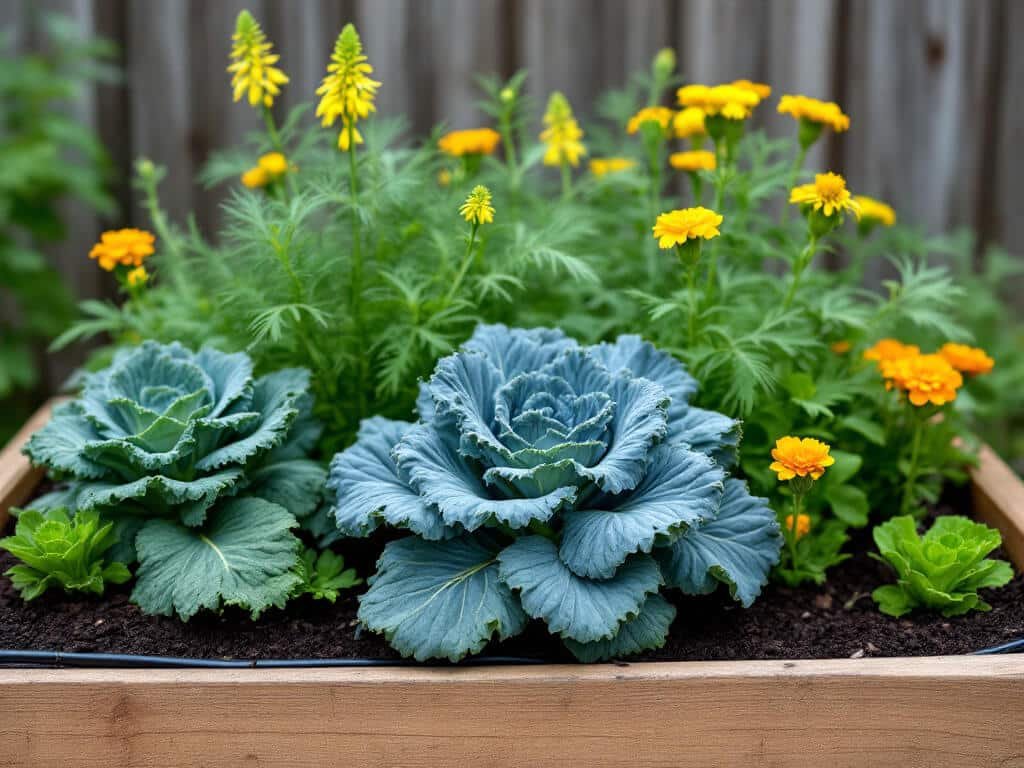
Why pairings matter for kale
Kale has a long list of problems: cabbage caterpillars, cabbage whitefly, aphids, flea beetles, slugs, snails, and birds. It can also get downy mildew, black rot, leaf spot, white blister, and clubroot. Several of those are shared across the whole cabbage family, so what you plant next to kale matters.
A good neighbor does one of three things. It fills lower space while kale is still small, it offers flowers for beneficial insects, or it adds a legume to the bed. A bad neighbor is usually a close relative that carries the same pests and diseases.
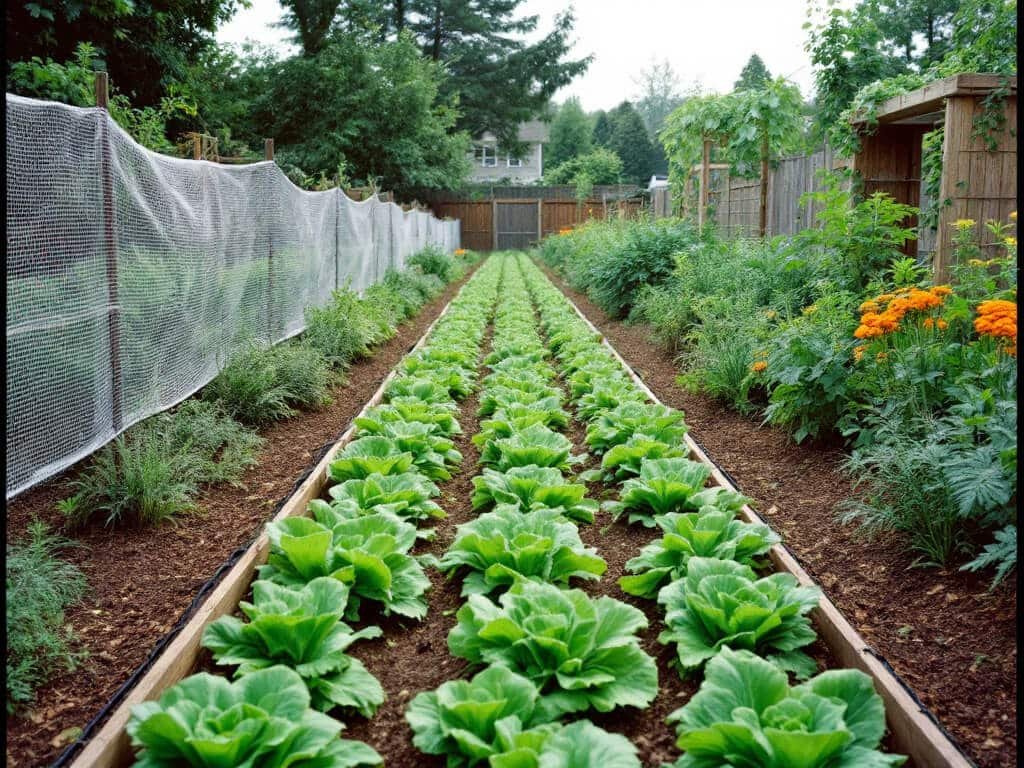
One myth is worth clearing up. No flower or herb has been shown to reliably repel all cabbage worms or wipe out kale pests, and extension guidance describes companion planting results as variable. Fine mesh netting, crop rotation, and basic integrated pest management are the more dependable protection. Treat companions as a bonus on top of those.
Best companion plants for kale
Mature kale runs roughly 2 to 3 feet tall and wide in larger cultivars, so most of these work either because they stay small or because they sit at the edge of the bed.
Bush beans
Beans are legumes, and legumes can add nitrogen to the garden system. That benefit goes mostly to the surrounding soil and later crops, not to the kale as an instant feed. Plant them 18 to 24 inches from kale, adjusted for the bean variety.
Peas
Peas are a cool-season legume, so their season matches kale’s. They also contribute nitrogen through fixation. Keep them 6 to 12 inches from kale, depending on trellising and variety.
Dill
Dill flowers provide nectar and habitat for beneficial insects, including predators and parasitoids of garden pests. Let some plants bloom rather than cutting everything for the kitchen. Space dill 12 to 18 inches from kale.
Cilantro
Cilantro that is allowed to flower adds small nectar sources for beneficial insects. It’s a reason to leave a plant or two to bolt instead of pulling them. Plant it 12 to 18 inches from kale.
Parsley
Flowering parsley diversifies habitat for beneficial insects. Keep mature plants from crowding the kale, because parsley will fill out more than you expect. Give it 12 to 18 inches from kale.
Marigolds
Marigolds are flowering annuals that can support beneficial-insect habitat. They are not a guaranteed pest fix, and extension guidance is clear that results vary. Plant them 12 to 18 inches from kale, preferably along the bed edge.
Lettuce
Lettuce is a compact, cool-season crop that uses the lower space while kale grows above it. It works best when you pick it before the kale spreads. Plant it 6 to 12 inches from kale, depending on how big the lettuce cultivar gets.
Radishes
Radishes are fast, so they can occupy the gaps between young kale plants and be gone before the kale reaches mature width. They are the easiest filler on this list. Plant them 6 to 12 inches from kale.
Spinach
Spinach likes similar cool-season conditions and stays low. That makes it an easy partner for the same watering routine. Place it 6 to 12 inches from kale.
Onions
Onions have a different plant form, which diversifies bed space. I’d be honest about this one: no kale-specific pest-repellent effect was verified, so grow them because they fit, not because they protect. Plant them 6 to 12 inches from kale, depending on bulb size.
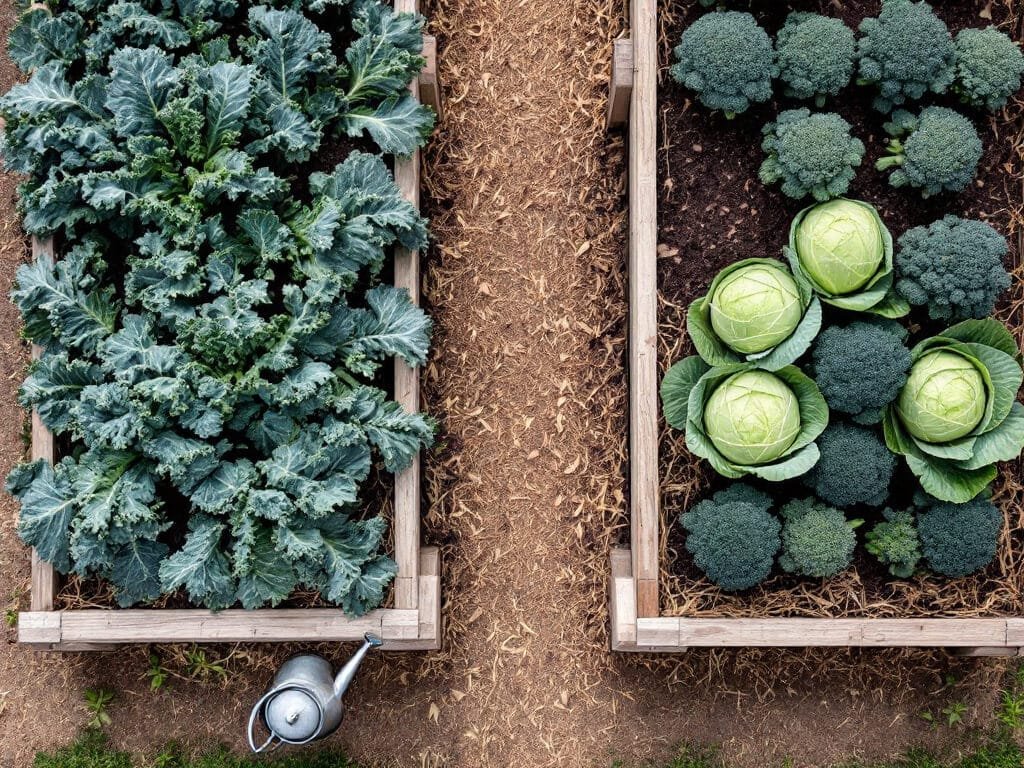
What not to plant with kale
The pattern here is simple. Kale’s worst neighbors are other brassicas, because they share its pests and its soil-borne diseases. Don’t pack cabbage-family crops into one bed, and rotate them instead of planting them in the same spot repeatedly.
Cabbage
Cabbage shares kale’s brassica pests and diseases. Grouping the two concentrates susceptible plants in one place and complicates crop rotation.
Broccoli
Broccoli has overlapping pests and soil-borne disease concerns with kale. Planting brassicas repeatedly in the same area can build up those problems.
Cauliflower
Cauliflower shares cabbage-family pests and diseases with kale. Don’t count on it as a disease-free neighbor just because it looks different.
Brussels sprouts
Brussels sprouts belong to the same pest and disease group. They also need a lot of space, so putting them next to kale adds crowding on top of the shared problems.
Kohlrabi
Kohlrabi is another brassica with overlapping pest and disease risks. If you grow it, rotate it with the rest of the cabbage family rather than tucking it into the kale bed.
Layout and spacing
Treat kale as the main crop and build around it. Space mature plants according to cultivar size, commonly 12 to 24 inches apart. Put quick, compact crops only where you will harvest them before the kale fills in, and keep supports and tall plants from shading kale or getting in the way of netting.
Kale: 12 to 24 inches apart, depending on cultivar.
Lettuce, radishes, spinach: 6 to 12 inches from kale, harvested before the kale fills the space.
Onions: 6 to 12 inches from kale, depending on bulb size.
Dill, cilantro, parsley, marigolds: 12 to 18 inches from kale, along the bed edge.
Peas: 6 to 12 inches from kale, with the trellis placed so it doesn’t shade the plants.
Bush beans: 18 to 24 inches from kale.
Netting: leave room for fine mesh over the kale, and keep supports from obstructing it.
FAQ
Can kale and tomatoes grow together?
The sources reviewed don’t show a kale-specific incompatibility with tomatoes. Kale is a cool-season crop and tomatoes are warm-season plants, so their timing and water needs may differ. Avoid crowding, and give each crop the light and moisture it needs.
Do marigolds repel cabbage worms from kale?
No reliable kale-specific repellent effect has been verified. Extension guidance presents flowers as possible habitat for beneficial insects and stresses that companion planting results vary.
How far apart should kale and companion plants be?
Mature kale commonly needs 12 to 24 inches between plants, depending on cultivar. Compact intercrops can go closer only if you harvest them before the kale reaches full size.