
Radish Companion Plants for Productive Garden Beds
The best radish companion plants are the ones that use the space radishes give up after a few weeks, not the ones promising to fix your pest problems. Radishes are fast, shallow-rooted, and cool-season, so they work as a gap-filler between slower crops. Pick partners that match that timing, and keep anything that shares radish pests at a distance.
Below is what the extension sources support, what they don’t, and how to lay out a bed so radishes get the sun and room they need.
Why pairings matter for radish
Radishes are an annual, cool-season root crop in the mustard family. They grow across USDA zones 5-9, but your results depend more on local temperatures than on your zone number. Many varieties are ready in about 21 days, and cool weather gives better roots.
That short season is the main reason to pair them. A radish row takes up space for a few weeks and then leaves, so it can sit beside slower crops like carrots or broccoli without competing for long. Radishes also need full sun, regular even moisture, and loose, fertile soil. Too much shade keeps the roots from filling out, so a companion that casts shade defeats the purpose.
One caution before the list. Arizona Extension states plainly that companion planting is not a proven science, and West Virginia University notes that results vary by location. No source reviewed shows that any companion reliably repels all radish pests or improves radish flavor. Treat these pairings as sensible space and timing choices, with any pest benefit as a possible bonus.
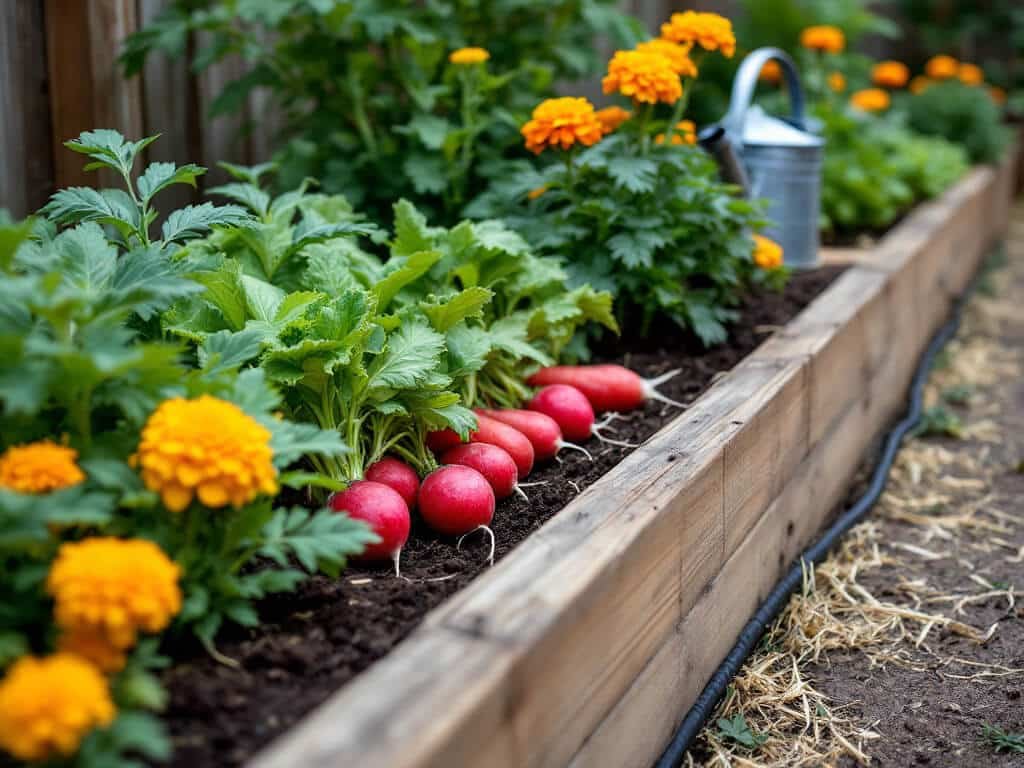
Best companion plants for radish
Carrots
This is the pairing extension sources back most clearly. Radishes mature before slower carrots need the room, and the two crops have different root structures, so they work different parts of the soil. Sow them together, thin radishes to 1-3 inches apart, and space the carrots for your variety.
Lettuce
Lettuce is a cool-season crop that shares radish beds without trouble. Plant it in adjacent rows and leave 10-12 inches between radish rows. Use the spacing listed for your lettuce variety.
Spinach
Spinach has similar seasonal timing and can follow radishes in the same bed. Put it in its own row next to the radishes rather than crowding it into the radish row. When the radishes come out, the spinach has the room.
Arugula
Arugula fits the same cool-season succession and can take over the bed once radishes are harvested. Sow it in a neighboring row, or wait and sow it where the radishes were. Remember that arugula is also a mustard-family plant, so see the brassica note in the next section if flea beetles are a problem for you.
Broccoli
Radishes can go at the base of broccoli as a small, fast crop that is harvested before the larger plant fills the space. Keep them in their own row and hold them to 1-3 inches between plants. Pull them before the broccoli canopy starts shading them.
Cucumber
West Virginia University lists cucumber as compatible with radishes. The logic is a quick crop ahead of a later, larger one. Give radishes a sunny, open strip and harvest them before the cucumber vines spread.
Squash
Squash is also listed as compatible, again because radishes can give an early harvest before squash takes over. Place the radishes where expanding vines won’t cover them before you pull them. Squash gets big, so this only works if you stay on top of the harvest.
Peas
A short-season radish crop alongside a later or taller crop like peas makes good use of space, because the two grow in different patterns. Keep the radishes in a sunny row, away from dense pea growth. Shaded radishes make poor roots.
Marigold (Tagetes erecta)
Maryland Extension says African marigolds may attract beneficial insects and may repel certain pests, but the effect isn’t guaranteed. Plant them at the bed edge, not inside the radish row. Grow them because they’re useful and pleasant, and don’t count on them to protect the crop.
Dill
If you let dill flower, it attracts pollinators and natural enemies of garden pests. Grow it nearby without letting it shade the radishes, and follow the spacing for your dill cultivar.
Cilantro
Flowering cilantro can attract beneficial insects, including predators and parasitoids. Grow it near the radishes but not densely within the planting. A few plants at the edge of the bed is plenty.
Chervil
Arizona Extension describes chervil as attracting hoverflies that may help control pests affecting radishes. The source presents this as a companion-planting observation, not a guaranteed result. Plant it nearby, spaced for the chervil variety you buy.
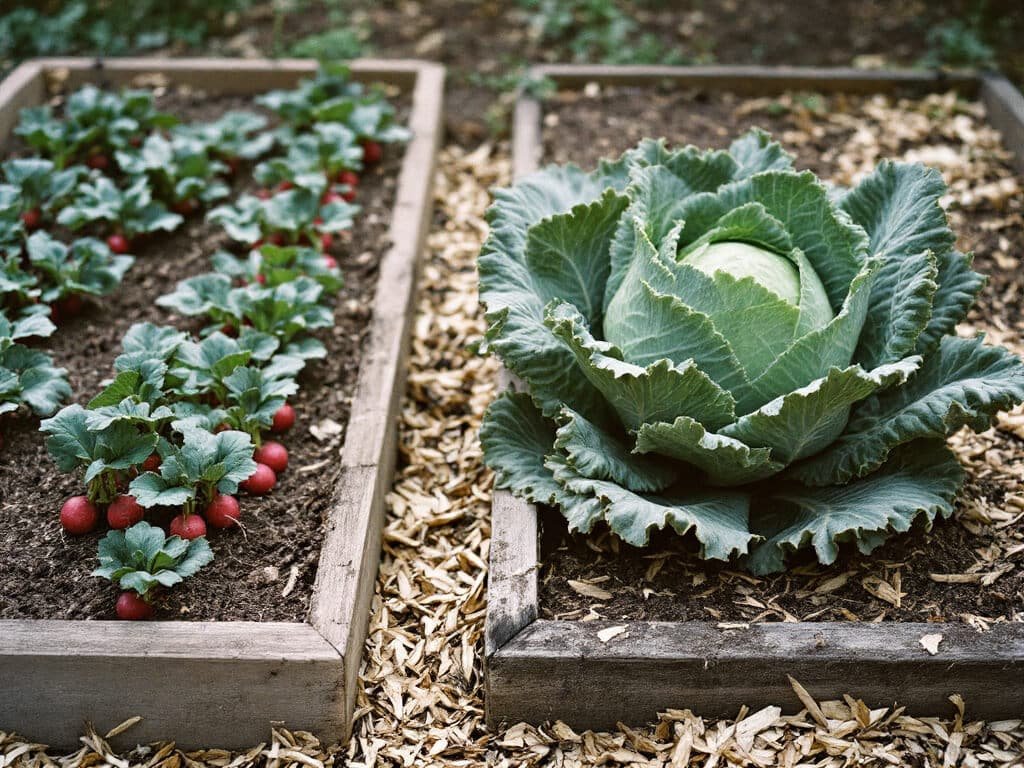
What not to plant with radish
The honest answer is that no reputable source reviewed names a plant that is chemically incompatible with radishes. What the sources do describe are practical problems with pests, shade, water, and competition.
Other brassicas (cabbage, kale, mustard, cauliflower)
Radishes belong to the same family, and these crops share pests, including flea beetles and other brassica-associated insects. Packing them together can let pest numbers build up. The sources don’t show a radish-only incompatibility, so this is a pest-pressure call. If flea beetles or root maggots are a problem in your garden, separate the plantings and rotate your brassica crops.
Dense, fast-spreading vine crops
Squash and cucumber are on the compatible list, but only on a schedule. Planted too close, their foliage will shade or cover radishes before you harvest. That is a layout problem, not a chemical one. Pull the radishes before the vines expand over the row.
Plants with very different water needs
Radishes want regular, even moisture and don’t tolerate waterlogged soil. A neighbor that needs markedly drier or wetter conditions is a poor partner no matter how well the two get along otherwise. Group plants by moisture needs and keep radishes out of soggy spots.
Weeds and dense, unmanaged plantings
Radishes compete poorly with weeds, especially during germination and early establishment. A bed with companions scattered everywhere is hard to weed. Keep companions in defined rows and weed carefully, without deep cultivation.
Layout and spacing
For beds, treat radishes as a quick row between slower crops. Keep them in full sun, hold them to 1-3 inches between plants and about 10-12 inches between rows, and harvest before taller or spreading companions crowd them. Companion planting does not replace spacing, moisture control, or pest exclusion.
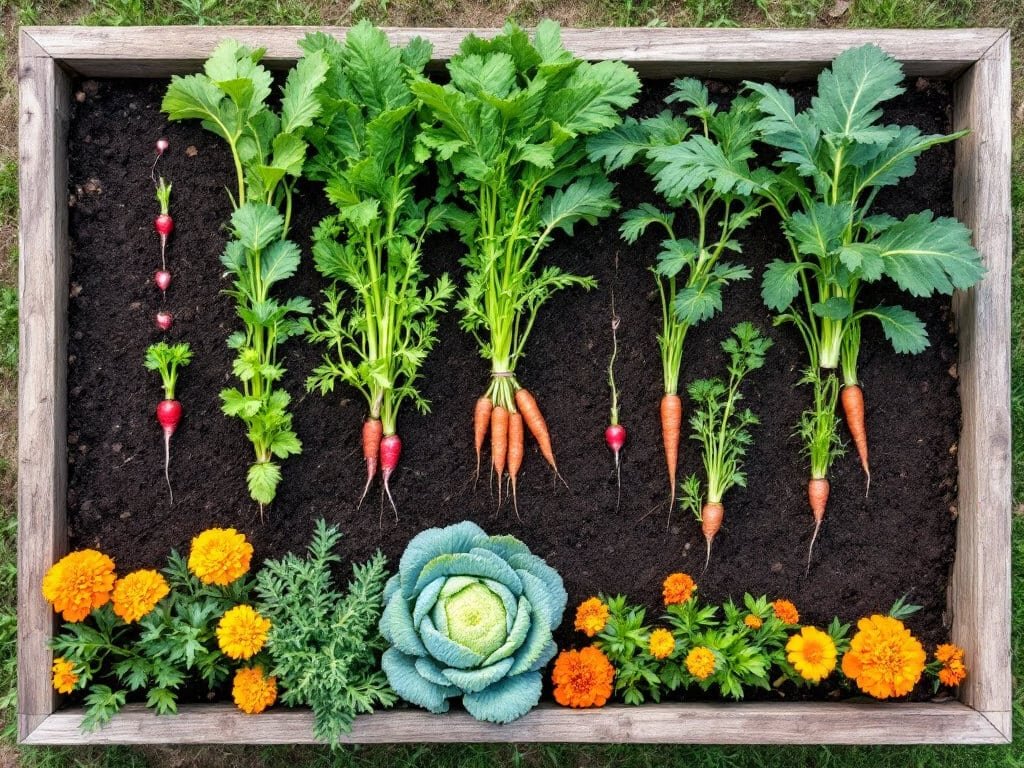
– Run a radish row between carrot rows, and thin the radishes to 1-3 inches.
– Place radishes along the edge of broccoli before the broccoli enlarges, in their own row.
– Put lettuce, spinach, or arugula in adjacent rows, and let them take over the space after the radish harvest.
– Set marigolds, dill, cilantro, or chervil at the bed edge, where they won’t shade the radishes.
– Plant radishes in a sunny strip ahead of cucumber or squash, and pull them before the vines arrive.
– In containers, pair radishes only with another compact, cool-season crop, and only when each plant has enough root room and light.
FAQ
Can radishes and carrots grow together?
Yes. Extension sources recommend the pairing because radishes mature quickly and can be harvested before carrots need more room. The crops also use different root structures.
Do marigolds repel radish pests?
Not reliably. Maryland Extension says African marigolds may repel certain pests and attract beneficial insects, but companion-planting effects are not guaranteed.
Can radishes grow beside broccoli?
Yes. Radishes can be planted at the base of broccoli as a small, fast crop, as long as they get enough sun and are harvested before the broccoli canopy crowds them.