
Karl Foerster Grass Companion Plants
Picking Karl Foerster grass companion plants comes down to two decisions: which plants want the same conditions, and how far apart to set them. This grass (Calamagrostis × acutiflora ‘Karl Foerster’) grows 4 to 6 feet tall and about 2 feet wide, so a poor match crowds it or fights it over water. The plants below share its need for sun and soil that drains but doesn’t dry out completely.
A note on zones before you buy. Many sources list Zones 4 to 9, while Missouri Botanical Garden listings often use Zones 5 to 9. Check the plant tag and your local conditions.
Why pairings matter for Karl Foerster grass
Karl Foerster is a clump-forming perennial grass with narrow, upright flower stems. It does best in full sun, in moist but well-drained soil. It tolerates loam, sandy soil, and clay as long as the water moves through. Anything you plant beside it has to live with that.
Water is the real constraint. The grass wants even moisture while it establishes, and deep watering during prolonged drought once it’s settled. It doesn’t want to sit in standing water. So a good companion is one that is fine with moderate moisture and good drainage, not one that needs a swamp or a desert.
Form is the other half. The grass is vertical, so the plants around it look best when they contrast: flat heads, rounded globes, flower spikes, or airy mounds. Pair it with more upright grass-like texture and the bed can read as one blur.
Flowering timing helps too. The feathery stems show up in early summer and stay attractive into fall, so companions that bloom through summer keep the bed from going flat in the middle of the season.
Best companion plants for Karl Foerster grass
All nine plants here suit a sunny border. Spacing is measured from the grass, and you should adjust it for the mature width of the cultivar you buy.
Purple coneflower (Echinacea purpurea)
Coneflower adds a contrasting flower shape against the grass’s narrow plumes and supports a pollinator-friendly planting. Set it about 18 to 24 inches from the grass. Check the mature width on the tag, since cultivars vary.
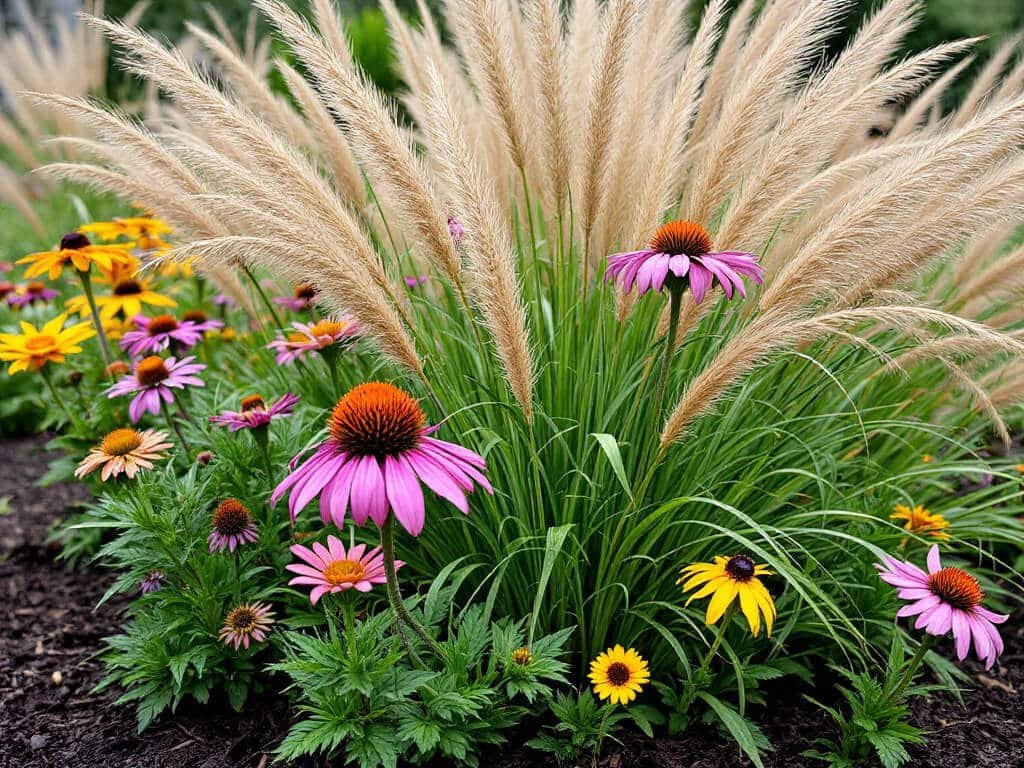
Black-eyed Susan (Rudbeckia fulgida or Rudbeckia hirta)
Black-eyed Susan brings warm-colored flowers and gives you a long-season perennial combination with the grass. Plant it about 18 to 24 inches away. Adjust for cultivar size, because the two species and their selections differ.
Stonecrop (Hylotelephium or Sedum cultivars)
Stonecrop is a lower, drought-tolerant foreground layer under the grass’s vertical form. Keep it about 18 to 24 inches away, based on its mature spread. It is the one plant on this list to watch for water: it tolerates dry spells, but the grass wants even moisture while it establishes. Water for the grass’s first season and rely on good drainage to keep the stonecrop happy.
Salvia (Salvia nemorosa cultivars)
Salvia supplies contrasting flower spikes and a lower layer in a sunny, well-drained bed. Allow about 18 to 24 inches from the grass, depending on the cultivar. It’s a sensible front-of-border choice where you want color at knee height.
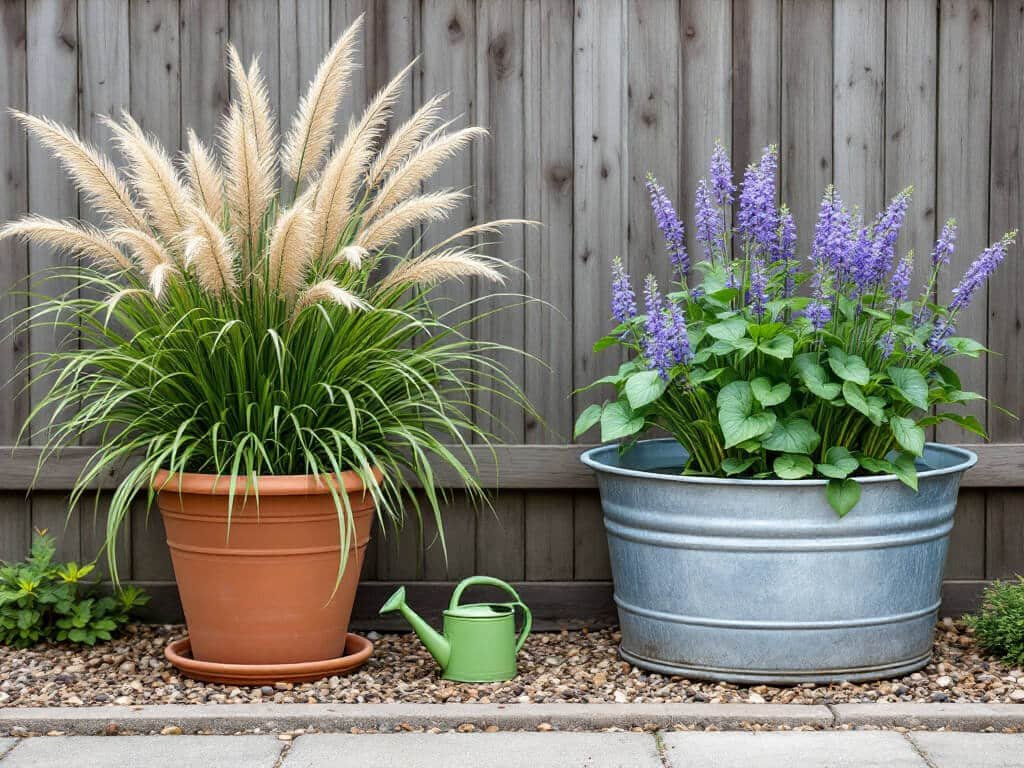
Russian sage (Perovskia atriplicifolia, now commonly Salvia yangii)
Russian sage adds airy texture and blue flowers in a sunny, well-drained spot. Allow at least 24 inches from the grass, because both plants can become substantial. You may see it sold under either name, so don’t treat the two labels as different plants.
Yarrow (Achillea cultivars)
Yarrow’s flat flower heads contrast with the grass’s vertical plumes, and it suits sunny, well-drained conditions. Plant it about 18 to 24 inches from the grass. It is one of the clearest shape contrasts on the list.
Ornamental allium (Allium cultivars)
Allium gives you rounded flower heads against the grass’s narrow spikes, a seasonal contrast. Plant bulbs or divisions to the spacing for your cultivar, and keep the grass at least 18 to 24 inches from the allium clump.
Switchgrass (Panicum virgatum cultivars)
Switchgrass builds a texture-on-texture combination, with a different upright form beside Karl Foerster. Leave at least 24 to 36 inches between mature clumps so they don’t crowd each other. This pairing suits a larger bed.
Miscanthus (Miscanthus cultivars)
Miscanthus offers contrasting foliage and plume texture in a large sunny border. Use at least 36 inches from Karl Foerster unless you choose a compact cultivar. I’d skip it in a small bed, since two big grasses will use up the space quickly.
What not to plant with Karl Foerster grass
Most bad pairings are a mismatch in water or light, or plain overcrowding.
Plants that need permanently wet soil
Karl Foerster likes moisture but not waterlogged ground. Bog and pond-margin plants that need saturated soil want conditions the grass won’t tolerate for long. Keep them in their own wet spot.
Plants that need very dry, lean soil
The grass does better with more consistent moisture than strict dry-garden plants prefer. Put the two in one bed and one of them will always be on the wrong watering schedule. Match the water needs first and the looks second.
Large, aggressive plants that want a lot of water, planted too close
Tight planting increases competition for water, nutrients, and root space. If a neighbor is large and thirsty, give it its full mature width. Check the tag and plan for the plant’s size in a few years, not its size in the pot.
Dense shade plants on the grass’s sunny side
Heavy shade can weaken the stems and reduce flowering. Light shade is tolerated, but a tall, dense plant that blocks the sun from the grass works against it. Keep tall companions to the back or sides, not to the south of the grass.
Layout and spacing
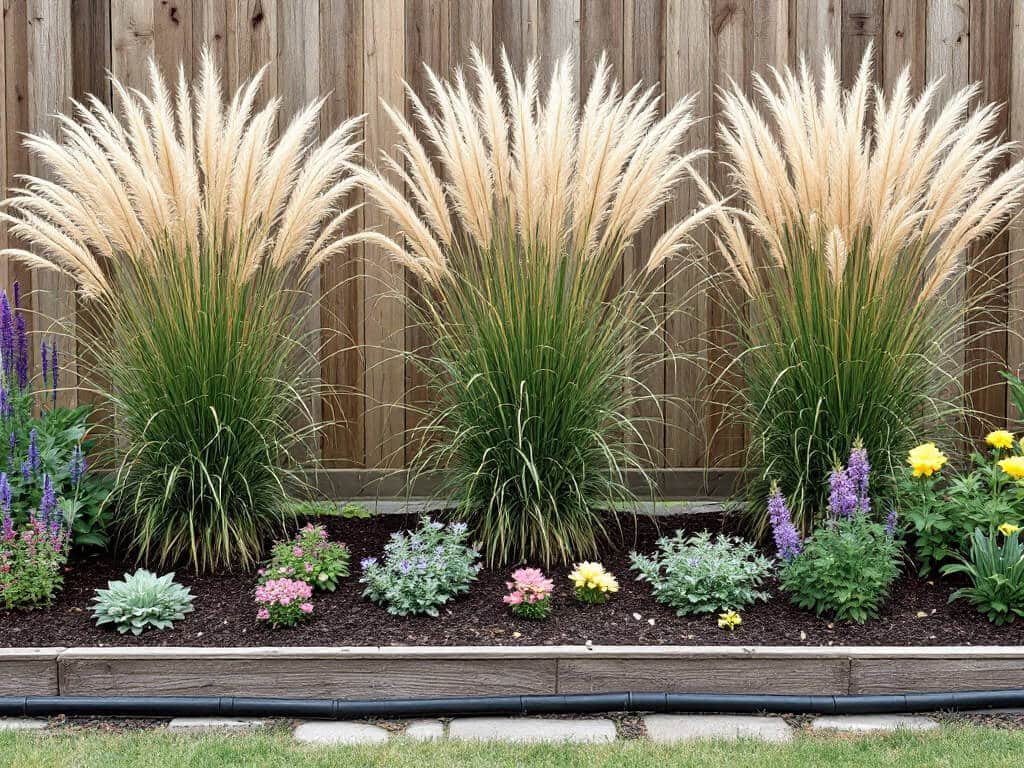
Treat Karl Foerster as a vertical anchor and put the shorter plants in front of it. Spacing depends on what’s next to it: about 18 to 24 inches for smaller companions, and 24 to 36 inches for large grasses or substantial perennials. Go narrower only if the mature widths and local recommendations support it.
– Place the grass toward the back or middle of a sunny border.
– Put lower plants such as salvia, sedum, yarrow, or coneflower in front of it.
– Leave about 24 to 36 inches between the grass and large neighboring clumps.
– Keep Russian sage at least 24 inches away and miscanthus at least 36 inches away (unless it’s a compact cultivar).
– Give switchgrass 24 to 36 inches between mature clumps.
– Keep the grass in full sun for the strongest, most upright growth.
FAQ
Can Karl Foerster grass grow in partial shade?
Yes, it tolerates light or partial shade. Full sun generally gives stronger upright growth and better flowering.
How far apart should Karl Foerster grass and companion plants be?
A practical starting point is about 18 to 24 inches from smaller companions and 24 to 36 inches from larger grasses or substantial perennials. Adjust for each plant’s mature width.
Does Karl Foerster grass need consistently wet soil?
It prefers evenly moist soil, especially while establishing, but it also needs drainage. It should not sit in standing water.