
Coneflower Companion Plants for a Pollinator Garden
The best coneflower companion plants are ones that want the same thing coneflower wants: full sun, well-drained soil, and not much fussing once they are settled in. Pick for those conditions first and color second, and most of the work is done. This guide covers what to plant beside coneflower, what to keep away, and how to lay it out.
Why pairings matter for coneflower
Purple coneflower is an herbaceous perennial hardy in USDA zones 3–9, so it covers nearly all of the zone 5–9 range most of you are gardening in. It grows about 2–4 feet tall and blooms from late June through early September, with timing shifting by species and cultivar. It tolerates full sun to partial shade, but flowering is generally best in full sun.
The care profile is simple. Coneflower likes evenly moist, well-drained soil while it establishes, then becomes drought-tolerant. It also tolerates rocky or clay soils, as long as water doesn’t sit.
That is why the neighbors matter. A companion that needs frequent watering or wet ground pulls the bed in a direction coneflower doesn’t want to go. Plants crowded tight around it cut airflow, and coneflower is already prone to powdery mildew and anthracnose. Other problems to watch for are aphids, Japanese beetles, mites, and stem rot.
So the rule is to match sun, drainage, and water, then leave enough room for air to move.
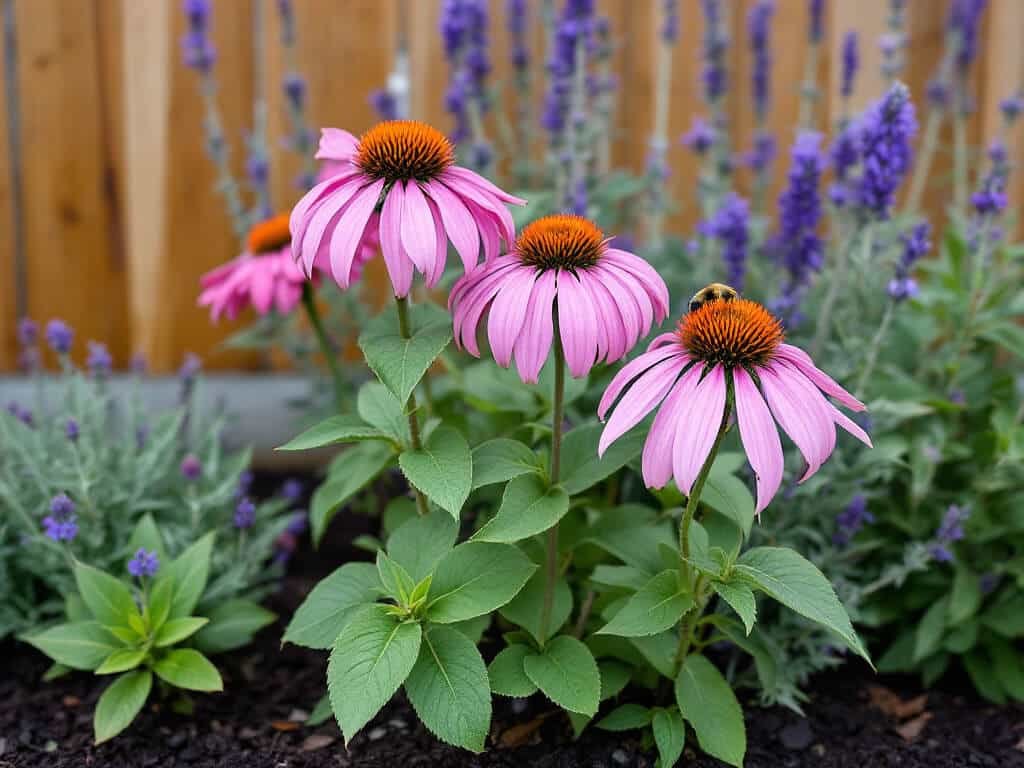
Best companion plants for coneflower
One note before the list: no authoritative coneflower-specific spacing figure was verified for any of these. For each plant, use the mature spread printed on its label to set the distance.
Lavender
Lavender shares coneflower’s preference for sun and well-drained soil, so the two can share a watering routine. It also gives you contrasting foliage and flowers next to coneflower’s daisy-type blooms. Space it by its mature spread.
Russian sage
Russian sage is a sun-loving, drought-tolerant perennial with a different form from coneflower and long-lasting flowers. Because it asks for the same dry-leaning conditions, you won’t be compromising on water. Space it by its mature spread.
Salvia
Penn State Extension specifically recommends salvia as a flowering partner for coneflower. It handles the same kind of site, and it fills in the bloom picture around coneflower’s flowers. Space it by its mature spread.
Bee-attracting native plants
Natives chosen for the same sunny, well-drained site can extend the forage for bees and butterflies beyond coneflower’s own bloom window. I wouldn’t lean on a fixed pairing list here. Choose species suited to your local soil and moisture, and check mature width on each tag before you set the spacing.
Prairie grasses and sedges
Grasses and sedges add structure with upright or mounding forms, and they fill a different visual layer than coneflower’s flowers do. That works well in a prairie-style planting. Clear out competing turf and weeds before you plant, or the grasses won’t be the only thing filling in.
Other native wildflowers
Other native wildflowers can build a wildlife-supporting, prairie-like planting around coneflower when they match the site’s sun, soil, and moisture. The matching is the whole job. A native that wants wetter soil than your bed offers is a poor fit, however local it is. Space by mature width.
Drought-tolerant perennials
If your coneflowers will get little supplemental water once established, other drought-tolerant perennials make sense next to them, provided the soil drains well. They keep the whole bed on one watering schedule. Space by mature width.
Plants with contrasting foliage
Fine-textured or gray foliage, like lavender’s or Russian sage’s, sets off coneflower’s broad leaves and flower heads without changing how you care for it. This is a design choice rather than a growing one, so use it to break up a bed that otherwise reads as one texture.
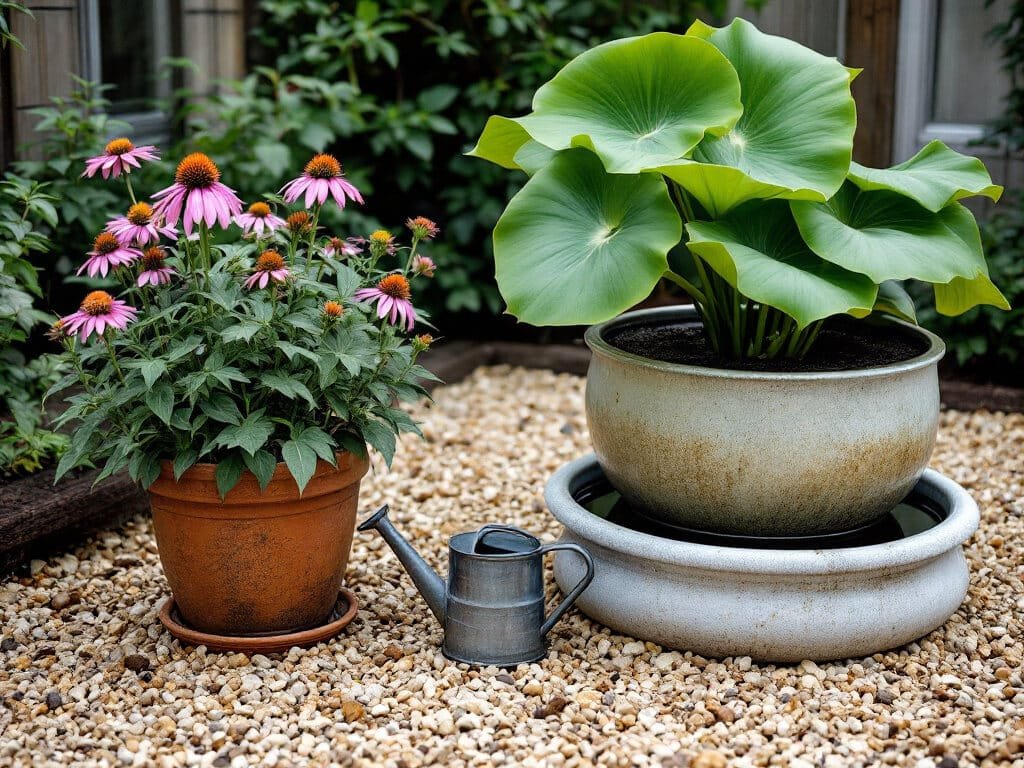
What not to plant with coneflower
Plants requiring standing water or persistently wet soil
Keep coneflower away from plants that need wet feet. Persistently wet soil conflicts with coneflower’s need for good drainage and may increase the risk of stem rot. If part of your yard stays soggy, plant something else there.
Plants with substantially higher irrigation needs
A thirsty neighbor means frequent watering, and frequent watering leaves the soil wetter than established coneflower wants. Even if the other plant is fine with it, coneflower’s drought-tolerant, well-drained conditions get undermined. Group high-water plants in their own bed or container.
Aggressive turfgrass and unmanaged weeds
Turf and weeds compete with young coneflowers and can keep prairie seedlings from establishing at all. If you are converting lawn to a coneflower bed, remove the sod and weeds first. Planting into them and hoping is how these beds fail in year one.
Plants crowded tightly around coneflowers
Tight planting reduces airflow, which raises the risk of powdery mildew and anthracnose. This one is easy to cause by accident, because small nursery pots look sparse. Plant for the mature size, not the size in the pot.
Layout and spacing
No universal coneflower-companion distance could be verified from the available authoritative sources, so the dependable method is to read the mature width on each plant’s label and space from that. Put coneflowers in the middle or rear of a sunny bed, lower-growing companions toward the edge, and leave gaps wide enough for air to move between plants of similar size.
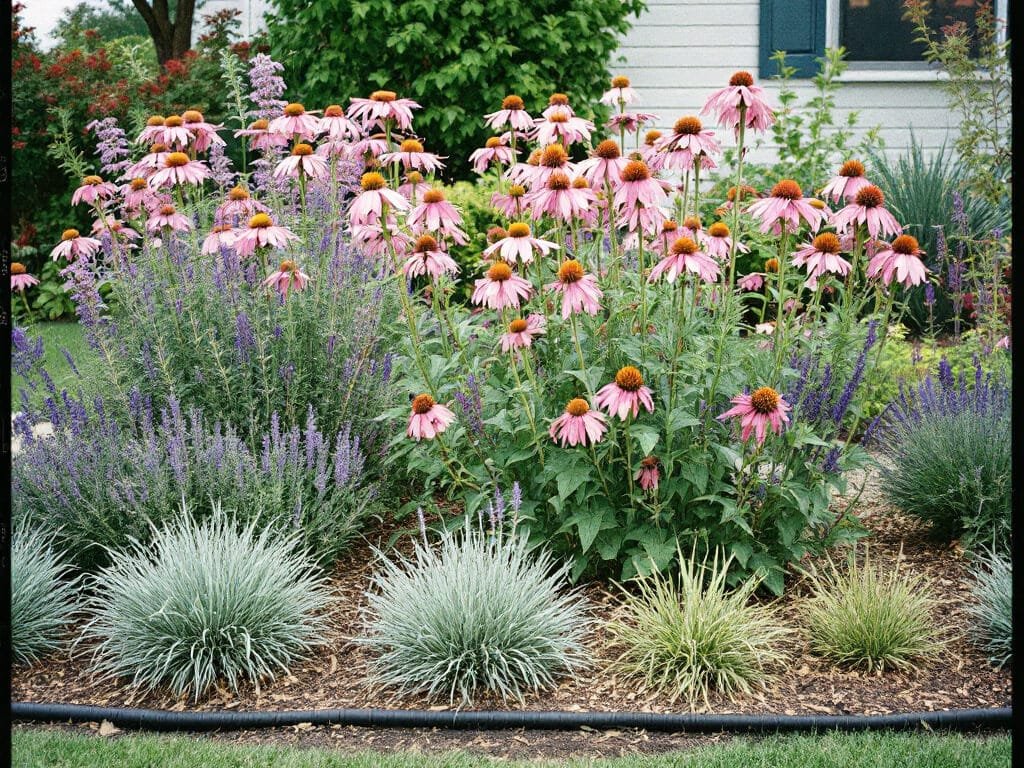
Back or middle of the bed: coneflower, plus taller or similarly sized companions like Russian sage, with space between them for airflow
Front edge: lower-growing partners such as lavender, spaced by their mature spread
Fill and structure: prairie grasses, sedges, and other native wildflowers matched to your soil and moisture
Before planting: clear turf and weeds from the whole planting area
Containers: combine only plants with similar sun, drainage, and watering needs
FAQ
What grows well with coneflowers?
Penn State Extension specifically lists lavender, Russian sage, and salvia as plants that combine well with coneflowers.
Do coneflowers need full sun?
Coneflowers tolerate full sun or partial shade, but full sun is the safer choice for abundant flowering and for companions with similar light requirements.
Can coneflowers tolerate drought?
Yes. They prefer evenly moist, well-drained soil during establishment but become drought-tolerant once established.