
Beet Companion Plants: What to Grow Nearby
Intro
Most lists of beet companion plants read like settled science, and most of it is folklore. What the extension research actually supports is narrower: a handful of plants used to manage flea beetles, a couple of crops that show up in discussions of plant associations with beets, and no proven “bad neighbor” at all.
That is still useful. If you know what each pairing is supposed to do, you can decide which ones are worth the bed space. This article sorts the supported ideas from the repeated ones and shows how to lay them out.
Why pairings matter for beet
Beets are a cool-season annual grown for both roots and leaves. They like full sun, fertile and well-drained soil (or a free-draining container mix), and steady moisture. You can sow from early spring through late summer, which means a beet bed often has seedlings, half-grown plants, and harvest-ready roots in it at different times. Whatever you plant beside them has to fit that rhythm.
The pest that matters most in the research is the flea beetle. It chews beet foliage, and flea beetles also spread several vegetable diseases. Most of the useful companion advice here is really flea-beetle advice, so keep that in mind as you read.
Now the myth. The idea that companion planting reliably improves beet growth through special nutrient sharing, or that certain plants guarantee pest repellency, is not supported by the evidence. Utah State University Extension points out that many companion recommendations are folklore, and that documented associations tend to give minor, context-dependent benefits at best.
Treat companions as a small bonus on top of good basics: sun, drainage, even watering, and sensible spacing.
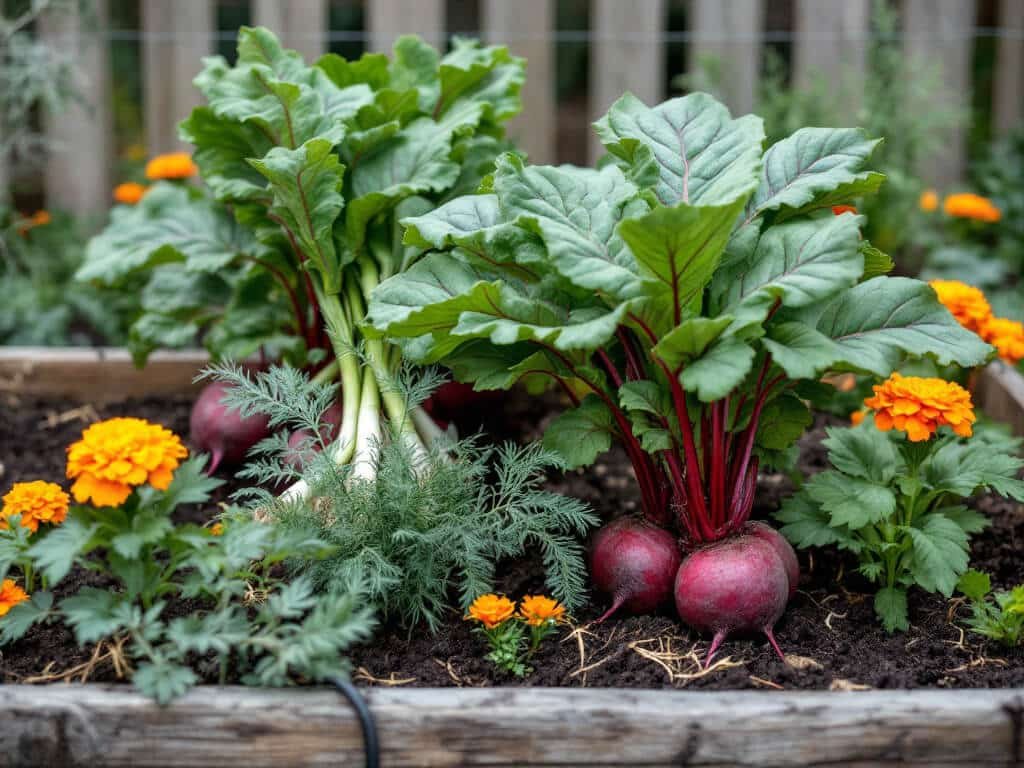
Best companion plants for beet
Two notes before the list. First, the beet spacing that has been verified is about 4 inches between seedlings. Second, no source gave a specific distance between beets and any of these companions, so space each companion according to its own seed packet or plant tag.
Bunching green onions
Green onions are used as a companion crop in flea-beetle management, and the idea is that they may help make host plants less apparent to the pest. That is a “may,” not a promise. Keep beet seedlings about 4 inches apart and give the onions the spacing on their own label.
Dill
Dill is listed among the companion crops used for flea-beetle management. Its effect on beets specifically is not guaranteed. Space the beets about 4 inches apart and follow the dill packet for its own spacing, since no verified dill-to-beet distance exists.
Marigolds
Marigolds also appear on the list of companion crops used in flea-beetle management. The source does not establish that they repel pests from beets in particular, so grow them because you like them and count any pest benefit as extra. Beet seedlings still go about 4 inches apart, and the marigolds get their own labeled spacing.
Radish
Radish is a documented flea-beetle trap crop, meaning it may draw feeding pressure away from the crop you want to protect. The timing matters: the source recommends establishing a trap crop 2–4 weeks before the protected crop. Sow radish first, then beets, and keep beet seedlings about 4 inches apart.
Daikon radish
Daikon is another documented trap crop for flea beetles, and the same timing applies. Get it growing 2–4 weeks before your beets if you want it to do any work. Beet spacing stays at about 4 inches.
Chinese southern giant mustard
This mustard is a documented flea-beetle trap crop. No verified distance between it and beets was found, so use the mustard’s own spacing guidance and keep your beet seedlings about 4 inches apart. It is a better fit for a planned trap-crop strategy than for casual interplanting.
Pac choi
Pac choi (also spelled pak choi) is documented as a flea-beetle trap crop. As with the mustards, the research gives no beet-to-pac-choi spacing. Follow the label for the pac choi and leave about 4 inches between beet seedlings.
Pacific Gold mustard
Pacific Gold is one more mustard documented as a flea-beetle trap crop. If you only want one mustard, pick whichever you can find seed for. Beet seedlings go about 4 inches apart, and the mustard follows its own spacing.
Lettuce
Lettuce turns up in an extension discussion of plant associations involving beets, but a beet-specific benefit and a spacing were not established. I’d treat it as a reasonable bed-mate rather than a proven helper. Plant it only where both crops can be watered consistently, and keep beet seedlings about 4 inches apart.
Carrots
Carrots also appear in that discussion of associations involving beets, again without an established benefit. Don’t crowd the roots, and don’t assume the two crops share nutrients in some helpful way. Beets still need about 4 inches between seedlings.
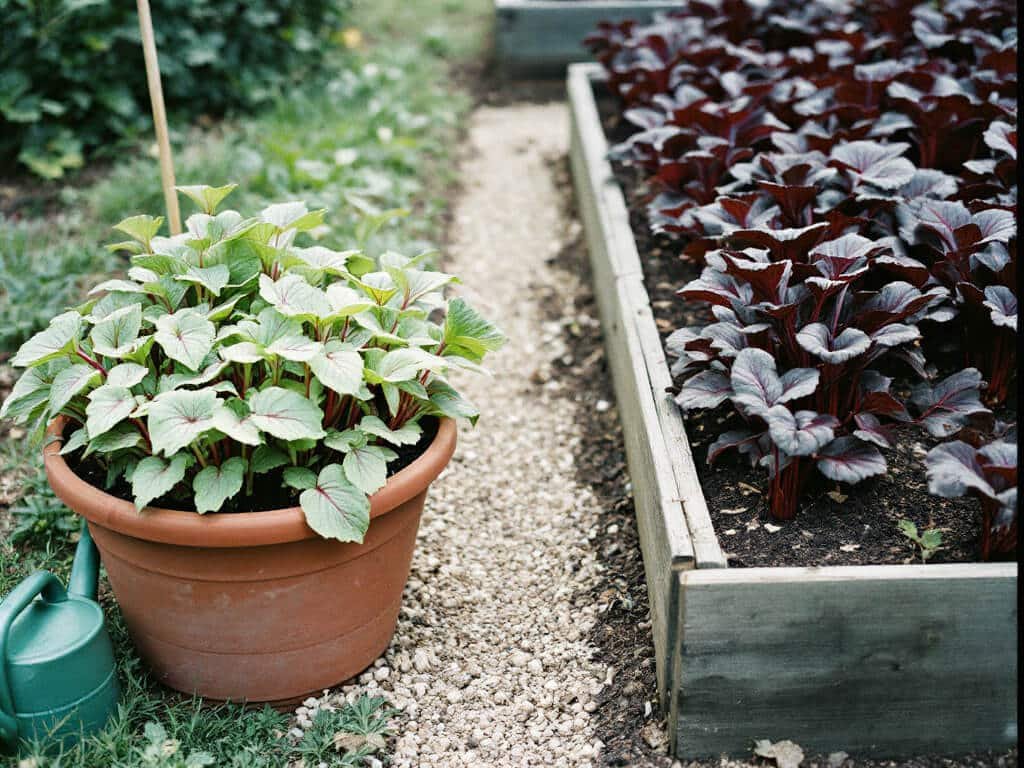
What not to plant with beet
This section is short because the evidence is short. No authoritative source in the research verified a plant that should be kept away from beets because of allelopathy, shared disease, mismatched water needs, or proven competition.
No verified bad companion found
The extension material emphasizes that many companion recommendations are folklore, and that even documented associations may produce only minor pest suppression or yield effects. So there is no plant I can tell you to rip out of a bed on the grounds that it harms beets. If a neighbor insists on a “never plant these together” rule, ask what the evidence is.
Unverified traditional exclusions
Claims about particular plant families, allelopathy, or “never plant together” rules should not be treated as evidence without crop-specific research. Plenty of these get repeated from site to site without a source behind them. I’d skip them rather than rearrange a bed around a rumor.
Common sense still applies. Anything that crowds beets, shades them, or competes hard for water in a small container will stress them, whatever its reputation. Beets in small containers can wilt or show nutrient-deficiency symptoms because of restricted root space, so the problem there is often the pot, not the neighbor.
Layout and spacing
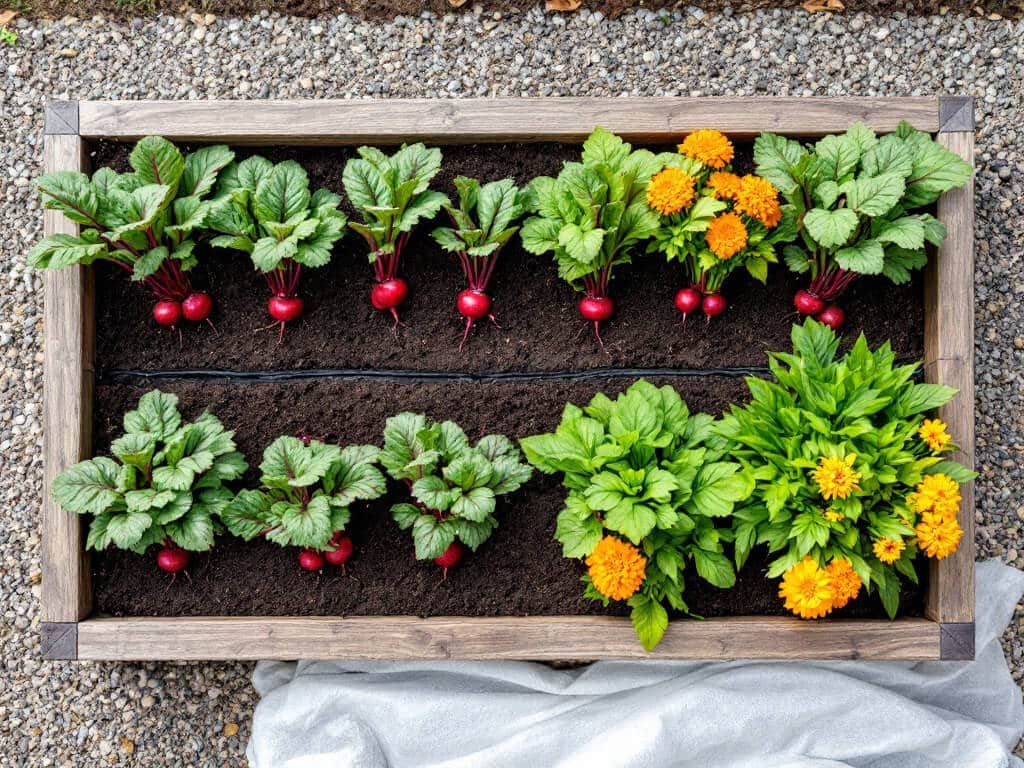
The most useful layout is simple: beets at the verified spacing in a sunny, well-drained spot, with any trap crop started early and row cover over the beets when flea beetles are around. Companion plants are not a substitute for physical pest control, so don’t rely on companions alone to protect beet foliage from flea beetles.
– Space beet seedlings about 4 inches apart in a sunny bed or a free-draining container.
– If you want a trap crop, choose radish, daikon, pac choi, or one of the mustards, and sow it 2–4 weeks before the beets.
– Because you can sow beets from early spring through late summer, expect to repeat that head start for each sowing if you use the trap-crop approach.
– Space each companion by its own label, since no beet-specific distances were verified.
– Cover beets with row cover when appropriate.
– In containers, avoid overcrowding and water regularly, because limited root space and drying out both stress the plants.
– Harvest young, often when roots reach about golf-ball size, which also frees up room as the bed fills in.
FAQ
Can marigolds protect beets from pests?
Marigolds are listed among companion crops used in flea-beetle management, but the available source does not prove a beet-specific level of protection. Use monitoring and row cover when flea beetles are a concern.
Should radishes be planted with beets?
Radishes can work as flea-beetle trap crops, but they do best as part of a planned strategy. Establish the trap crop about 2–4 weeks before the crop you want to protect.
How far apart should beet plants be?
Leave about 4 inches between beet seedlings. Companion-specific spacing was not verified, so follow the guidance for each companion plant rather than crowding the bed.