
Elderberry Companion Plants: What to Grow Nearby
Choosing elderberry companion plants is mostly about avoiding trouble, because the extension and botanical garden sources behind this article don’t prove that any specific plant helps an elderberry. What they do support is a short list of neighbors that share the shrub’s site conditions or add wildlife value. Think of these as functional neighbors, not pest-control partners.
That distinction matters if you’ve seen long companion lists elsewhere. Nothing here claims a plant repels elderberry sawfly or aphids. The advice is about moisture, light, space, and keeping aggressive weeds out of the root zone.
Why pairings matter for elderberry
Elderberry is a deciduous shrub that wants full sun for the best fruiting, though it tolerates light or partial shade. It likes moderately fertile, moist but well-drained soil with a pH of about 5.5 to 6.5. Newly planted shrubs need consistent water, and commercial guidance puts the target at about 1 to 2 inches per week for good growth and fruit development. Established plants tolerate some drought, but long dry spells cut performance.
So the main question for any neighbor is whether it competes for that water and sun. A thirsty annual bed jammed against a young elderberry will lose you fruit. A plant that wants the same moist, well-drained conditions can share the spot without a problem.
Size is the other factor. American elderberry (Sambucus canadensis) typically reaches 4 to 8 feet tall and wide, and the RHS notes that some elders can hit 10 to 13 feet if left unpruned. Plan for the mature shrub, not the one-gallon pot.
Pests and diseases are worth knowing, but companions won’t solve them. The list includes elderberry sawfly, aphids or blackfly, spotted-wing drosophila, elder borer, birds, and occasional verticillium wilt. Good airflow and a clear zone at the base will do more for you than any neighbor.
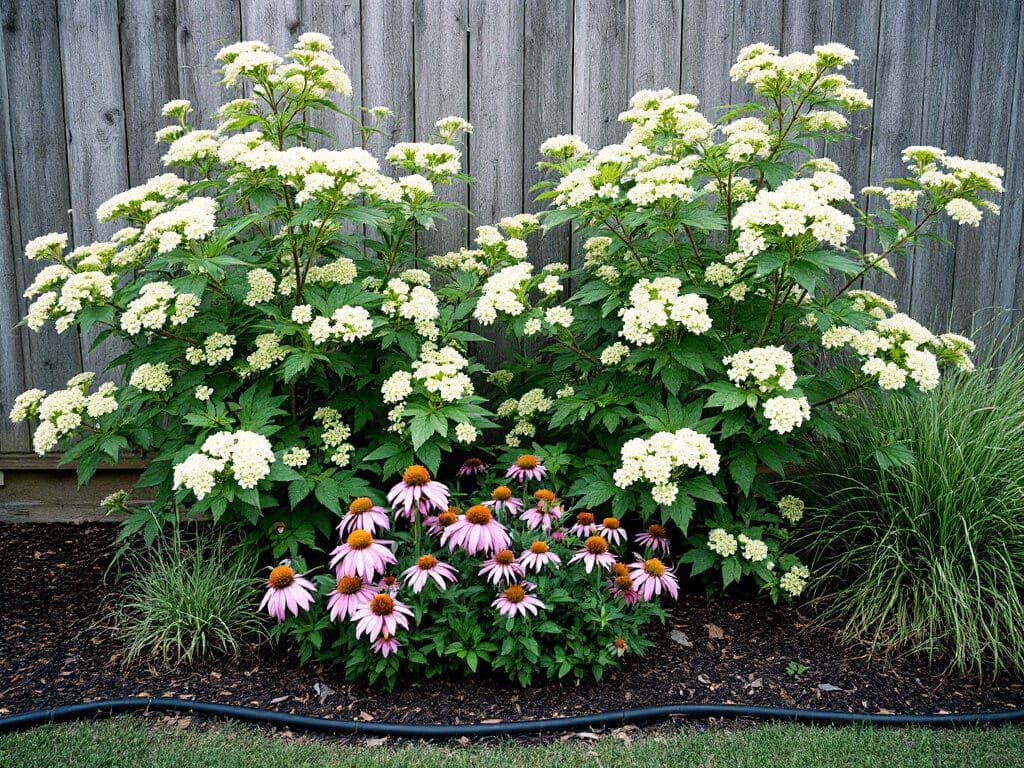
Best companion plants for elderberry
The brief gives categories rather than named species, and that’s honest: the evidence is limited. Pick specific plants from your local extension office’s list for your region. The H3s below are the types worth looking for.
Second elderberry cultivar
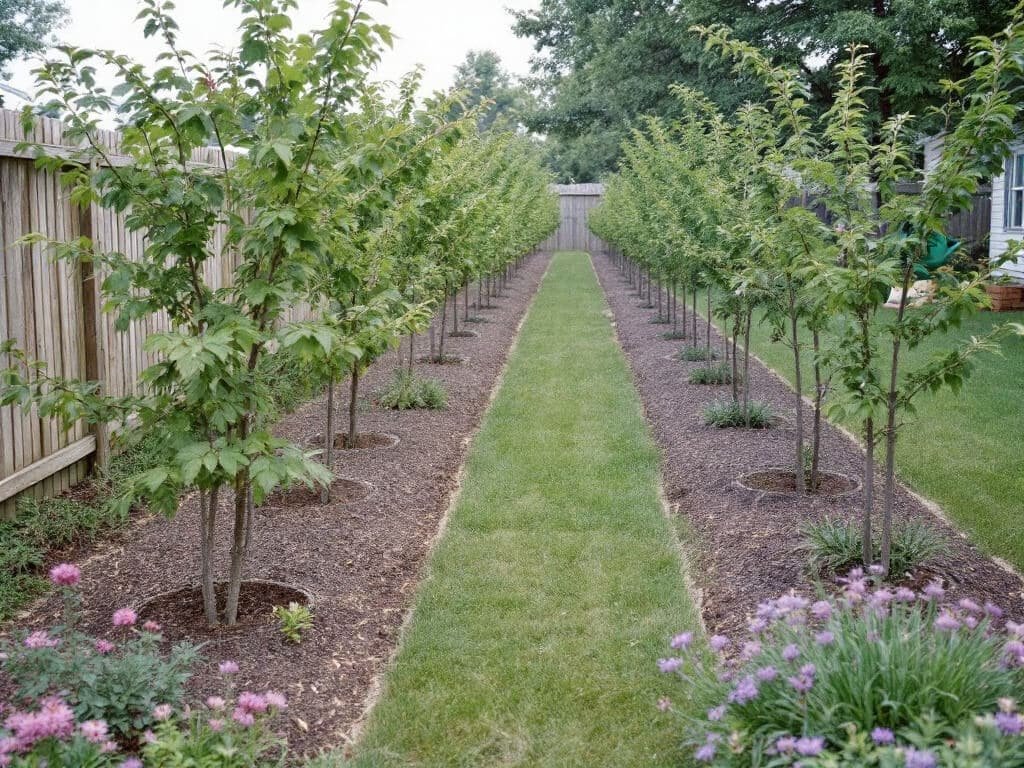
This is the one pairing with real support. Two different cultivars that bloom at the same time improve cross-pollination and may give a heavier crop. Space them about 4 feet apart in a row, with 10 to 12 feet between rows. That is a production spacing, so give vigorous cultivars more room at home.
Native flowering perennials suited to moist, well-drained soil
These add flowers for pollinators near the shrub, and a locally adapted species will handle your conditions without extra fuss. No universal spacing has been verified. Keep them clear of the elderberry’s base and follow each perennial’s mature width.
Native grasses suited to the site
A low planting of native grass can serve as a living ground cover between elderberry rows. It only works if the grass is established without crowding the shrubs. Keep it between rows, not pressed against the stems.
Low-growing groundcover suited to moist, well-drained soil
A groundcover occupies bare soil and can leave less room for weeds. No elderberry-specific spacing exists, so keep a weed-free zone around the shrub itself. Don’t let the groundcover form a dense mat over the root area.
Bird-supporting native shrubs
These add nesting structure and wildlife habitat next to elderberry’s own berries and cover. Use the mature spread of both shrubs to set the distance, because no universal companion spacing is documented. Expect birds to take some of your berries either way, since birds are on the pest list.
Pollinator-supporting shrubs that tolerate full sun or light shade
Elderberry blooms in late spring to early summer, and a shrub with its own flowering window extends what’s available to insects nearby. Separate the plants by their mature widths. No elderberry-specific spacing has been verified.
Moisture-tolerant herbaceous plants
These make sense because they like the same moist, well-drained conditions, so you don’t need a separate dry bed beside the shrub. Place them outside the elderberry’s intended spread. That keeps them out of the way of pruning and harvest.
A second wildlife-border shrub
A second shrub adds layered habitat, with elderberry supplying nesting cover and berries. Leave room for each shrub’s mature width. Don’t apply the 4-foot in-row figure to unrelated shrubs, since that number applies to elderberries only.
What not to plant with elderberry
No source reviewed here verifies any plant as chemically incompatible with elderberry. The problems below are site and management conflicts, not proven allelopathy. They’re still real.
Clear perennial weeds like bermudagrass, johnsongrass, blackberry, and poison ivy before you plant, because they are far harder to remove once the shrub is in.
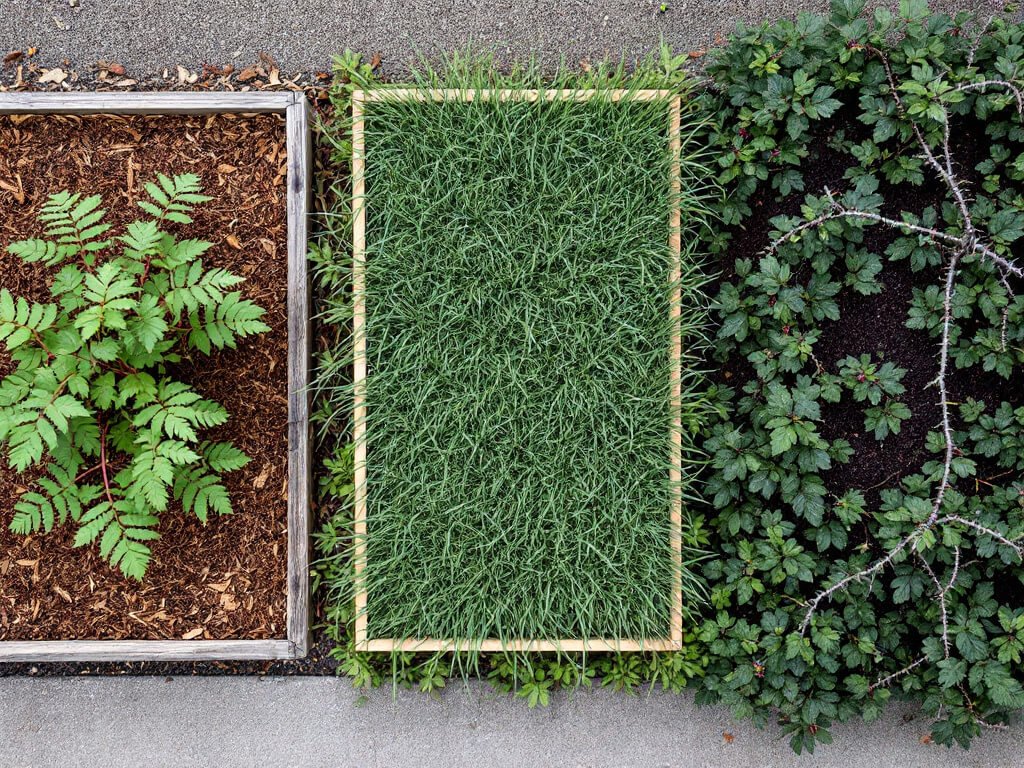
Bermudagrass
It competes for water, nutrients, and establishment space, and Missouri guidance lists it as a perennial weed to control before planting. Young elderberries lose badly to it. Dig or smother it out first.
Johnsongrass
Another persistent competitor that is difficult to manage around young elderberries. Deal with it before the shrub goes in, not after.
Blackberry
Its vigorous, thorny growth competes with elderberry and complicates access and harvest. Missouri guidance also lists blackberry among the perennial weeds to control before planting. Skip it as a neighbor.
Poison ivy
It competes for space and turns pruning and harvesting into a handling hazard. Missouri guidance recommends controlling it before establishing elderberry. Don’t leave it at the edge of the planting.
Dense, thirsty annual plantings
Heavy annual beds can pull away the consistent moisture elderberry needs for growth and fruit, especially in its first seasons. If you want annuals nearby, keep them thin and out of the root area.
Layout and spacing
In a bed, put elderberry toward the back or at the edge, where its mature height and spread won’t shade smaller plants. Use the elderberry production spacing only for elderberries, and space everything else by its own mature width. Keep a weed-free area around young shrubs.
– Elderberries in a row: about 4 feet apart.
– Rows of elderberries: 10 to 12 feet apart.
– Unrelated companions: spaced by their mature width, outside the elderberry’s spread.
– Base of the shrub: kept clear and weed-free, especially while it’s young.
– Between rows: only low, noncompetitive plantings such as grass.
Containers are a poor match for mixed pots. Elderberry becomes a large shrub and needs real root and canopy space. A large container can hold one appropriately sized elderberry, with only shallow, low-competition plants around the edge, and only if they don’t interfere with watering or pruning. No universal companion spacing has been established for that setup.
FAQ
Does elderberry need a companion plant to produce fruit?
Not a companion species, but a second elderberry cultivar helps. Two different cultivars that bloom at the same time are recommended for cross-pollination and may give a heavier crop.
Can vegetables grow near elderberry?
No specific vegetable pairing was verified by the extension sources reviewed. Vegetables are worth trying only where they tolerate the same moisture and light and don’t compete with the shrub or block access.
How far apart should elderberry plants be spaced?
Missouri production guidance recommends about 4 feet between plants within a row and 10 to 12 feet between rows. At home, also account for your cultivar’s vigor and mature spread.