
Astrantia Companion Plants for Moist, Partly Shaded Beds
Choosing astrantia companion plants is harder than it looks, because there is no verified list of “best partners” to copy. The sources available for this article document what astrantia needs (light, soil, moisture, space) but do not back up specific pairings, spacing rules, or pest-control benefits. So this article gives you the matching rules and leaves the plant names to you.
Astrantia is a clump-forming perennial that blooms from summer into autumn, depending on the cultivar and your climate. It grows in full sun to partial shade and wants evenly moist, fertile, humus-rich soil.
Any plant you put beside it has to be comfortable in the same bed. I’m not going to name plants the sources don’t support. What follows is how to vet any candidate yourself, using astrantia’s documented needs as the test.
One gap to flag: the source material did not give a reliable USDA hardiness range for astrantia, and the ratings it did give are UK-specific and don’t convert directly to USDA zones. Before you buy, check hardiness for your zone with your local extension office or a nursery that sells it regionally.
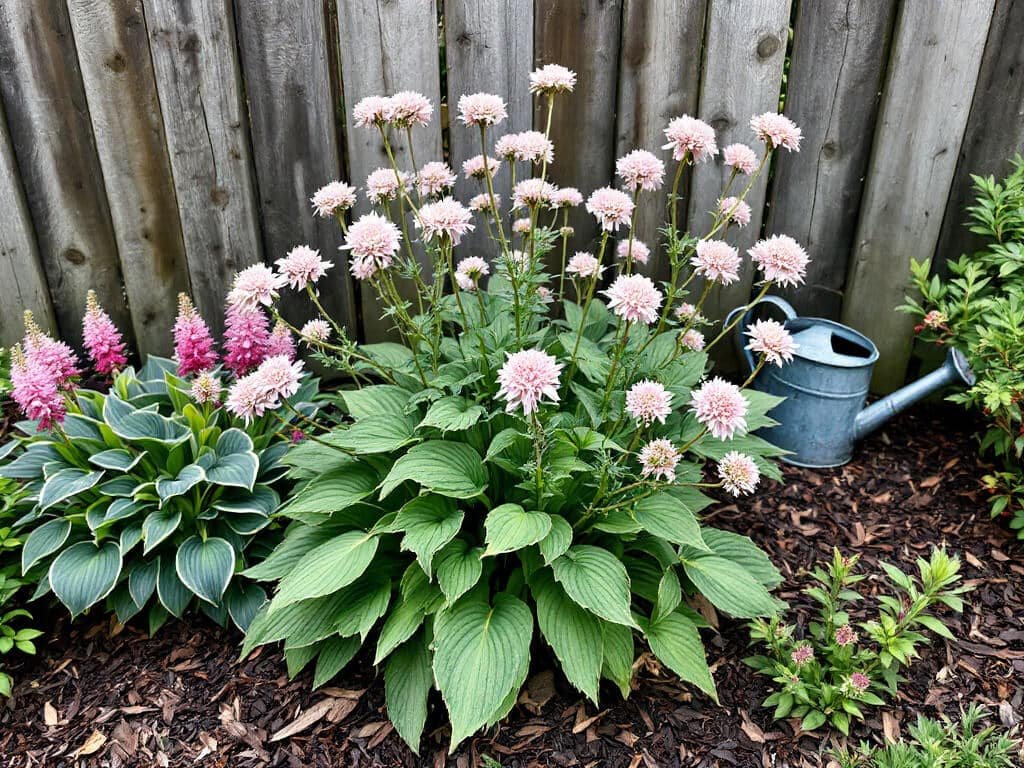
Why pairings matter for astrantia
Astrantia is fussier about moisture than many perennials. It prefers soil that stays evenly damp and rich in organic matter, and it likes drainage that is decent without being sharp. Some cultivars tolerate poorer drainage or drier soil once established, but that is a cultivar-level exception, not the baseline.
That means a neighbor with different needs can cause trouble. A plant that wants dry, lean ground would either sit in wet soil it dislikes or pull you into watering the bed unevenly. Either way, one of the two plants loses.
Size matters too. Astrantia typically reaches 1.6–3.3 feet tall and 0.3–1.6 feet wide, depending on the cultivar, and some cultivars spread more broadly. A companion that grows much taller or wider can crowd it, and a fast spreader can close in on a narrow clump.
Best companion plants for astrantia
I can’t give you a verified list of named plants here, and I’d rather say so than make one up. What I can give you is the checklist a good companion has to pass. Look up any candidate’s own requirements and compare.
Matching light
Astrantia grows in full sun to partial shade. A companion should tolerate that same range, so check its label for partial shade tolerance and for how it handles whatever sun your bed gets.
Matching soil
Astrantia wants moist, fertile, humus-rich loam or clay, and it tolerates acid, neutral, or alkaline soil. Because it isn’t picky about pH, soil acidity is rarely the deciding factor. Look for companions that do well in rich, organic soil and don’t need grit or lean ground.
Matching moisture
This is the filter that matters most. Pick plants documented to do well in evenly moist soil, so one watering routine works for the whole bed. If a plant’s tag says “drought tolerant” or “prefers dry soil,” it belongs somewhere else.
Matching size
Check the mature height and spread of any candidate against astrantia’s 1.6–3.3 feet by 0.3–1.6 feet. Choose plants that won’t smother a clump or block its light. Look up your specific astrantia cultivar too, since the range is wide.
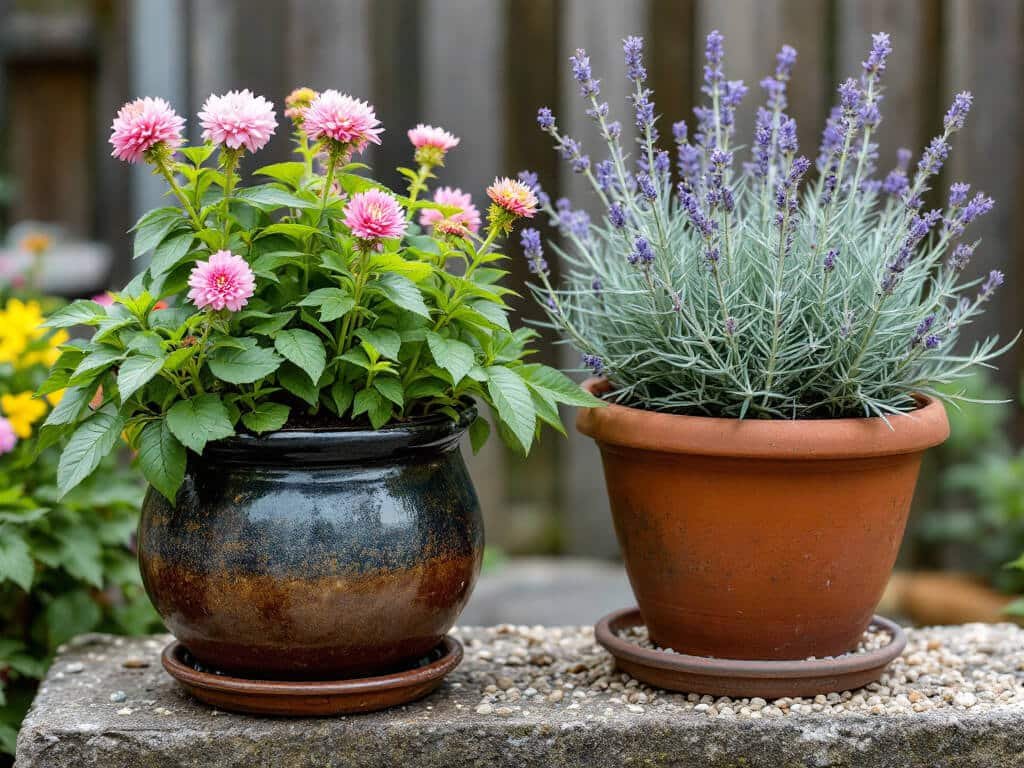
What not to plant with astrantia
The sources identified no specific plants that are bad companions for astrantia. Claims about allelopathy, shared pests or diseases, or nutrient competition could not be verified, so I won’t repeat them. Here is what the cultural facts do support.
Plants that need dry, lean soil
Astrantia prefers evenly moist, humus-rich soil. A plant that wants dry conditions has the opposite need, and sharing a bed means one of them is always in the wrong conditions.
Plants that need conditions outside astrantia’s light range
Astrantia handles full sun to partial shade. A plant that needs something outside that range, such as deep shade or conditions much hotter than your bed provides, is a poor match.
Plants that will outgrow the space
A plant that grows much larger than astrantia’s 0.3–1.6 foot spread can crowd it out, and some astrantia cultivars spread more broadly themselves. Always confirm the mature spread of every plant before it goes in. Don’t pair astrantia with any plant until you’ve confirmed that plant’s own light, soil, and water needs match.
Layout and spacing
I can’t give you an astrantia-specific spacing rule, because the sources don’t contain one. Use each plant’s own label or extension guidance for spacing, and plan around the mature spread of every plant in the bed.
– Group plants by water need first, so the whole bed can share one watering routine.
– Place astrantia where it gets partial shade or gentle sun.
– Work compost into the bed before planting, since astrantia wants fertile, humus-rich soil.
– Leave room for the mature width of your cultivar, which can be up to 1.6 feet, plus whatever the neighbor’s label recommends.
– Keep taller plants where they won’t shade astrantia more than partial shade allows.
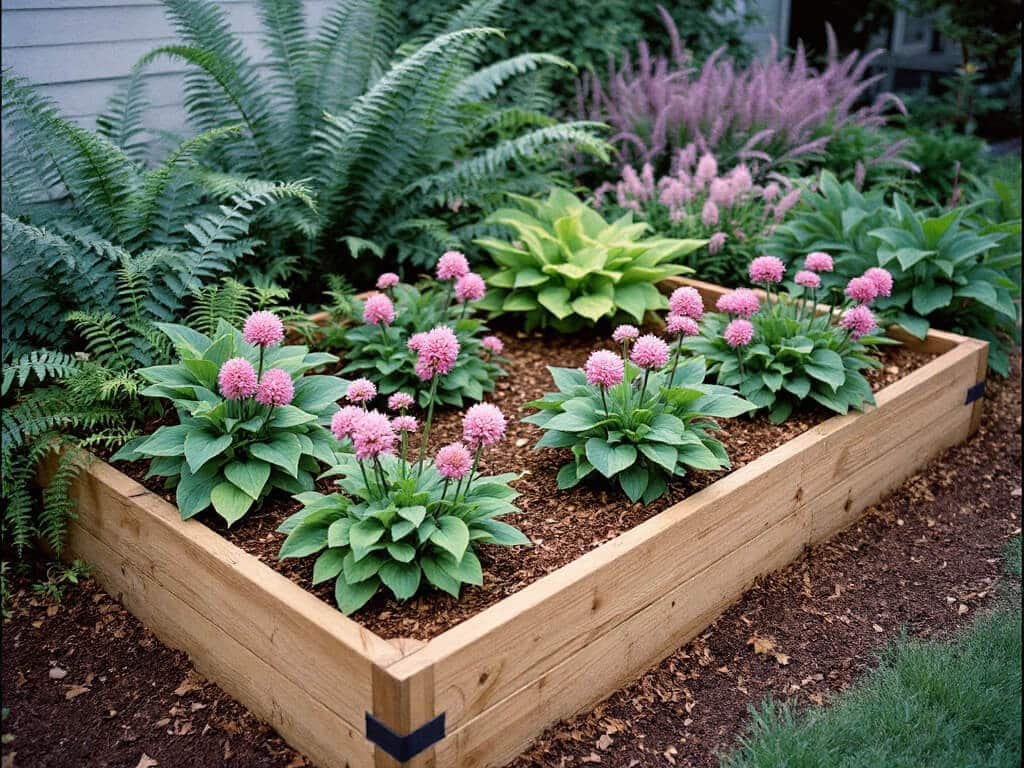
FAQ
What conditions should astrantia companions share?
Choose plants that tolerate full sun to partial shade and moist, fertile, humus-rich soil, because those are astrantia’s documented preferred conditions.
Does astrantia need a special companion plant to prevent pests?
No. Nothing in the available sources supports a specific pest-repelling companion for astrantia, so treat any such claim as unproven.
Can astrantia grow in containers with other plants?
Probably, but the sources don’t verify a mixed-container recipe or spacing formula. Use a container large enough for your cultivar’s mature spread, and combine it only with plants documented to tolerate the same light, soil, and moisture.