
Picking alocasia companion plants is mostly a matter of matching water and light, then leaving the plant enough room. Alocasia is a tropical perennial that grows from a corm or rhizome. It is typically hardy only in USDA Zones 10a–12b, so in Zones 5–9 you are growing it in a container or lifting it before frost.
That changes the question a little. You are usually not building a permanent bed around it. You are deciding what can share a pot, a patio corner, or a summer border with a plant that wants steady moisture and partial shade.
Extension research has not identified any plant that is inherently incompatible with alocasia, and it has not verified alocasia-specific spacing either. What follows is built on the plant’s own needs, plus what extension sources say about each candidate companion.
Why pairings matter for alocasia
Alocasia wants moist, well-drained, humus-rich soil that runs slightly acidic to neutral. It does best in dappled light to partial shade, roughly 2–6 hours of direct sun, with protection from harsh afternoon sun and wind. Water regularly during the growing season, then cut back during winter dormancy.
A neighbor that wants dry soil or full sun will fight that setup. So will one that grows big enough to take over the light, water, and airflow around the alocasia.
Airflow matters because spider mites are the main pest. Aphids and mealybugs can show up too, and overwatering can lead to root rot and leaf spots. Crowded plantings make all of that harder to spot and manage.
Then there is the pest-repelling claim you will see on companion lists. Extension sources describe companion planting results as variable, and for many proposed pairings the evidence is thin. Marigolds are especially limited. Don’t count on any herb or flower to keep spider mites off your alocasia; check the leaves yourself.
Best companion plants for alocasia
None of these has verified alocasia-specific spacing. For all of them, follow the plant’s labeled mature spread and leave gaps for airflow. Alocasia itself can need anywhere from a pot’s worth of room to 6–12 feet of planting space depending on species and cultivar, so check your variety’s tag first.
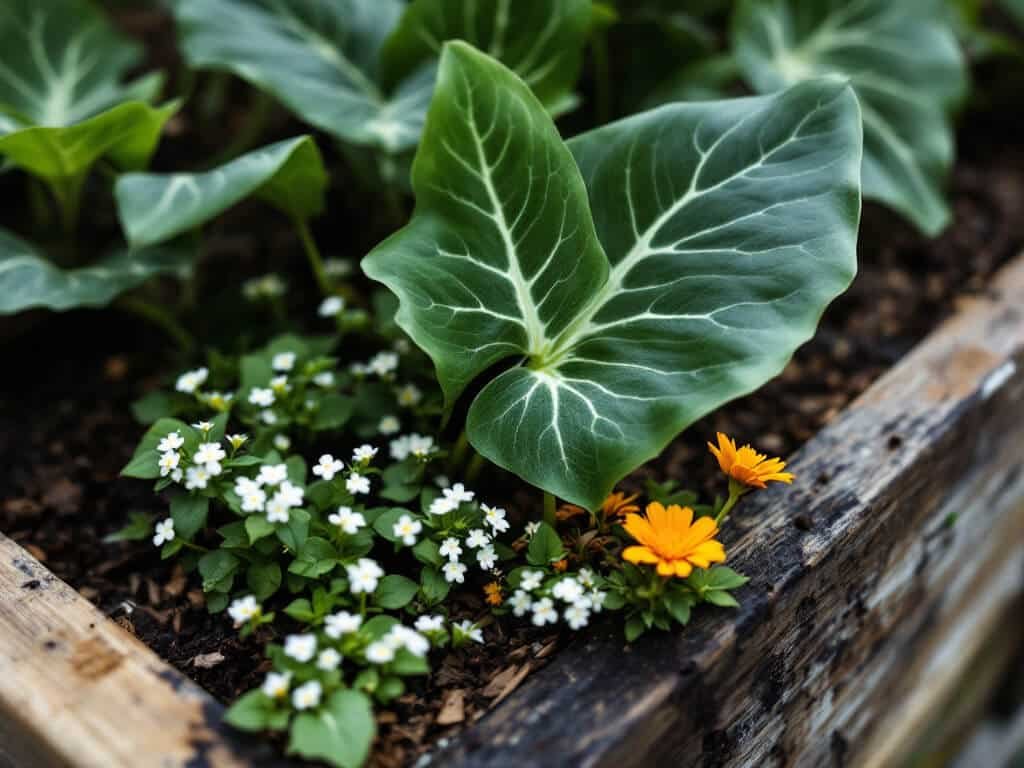
Sweet alyssum
Its small flowers offer nectar and habitat for hoverflies, and hoverfly larvae may help reduce aphids. That is a general benefit, not a tested alocasia result. Use it only where the alocasia’s shade does not stop it from flowering, which usually means the brighter edge of the planting. Give it room for airflow and its labeled mature spread.
Dill
Flowering dill provides nectar for beneficial predatory insects. Treat that as a general biodiversity benefit, not proven pest control for alocasia. Let it flower, keep it at the brighter perimeter, and follow the seed packet for spacing.
Coriander (cilantro)
Cilantro flowers can support beneficial predators and parasitoids, but only once the plant is allowed to flower. If you keep cutting it for the kitchen, you won’t get that benefit. Spacing is not alocasia-specific, so follow the label and don’t crowd the alocasia’s leaves.
Calendula
Flowering calendula adds nectar and habitat for beneficial insects. The claim that it reliably repels pests from alocasia is not established, so plant it for the insects and the color, not as a spider mite fix. Use the label’s mature spread for spacing.
French marigold (Tagetes patula)
Marigolds may add to biodiversity, but that is about the limit of what the research supports here. The nematode benefit is best documented when marigolds are grown as a cover crop and worked into the soil, not when they sit next to another plant. Grow them because you like them, and space them by the label.
Nasturtium
Nasturtium can act as a trap crop for some insect pests in documented vegetable systems. Nobody has verified an alocasia-specific pest-control result. It is a reasonable flowering filler at the edge of a bed, spaced by its label.
Basil
Aromatic plants like basil have shown potential to repel some aphids and whiteflies in general gardening. That has not been demonstrated for alocasia. Basil is a fine container neighbor if the light works, but keep expectations modest and give it the spacing on its label.
Rosemary
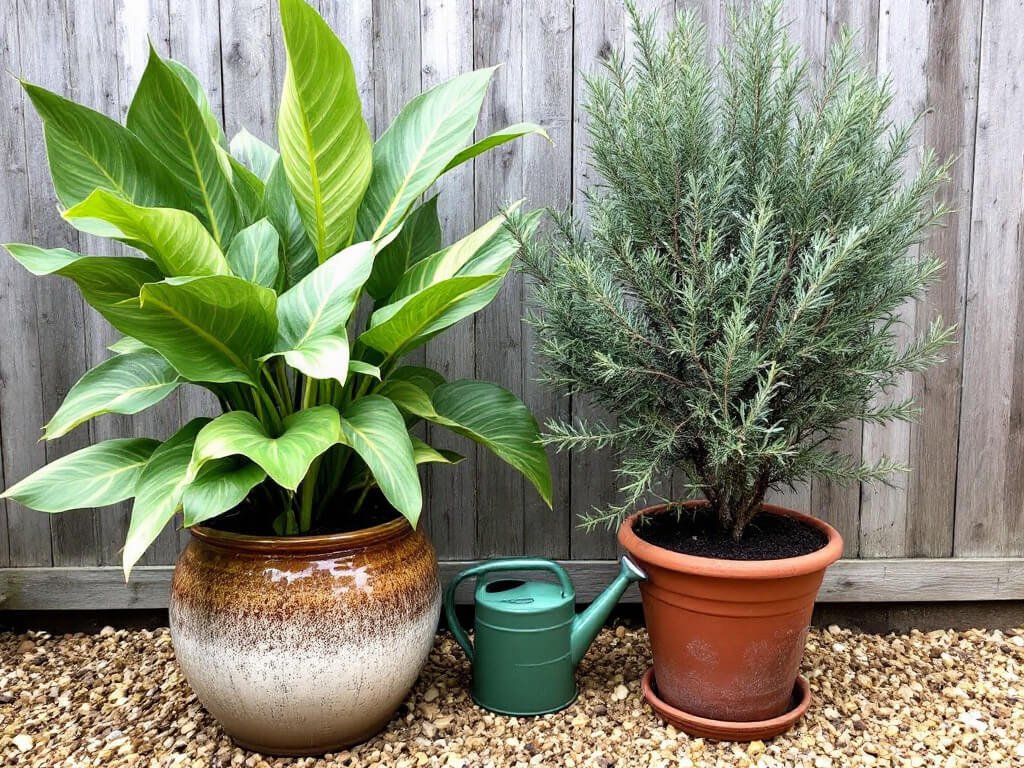
Rosemary’s aromatic foliage may repel some aphids and whiteflies. The catch is that it prefers drier, sunnier conditions than alocasia. Put it at the bright, dry edge of a bed, not in the same wet shade. Spacing is not alocasia-specific, so follow the label.
Beans
Legumes can add nitrogen through biological fixation, especially when you return the residues to the soil. Beans need more sun than alocasia and should not be used to shade it heavily. Grow them where they get light, and follow the label for spacing.
Clovers
Clover used as a green mulch can improve soil nitrogen, texture, and water retention. A living clover understory, though, may compete with alocasia for water and space. If you try it, keep it thin and away from the alocasia’s crown, and follow the label for spacing.
What not to plant with alocasia
Extension research has not named a plant that is flat-out incompatible with alocasia. The combinations below are poor choices because the growing needs don’t match or because of likely competition.
Rosemary in the same wet container
Rosemary likes drier conditions. Alocasia likes consistently moist, well-drained soil. Put in one pot, one of them will be unhappy, and with alocasia’s root rot risk from overwatering, you can’t just split the difference. Use separate containers, or put the rosemary at a much drier bed edge.
Dense clover understory
A thick living carpet of clover can compete with alocasia for water, nutrients, and root space. If you want clover for its soil benefits, keep it patchy. Don’t let it close in around the alocasia.
Large, aggressive plants placed directly against alocasia
Dense plantings reduce the water, nutrients, and sunlight available to their neighbors, and they restrict airflow. Against an alocasia, that also hides the undersides of the leaves where you would check for spider mites. Keep big growers a full mature spread away.
Plants that share a serious pest or disease problem with alocasia
No specific pairing was verified in the available extension sources, so I won’t name one. Avoid choosing companions based only on general companion-plant lists, and if a neighbor plant develops spider mites, treat it as a source of trouble for the alocasia too.
Layout and spacing
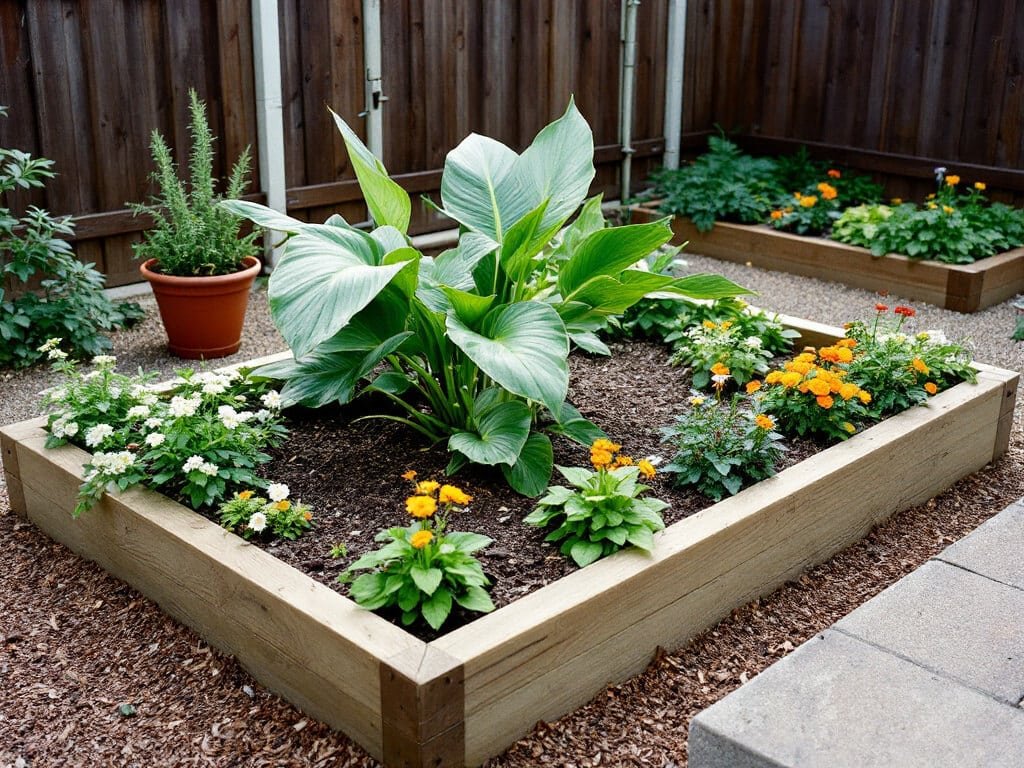
Treat the alocasia as the focal foliage plant in a moist, sheltered, partly shaded spot, and push the flowering companions out toward the brighter perimeter. Since no reliable alocasia-specific spacing figures exist, rely on each plant’s labeled mature spread and leave yourself room to look at the leaves.
Center: alocasia, in a container or a sheltered bed, out of afternoon sun and wind.
Brighter perimeter: sweet alyssum, dill, cilantro, calendula, or nasturtium, where they can get enough light to flower.
Separate and drier: rosemary in its own pot or at a dry bed edge, not in the alocasia’s soil.
Full-sun zone: beans, placed so they don’t shade the alocasia.
Gaps: enough space between plants for airflow and for checking leaves for spider mites.
Zones 5–9: keep the alocasia in a pot you can move, so it can come indoors or be lifted before frost.
FAQ
Does alocasia need companion plants?
No. Alocasia grows fine alone when it gets partial shade, consistent moisture, fertile well-drained soil, and protection from wind. Companion planting is optional and does not replace monitoring or proper care.
Can herbs repel alocasia pests?
Some aromatic plants may repel certain aphids or whiteflies in general gardening. The available sources do not verify that basil, rosemary, or any other herb reliably protects alocasia. Spider mites remain a known alocasia pest, so check the plant directly.
What grows well with alocasia in a container?
Plants with similar moisture and light needs are the safest choices, and the container still needs room for mature growth and good drainage. Avoid pairing alocasia with dry-soil plants like rosemary unless they go in separate containers or distinct soil zones.