
Almond Tree Companion Plants: What to Grow Nearby
Almond tree companion plants are a harder call than most garden guides admit, because the university and extension sources on almonds don’t verify any specific plant pairing. No herb, flower, or ground cover has documented evidence behind it as an almond companion, and none has a verified spacing number.
That doesn’t leave you with nothing to decide. The research does tell you what the tree needs (full sun, deep and fast-draining soil, deep infrequent watering, good airflow) and what causes trouble (wet crowns, crowded canopies, shared pests). Use those as your filter, and treat any plant you add as a guest, not a helper.
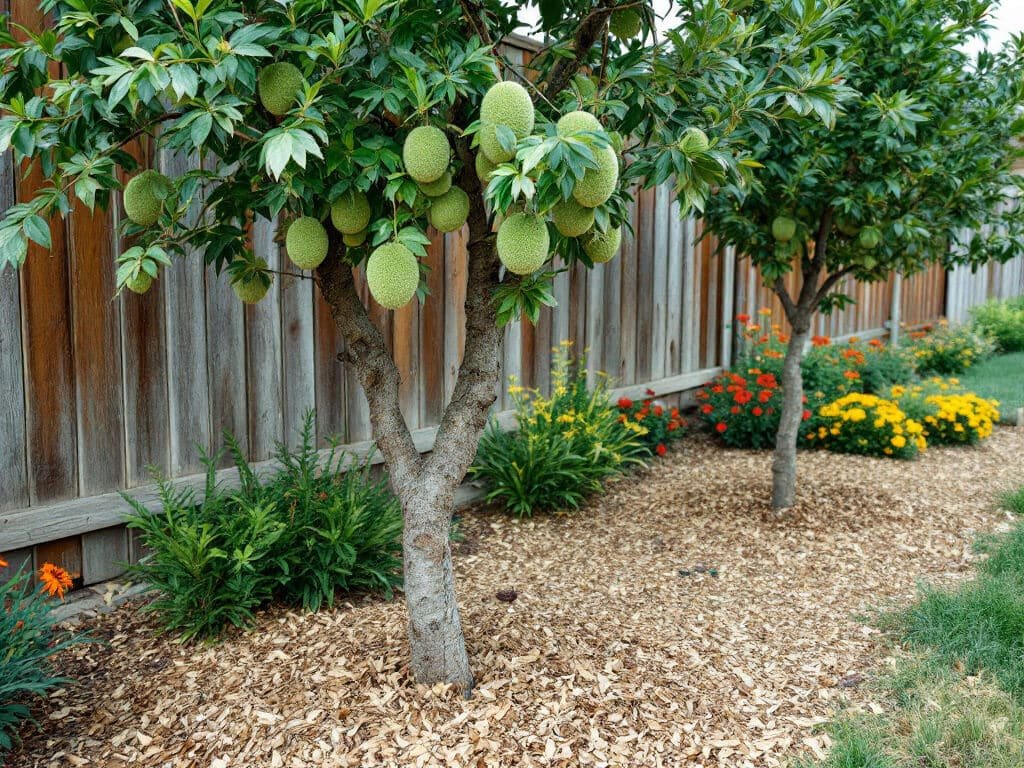
Why pairings matter for almond tree
An almond is a deciduous nut tree that blooms early in spring and ripens nuts from August through October, when the hulls split. It is commonly listed for zones 5 to 9, but reliable nuts depend on the right cultivar, enough winter chilling, a long warm season, and low frost risk during bloom. In much of that range, the tree is already working against the odds, so anything planted nearby shouldn’t add to its problems.
The biggest risks from neighbors are water and airflow. Almonds want deep, infrequent watering and soil that never sits wet. Thirsty or moisture-loving plants underneath pull the irrigation plan in the wrong direction, and dense growth around the canopy makes brown rot, shot hole, and leaf spot harder to manage.
One myth is worth clearing up. You will see claims that a particular herb or flower beside an almond will reliably repel its pests. The extension sources list almond pests (aphids, mites, scale, borers, peach twig borer, plum curculio) and how to manage them, but none of them confirms that companion planting controls any of these. Keep scouting the tree and use the management steps your local extension office recommends.
Best companion plants for almond tree
I’m not going to hand you a list of “proven” almond companions, because there isn’t one to hand over. What the sources do support is short.
A compatible almond cultivar that blooms at the same time
Almonds are insect-pollinated, and the sources point to compatible cultivars or pollenizer varieties that bloom together as the basis for fruit set. That makes another almond the one nearby planting with actual backing. Check with the nursery about whether your cultivar needs a pollenizer and which varieties match its bloom window. Standard trees may need about 24 to 30 feet between them, depending on rootstock and soil.
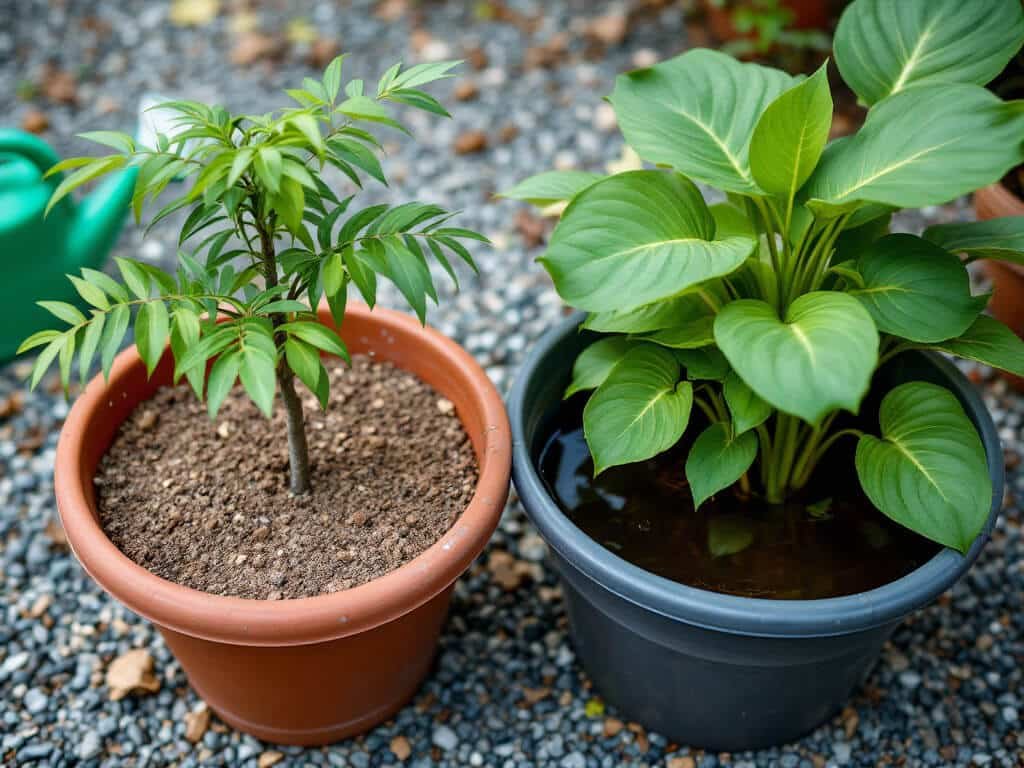
Low, non-invasive plants outside the root-collar area
If you want something growing under or near the tree, keep it low, keep it away from the trunk, and keep it out of the way of irrigation and nut cleanup. General habitat plantings such as native perennials can support insects, but no almond-specific benefit has been verified for any of them. A flower bed near an almond won’t improve pollination on its own, since bloom timing and cultivar compatibility matter far more.
Size each plant by its own mature spread, not by an almond rule. Whatever you pick should be happy in full sun and well-drained soil, and shouldn’t need regular watering that reaches the tree’s crown.
What not to plant with almond tree
No single species was documented as an incompatible neighbor through allelopathy or similar effects. The problems come from conditions and habits, and a few plant types create them reliably.
Plants that need constantly wet soil
Don’t plant anything near an almond that needs constantly wet soil. Almonds need deep, well-drained soil, and waterlogged ground raises the risk of crown and root rots. Bog plants, water-hungry vegetables on a daily drip, and anything that needs a soaker running near the trunk all work against the tree.
Heavy feeders packed under the canopy
Dense plantings of hungry plants compete with the tree for water and nutrients. Almonds need deep watering and regular nitrogen management, and a crowded understory makes both harder to do properly. Leave the area under the canopy lean.
Plants that keep the trunk area wet or weedy
A continually damp trunk base is a crown rot concern, and UC guidance recommends controlling weeds near the trunk. Thick ground covers right at the base do the opposite of what you want, holding moisture against the bark and hiding problems. Keep a clear ring around the trunk.
Peaches, apricots, and other stone fruits
Peaches and apricots share a number of almond pest and disease problems. Planting them together isn’t a disease-avoidance strategy, and it gives shared pests more to feed on. Grow them if you want them, but not as a protective mix.
Nitrogen-fixing plants under the tree
No source verifies planting nitrogen fixers directly beneath almond trees, and excess nitrogen can contribute to poor fruiting or too much leafy growth. Since nitrogen is something you manage on purpose with almonds, I’d skip adding a plant that supplies it on its own schedule.
Anything that blocks airflow
Brown rot, shot hole, scab, and anthracnose all do better in still, damp canopies. Tall or bushy plants crowding the tree’s edge make those diseases harder to manage. Keep space open around and below the branches so air moves through.
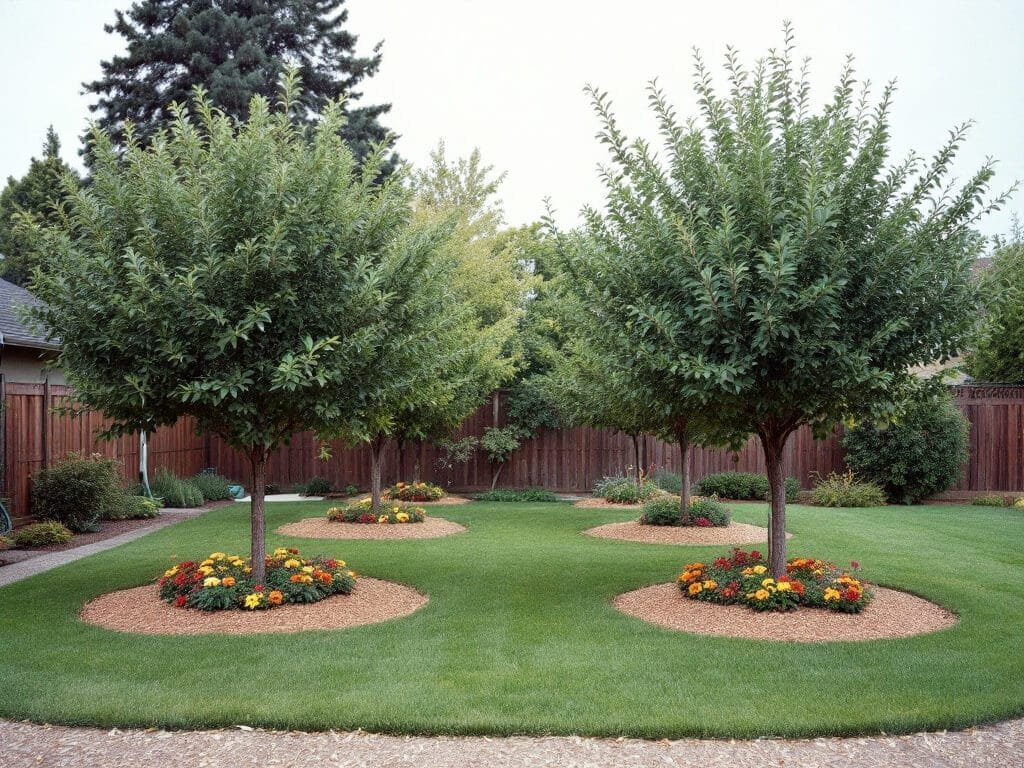
Layout and spacing
Treat the almond as the main plant and fit everything else around it. Since no almond-specific companion spacing exists, use the tree’s needs and each neighbor’s mature size to set distances.
– Leave the trunk base open, with a clear, weed-controlled ring around it.
– Plant only in well-drained soil, and avoid low spots where water collects.
– Keep any understory planting outside the main root-collar area.
– Choose low, non-invasive plants, and space each one by its own mature spread.
– Keep paths open for irrigation, fallen-nut cleanup, and checking leaves and branches for pests and disease.
– Space standard almond trees about 24 to 30 feet apart, adjusting for rootstock and soil.
FAQ
What should I plant under an almond tree?
No specific companion plant was verified as giving an almond-specific benefit. Choose plants that tolerate the site while preserving drainage, access, airflow, and the tree’s irrigation needs.
Can flowers improve almond pollination?
Almonds are insect-pollinated, but the sources point to compatible cultivars or pollenizer varieties that bloom together as the basis for fruit set, not to a flower planted beneath the tree.
How far should plants be kept from an almond tree?
A universal companion distance wasn’t verified. Keep the trunk area clear, avoid dense planting that competes for water or nutrients, and size each plant by its mature spread. Standard almond trees themselves may need roughly 24 to 30 feet between them, depending on rootstock and soil.