
Alchemilla Mollis Companion Plants for Garden Beds
Picking alchemilla mollis companion plants comes down to two things: matching the water and sun it likes, and leaving room for a mound that reaches roughly 12 to 18 inches tall and wide. Get those two right and most of the classic pairings work without fuss. Get them wrong and you end up with a soggy crown or a crowded, mildew-prone clump.
This guide covers ten plants that pair well with it, four kinds of plants to keep away from it, and a simple layout for borders and containers. It is aimed at zones 5 through 9, so the zone note below matters.
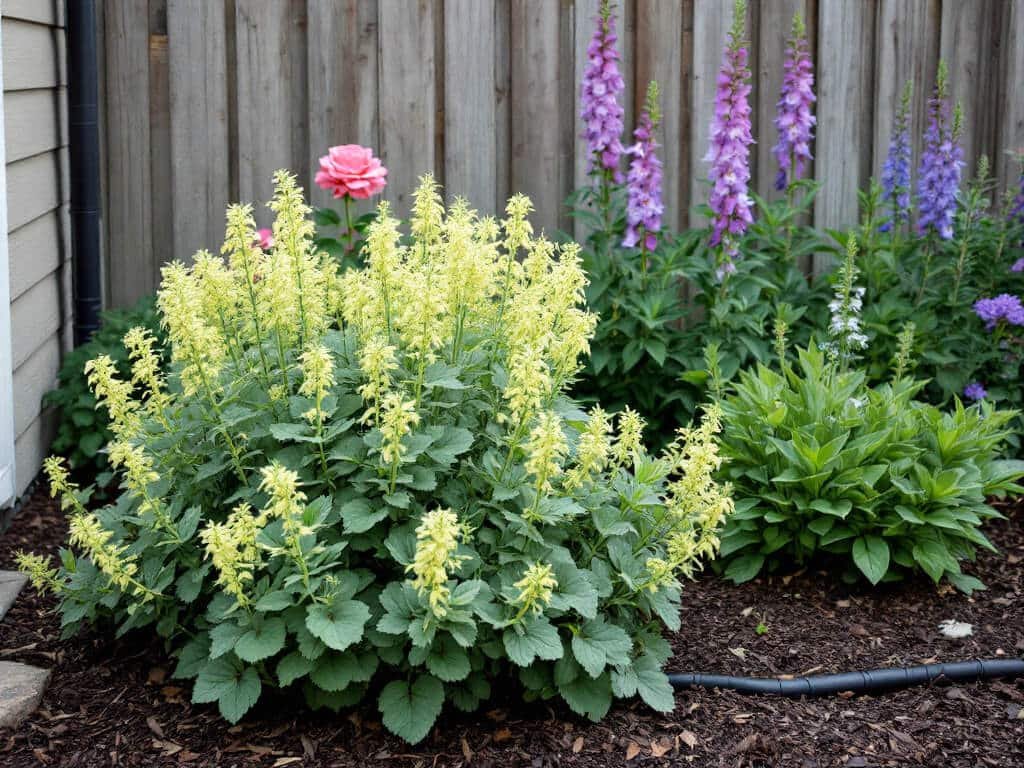
Why pairings matter for Alchemilla mollis
Alchemilla mollis (lady’s mantle) is an herbaceous perennial. It dies back in autumn and regrows in spring, and it sends up chartreuse flower sprays in mid-summer, though the timing shifts with your climate. It grows in full sun to partial shade and wants evenly moist, well-drained soil. It is commonly listed for zones 3 to 8, so if you garden in zone 9, check how it performs locally before you plant a whole border of it.
Water is the main thing to match. Alchemilla dislikes both long dry spells and waterlogged ground, and standing wet soil raises the risk of disease. Any neighbor you choose has to be happy with the same irrigation, or one of the two plants will suffer.
Pests are rarely the issue. Alchemilla is generally pest-free, and slugs and snails usually leave mature foliage alone. That has led to a lot of talk about what the plant does for its neighbors, and I’d treat most of it with caution. No extension source reviewed offers evidence that alchemilla repels pests, fixes nitrogen, or improves the growth of particular companions. Plant it next to other things because they look good together and share conditions, not because of a supposed chemical benefit.
Best companion plants for Alchemilla mollis
The pairings below fall into three groups: shrubs and cut flowers, tall plants that go behind the mound, and low or edge plants. Spacing is specific only where the research gives a number. Elsewhere, follow the label for the companion’s mature size and keep the alchemilla’s 12 to 18 inch footprint in mind.
Roses
This is the classic pairing. The chartreuse flowers contrast with rose colors, and the alchemilla mound helps hide bare lower stems on the shrub. Keep alchemilla about 12 inches from the base of shrub roses where space allows, and check the mature spread of both plants so neither crowds the other.
Sweet peas
Alchemilla is an established partner for cut-flower plantings. It gives sweet peas a low layer of contrasting foliage and flowers at their feet. There is no verified universal spacing, so follow the sweet-pea cultivar’s spacing and keep alchemilla at least 12 inches from its base.
Lavender
The purple and chartreuse combination is a good one, and both plants are happy in sun. The catch is drainage, which I’ll come back to in the FAQ. Use this pairing only where the soil drains well, and allow at least 18 inches between plants unless your lavender is a smaller selection.
Hardy geraniums
Low, spreading geraniums sit in the same border layer as alchemilla and add contrasting flowers. There is no alchemilla-specific spacing, so give each plant its labeled mature spread. Planting them shoulder to shoulder will not make a tidier edge, just a more crowded one.
Foxgloves
Foxgloves send tall flower spires up above alchemilla’s rounded mound, which gives the bed some vertical contrast. Place them behind the alchemilla, not in front. No alchemilla-specific spacing is verified, so avoid burying either plant in a crowded clump.
Delphiniums
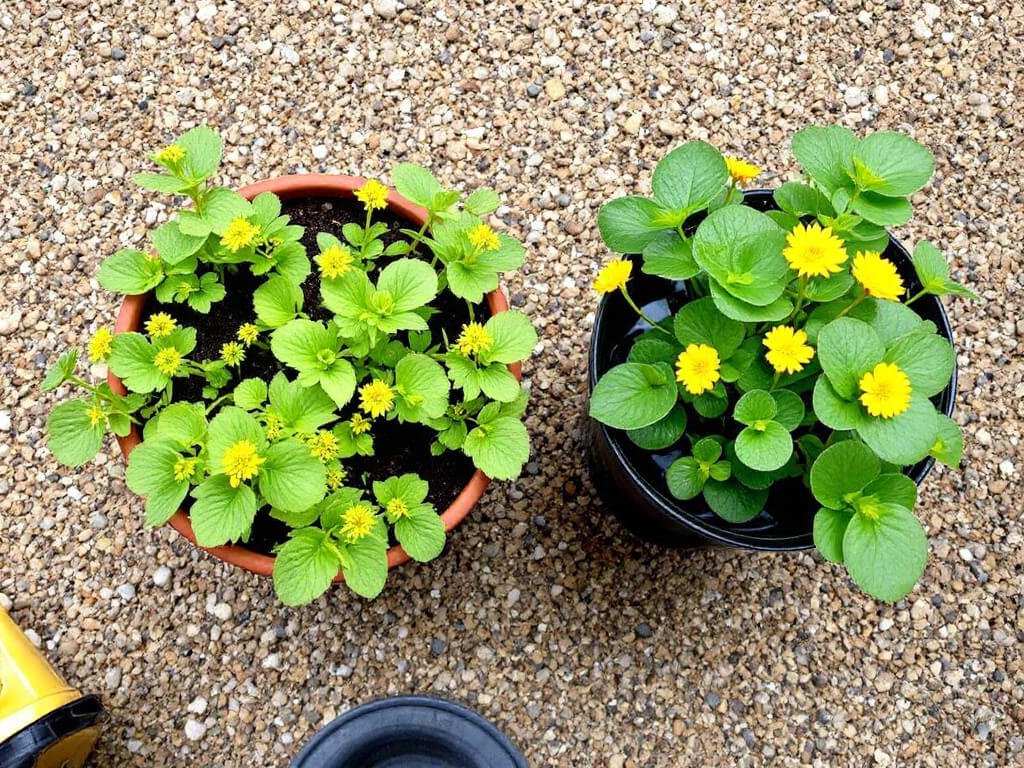
Delphiniums do the same job as foxgloves: tall stems above a low foliage mound. Use the spacing on the delphinium’s label and position it behind the alchemilla. Tall plants in front of it would hide the flowers you planted it for.
Alliums
Tall, upright allium flower heads contrast with the rounded alchemilla foliage, and the two use different vertical layers of the bed. Follow the bulb-spacing guidance for your allium cultivar. No alchemilla-specific number is verified.
Chives
Chives are alliums too, and their flowers can attract beneficial insects. Their upright foliage contrasts with alchemilla’s broad leaves. Use the labeled chive spacing and leave room for the alchemilla mound to fill out.
Thyme
Thyme is a low, aromatic plant that suits drier, sunnier edge space. That is exactly why it is a poor fit for the same consistently moist pocket as alchemilla. If your drainage differs across the bed, put thyme in the drier spot and keep the two apart, following the thyme label for its own spacing.
Marigolds (Tagetes spp.)
Marigolds offer nectar and pollen for beneficial insects. Don’t count on them to control pests more broadly, because that claim is not supported. Follow the marigold cultivar’s label for spacing and keep enough airflow between plants.
What not to plant with Alchemilla mollis
The bad companions here are defined by conditions and habit, not by any verified chemical incompatibility. The most common mistake is putting alchemilla beside a plant with very different water needs and trying to serve both with one irrigation schedule.
Plants that need permanently wet soil
Alchemilla wants moist but free-draining soil. If it shares a waterlogged spot with a bog-type plant, the crown and roots are at greater risk of problems. Keep these plants in separate beds.
Plants that need very dry, sharply drained soil
The opposite problem is just as real. A plant that wants sharp drainage and little water will not do well on the schedule alchemilla needs, and alchemilla will sulk if you water to suit the other plant. A single watering routine cannot work for both.
Highly invasive or rapidly spreading plants
Aggressive spreaders can overwhelm a 12 to 18 inch mound and compete with it for light, water, and nutrients. The conflict is about growth habit, not poison or chemistry. If a plant is known for running through a bed, give it its own space.
Crowded, mildew-prone plantings
Dense growth and poor airflow raise the odds of fungal trouble. Avoid pairing alchemilla with plants that need unusually open spacing in a cramped bed. If the bed is already tight, edit the planting before you add anything else.
Layout and spacing
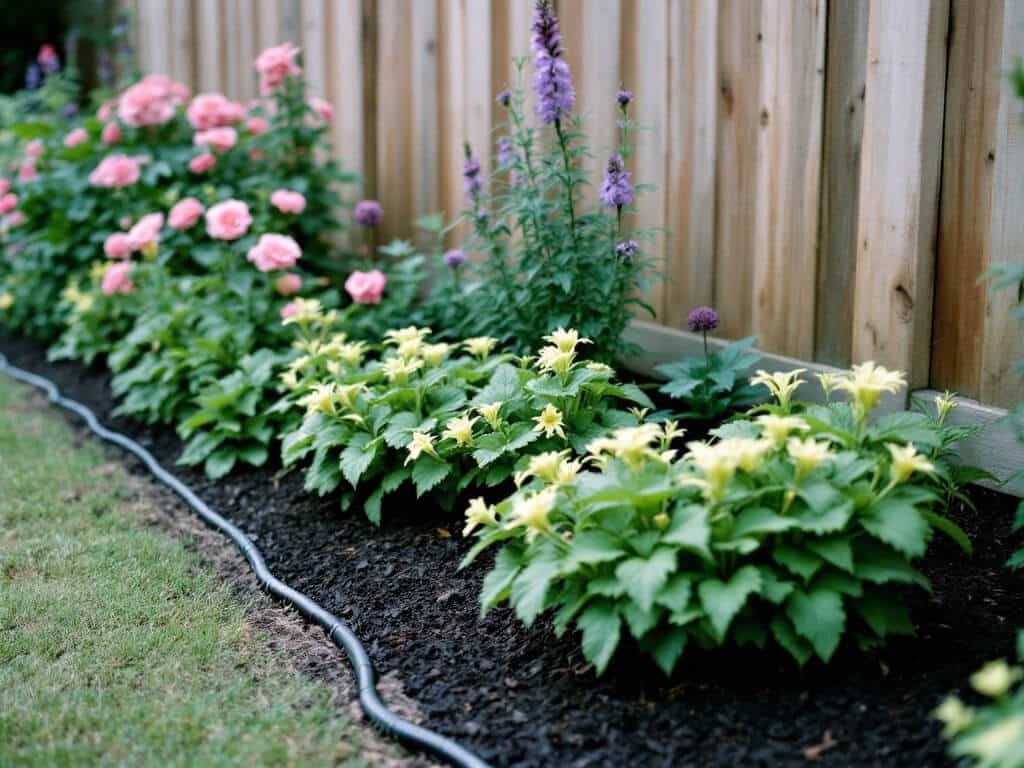
Use alchemilla as a front or middle-border mound, with taller plants behind it so its foliage and flowers stay visible. Give every plant its full labeled spread, and treat alchemilla as roughly 12 to 18 inches wide when you mark out the bed.
Front of the border: alchemilla, with hardy geraniums nearby, each at its labeled spread.
Middle of the border: alchemilla about 12 inches from shrub-rose bases, or at least 12 inches from sweet peas.
Behind the mound: roses, foxgloves, delphiniums, or alliums, placed behind rather than in front of the alchemilla.
Sunny, drier edge: lavender (at least 18 inches from alchemilla unless it is a smaller selection) and thyme, only where drainage suits them.
Containers: combine alchemilla only with plants that tolerate an evenly moist, well-drained mix. Put drier-soil plants in their own pot.
FAQ
Can roses and Alchemilla mollis grow together?
Yes. The RHS identifies alchemilla as a classic companion to roses, where its chartreuse flowers and mound complement rose growth. Allow enough room for the mature size of both plants.
Does Alchemilla mollis repel slugs?
The RHS reports that slugs and snails generally avoid alchemilla’s downy leaves. That is not the same as proof that the plant keeps slugs away from its neighbors, so don’t rely on it to protect other plantings.
Can Alchemilla mollis grow with lavender?
They can share a sunny border, but lavender needs sharply drained conditions while alchemilla prefers moist, free-draining soil. Plant them together only where drainage and irrigation can meet both plants’ needs. Otherwise use separate locations or containers.