
Choosing liriope companion plants comes down to matching light, water, and drainage, because that is the only pairing logic the research actually supports. Liriope is a clumping perennial that grows in USDA zones 4a to 10b depending on cultivar, so it fits zones 5 to 9 without trouble. It is easygoing about sun and soil, which gives you a lot of options.
You will see lists online claiming certain plants protect liriope from pests or feed it nutrients. Extension sources say companion planting is not a proven science, and the usual pairings work because the plants like the same conditions, not because of any liriope-specific trial. So treat the list below as a set of plants that share a site comfortably, and not as a pest-control plan.
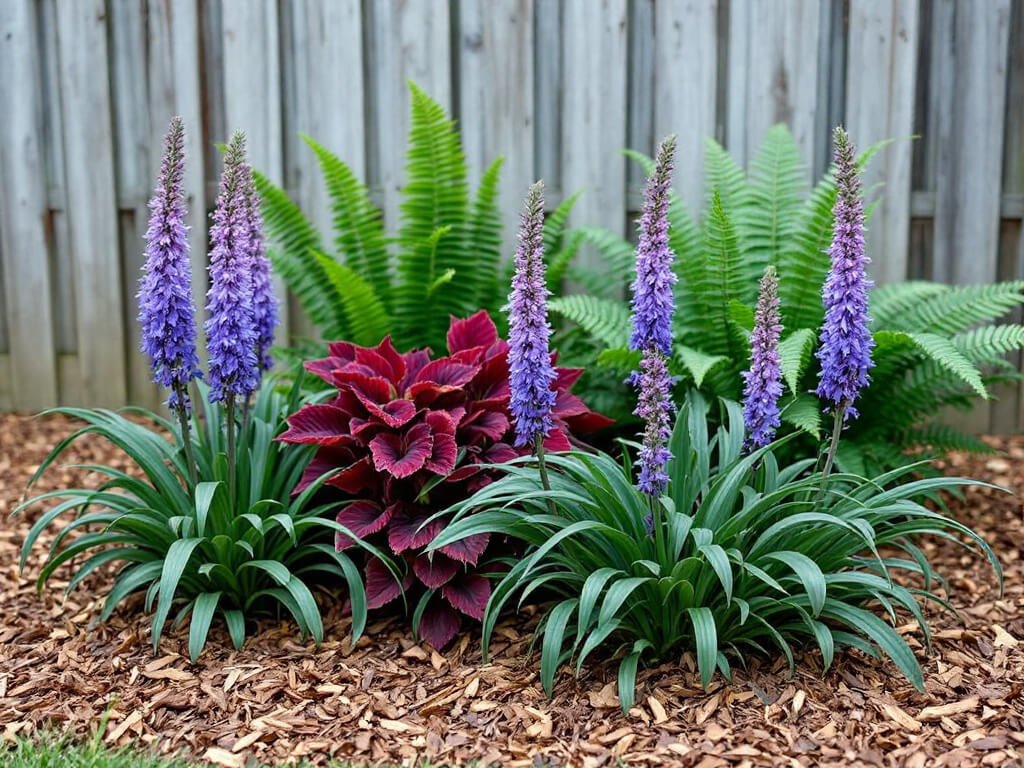
Why pairings matter for liriope
Liriope grows in full sun to partial shade and tolerates deep shade, though it grows slower and flowers less there. It wants moist, well-drained soil that runs acidic to neutral, and it handles sand or clay as long as water drains. Established plants tolerate drought. What they do not tolerate is soil that stays wet.
That last point drives most of your decisions. Liriope is prone to leaf, crown, and root rots, and wet feet make them worse. A companion that needs constant moisture can set up a problem for the liriope next to it, so the water needs of the neighbors matter more than their looks.
The other pests to know are liriope scale, fern scale, anthracnose, slugs, and snails. Mixing plants does not prevent any of these, and variety is no substitute for cleaning up debris and managing the site. If a nearby plant is visibly diseased, don’t put it next to your liriope.
Mature size varies a lot by species and cultivar, from under 12 inches to about 3 feet of space. Check the label on the liriope you bought before you plan around it.
Best companion plants for liriope
Spacing note for every plant below: Clemson recommends planting liriope about 1 foot from other liriope. For the companion itself, follow its label for mature width so nothing crowds by the second or third season.
Ferns
Ferns suit the same moist, well-drained partial-shade spots liriope does, and the fine fronds contrast with liriope’s strappy leaves. Leave the fern’s labeled mature-width space between it and the liriope. Keep the liriope about 1 foot from other liriope.
Heuchera
Heuchera is a foliage perennial that likes partial shade and moist, well-drained soil, the same conditions as liriope. It gives you leaf color at the front of a bed where liriope provides the green. Follow the heuchera label for its mature spread.
Begonias
Begonias add seasonal color in shaded areas with moist, well-drained soil. Because they are replaced or lifted each year, they are an easy way to change the look of a bed without disturbing the liriope. Space them by the cultivar label.
Impatiens
Impatiens work in shade or partial shade where the soil stays moist but drains well. They give a long run of seasonal color around liriope clumps that are mostly green outside the summer bloom window. Use the annual’s label spacing.
Japanese forest grass (Hakonechloa macra)
This is a texture plant for partial shade and evenly moist, well-drained soil. Its arching blades read differently from liriope’s upright clumps, so the two don’t blur together. Use the grass’s mature-width spacing and keep liriope about 1 foot from other liriope.
Sweet flag ‘Ogon’ (Acorus gramineus ‘Ogon’)
‘Ogon’ offers yellow-green foliage that stands out against liriope’s darker green. It prefers moist, well-drained partial shade, which lines up with liriope’s needs. Allow the sweet flag’s labeled spread, and keep the soil well drained so the liriope crowns stay safe.
Blue fescue (Festuca glauca)
Blue fescue is the pick for a sunnier site that drains quickly. Its blue-gray foliage is a clear contrast with liriope, and the two share a preference for good drainage. Follow the fescue cultivar’s mature-width spacing.
Black mondo grass (Ophiopogon planiscapus ‘Nigrescens’)
Black mondo grass supplies dark, nearly black foliage and can share well-drained sites with liriope. It makes the most sense where you want contrast rather than more green. Allow its labeled spread, and keep liriope about 1 foot from other liriope.
Marigold (Tagetes spp.)
Marigolds add seasonal color and have documented nematode-repellent compounds. That benefit is not specific to protecting liriope, so plant them for the color and call anything else a bonus. Follow the marigold label for spacing.
Spring bulbs
Spring bulbs can fill the open space between liriope clumps and give you height and color before the liriope bloom. Leave the bulb foliage in place until it finishes its cycle, since the liriope will cover the gap. Follow each bulb’s recommended planting depth and spacing, and keep liriope about 1 foot from other liriope.
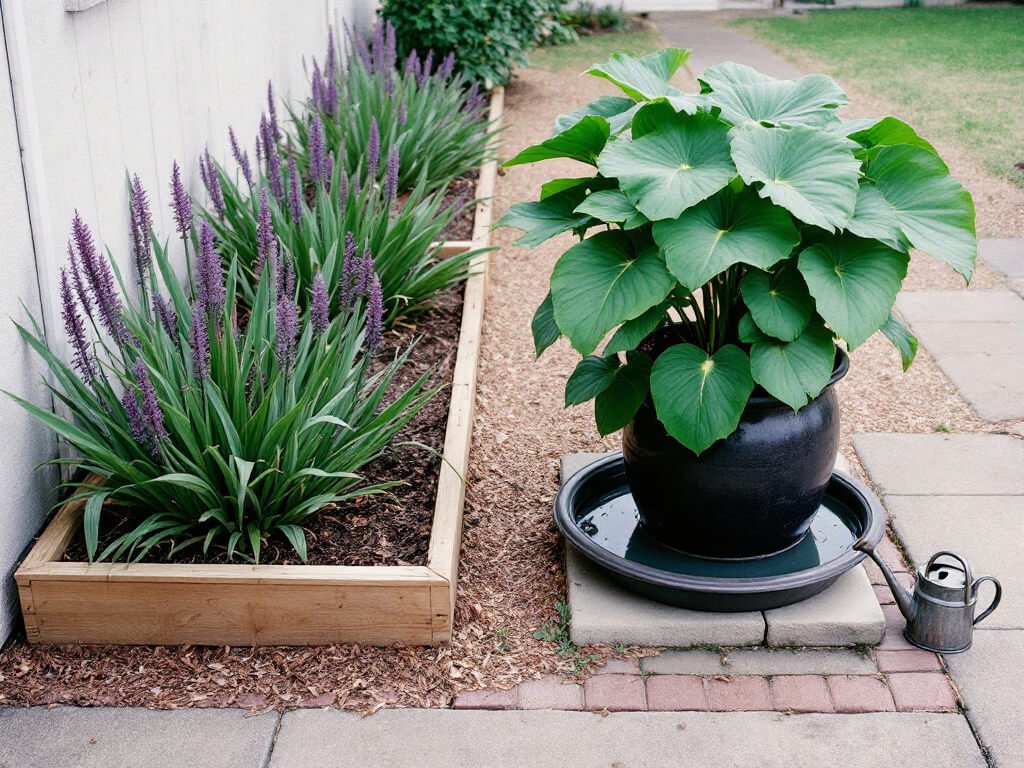
What not to plant with liriope
No reputable source in the research names a plant that is a proven bad companion for liriope. The items below are based on general principles and on liriope’s own needs, not on liriope-specific trials.
Black walnut (Juglans spp.)
Black walnut releases juglone, which can suppress many nearby plants. Do not plant liriope beneath or near black walnut unless you have verified that the site is tolerable. If you already have liriope there and it is doing fine, that is your answer for that spot only.
Plants that need boggy or constantly saturated soil
These conflict directly with liriope’s need for good drainage and its vulnerability to crown and root rots. Keep them in a separate, wetter part of the yard. Don’t try to split the difference in one bed.
Plants that need very dry soil beside frequently watered liriope
Mismatched water needs stress one planting or the other. If you irrigate regularly for the liriope, the dry-soil plant suffers, and the reverse is also true. Group plants by how much water they need.
Dense plantings of unrelated ground covers
Packing several ground covers together can mean competition for water and nutrients and less airflow. Poor airflow matters with liriope because of its leaf diseases. Keep each plant at its labeled mature spacing.
Plants under heavy pest or disease pressure
Companion planting does not automatically prevent pests or disease. Don’t put a visibly diseased plant next to liriope and expect the mix to sort it out. Remove or treat the problem plant first.
Layout and spacing
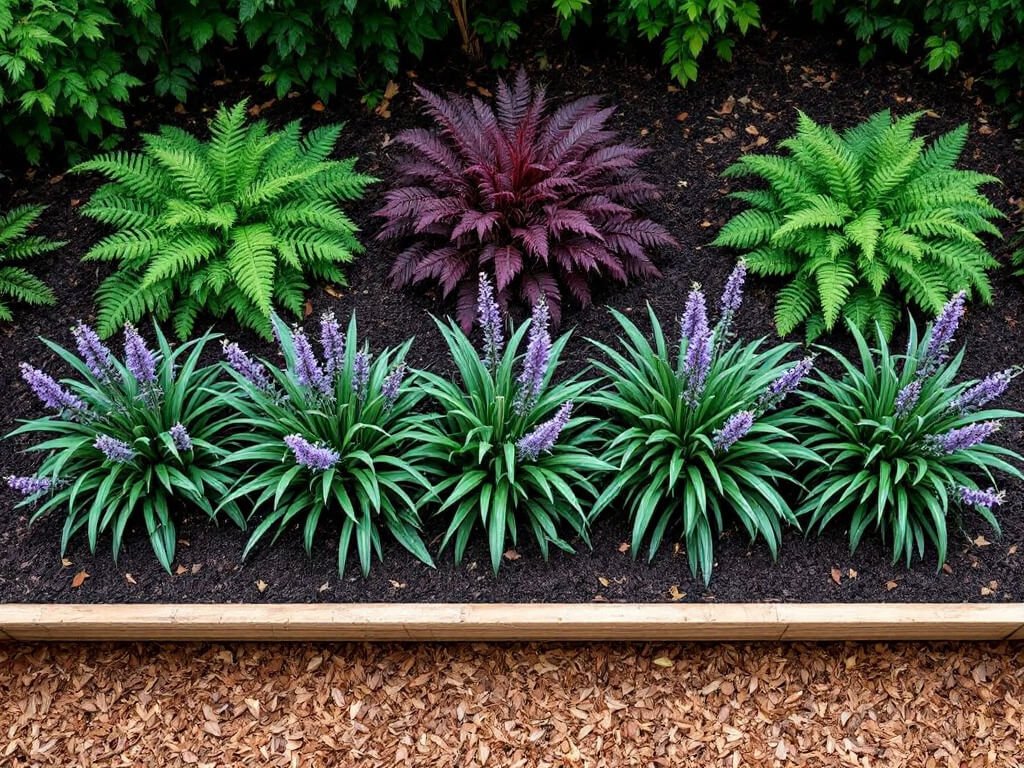
Use liriope as a low edging or a repeating clump along the front of a bed, then put taller or broader companions behind it according to their mature size. Match the plants to the light, and don’t bury the liriope crowns when you mulch or plant around them.
Sunny, well-drained bed: liriope with blue fescue or marigolds.
Partial shade: liriope with ferns, heuchera, impatiens, begonias, or sweet flag.
Spacing: about 1 foot between liriope plants, and each companion at its own label spacing.
Drainage: keep every planting well drained, and keep the crowns at soil level.
Containers: pair liriope only with plants that tolerate the same light and moisture. Use a pot with a drainage hole and a free-draining mix, and leave room for each plant’s mature spread rather than using one spacing rule.
FAQ
Can liriope grow with hostas?
They can share similar partial-shade settings, but no liriope-specific companion benefit was verified. Pair them only where drainage is good and give each its labeled mature width, since liriope is vulnerable to root and crown rots in wet soil.
How far apart should liriope be planted from companion plants?
Clemson recommends about 1 foot between liriope plants when you plant them as a group. In a mixed planting, keep that spacing between the liriope and use each companion’s label spacing so mature plants don’t crowd.
Does liriope repel pests from nearby plants?
No verified extension evidence establishes liriope as a pest-repellent companion. Extension sources describe companion planting as incompletely proven, so be cautious about claims that say otherwise.