
Choosing Texas sage companion plants comes down to three things the shrub won’t compromise on: full sun, fast drainage, and very little water. Pick neighbors that need the same conditions and the bed mostly takes care of itself. Pick one that wants regular watering and you’ve created a problem for the shrub.
Texas sage (Leucophyllum frutescens, also called cenizo or silverleaf) is an evergreen shrub with silvery foliage. It flowers in pink, purple, or lavender, on and off from summer into fall, often after rain. This article covers which plants share its needs, which kinds of plants to keep away from it, and how to lay out the bed.
Why pairings matter for Texas sage
Texas sage wants at least 6 hours of direct sun a day, low water once established, and well-drained soil. Rocky or sandy ground suits it. Wet or poorly drained soil raises its disease risk, and excess moisture can contribute to cotton root rot.
So the real job of a companion is to leave those conditions alone. A neighbor that needs frequent irrigation will keep the soil wetter than the sage wants. A neighbor that shares the sage’s habits lets you water sparingly and drain fast across the whole bed.
I’d also be skeptical of claims that one plant “protects” another. The research I’m working from found no verified list of plants that repel pests of Texas sage, and no shared-pest or allelopathy problems to avoid. Texas sage generally has no serious insect or disease problems anyway. Choose companions for matching conditions and for how they look next to the shrub, not for pest control.
One note on hardiness: Texas sage is generally listed for zones 8–11, though Texas Tech lists zones 7–9. If you garden toward the cooler end of that range, check the specific cultivar before you plan a whole bed around it.
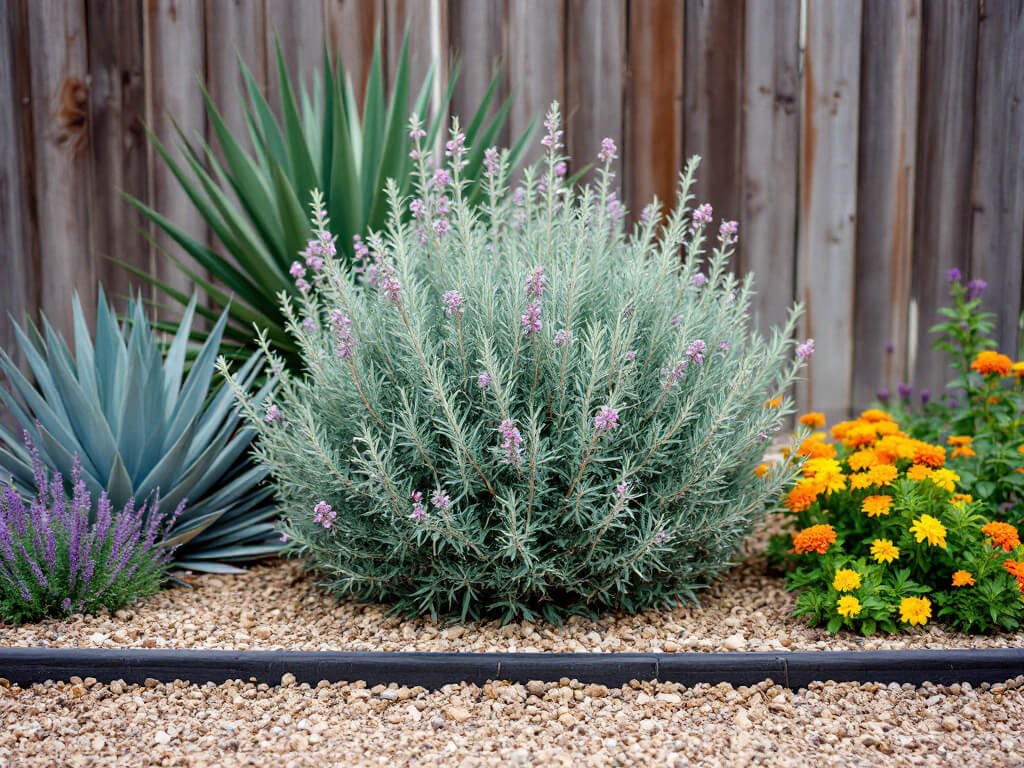
Best companion plants for Texas sage
Every plant below is reported as a drought-tolerant, full-sun match. None of the sources I reviewed gave a universal spacing figure, so for each one, use the mature width listed on the plant tag.
Agave
Agave matches Texas sage’s full-sun, low-water conditions and adds a bold succulent shape against the sage’s soft, silvery foliage. Space it by the mature spread of the agave you buy, since species vary.
Yucca
Yucca likes the same sunny, low-water setting and gives you upright, architectural foliage to contrast with the rounded shrub. Space it by its mature spread. It works well as a structural plant toward the back or sides of the planting.
Lantana
Lantana is a compatible drought-tolerant companion that adds low, long-season color in front of the shrub. Leave room based on the mature spread of the variety you choose. Putting it in the foreground keeps it from being shaded by the sage.
Ornamental grasses
Grasses add texture and movement and fit a water-wise design. Space each one by its mature spread. The three below are the specific grasses named in the research.
Blue grama grass (Bouteloua gracilis)
Blue grama is named as a suitable ornamental grass for contrast in texture next to Texas sage. Set it by the mature width of the cultivar you buy.
Muhly grass (Muhlenbergia spp.)
Muhly grass is a drought-tolerant, textural companion. Since Muhlenbergia covers several species, go by the mature width of the particular species or cultivar on the tag.
Fountain grass (Pennisetum spp.)
Fountain grass gives a contrasting grass form in a sunny, water-wise planting. Space it by the mature width of the species or cultivar, which differs from one to the next.
Aloe
Aloe fits the low-water, full-sun logic behind most Texas sage pairings. Space it by the mature spread of the aloe you choose.
Lavender (Lavandula spp.)
Lavender is reported as a drought-tolerant, full-sun pairing for water-wise plantings. Space it by its mature width. This is one of the easier combinations to picture, with lavender’s flowers beside the sage’s silver leaves.
Rock rose (Cistus spp.)
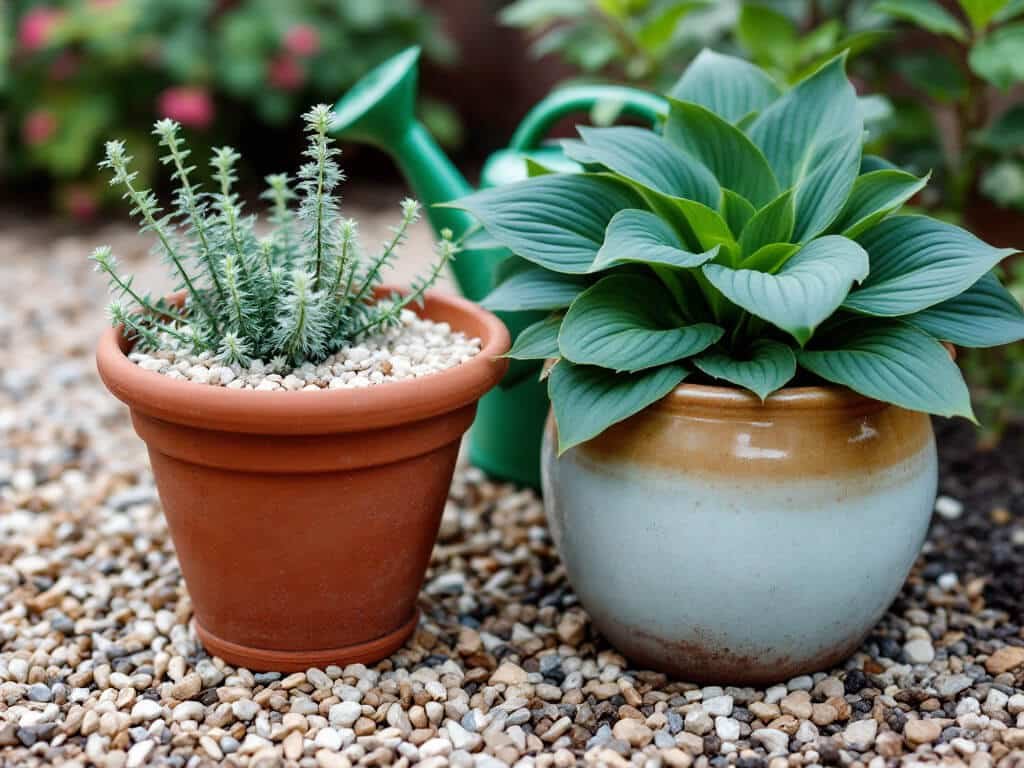
Rock rose is a drought-tolerant companion that can fill a lower layer around the shrub. Give it room based on the mature width of the selected plant, and keep it from crowding the sage’s base.
Salvia (Salvia spp.)
Salvias create a compatible full-sun, drought-tolerant planting theme. The sources don’t establish any pest-control or nutrient benefit, so plant them because they match the conditions, not to protect the sage. Space by the mature spread of the salvia you choose.
What not to plant with Texas sage
The sources didn’t name any specific plant as a verified bad companion for Texas sage. What they do support is a set of conditions to avoid, so judge a candidate by what it needs, not by its name.
Plants that need consistently moist soil
These conflict with Texas sage’s low water needs and its requirement for excellent drainage. If a plant’s tag says “keep evenly moist,” it belongs in a different bed. Watering it will keep the sage’s roots wetter than they want to be.
Plants suited to wet or poorly drained beds
Wet, poorly drained soil is the main thing that goes wrong with Texas sage, because it raises the risk of cotton root rot. Bog-type or rain-garden plants belong somewhere else. If a spot stays soggy after rain, it’s the wrong spot for the shrub.
Heavy-feeding plants
Texas sage does best with low fertility, and NC State advises not fertilizing it. A plant that needs regular feeding pulls you toward fertilizing the whole bed. Skip those, or plant them well away.
Plants that need partial shade
Texas sage performs best in full sun, and a shade-lover asks for the opposite site. Putting one beside the sage means one of them is in the wrong light. Keep shade plants in a shadier part of the yard.
Layout and spacing
Start with the shrub’s site, then build around it. Put Texas sage where it gets full sun and water drains quickly, and group companions that share its low-water needs. Don’t mix in anything that needs frequent irrigation. Mature size matters for planning, because Texas sage is commonly 3–5 feet tall and wide, though NC State reports plants reaching 6–12 feet tall and equally wide.
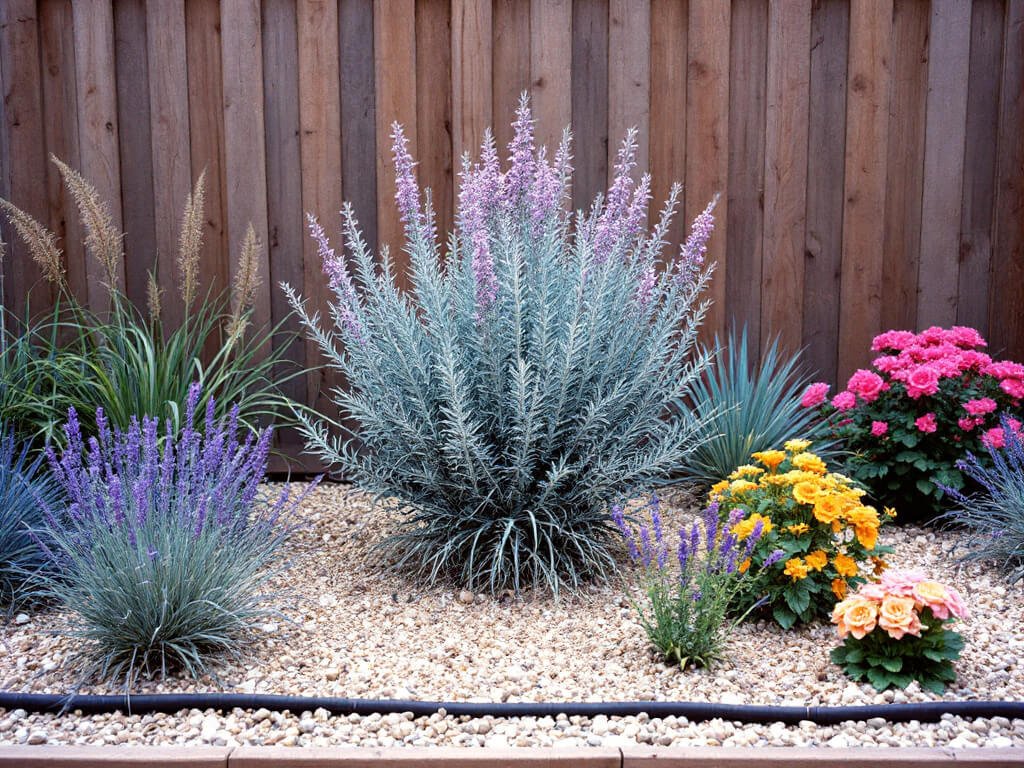
Back or sides: taller structural plants such as yucca or agave.
Foreground: grasses (blue grama, muhly, fountain grass), lavender, lantana, or rock rose, each in its own position.
Anywhere in the bed: aloe and salvia, placed by their mature size.
Spacing: go by the mature width of both the sage and each companion. No universal spacing figure was verified, so read the tag and leave room to avoid crowding.
FAQ
Can Texas sage grow with lavender?
Yes. Lavender and Texas sage are both reported as drought-tolerant, full-sun plants suited to water-wise landscapes.
What plants have similar water needs to Texas sage?
Agave, yucca, lantana, ornamental grasses, aloe, lavender, and rock rose are reported as drought-tolerant pairing options.
How much space should be left between Texas sage and its companions?
Use the mature width of both plants to set the spacing and avoid crowding. The sources don’t give one distance that applies to every Texas sage cultivar and companion plant.