
Canna Lily Companion Plants for Sunny, Moist Beds
Choosing canna lily companion plants comes down to three things: sun, steady moisture, and room. Cannas grow from rhizomes, tall cultivars reach about 6 feet, and they want full sun and water that doesn’t quit in dry weather. Any neighbor you pick has to live with all of that.
The good news is that the list of plants that fit is long. Tropical-looking foliage plants, moisture lovers, and a few woody shrubs all work if you give them the right spot. This guide covers ten that do, four kinds of plants to keep away, and how to lay it all out.
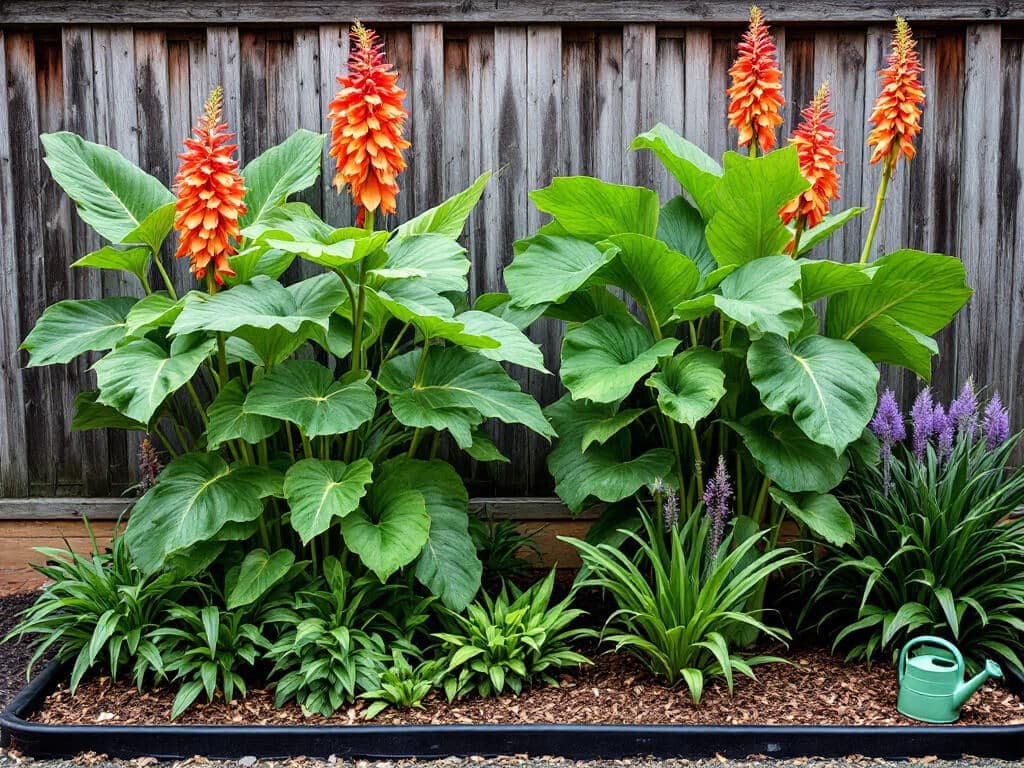
Why pairings matter for canna lily
Cannas are thirsty. They do best in fertile, moisture-retentive soil that still drains, and they need extra water during dry spells. A neighbor that sulks in wet soil will lose that argument every time you water the canna properly.
Light is the second conflict. Cannas flower and grow best in strong sun, though they tolerate partial shade. A tall canna also throws shade on whatever sits close behind it, so short plants on the sunny side of a canna can end up in the dark.
Space is the third. Plan on roughly 30 inches between cannas, and keep other plants outside the zone where the rhizomes will spread. In colder zones you’ll be lifting those rhizomes anyway, so a neighbor planted tight against them makes that job harder.
Last, pests. Cannas can pick up aphids, slugs, snails, spider mites, caterpillars, rust, and viruses. No companion plant has been verified to repel any of these on cannas, so treat pairings as a design and watering decision, not pest control. Crowding does make foliage stay wet longer and disease harder to manage, so leave air gaps.
Best companion plants for canna lily
Every plant below either shares the canna’s appetite for warmth and water or fills a layer the canna doesn’t. For each one, check the mature size on the plant tag and space to that, not to how it looks in the pot.
Elephant ear
Elephant ear likes the same warm, moist conditions as cannas and adds oversized leaves in a different shape. Use the mature spacing listed for your particular cultivar. Leave enough room that the leaves don’t overlap heavily.
Sedge
Sedge gives you fine, grassy foliage against the canna’s broad leaves, and it suits moist planting areas. Space it by the labeled mature spread. Don’t wedge it up against the canna rhizome.
Florida shield fern
This fern brings shade-tolerant, fernlike texture to a consistently moist site. It is the one plant on this list that shouldn’t sit in the canna’s full-sun footprint. Put it where it gets the shade it needs, such as the lee side of a tall canna or another shaded edge of the bed.
Calla lily
Calla lily takes moist soil and adds a very different flower shape from the canna’s. Space it by the calla cultivar’s mature width. Keep the canna’s 30-inch planting allowance intact, so the calla goes beside that circle, not inside it.
Viburnum
Viburnum is a woody shrub, so it works as a structural layer behind or beside cannas instead of competing in the same low layer. Follow its mature-size spacing. Keep it from shading the canna too much, which means siting it on the side where its shadow won’t fall across the canna.
Liriope
Liriope makes a low edging layer beneath taller canna foliage and hides the bare lower stems. Use the mature spread of the liriope you buy. Keep the edging outside the area the canna rhizomes will expand into.
Hibiscus
Hibiscus is a heat-loving flowering plant that suits a sunny, moisture-retentive bed, so its needs line up with the canna’s. Follow the cultivar’s mature width. Don’t put it where it will shade shorter cannas.
Marsh marigold
Marsh marigold suits very moist or boglike spots and adds low seasonal color. Reserve it for consistently wet soil, and use its own recommended spacing. If your canna bed drains well, this isn’t the right pick.
Banana
Banana gives a tropical foliage effect and can take the tall background position behind the cannas. Allow room for its eventual spread. Protect both plants from strong wind, since both have big leaves that catch it.
Bergenia
Bergenia has broad, low foliage that contrasts with the upright canna and sits well at the front of a border. Use cultivar-specific spacing. It isn’t a full-sun, high-moisture match for cannas, so don’t treat it as one. It works as a front-edge plant, not a twin.
What not to plant with canna lily
I haven’t found a reliable canna-specific claim that cannas poison their neighbors, so I wouldn’t blame chemistry for any of this. The problems below are about water, light, space, and air.
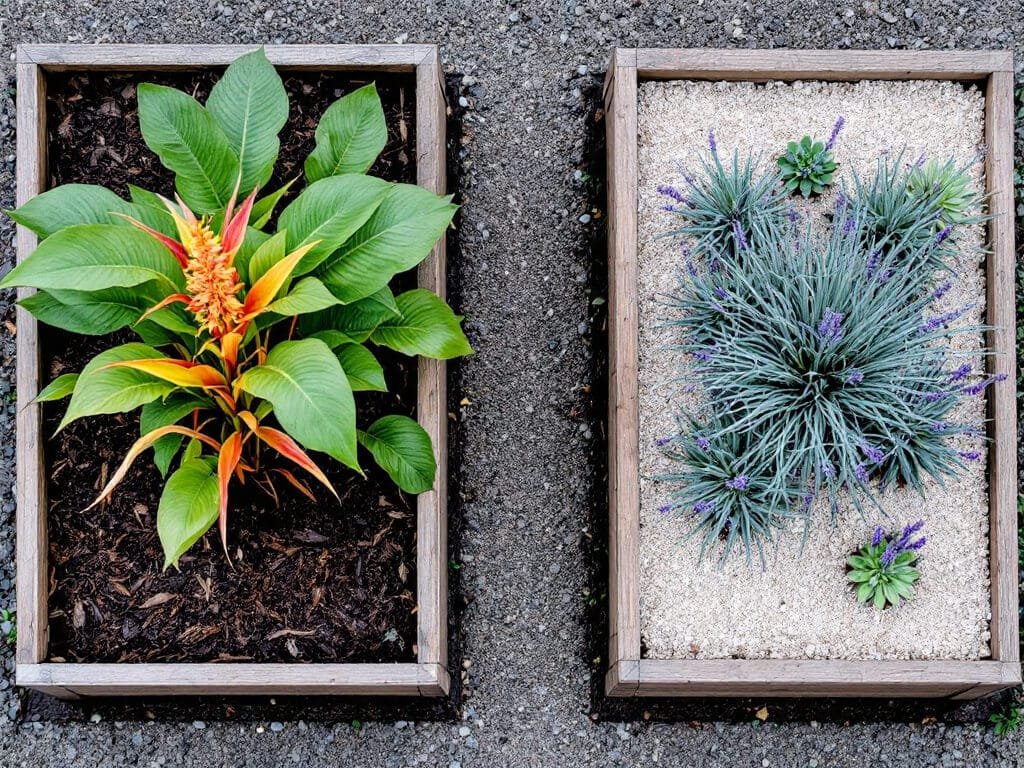
Don’t plant cannas in the same root zone as plants that want dry soil.
Drought-tolerant Mediterranean herbs such as lavender
Lavender and similar herbs want dry soil, and cannas want steady moisture. Water for the canna and the herb is likely to suffer, while watering for the herb leaves the canna short. Keep them in separate beds or well apart.
Rock-garden succulents
Succulents generally need sharper drainage and less frequent watering than cannas. The watering schedule that keeps a canna in good shape is more than most succulents want. They belong in their own gritty bed.
Small, drought-sensitive annuals planted right beside tall cannas
Broad canna leaves can shade small annuals, and vigorous rhizomes can physically overwhelm them. If you still want annuals near the canna, use them only where their light and space needs are met, which usually means well forward of the canna and not tucked against the stems.
Plants prone to the same wet-site problems when airflow is poor
Dense planting keeps foliage wet longer and makes disease harder to manage. Cannas are reported to get rust and viruses, so a packed bed of other moisture-loving, disease-prone plants makes things worse. Leave gaps between plants, and keep spacing to the tag numbers.
Layout and spacing
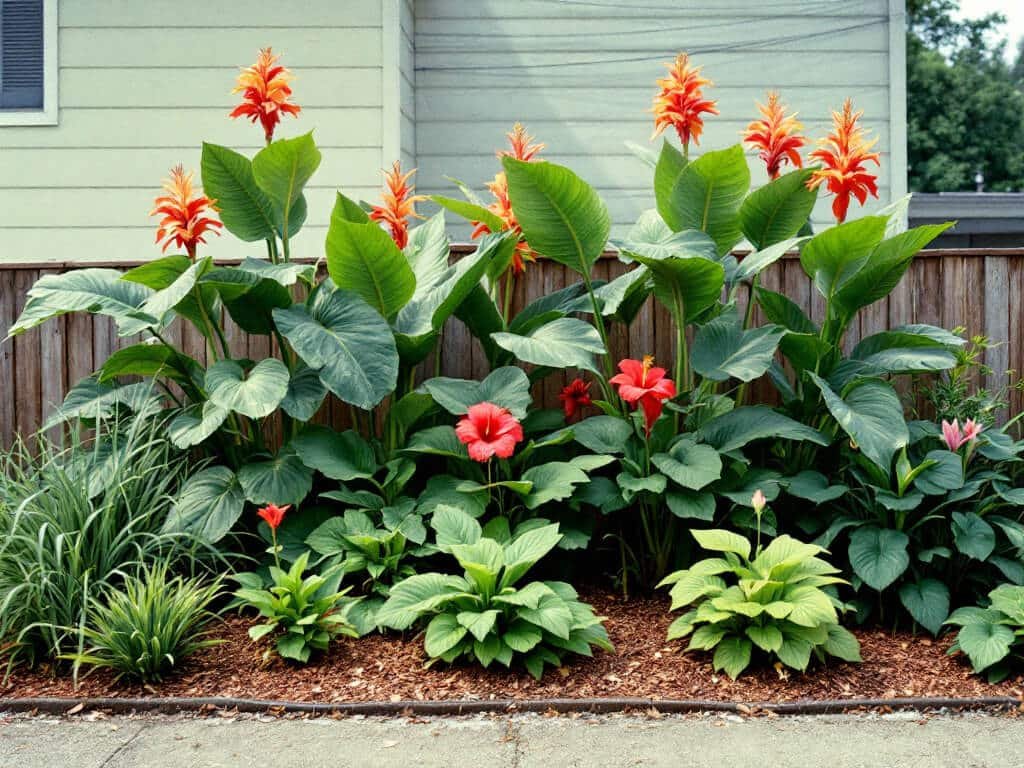
Put tall cannas at the back or center of a sunny bed. Run lower plants such as liriope or bergenia along the front, and put moisture-compatible foliage plants to the sides. Give each canna about 30 inches, and keep all neighbors outside the rhizome area.
Back or center: tall cannas, with banana or viburnum behind them if you have the room and the wind protection.
Sides: elephant ear, sedge, hibiscus, or calla lily, spaced by their own mature widths.
Front edge: liriope or bergenia, kept outside the canna’s expansion area.
Shaded pocket: Florida shield fern, only where shade actually falls.
Wettest spot: marsh marigold, only if the soil stays consistently wet.
Containers: combine cannas only with plants that tolerate the same steady moisture. Leave the canna room for its rhizome and mature foliage, and keep the drainage holes unobstructed.
FAQ
Can canna lilies grow with plants that need dry soil?
Usually not successfully in the same root zone. Cannas need steady moisture, while drought-adapted plants generally do better when allowed to dry between waterings.
What can I plant in front of tall canna lilies?
Lower plants such as liriope or bergenia work as a front layer. Check that their mature spacing leaves room for the canna’s rhizomes and foliage.
Do cannas need another plant to repel pests?
No verified canna-specific pest-repellent pairing was found. Cannas can get aphids, slugs, snails, spider mites, caterpillars, rust, and viruses, so keep monitoring and cleaning up debris instead of relying on companion plants.