
Daylily Companion Plants for a Healthy Garden
The best daylily companion plants are the ones that want the same sun, drainage, and water you already have, not the ones with a reputation for “helping” each other. Daylilies are easygoing, but they still go downhill when a neighbor shades them, soaks them, or crowds their leaves. This guide sorts good partners from bad ones and shows how to lay them out.
Why Pairings Matter for Daylily
Daylilies are herbaceous perennials that grow in zones 3a through 9b, depending on the cultivar. They flower best with about 6 hours of sun, and in hot climates some afternoon shade is useful. They like well-drained soil enriched with organic matter. Once established they put up with dry spells, but about 1 inch of water a week gives you stronger flowering, and new divisions need steady moisture.
So the job of a companion is simple: don’t wreck those conditions. A tall neighbor on the south side steals light. A plant that needs constant wet feet invites root and crown rot. A sprawling spreader packs the foliage together and holds moisture on the leaves.
One myth to clear up: you’ll see claims that certain plants repel daylily pests, cure diseases, or boost flowers. No extension source I found verified any of that. Daylilies deal with aphids, thrips, spider mites, slugs, snails, leaf streak, rust, and crown rots, and no companion has been shown to stop them. What the evidence does support is matching sun, drainage, moisture, mature size, and airflow, so that’s the standard used below.
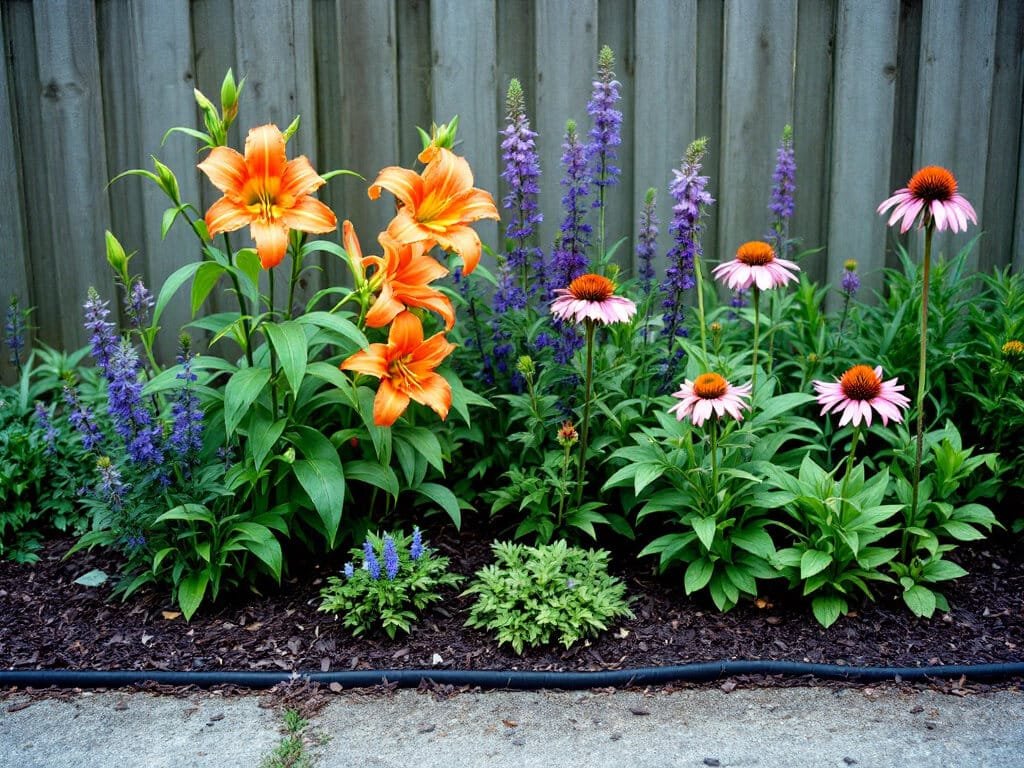
Best Companion Plants for Daylily
These ten work because their growing conditions line up with daylilies, or because they fill a different layer of the bed. None of them has a verified pest-control benefit for daylilies, and I won’t pretend otherwise.
Daffodil
Daffodils bloom in spring, before daylilies reach their summer peak. When the daffodil leaves start to fade, the growing daylily foliage helps hide them. Use the daylily spacing of 18–24 inches as a starting point, and don’t let bulbs and daylily clumps crowd each other.
Lavender
Lavender wants a sunny spot with well-drained soil, which fits an established daylily bed. The catch is water: lavender needs excellent drainage, so this is a dry-to-moderate pairing, not a wet one. Space each plant for its mature size and keep the crowns apart.
Salvia
Salvia sends up upright flower spikes, so it fills a different visual layer than the arching daylily foliage. It likes the same sunny bed. Leave room for each plant’s mature spread so air can move between them.
Catmint
Catmint is a low, spreading plant that suits the front of a sunny, well-drained bed. It gives the daylily clumps behind it a contrasting edge. Plant it in front of the daylily crowns, not inside them.
Coneflower (Echinacea)
Coneflower extends summer color and brings pollinators into the same sunny conditions daylilies like. It doesn’t do anything proven for daylily health. Go by mature plant width when you space it so the two don’t crowd.
Black-eyed Susan (Rudbeckia)
Black-eyed Susan shares the full-sun setting and carries flower color later into the season. Watch its mature height. Put it where it won’t shade the daylilies excessively.
Garden phlox
Garden phlox adds taller flower clusters in summer and works in the back layer of a bed. Both plants flower best with adequate moisture, which makes them an easy match on watering. Keep the planting open and skip overhead irrigation, because wet foliage favors daylily leaf streak and other leaf problems.
Yarrow (Achillea)
Yarrow is drought tolerant and brings a fine texture that suits established daylilies in a sunny bed. It has no verified effect on daylily pests. Place it where its spread won’t overrun the daylily clump.
Ornamental grasses
Grasses add height and a different foliage form without needing any claimed chemical benefit. Water needs vary a lot by grass, so pick one with the same sun and moisture needs as your daylilies. Keep it outside the daylily crown.
Heuchera
Heuchera gives you contrasting foliage at the front or edge of a bed, but it generally prefers more shade and moisture than daylilies. I’d treat it as a situational pick, not a standard pairing. Use it only in a partly shaded, evenly moist spot, and skip it in full, hot sun.
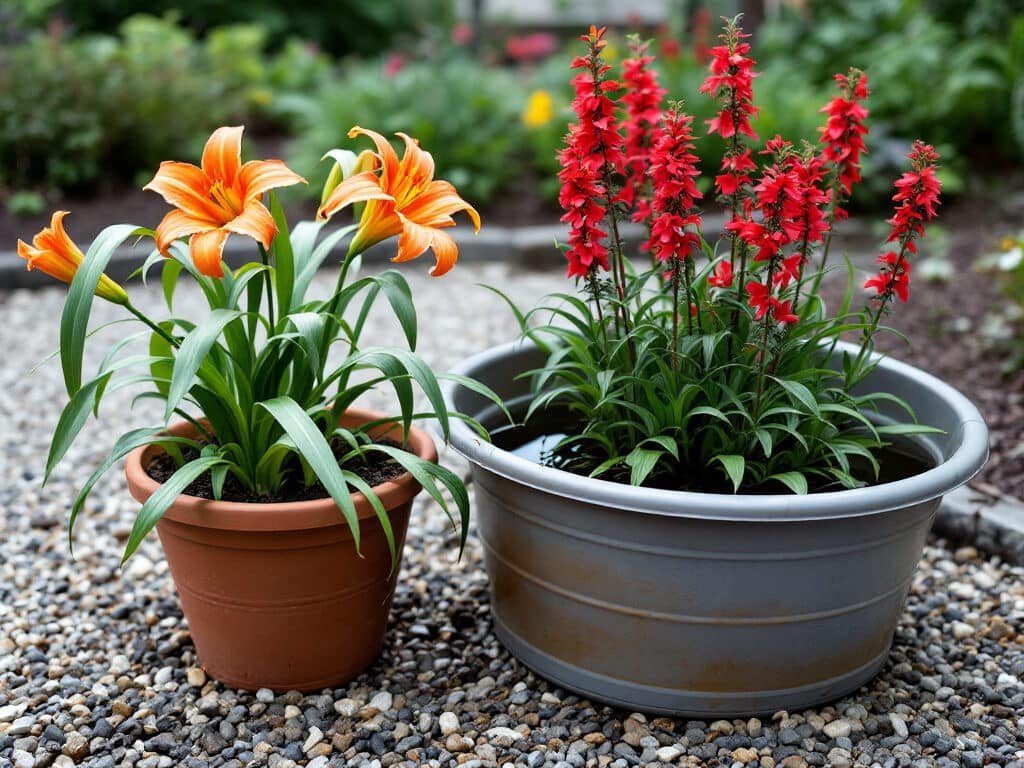
What Not to Plant With Daylily
The problem plants are defined by their needs, not their names. If a plant demands any of the following, keep it away from your daylilies.
Plants that need poorly drained soil
Daylilies can develop root and crown rots in poorly drained soil. A plant that requires persistently waterlogged conditions forces you to create exactly the site daylilies handle worst. Put bog-type plants somewhere else.
Plants that need frequent overhead irrigation
Sprinkler irrigation can spread or worsen daylily leaf streak, and wet foliage contributes to other disease problems. If a neighbor needs regular overhead watering, the daylilies get wet too. Choose companions you can water at the base.
Very aggressive spreaders
Daylilies themselves may need dividing every 3–5 years. An aggressive neighbor competes for space and makes dividing harder, and it cuts down airflow around the foliage. If a plant’s spread is hard to control, it doesn’t belong in the clump.
Dense, tall plants directly south of daylilies
Heavy shade reduces flowering, because daylilies do best with substantial direct sun. A big, dense plant on the south side blocks the light they need most. Put tall plants behind the daylilies or to the north instead.
Plants with very different water needs
Pairing a moisture-demanding plant with a drought-oriented one forces you to overwater one or underwater the other. Match plants by site, not by an assumed companion list. A pairing that looks good on paper but needs two watering schedules will fail.
Layout and Spacing
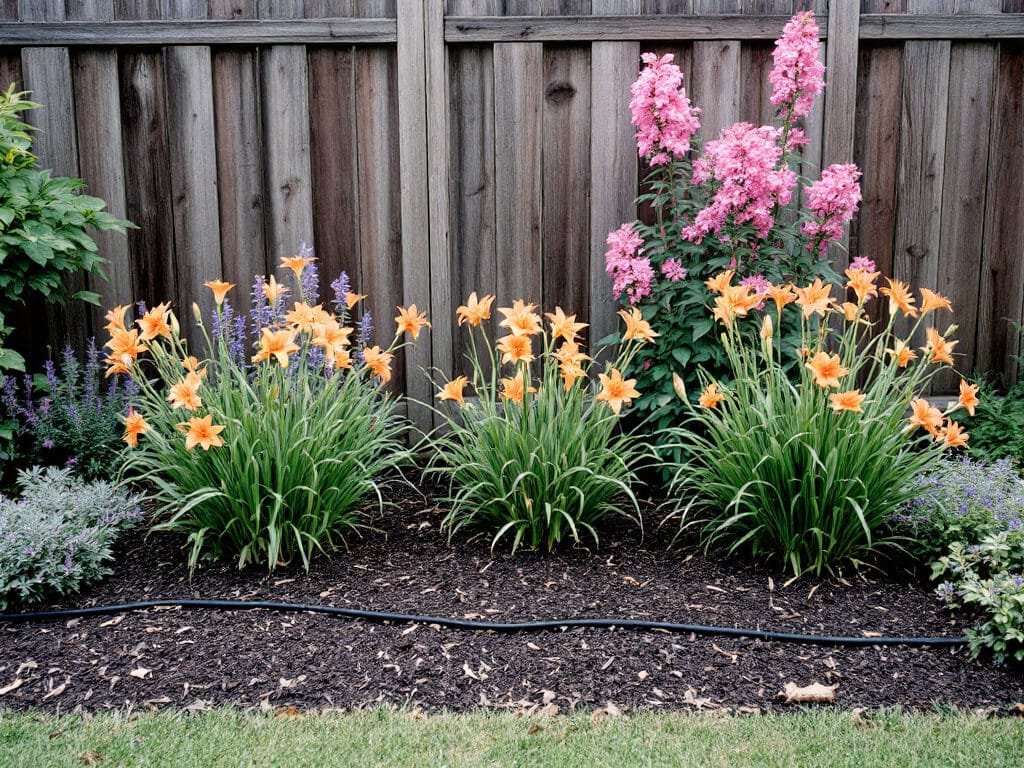
Treat daylilies as middle- or back-of-border clumps. Put lower companions at the edge and taller ones behind or to the north, so nothing blocks the main light. The goal is open space around each crown so air moves and foliage dries quickly.
– Set daylily plants about 18–24 inches apart, depending on the cultivar’s ultimate size.
– Keep crowns and foliage from touching neighboring plants.
– Add lower plants such as catmint at the front, outside the crown area.
– Place taller plants like garden phlox behind or to the north of the daylilies.
– Plant in well-drained soil and water at the base, not over the leaves.
– In containers, combine plants only when mature size, drainage, and moisture needs genuinely match.
FAQ
What is the best companion plant for daylilies?
No single companion has been scientifically established as the best. Choose plants with compatible sun, drainage, moisture, mature size, and airflow needs. Daffodils are a practical seasonal pairing because daylily foliage can conceal their fading leaves.
Can daylilies and lavender grow together?
They can share a sunny, well-drained bed, but they don’t have identical water needs. Lavender needs excellent drainage, while daylilies flower best with regular moisture. Place them where you can water the daylilies without keeping the lavender wet.
How far apart should companion plants be from daylilies?
No universal companion spacing is supported, because daylily and companion sizes vary. Start with about 18–24 inches between daylily plants, then adjust for each companion’s mature width and keep air moving through the planting.