
Lemon Tree Companion Plants: What to Grow Nearby
Choosing lemon tree companion plants is mostly about what you keep away from the tree, not what you pile around it. A lemon wants full sun, steady but not soggy moisture, and air moving through the canopy. Anything you plant nearby has to leave those three things alone.
This guide covers the plants that fit that job, the ones that don’t, and how to lay it all out. One point up front: none of these plants is a guaranteed pest fix. More on that below.
Why pairings matter for lemon tree
A lemon tree is an evergreen citrus that does best in full sun. It tolerates light shade but fruits better with more light. Once established, it wants a thorough watering when the top 1–2 inches of soil is dry, in soil that drains well. Waterlogged ground and poor airflow invite fungal problems, so a neighbor that holds moisture or blocks air works against you.
Citrus roots sit close to the soil surface, which means anything planted underneath is competing at exactly the depth where the tree feeds. That is why a thirsty groundcover or a dense clump of perennials can cause trouble even when it looks harmless.
Size matters too. A key lime-type lemon can be kept at roughly 6–8 feet tall and 10–12 feet wide, and other lemons can grow larger. Plan around the full spread of the canopy, not the size of the tree you bought.
Now the myth. You will see claims that certain herbs or flowers repel citrus pests, improve lemon flavor, or raise yields. The extension and botanical sources behind this article don’t support any of that. Treat companions as habitat and space-management choices. Scale, mealybugs, spider mites, and aphids are the usual lemon pests, and you still need to check the tree for them.
Best companion plants for lemon tree
The plants below share a few traits. They stay low, they don’t need much extra water, and they can sit at the edge of the root zone instead of at the trunk. The sources give no verified universal planting distance for any of them, so spacing here comes down to location: outside the trunk-clear area, near the drip line or bed edge.
Sweet alyssum
Sweet alyssum attracts pollinators and beneficial insects, and it stays low. Plant it along the bed edge or near the drip line, not against the trunk. It fills space without casting shade on anything.
Calendula
Calendula gives pollinators and beneficial insects flowers to visit without building a tall canopy. Use it around the outer edge of the root zone. The sources don’t give a lemon-specific spacing, so keep it well back from the trunk.
Borage
Borage draws pollinators and works best away from the trunk. Put it near the drip line or in a nearby bed. It is a bigger plant than alyssum, so give it room and keep it from crowding the tree’s base.
Basil
Basil fills low-to-moderate space and shows up as a citrus companion in warm-climate guidance. Keep it outside the trunk-clear area and don’t let it crowd the root zone. No lemon-specific distance was verified.
Garlic
Garlic is suggested as a pest-deterrent companion for citrus in warm-climate guidance. Treat that as a possible bonus, not a promise. Grow it near the outer root zone or in a nearby bed.
Chives
Chives are suggested for possible leafminer deterrence, and they take up a narrow clump footprint. That makes them easy to tuck in without crowding. Place them outside the trunk-clear area.
Nasturtium
Nasturtium can act as an aphid trap crop, potentially pulling aphids away from the tree. Grow it near the outer edge or in a separate container, where it can attract aphids without sitting in the tree’s root zone. Check it regularly, since a trap crop only helps if you notice what is on it.
Marigold
Marigold appears in citrus companion guidance for possible suppression of soil-borne nematodes. Plant it near the outer root zone rather than directly beside the trunk. As with the others, the benefit is possible, not proven.
White clover
White clover is a low ground cover described as nitrogen-fixing. It is also the companion I’d be most careful with. Use it only where it won’t compete with the tree’s irrigated root zone, since citrus roots are shallow and a groundcover takes water from the same layer.
Comfrey
Comfrey is described in warm-climate guidance as an accumulator of nutrients. It is also large and vigorous. Keep it outside the trunk-clear area, and I’d give it its own container or bed so it can’t spread into the tree’s space.
Low-growing native flowers
Low native flowers support biodiversity and beneficial insects without shading the canopy. Use them in a separate insectary strip or around the bed edge. Pick compact ones, since the point is to add flowers without adding height on the sunny side.
What not to plant with lemon tree
The bad-companion list in the sources is short and mostly about categories, not named species. The sources don’t establish a universal list of plants to avoid, so judge a candidate by what it does to light, water, and roots.
Lawn grass
Grass competes with citrus for water and nutrients. Heavy fertilizing of adjacent lawn can also reduce fruiting or fruit quality on the lemon. If your lemon sits in a lawn, the grass is the first thing to push back.
Tall plants on the sunny side
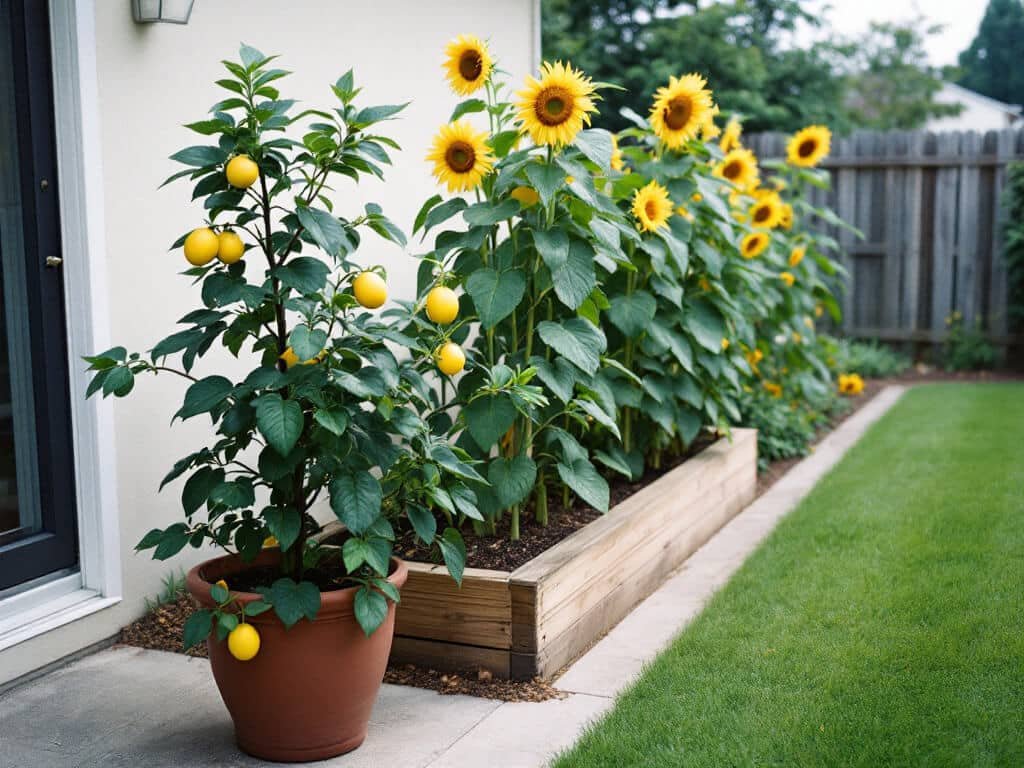
Lemons fruit better in full sun, so anything tall enough to shade the canopy costs you. This is mostly a placement problem. A tall plant on the shaded side may do no harm, while the same plant on the sunny side does.
Aggressive or densely rooted plants
Vigorous spreaders and dense root mats compete with the tree for water and nutrients, and citrus roots are concentrated near the surface. The sources don’t name specific species, so use your own judgment. If a plant spreads fast or forms a thick mat, keep it in a pot.
Plants with incompatible moisture needs
A drought-loving plant won’t suit a lemon’s regular irrigation, and it may suffer or rot beside it. On the other side, a moisture-loving plant can keep the soil wet and encourage the waterlogged conditions lemons dislike. Match water needs before you plant, not after.
Layout and spacing
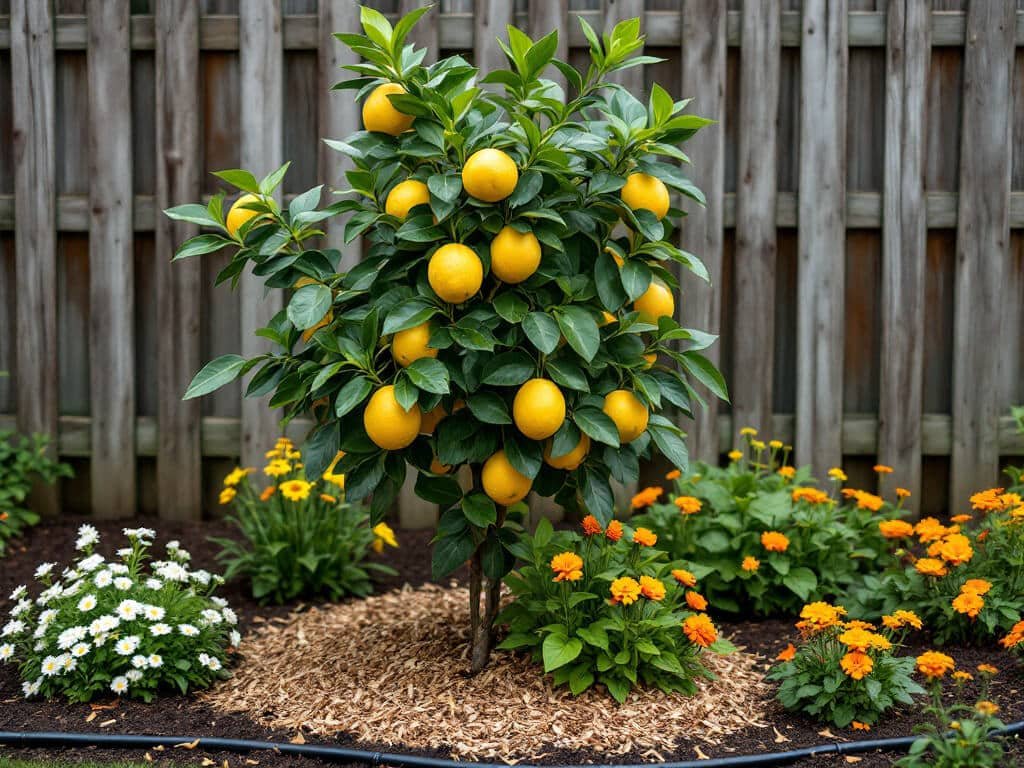
Start from the trunk and work outward. The trunk and its base stay clear, mulch goes there instead of plants, and the companions sit at the drip line or bed edge. University of Florida guidance puts the numbers on it.
Keep the trunk and immediate base free of companion plants. Use mulch instead, kept 8–12 inches from the trunk.
Keep grass at least 2–5 feet from the trunk.
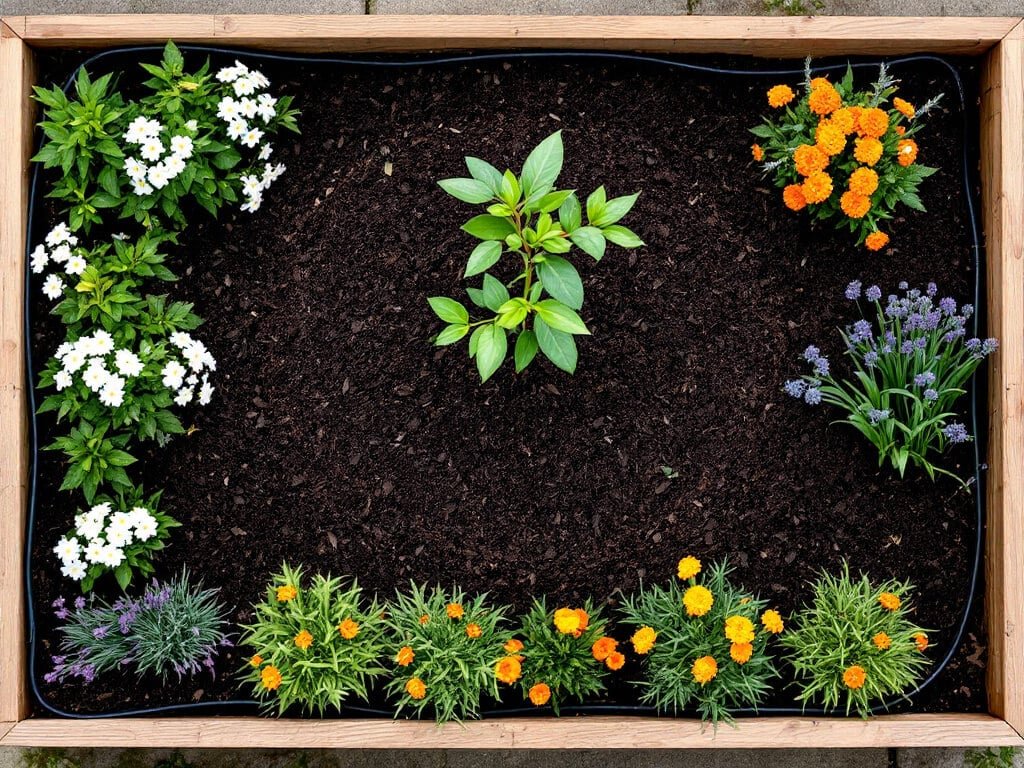
Place low flowers and herbs near the drip line or bed edge.
Keep taller plants off the sunny side so they don’t shade the canopy.
Put vigorous companions, such as comfrey, in separate containers.
For a container lemon, use a well-drained, loam-based citrus compost or potting mix, and give companions their own pots rather than sharing the lemon’s.
FAQ
Can flowers be planted directly around a lemon tree?
They can be used near the drip line or bed edge, but don’t crowd them against the trunk. Keep the trunk area clear and maintain good airflow.
Is grass a good companion for a lemon tree?
No. Grass right around a lemon competes for water and nutrients, and heavy fertilizing of nearby grass can affect fruiting or fruit quality.
Do companion plants prevent lemon-tree pests?
Some plants may attract beneficial insects or act as trap crops, but the sources don’t support guaranteed pest prevention from any companion. Keep checking the tree and use sensible pest-management practices.