
Black Eyed Susan Companion Plants for Sunny Gardens
Choosing black eyed susan companion plants comes down to two things: matching sun, water, and drainage, then adding contrast in flower shape, height, and bloom time. Black eyed Susan is easy to please, so the main job is not crowding it or pairing it with something that wants different soil.
Which black eyed Susan you have matters a little. Rudbeckia fulgida is a rhizomatous perennial that comes back and spreads. Rudbeckia hirta is a biennial or short-lived perennial that is often grown as an annual. Hardiness varies by species and cultivar, so check the tag for your zone before you plan the bed around it.
Why pairings matter for black eyed susan
Black eyed Susan does best in full sun, in moderately fertile, humus-rich soil that holds some moisture but drains well. It tolerates partial shade, but flowering is better in full sun. Once established it handles some drought, though it can wilt in a long dry stretch in summer. Any neighbor you pick needs to be comfortable with those same conditions.
The second reason is bloom timing. Black eyed Susan flowers from mid to late summer into early autumn, and some forms bloom from August to October. Pair it with plants that flower before, after, or in a different shape, and the bed keeps interest longer than a block of yellow daisies would.
One myth to drop: no extension source supports the claim that black eyed Susan repels a particular pest, or that any specific companion makes it grow better. Good companion planting here is about compatible growing conditions, contrasting form, and staggered flowering. That is plenty of reason to do it.
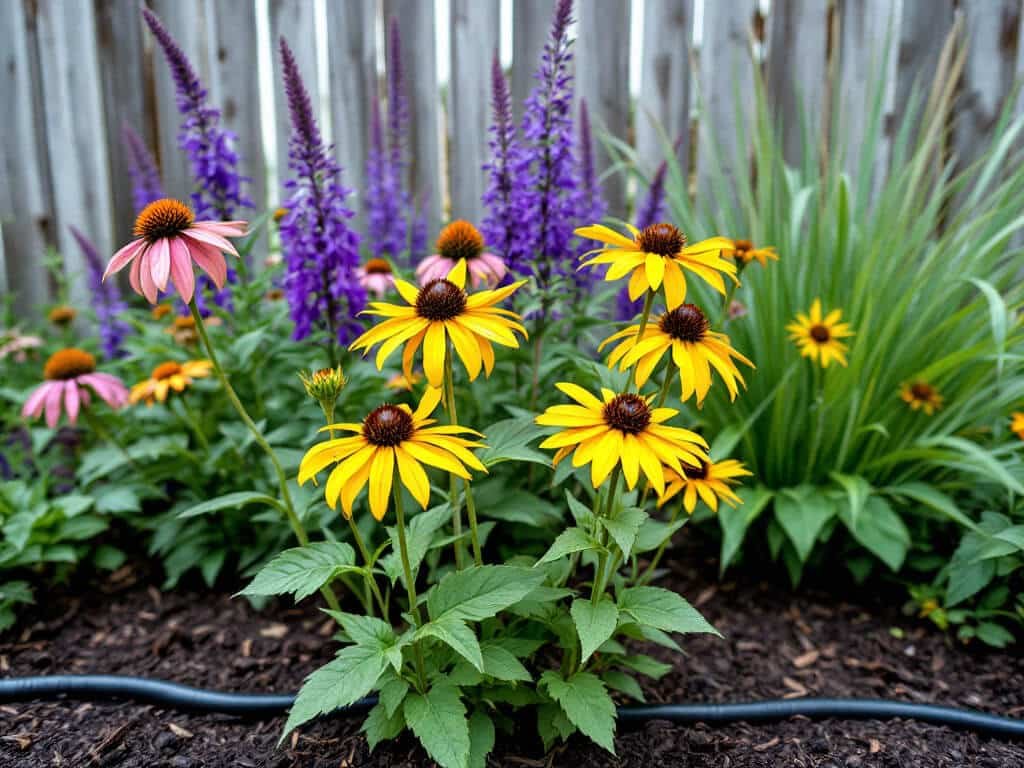
Best companion plants for black eyed susan
None of the sources I have give a spacing figure specific to Black Eyed Susan for any of these plants. The reliable method is to read the mature width on each plant’s tag and leave that much room, counting from the center of one plant to the center of the next if the tag gives widths for both. Sizes vary a lot between cultivars, and some black eyed Susans stay around 18 to 24 inches while larger species get considerably taller.
Giant hyssop (Agastache)
Giant hyssop gives you a different flower form next to the flat daisy faces, and it suits a planting aimed at pollinators. It is a recommended rudbeckia companion. Space it by the mature width on the label.
Vervain (Verbena)
Vervain adds contrasting color and flowers on a different schedule, which helps in a mixed perennial bed. Use both plants’ mature widths when you set the distance between them.
Moor grass (Molinia)
Moor grass adds vertical texture and grass foliage, and it shares black eyed Susan’s suitability for naturalistic plantings. It breaks up a bed that would otherwise be all flowers. Follow the cultivar label for spacing.
Blue grama (Bouteloua gracilis)
Blue grama is a fine-textured grass that sits in a different visual layer from the coarser rudbeckia leaves and flowers. That contrast is the reason to use it. Space it according to the label for the cultivar you buy.
Switchgrass (Panicum virgatum)
Switchgrass brings height and structure to a prairie-style bed, which suits black eyed Susan’s natural look. It makes a good backdrop when it sits behind the rudbeckia. Follow the cultivar label for spacing.
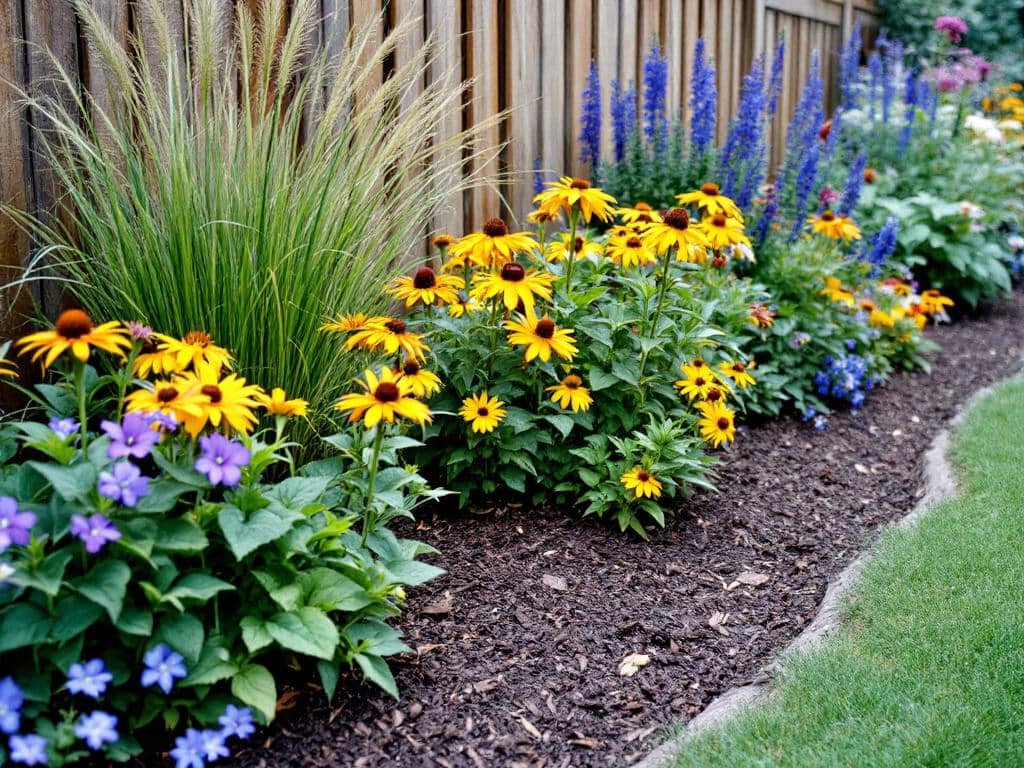
Aster (Aster)
Aster extends the seasonal color and offers a different flower form. It is a straightforward way to keep the bed going as the planting matures. Check the label for mature width and space accordingly.
Bergamot (Monarda)
Bergamot adds a contrasting flower shape and works well in a varied perennial border. Its form differs enough from rudbeckia that the two read as separate plants rather than a mass. Use the cultivar label for spacing.
Sage (Salvia spp.)
Salvia supplies upright flower spikes and color in a sunny planting. The spikes play well against the round, flat faces of black eyed Susan. Space by the label for the species or cultivar you choose.
Coneflower (Echinacea)
Coneflower is the obvious prairie-style partner, since it is also a sun-loving flowering plant. The pairing is compatible and familiar. Follow the cultivar label for spacing.
Cranesbill (Geranium)
Cranesbill gives you lower-growing foliage and a contrasting plant form. It works best at the front of the bed, where it covers the base of the taller plants. Space it by the mature width on the label.
Larkspur (Delphinium)
Larkspur contributes tall flower spikes and height contrast. It belongs behind black eyed Susan, not in front. Follow the label for spacing.
Helenium
Helenium offers more daisy-like flowers and seasonal color in a sunny border. It is the closest in look to black eyed Susan on this list, so I’d use it if you want a bolder, more uniform planting. Follow the cultivar label for spacing.
What not to plant with black eyed susan
The research doesn’t identify any plant that is flat-out incompatible with Black Eyed Susan. Two situations do cause problems, though, and both are about conditions rather than specific species.
Plants that need permanently wet or poorly drained soil
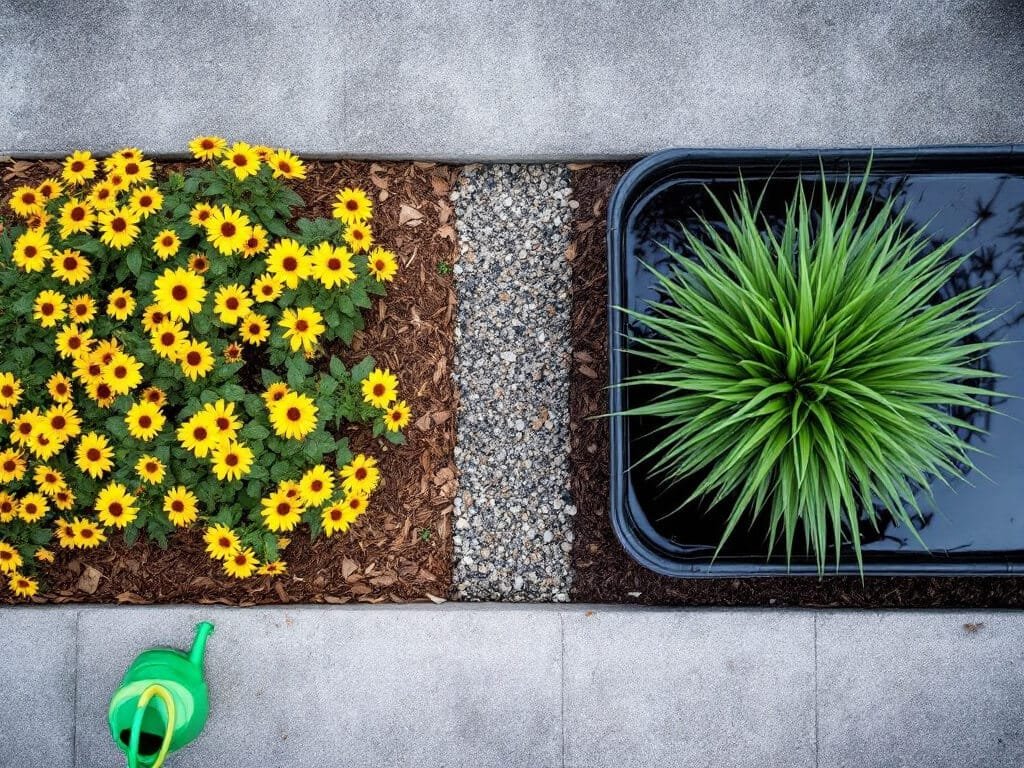
Don’t plant black eyed Susan beside anything that needs constantly wet, poorly drained soil. Black eyed Susan likes soil that holds moisture but drains, and it doesn’t tolerate waterlogging well. If you water or site the bed for a bog plant, the rudbeckia will be the one that suffers.
Disease-prone plants in dense, stuffy plantings
Some rudbeckia forms can get powdery mildew or gray mold when conditions favor disease, and R. hirta is the one more often affected. Cramming black eyed Susan into a tight mass with plants that are themselves prone to foliar disease gives the problem a place to spread. Leave enough room between plants for air to move.
Black eyed Susan’s other reported pests are aphids and slugs, and R. hirta may also get leaf and bud eelworms. None of that rules out a companion, but it is another reason to avoid dense, overlapping growth where you can’t see what is happening on the leaves.
Layout and spacing
Put black eyed Susan in full sun with plants that share its moisture and drainage needs, then arrange by height. Give every plant its full mature width, because crowding is what turns an easy planting into a disease problem. A simple front-to-back layout:
Front: cranesbill, for low foliage that hides the lower stems behind it.
Middle: black eyed Susan, with other perennials whose tag height is similar, such as coneflower, bergamot, or helenium.
Back: grasses such as switchgrass or moor grass, and taller perennials such as larkspur.
Check each tag before you commit, since height and width swing widely between cultivars. If a plant you like doesn’t fit the layers above, adjust it by its label, not by what I’ve listed.
FAQ
What grows well with black eyed Susan?
Giant hyssop, vervain, grasses, asters, bergamot, sage, coneflower, larkspur, helenium, and cranesbill all work. They offer contrasting forms, staggered flowering, or a compatible prairie-border look.
Can black eyed Susan grow in partial shade?
Many rudbeckias tolerate partial shade. Flowering is generally best in full sun.
How much water does black eyed Susan need?
Keep the soil evenly moist but well drained while plants establish. Mature plants tolerate some drought, although long dry periods can cause wilting.