
The best coreopsis companion plants are the ones that want the same hot, dry, well-drained spot, and that points mostly to sun-loving herbs. Pick neighbors with the wrong water needs and you can end up with a floppy or rotting coreopsis, whatever the plant tag promised.
No source I could find makes coreopsis-specific companion claims. That includes the common one that a certain herb will “repel” pests from your flowers. Penn State Extension describes most herb effects as confusing or disrupting pest behavior, not reliably driving insects away, so treat any universal repelling claim with suspicion.
What the sources do support is matching sun, drainage, and moisture, and choosing flowering plants that bring in beneficial insects. That is the approach below.
Why pairings matter for coreopsis
Coreopsis wants full sun, dry to medium moisture, and well-drained soil. Poor, sandy, rocky, or shallow soil suits it fine. Established plants handle heat, drought, and dry soil without much help from you.
The trouble starts when you plant it with something that needs the opposite. In fertile, moist soil coreopsis may sprawl, and in wet, poorly drained soil it is prone to crown rot. Whatever you plant beside it sets the watering and soil conditions for both plants.
Size and type matter too. Coreopsis includes annuals and perennials, and threadleaf coreopsis (Coreopsis verticillata) is a rhizomatous perennial that commonly forms clumps 1–3 feet tall, though some cultivars are smaller. Hardiness varies by cultivar: ‘Hot Paprika’ is listed for USDA Zones 5–9 and ‘Golden Dream’ for Zones 5–8. Check your cultivar’s tag before you build a bed around it.
Coreopsis usually has few serious problems. Slugs and snails can show up, and less common issues include botrytis, aster yellows, powdery mildew, and fungal leaf spots. Good airflow between plants helps with the fungal ones, which is one more reason not to pack the bed.
Bloom runs from late spring through late summer. Cutting plants back in midsummer may encourage fall rebloom, so leave yourself room to reach in with shears.
Best companion plants for coreopsis
The sources don’t give coreopsis-specific spacing for any of these plants. Spacing below follows each companion’s mature width on its label, and I haven’t made up numbers. The first five or six are the safest matches for dry, sunny soil. The later ones are flowering herbs worth adding for beneficial insects.
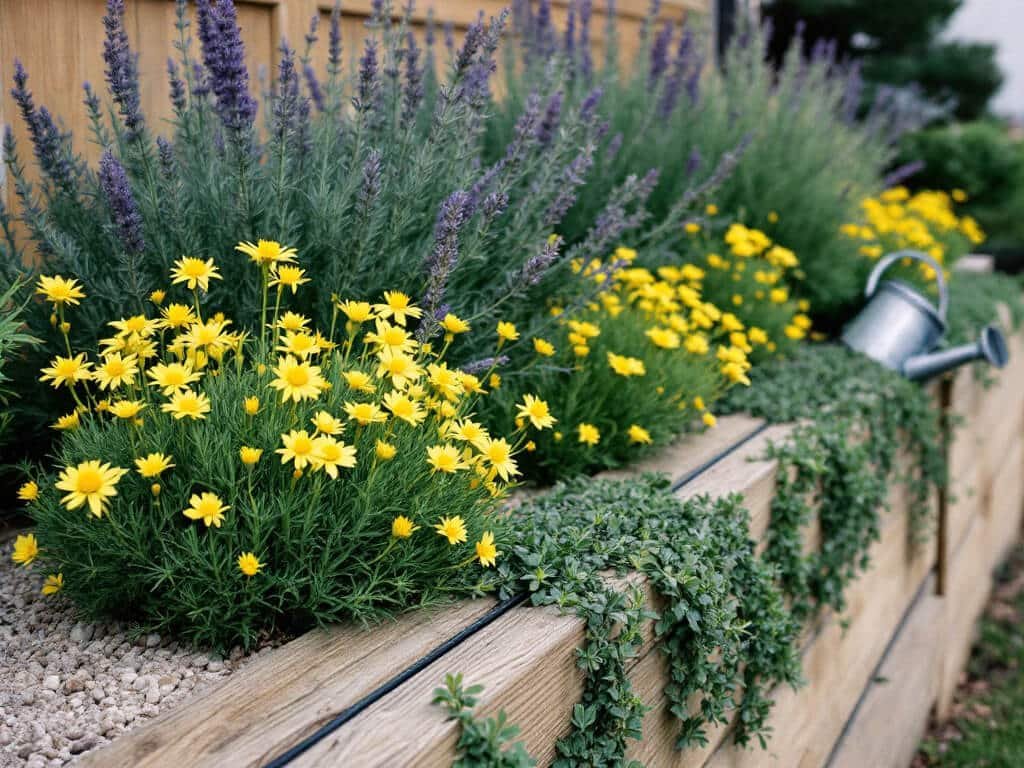
Lavender
Lavender matches coreopsis on full sun and well-drained, dry soil, so neither plant needs special treatment in the same bed. For spacing, use the larger of the two plants’ mature-width recommendations and keep air moving between them.
Rosemary
Rosemary shares the full sun and light, relatively dry, well-drained soil that coreopsis likes. Space it by the mature width of your rosemary cultivar, and leave airflow between it and the coreopsis clump.
Thyme
Thyme suits sunny, well-drained conditions and can fill the low, ground-level space under taller plants. Use the mature spread on the thyme label, and keep the thyme crowns from touching coreopsis stems.
Oregano
Flowering oregano can provide pollen and nectar for beneficial insects. Let it bloom if you want that benefit. Space it by the mature spread of your oregano cultivar.
Sage
Sage shares full sun and well-drained soil with coreopsis, and flowering sage can attract pollinators. Follow the mature width listed for your sage cultivar when you set the spacing.
Marjoram
Flowering marjoram can support beneficial insects, and it fits the same sunny, lean conditions as the other herbs here. Use the mature width on the plant label for spacing.
Dill
Dill flowers can attract beneficial insects, including predatory and parasitic species. It gets tall, so allow its full mature width and don’t crowd its flower stems against the coreopsis.
Cilantro
Flowering cilantro can attract lacewings, ladybugs, parasitic wasps, and syrphid flies. Let a few plants bolt and bloom to get that effect. Follow the seed packet or cultivar’s mature width for spacing.
Fennel
Flowering fennel attracts beneficial insects, including parasitic wasps. Space it by the mature width of your cultivar, and account for its height when you decide where it goes so it doesn’t shade the coreopsis.
Calendula
Calendula attracts beneficial insects. Extension research documents fewer aphids when calendula is planted near collards, but that is not a coreopsis-specific pest-control effect, so don’t count on it as one. Follow the mature spread on your calendula cultivar’s label.
What not to plant with coreopsis
I found no reliable source naming a plant that is biologically incompatible with coreopsis. The sensible exclusions are plants whose growing conditions conflict with what coreopsis needs. The main thing to avoid is wet, poorly drained soil, which is associated with crown rot in coreopsis.
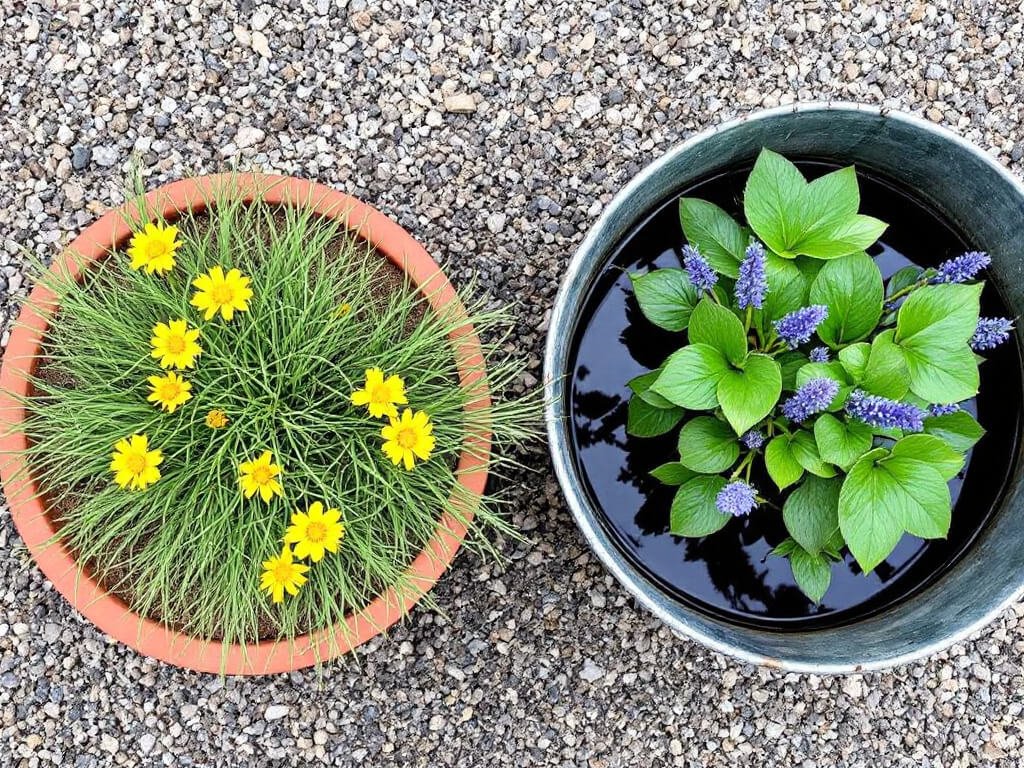
Water-loving bog plants
Bog plants need steady wet conditions, and coreopsis performs best in well-drained soil. If you water the bed enough to keep a bog plant happy, you raise the odds of crown rot in the coreopsis. Keep them in separate beds.
Plants that need consistently moist, fertile soil
Rich, moist soil may push coreopsis to sprawl, and the two plants end up with competing moisture needs. One of them will be unhappy. If a plant’s tag says “keep evenly moist,” it belongs somewhere else.
Plants that require poorly drained clay soil
Anything that wants heavy, slow-draining clay conflicts directly with coreopsis’s drainage needs and increases the risk of crown rot. This is a site problem more than a plant problem. If your bed is clay and stays wet, coreopsis may struggle there no matter what you plant beside it.
Dense, aggressive spreaders in a small container
Putting a fast-spreading plant in the same small pot as coreopsis can mean competition for limited water, nutrients, and root space. This is a general container-design risk, not a documented coreopsis problem. If you want a container combination, give each plant room or use separate pots.
Layout and spacing
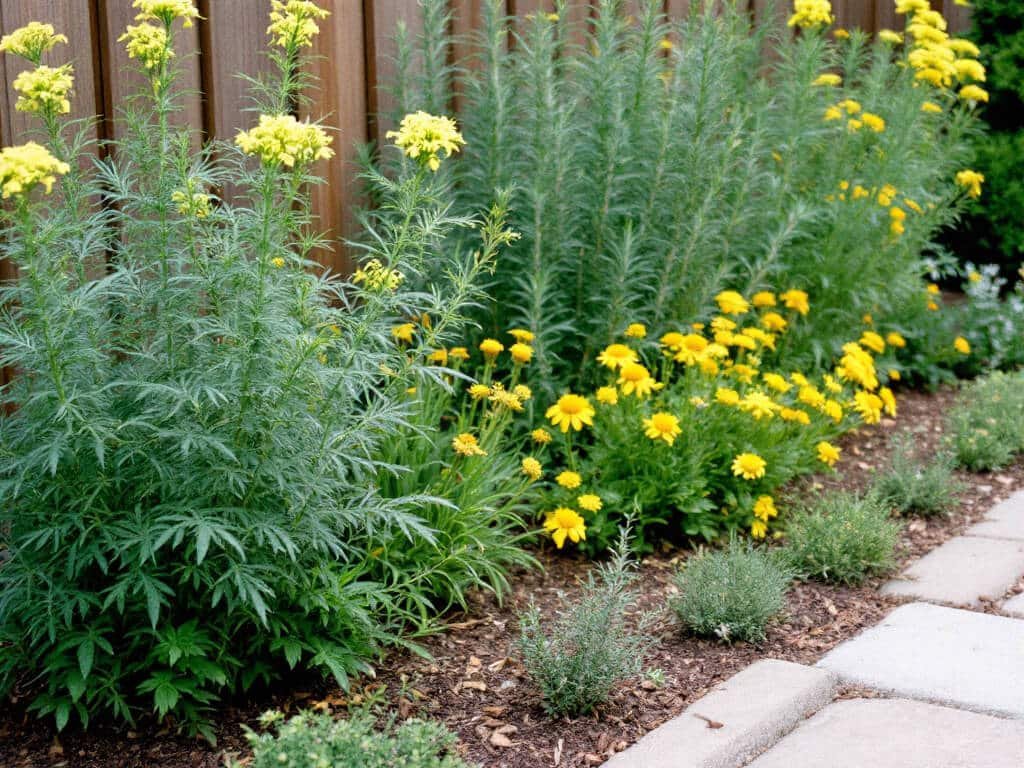
Put coreopsis in the sunniest, fastest-draining part of the bed, with drought-tolerant herbs such as thyme, oregano, sage, or rosemary nearby. Use the mature width on each plant’s label for spacing, and leave enough room for airflow so the plants don’t crowd each other, since coreopsis can sprawl in moist or fertile conditions.
Back or center of the bed: taller flowering herbs such as dill and fennel, set so they don’t shade the coreopsis.
Middle: coreopsis in the sunniest, best-drained spot, with lavender, rosemary, sage, or oregano close by.
Front edge: low herbs such as thyme, with their crowns kept off the coreopsis stems.
Between plants: a gap at least equal to the larger plant’s mature width recommendation, so air can move through.
FAQ
Which plants share coreopsis’s dry-soil needs?
Lavender and rosemary are reasonable matches because they prefer full sun and well-drained soil. Thyme, oregano, and sage can also fit a sunny, well-drained planting. Exact compatibility still depends on the species or cultivar and your local conditions.
Can herbs repel pests from coreopsis?
The reviewed extension source does not establish a coreopsis-specific pest-repelling effect for herbs. It explains that herbs may mask plant odors, disrupt pest behavior, or attract beneficial insects, rather than universally repel pests.
How much space should companions need?
No verified universal spacing figure was found for coreopsis with these companions. Use the mature width on each plant’s label, avoid overlapping crowns, and leave enough airflow to reduce crowding and disease risk.