
Companion Planting Chart: 12 Proven Pairings
A companion planting chart is only useful if each pairing does a specific job, so this one sticks to twelve combinations with a documented function: sharing space, giving physical support, or drawing in beneficial insects. They suit USDA zones 5 to 9, though planting dates and crop performance shift with your local climate. Most of the vegetable pairings want full sun, and the quick reference table below covers the basics before the details.
| Pairing | What it does | Watch for |
|—|—|—|
| Tomato and basil | May mask tomatoes from thrips, deters some egg-laying | Needs light and airflow |
| Tomato and thyme | Groundcover that deters armyworm egg-laying | Crowding the stem |
| Tomato and calendula | Feeds beneficial insects | Deadhead or leave some blooms open |
| Lettuce and alyssum | Draws insects that eat lettuce aphids | Shading the lettuce |
| Lettuce and radish | Fast intercrop, efficient use of space | Harvesting radish on time |
| Carrot and onion | Different root depths | Even moisture, good drainage |
| Collards and calendula | Predator insects for aphids | Calendula overwhelming the crop |
| Greens and dill | Habitat for aphid predators | Let some dill flower |
| Greens and cilantro | Flowers attract aphid-eating insects | Bolts fast in warm weather |
| Cole crops and thyme | Deters cabbageworm and looper egg-laying | Keep scouting |
| Corn, climbing beans, squash | Support, nitrogen, ground cover | Needs lots of room |
| Brassicas and mustard or arugula | Trap crop for flea beetles | Monitor the trap crop |
Why pairings matter for companion planting chart
Pairings earn their spot in three ways. Some share space, like a fast radish crop that is gone before the lettuce fills in. Some give physical support or cover, like corn holding up beans. And some bring in beneficial insects that eat the pests you would otherwise be chasing, including aphids, thrips, and cabbageworms.
The pest side is where people get carried away. Companion planting is not a universal pest-control method. Extension guidance notes that commonly promoted plants like marigolds may work in some situations and not others, and that herbs tend to confuse pests or change egg-laying behavior rather than repel insects outright. Treat the pest benefits below as partial and variable.
Companion planting does not replace row covers, sanitation, crop rotation, or regular scouting.
The basics still apply. Pair plants with similar moisture needs, because a companion does not cancel the need for crop-specific watering. Most vegetables want fertile, well-drained soil, and shade-tolerant greens can sit beneath or between taller crops. Tall crops like corn and trellised beans can support or shade their neighbors, and low growers like squash or clover cover the ground.
Best companion plants for companion planting chart
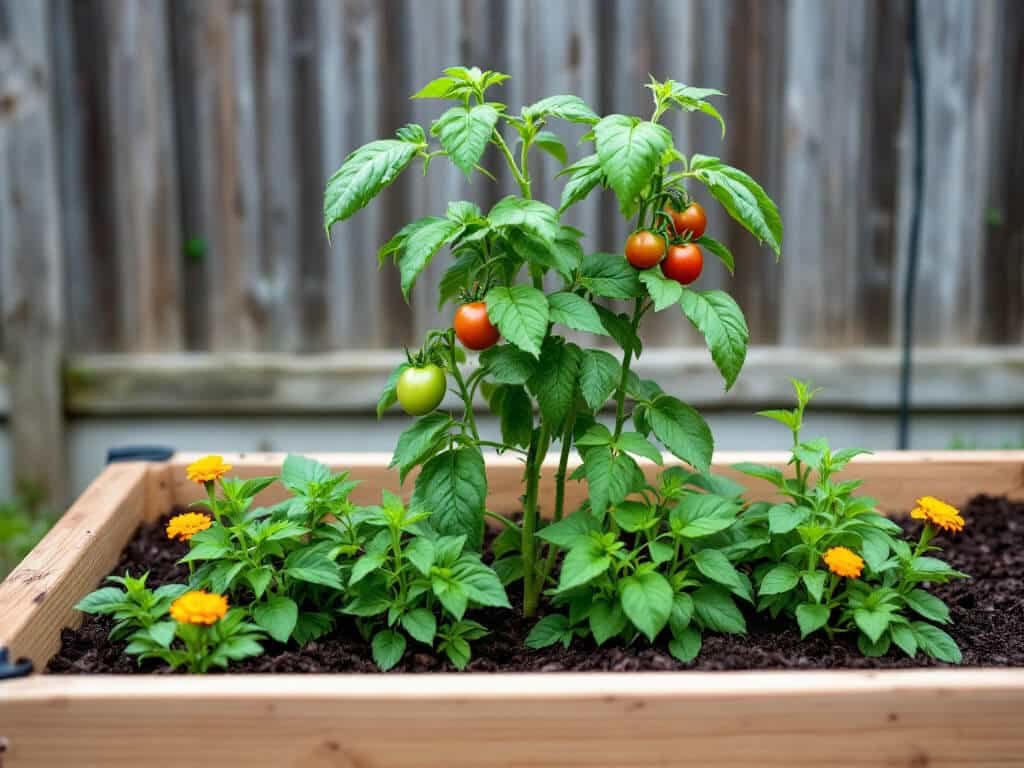
Tomato and basil
Basil may mask tomatoes from thrips and can deter egg-laying by tomato hornworms and some armyworms. That makes it the first herb to try beside tomatoes. Plant it where it gets adequate light and airflow, not wedged in the shade of a big tomato. It is not a guaranteed repellent, so skip it as your only hornworm plan and keep checking the plants.
Tomato and thyme
Thyme forms a low groundcover, and that mat can deter egg-laying by yellow-striped armyworm moths. Keep the thyme from crowding the tomato stem so air still moves around the base of the plant. Trim it back if it creeps. This one is not for a tightly packed bed where there is no room for a groundcover.
Tomato and calendula
Calendula supplies nectar and pollen for beneficial insects. The aphid-control research behind it was done near collards, not tomatoes, so think of it as habitat for good insects, not a proven tomato protector. Deadhead some blooms, but leave a few open so insects have something to feed on. Not for gardeners who want a strictly tidy bed.
Lettuce and alyssum
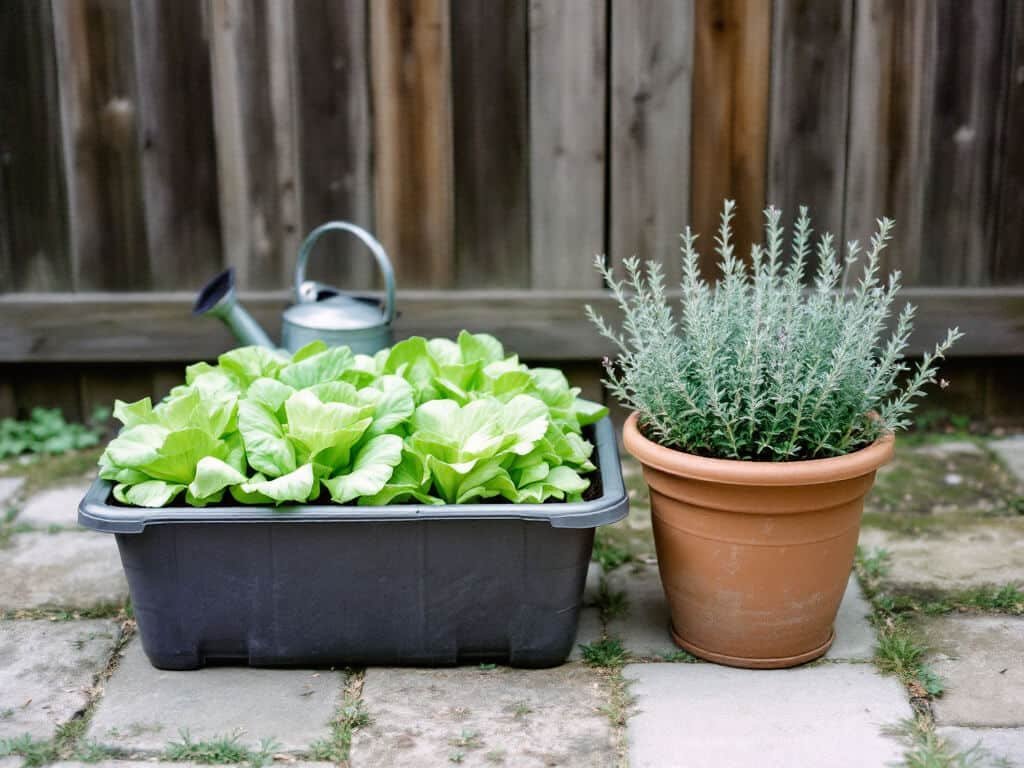
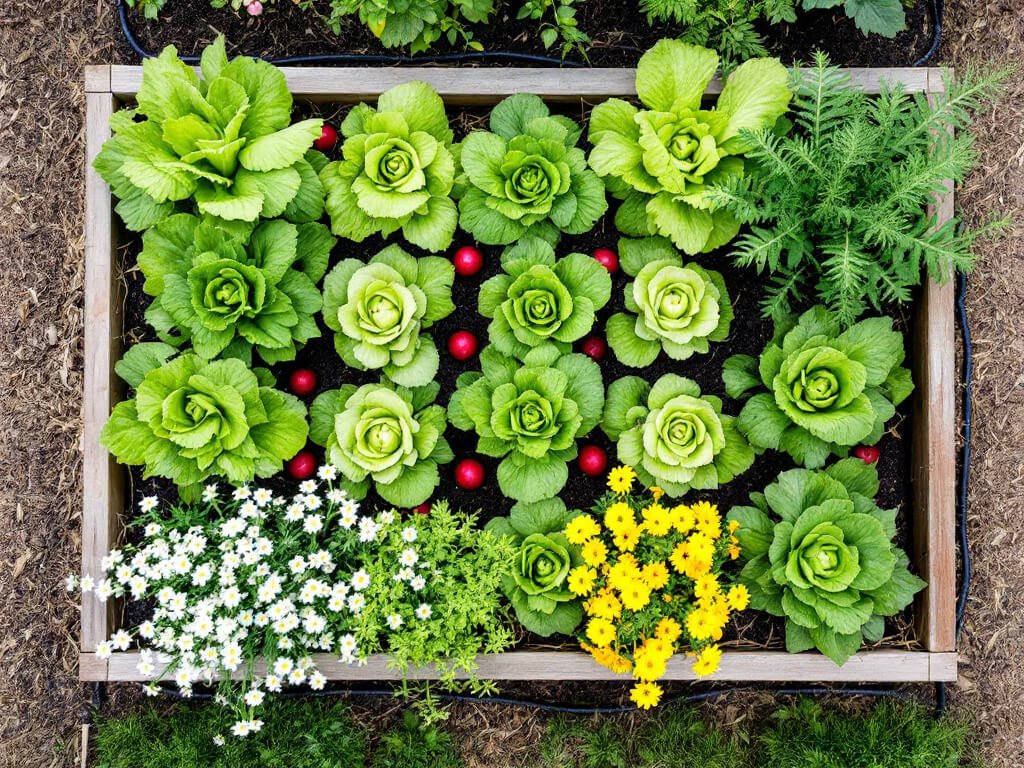
Alyssum attracts beneficial insects whose predation can reduce lettuce aphids. Plant it along bed edges or between lettuce plantings, and keep it from shading the crop. Lettuce is low and easy to smother. This pairing is not for beds where the alyssum would be planted thick enough to crowd out the greens.
Lettuce and radish
This is a plain space-saving intercrop. Radish is quick and lettuce is slower, so you harvest the radish before the lettuce becomes crowded. The catch is timing: if you leave radishes in the ground too long, the benefit disappears. It is not for anyone who will forget to pull them.
Carrot and onion
Deep-rooted carrots and shallow-rooted onions use different layers of soil, and there is limited competition above ground. Keep both in evenly moist, well-drained soil. That requirement rules this pairing out for beds that stay soggy or dry out hard between waterings.
Collards and calendula
Calendula attracts beneficial predator insects that help control aphids, and collards are where that effect has been documented. Let the calendula flower near the collards without overwhelming them. Give the collards room to keep growing. This one is not for a tight bed where the flowers would take over.
Greens and dill
Dill attracts ladybugs, lacewings, syrphid flies, and parasitic wasps, all of which can prey on aphids. Let some dill flower so those insects get nectar and pollen. If you pull dill the moment it bolts, you lose the benefit. Not for gardeners who only want the leaves.
Greens and cilantro
Cilantro flowers draw beneficial insects associated with aphid control. The trouble is that cilantro bolts quickly in warm weather, so succession-sow it to keep plants coming. In practice that means a small new sowing every so often, not one big planting. Skip it if you will not resow.
Cole crops and thyme
Thyme can deter egg-laying by cabbageworms and cabbage loopers. Put it nearby and keep inspecting the crop and managing pests as you normally would. The herb helps at the margins and does not replace a row cover. Not for anyone who plans to stop scouting.
Corn, climbing beans, and squash
In the three-sisters arrangement, corn supports the beans, the beans contribute nitrogen, and squash covers the soil and suppresses weeds. It works only with enough space. Guide squash vines away from walking paths so you can still reach everything. It is not for a small bed or a container.
Brassicas and mustard or arugula
Spicy brassicas like mustard and arugula can work as trap crops for flea beetles, pulling the pests away from the main planting. Watch the trap crop closely. If it turns into a source of pests for the main crop, it is doing the opposite of its job. Not for gardeners who will not check it regularly.
What not to plant with companion planting chart
The research does not support a list of plants that should never touch. What it does support is a short list of mistakes that make a good pairing go wrong.
Marigolds as your only pest plan
Marigolds are among the most commonly promoted companions, and extension guidance says they may work in some situations and not others. Plant them if you like them, but do not count on them to protect a crop. Pair them with scouting and real controls.
Plants with mismatched water needs
Companion planting does not remove the need for crop-specific irrigation. If one plant wants steady moisture and its partner wants to dry out, one of them loses. Check sun and water needs before you commit to a pairing.
Thyme crowding a tomato stem
Thyme works as a groundcover under tomatoes only if air still circulates around the stem. Let it spread up against the plant and you trade a small pest benefit for a damp, crowded base. Trim it back as needed.
Three sisters in a small bed
Corn has to support the beans, and squash vines need room to spread. In a small garden, that means a crowded bed and vines across the paths. Use this system only where there is space.
A trap crop you never check
A trap crop of mustard or arugula only helps if you watch it. Left alone, it can become a source of flea beetles for the main brassicas. If you will not monitor it, do not plant it.
Layout and spacing
The sources do not give one universal spacing chart for all pairings, so use the regional planting dates and spacing guidance for each individual crop, then arrange them with the logic below. Keep every bed reachable so you can water, harvest, and scout for pests without stepping on anything.
– Tall and supporting crops: corn and trellised beans go where they will not shade sun-hungry neighbors.
– Ground cover: squash, clover, or thyme fill the low layer, with vines guided away from paths.
– Edges: alyssum and calendula go along borders or between plantings, not on top of the crop.
– Fast crops between slow ones: radish and lettuce can be harvested before slower crops mature and shade them.
– Shade-tolerant greens: place them beneath or between taller crops.
– Herbs for insects: let dill and cilantro flower in a corner so beneficial insects have a reason to stay.
FAQ
Does companion planting reliably repel pests?
Not always. Extension guidance says commonly promoted plants such as marigolds may work in some situations but not others, while herbs often confuse pests or alter egg-laying behavior rather than repel insects outright.
What is the best companion for tomatoes?
Basil has documented benefits in tomato plantings, including masking tomatoes from thrips and reducing egg-laying by tomato hornworms and some armyworms. The effect is not guaranteed, so use it alongside regular pest monitoring.
Can corn, beans, and squash be grown together in a small bed?
The three-sisters system can work with enough space, but it is not ideal for every small garden. Corn must support the beans and squash vines need room to spread. Train vines away from access paths so harvesting stays practical.