
How to Grow Potatoes in Containers
Picking the right potato gardening container is the first decision, and the minimum is a pot or grow bag at least 30 cm (12 in) wide and deep, with drainage holes. Everything else follows from that: how often you water, how many tubers you plant, and how much compost you need as the plants grow.
The method is simple. You plant a seed potato low in the pot, then keep adding compost around the stems as they grow until the container is nearly full. Here is how to do it, step by step.
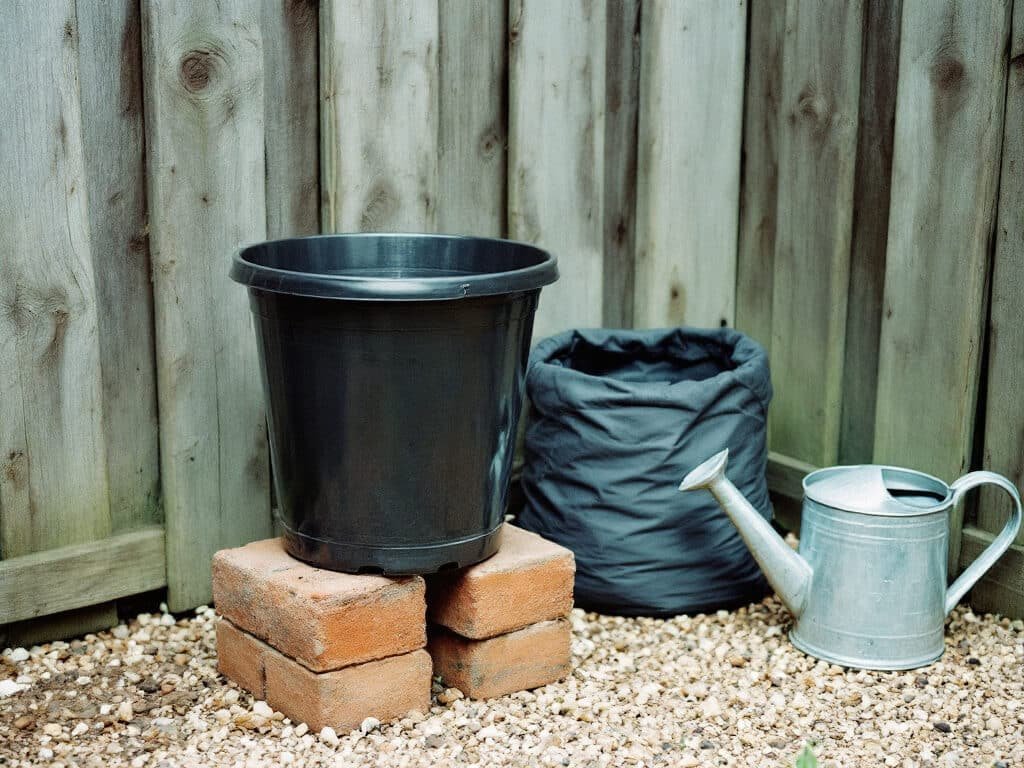
What you need
– A container or grow bag at least 30 cm (12 in) wide and deep, with drainage holes. Bigger pots dry out more slowly and can give larger crops.
– Certified seed potatoes, preferably an early cultivar. Early types are generally smaller and crop sooner, which suits containers.
– Light, free-draining potting mix or peat-free compost. A mix of suitable garden soil and finished compost also works.
– A watering can or hose with a gentle spray.
– Optional: a general-purpose liquid fertilizer, mainly useful if your mix is a low-nutrient, soil-free compost.
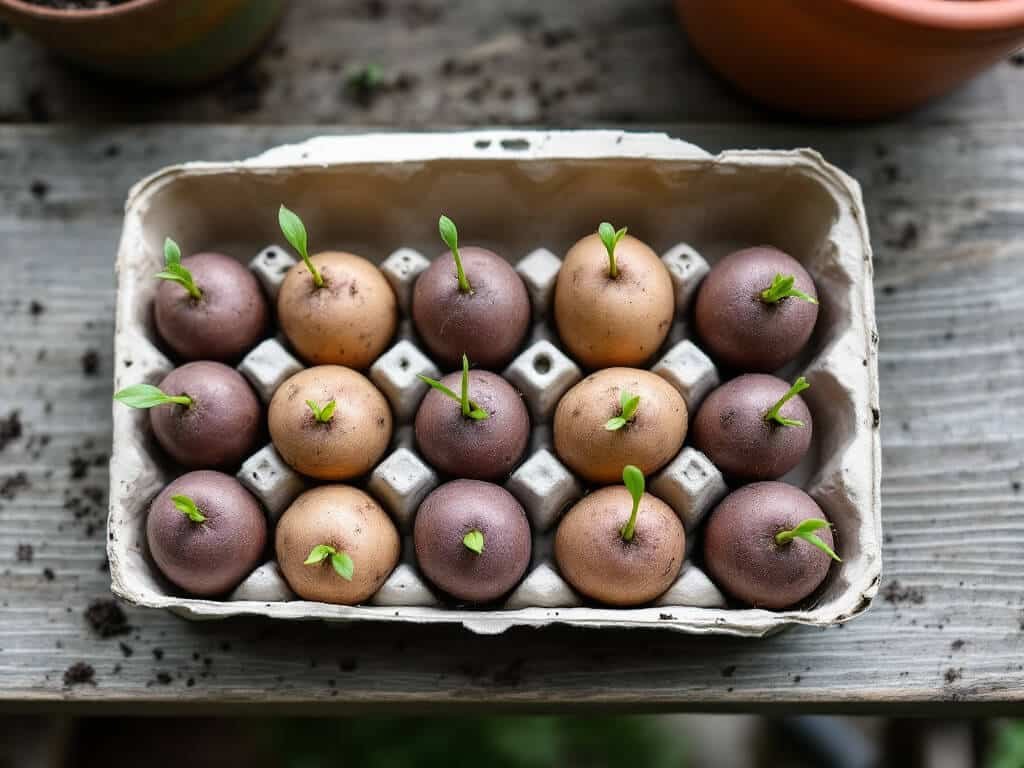
– Optional: an egg carton or shallow tray for chitting (sprouting) the seed potatoes before planting.
Choose a container and location
Use a pot or grow bag at least 30 cm (12 in) wide and deep, and put it in full sun. Check that the drainage holes are open. A pot with blocked holes holds water, and prolonged waterlogging is a problem for potatoes.
If you have the space, go larger than the minimum. A bigger container holds moisture more evenly, so you water less often, and it can produce a bigger crop. For a small pot, I’d choose an early cultivar over a maincrop.
Set the container where it will stay. Once it’s full of wet compost and growing stems, it’s heavy to move, and you may still need to shift it if a frost threatens (more on that below).
Prepare the seed potatoes
Buy certified seed potatoes. Weak crops often start with unsuitable planting material, and certified seed is the easy fix.
Chitting is optional but useful. Stand the tubers in an egg carton or shallow tray in a cool, light place until the shoots are about 2–5 cm (roughly 1 to 2 in) long. Those short, sturdy shoots are what you want to plant.
Fill the container and plant
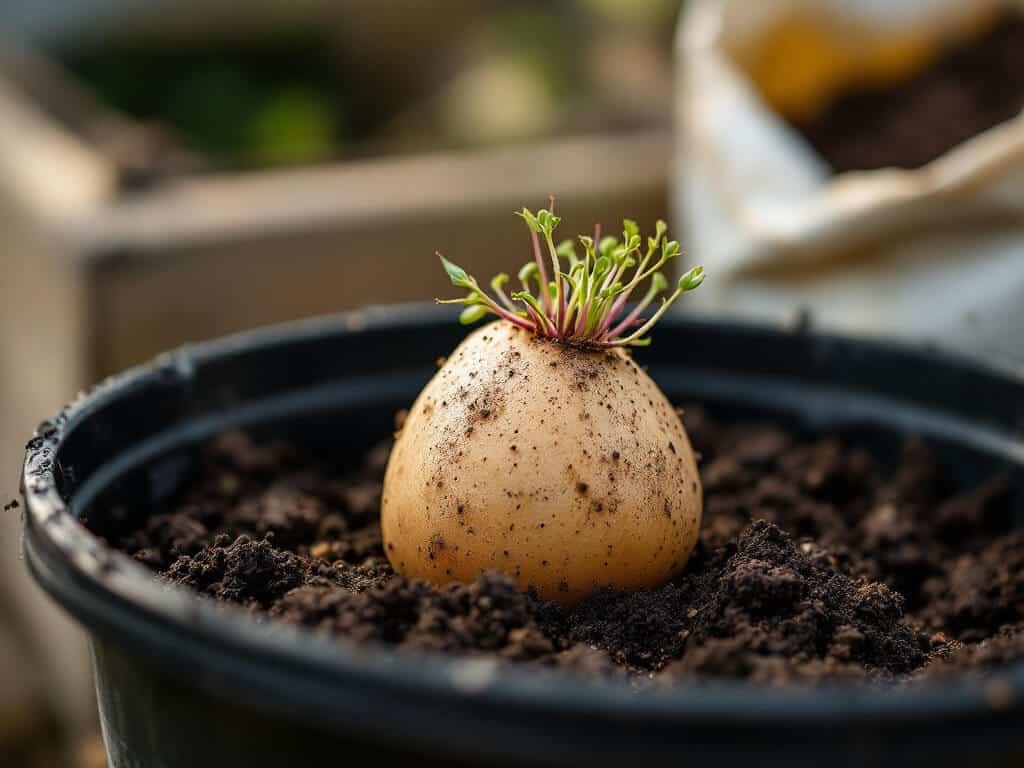
Half-fill a 30 cm container with about 15 cm (6 in) of compost. Plant one seed potato per 30 cm (12 in) of pot diameter, so a standard 30 cm pot holds one.
Set the tuber on the compost and cover it so it sits just below the surface of the mix. In a deeper pot you can cover it with up to about 15 cm (6 in) instead. Leave the rest of the container empty for now, because you’ll need that room for earthing up.
Water and protect the crop
Water thoroughly right after planting, then keep the compost evenly moist. Consistent watering matters most while the tubers are swelling. Containers dry out faster in hot or dry weather, so check them often and water when the compost feels dry.
The other half of the job is not overdoing it. Don’t leave the pot standing in water, and make sure excess drains freely.
If you’re using a soil-free compost with few nutrients, a general-purpose liquid fertilizer helps. It’s optional with a richer mix.
Potato foliage is frost-sensitive. Keep newly planted containers frost-free, and move them to a sheltered spot when a frost is forecast. Plant after your local frost risk has passed, or be ready to carry the pot inside.
Earth up as the foliage grows
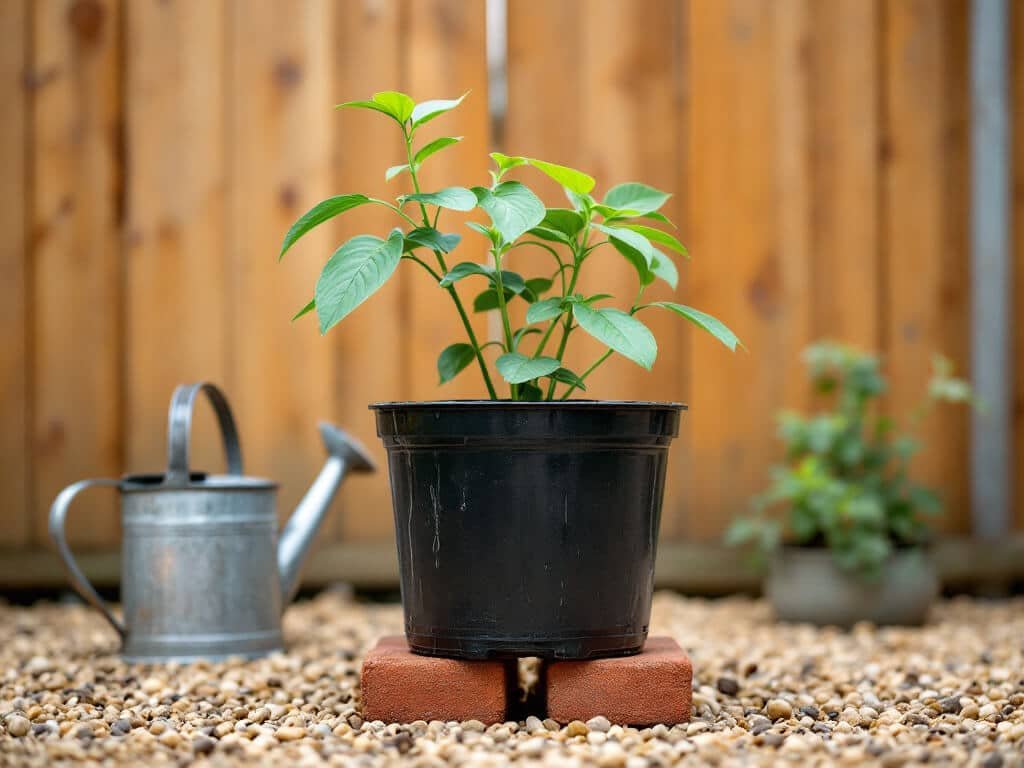
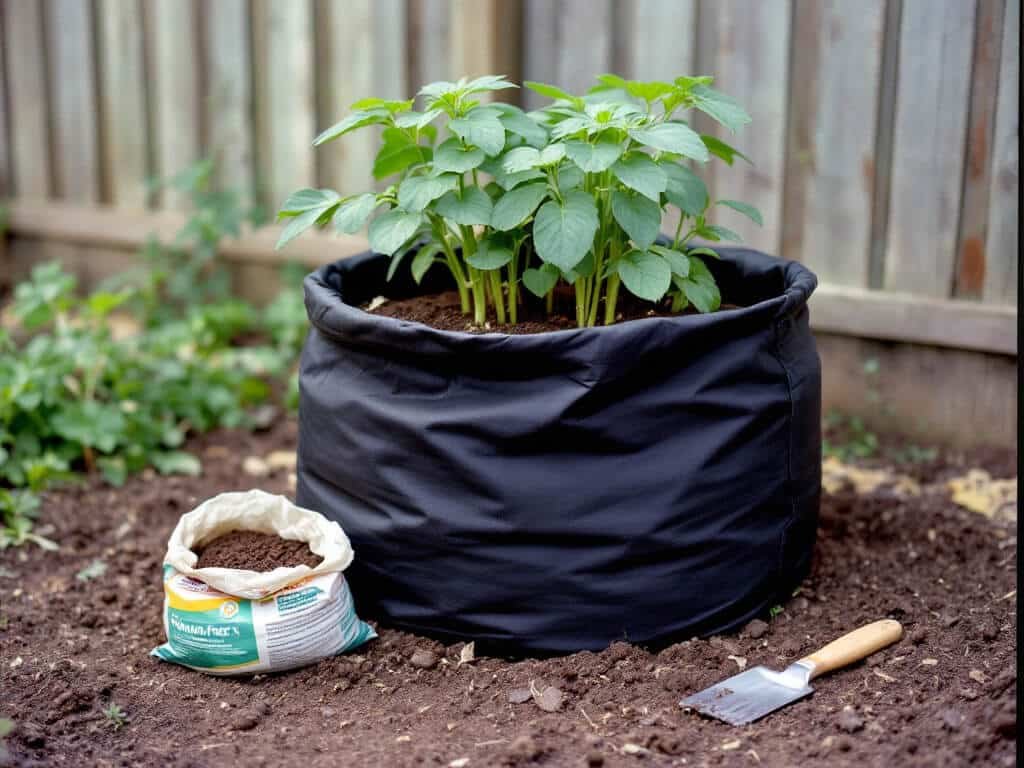
Once foliage emerges, add compost gradually around the stems, leaving only the shoot tips showing. Repeat as the plant grows until the container is nearly full. Leave a small lip at the top so water doesn’t run over the edge when you water.
This does two jobs. It gives the plant more buried stem to work with, and it keeps light off the developing tubers. Tubers that see light turn green, so if you spot any exposed ones, cover them with more compost.
If you run short of compost mid-season, that’s a sign you started with too little. Keep a spare bag nearby.
Harvest and store the potatoes
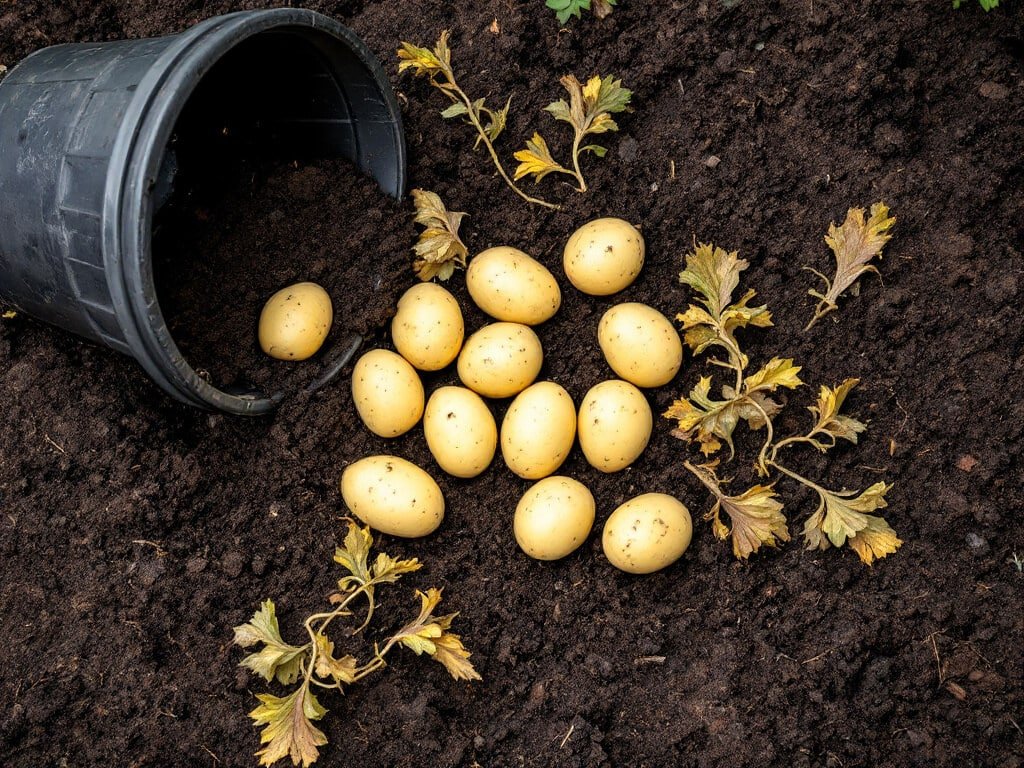
You can harvest early cultivars as new potatoes around flowering. For mature potatoes, wait until the foliage yellows and dies back, then stop watering. Tip the container out carefully and sort through the compost for tubers, including small ones that stayed buried.
Discard any green potatoes. Green means light reached the tuber, and they shouldn’t be eaten.
On storage, I don’t have tested numbers or conditions for this guide, so I won’t guess at temperatures or timelines. The one rule I can stand behind is the green-tuber rule above. Check any storage advice that comes with your seed potato cultivar.
Common problems
Poor drainage or waterlogging. Use a container with unobstructed drainage holes and a free-draining mix, and don’t leave the pot standing in water.
Dry compost and small tubers. Check containers frequently and water when the compost dries out, especially in hot or dry weather.
Green tubers. Light is the cause. Keep covering exposed tubers with compost and discard any that have turned green.
Frost-damaged foliage. Plant after local frost risk has passed, or move containers to a frost-free, sheltered place when frost is forecast.
A weak crop. Start with certified seed potatoes, and choose an early cultivar for smaller containers and quicker cropping.
Running out of growing medium. Keep adding compost as the stems grow until the container is nearly full, with a small lip left for watering.
When to expect results
Chitted shoots are ready to plant at about 2–5 cm long. Early cultivars are usually planted in spring. The Royal Horticultural Society’s container guidance says March for early potatoes, but that is a UK date. In the US, go by your local last frost date instead, which varies widely across zones 5 to 9.
After planting, shoots emerge and you add compost progressively as the foliage develops. New potatoes can be harvested around flowering. Mature potatoes are ready when the foliage yellows and dies back.
I can’t give you a reliable number of days. It depends on the cultivar and the conditions, so watch the plant rather than the calendar.
FAQ
How many potatoes can go in one container?
Use one seed potato per 30 cm (12 in) of pot diameter. A 30 cm container therefore generally holds one seed potato.
Do potatoes need to be covered as they grow?
Yes. Add compost gradually around the emerging stems, leaving the shoot tips exposed, until the container is nearly full. This keeps light off the developing tubers.
How do you know container potatoes are ready to harvest?
New potatoes may be harvested around flowering, while mature potatoes are ready when the foliage yellows and dies back. Stop watering at that stage, then empty the container carefully.