12 Container Gardening Flowers Combinations
The hardest part of choosing container gardening flowers combinations is not color. It is finding plants that want the same light and the same watering routine, because a pot forces them to share both. Get that right and almost any color scheme works.
The twelve designs below are grouped loosely by growing conditions: most are for full sun, two are for light shade, and one is for dry sites. Each entry says what the combination is built from, what to watch, and who should skip it. In zones 5 to 9, treat most of these summer bedding plants as annuals and plan to replace them at the end of the season.
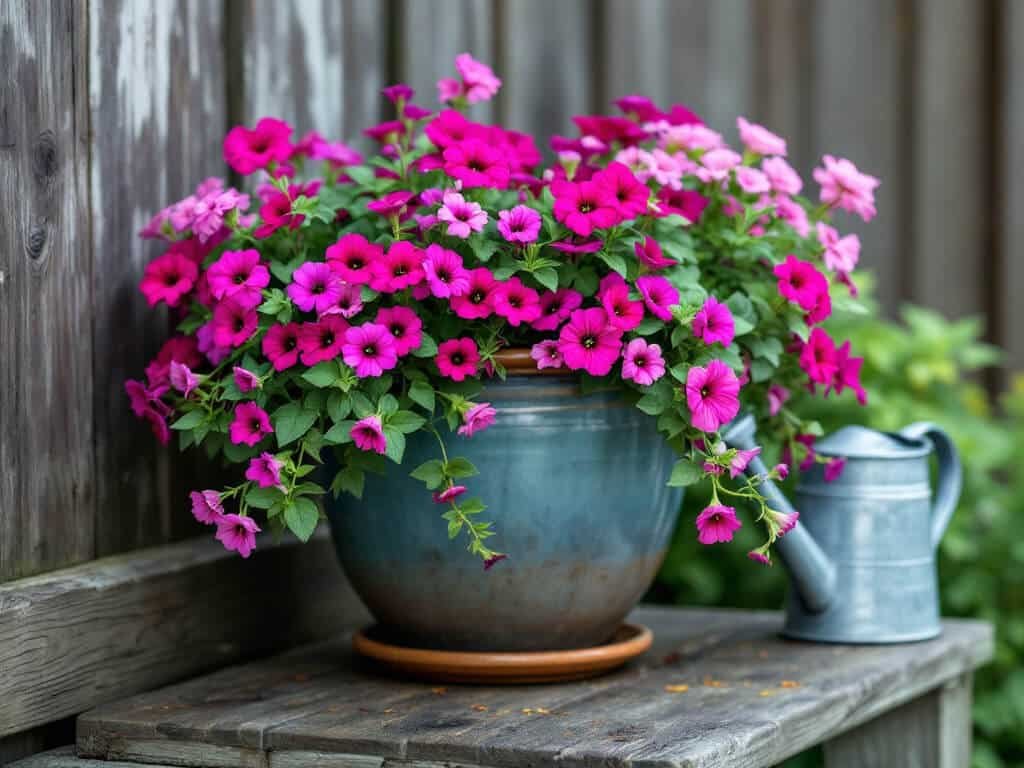
Calibrachoa, Petunia, and Verbena
This is a full-sun design built around trailing plants. Put the trailing plants near the rim so they spill over the edge, and fill the pot with a container potting mix, not garden soil.
The trio works because all three are sun-loving summer bedding plants, so their water needs line up reasonably well. Check the mature size of each cultivar before you plant so the pot isn’t crammed on day one.
Skip it for a shady porch. Everything in this pot expects sun.
Lantana, Nemesia, and Diascia
Here lantana (or another upright plant) takes the height, and nemesia and diascia fill in below it with rounded growth. That follows the thriller-filler-spiller structure, which keeps a pot from looking like a flat mat of one shape.
Group these only where light and moisture needs actually align. Read the tags on the specific cultivars you buy and confirm they agree on sun exposure before they go in the same pot.
This one isn’t for gardeners who want a no-checking, grab-three-plants approach. It rewards a little label reading.
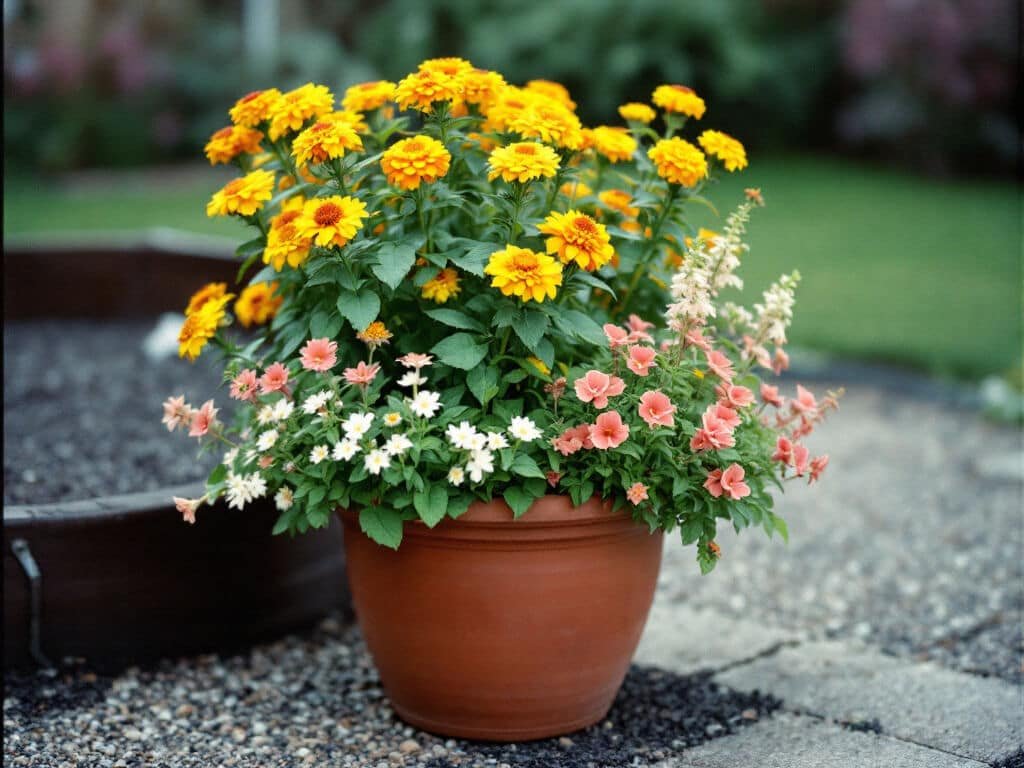
Salvia, Lantana, and Trailing Verbena
Upright flowers on top and a trailing edge below give you height and movement with just three plants. Salvia and lantana handle the vertical work, and the verbena softens the rim.
Choose cultivars suited to the container’s sun exposure. Salvia and lantana both come in a range of sizes, so a compact pot calls for compact types.
Not for a spot that gets only a few hours of light. This is a sun combination, and it will stretch and sulk without it.
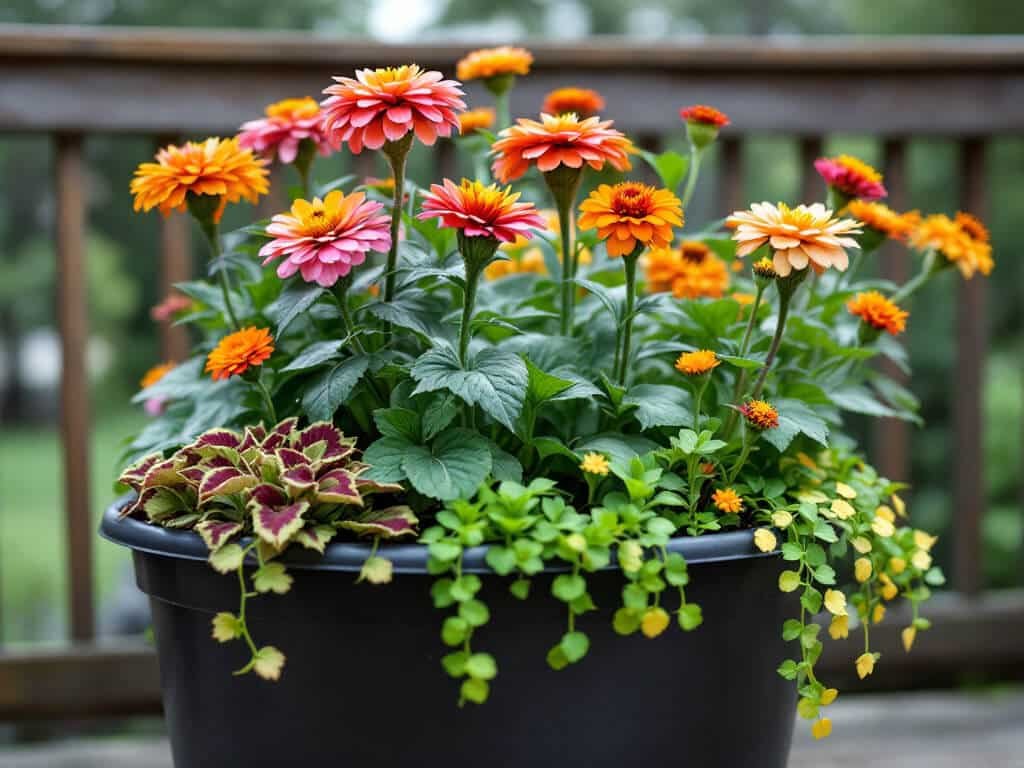
Zinnia, Coleus, and Creeping Jenny
This design pairs an upright flowering plant (zinnia), colorful foliage (coleus), and a spiller (creeping Jenny). It’s the trickiest combination on this list, because zinnia is a sun plant while coleus tolerates or prefers light shade.
Only use it where the coleus cultivar and the zinnia can tolerate the same light, and where the creeping Jenny’s moisture needs fit too. If you can’t confirm that, pick a different recipe.
Not for beginners who don’t want to troubleshoot. Choose one of the sun-only or shade-only pots instead.
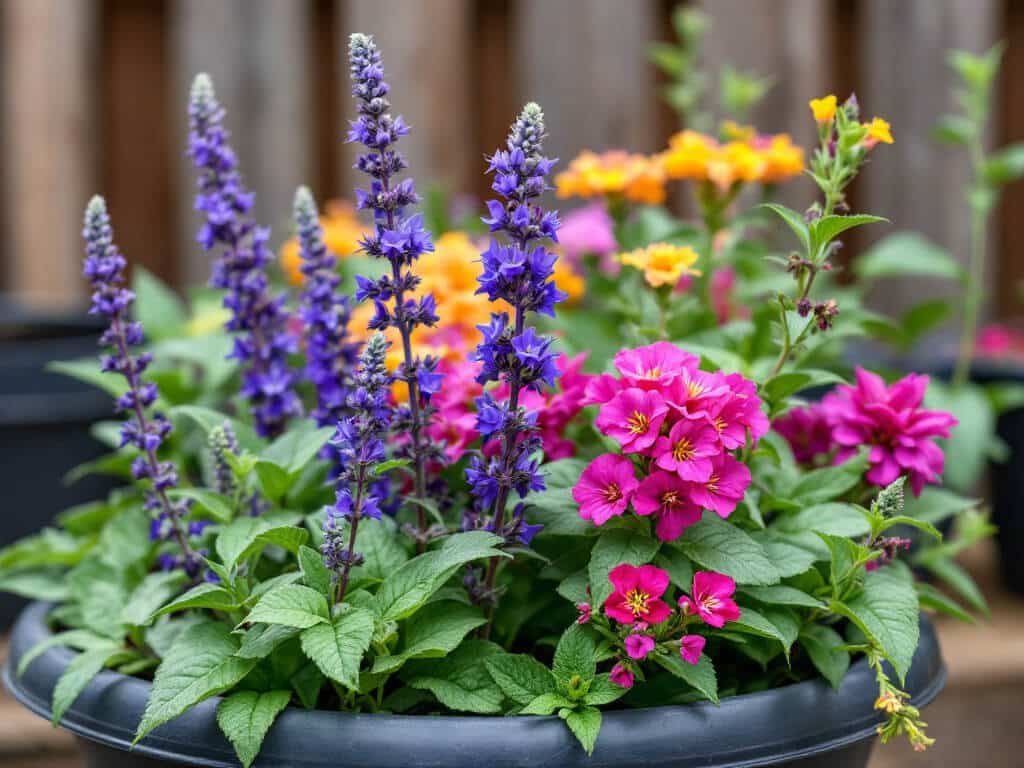
Begonia, Bacopa, and Torenia
This is a light-shade combination, built from flowering plants that tolerate or prefer lower light. Begonias, bacopa, and torenia all suit a spot that doesn’t get full sun.
Keep the container evenly supplied with moisture. Don’t pair these with drought-tolerant plants, and don’t let the pot dry out between waterings and then flood it.
It isn’t for a hot, sun-baked patio. Those conditions call for the full-sun designs elsewhere on this list.
Impatiens, Coleus, and Creeping Jenny
A shade-tolerant mix of foliage and flowers, this works because impatiens and coleus both like consistent moisture. Place the creeping Jenny at the edge, where it can spill over the rim.
Keep this pot physically and mentally separate from your dry-sun containers. If you water the whole patio with one quick pass, this pot will end up either too dry or fine while its neighbors drown.
Skip it if your only open spot gets all-day sun.
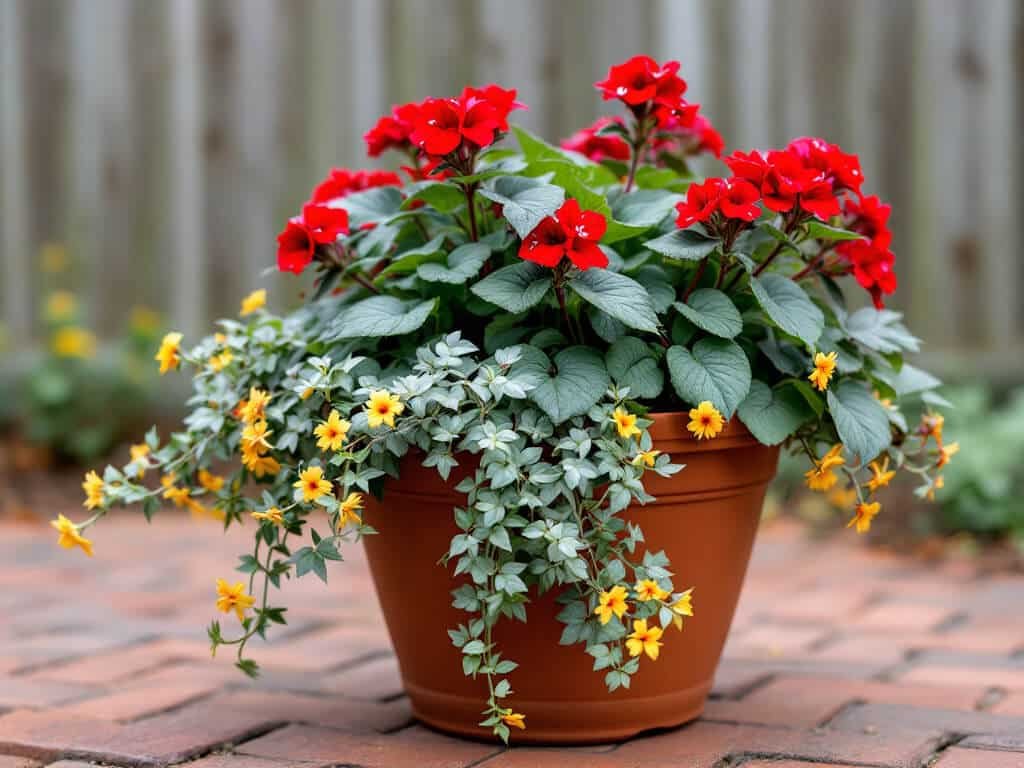
Pelargonium, Calibrachoa, and Silver Falls
A sunny design that pairs an upright or mounded plant (pelargonium, which most people call geranium) with two trailing forms, calibrachoa and silver falls. The mounded center keeps the pot from looking top-light.
Use plants with comparable sun and watering requirements, and keep it away from moisture-lovers like impatiens and coleus. Penn State specifically contrasts sun-loving, relatively dry geraniums with those two.
This is not the pot for a shady entry. It wants sun and a slightly more relaxed watering schedule.
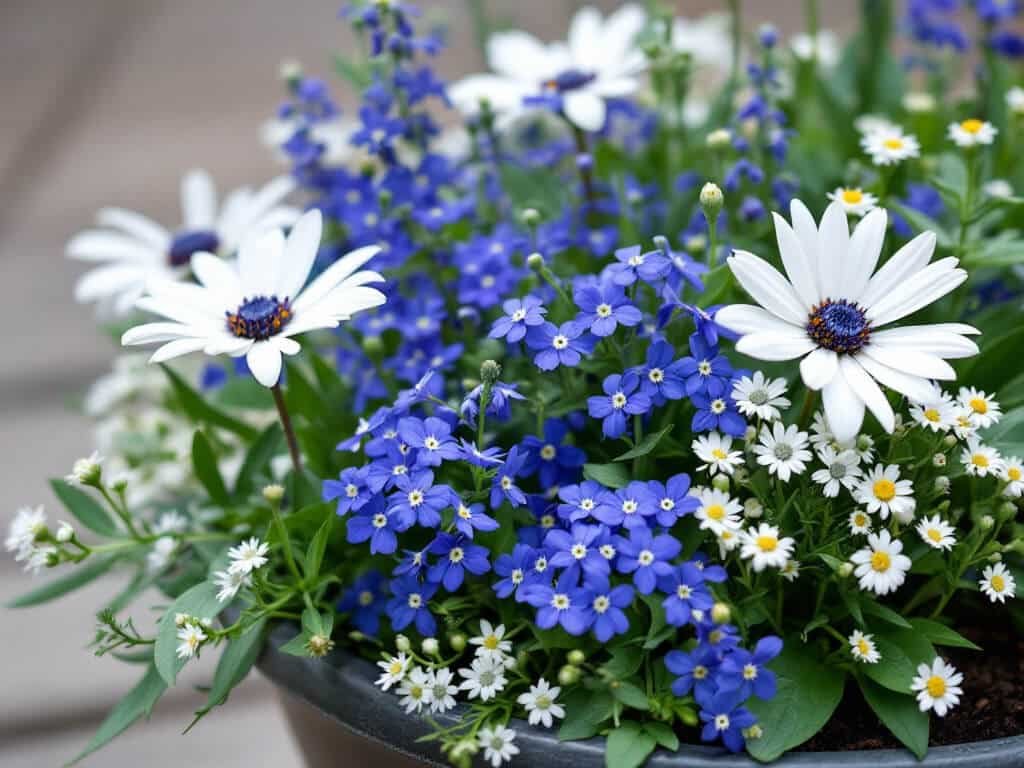
Osteospermum, Lobelia, and Alyssum
A cool-toned display with an upright flower (osteospermum), a trailing plant (lobelia), and a scented filler (alyssum). The scent is a practical bonus near a seat or doorway.
Repeat the same selection across several containers. Three matching pots on a step or deck look planned, where three different ones can look random.
It isn’t for gardeners who want warm, hot-colored displays. This palette runs cool by design.
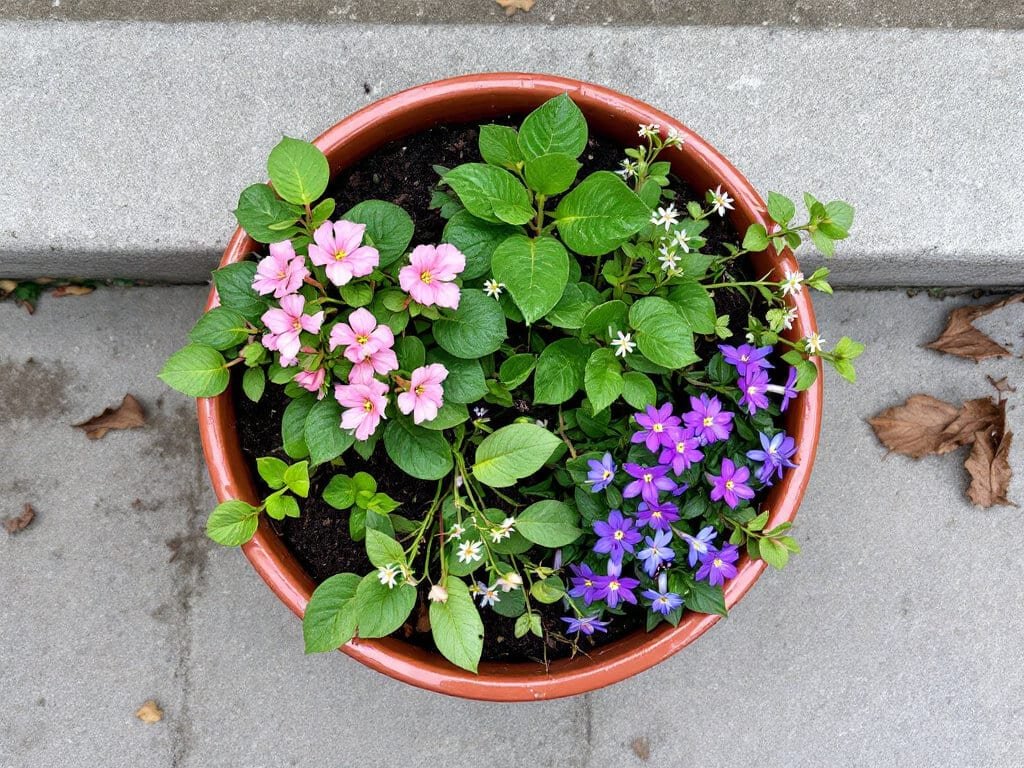
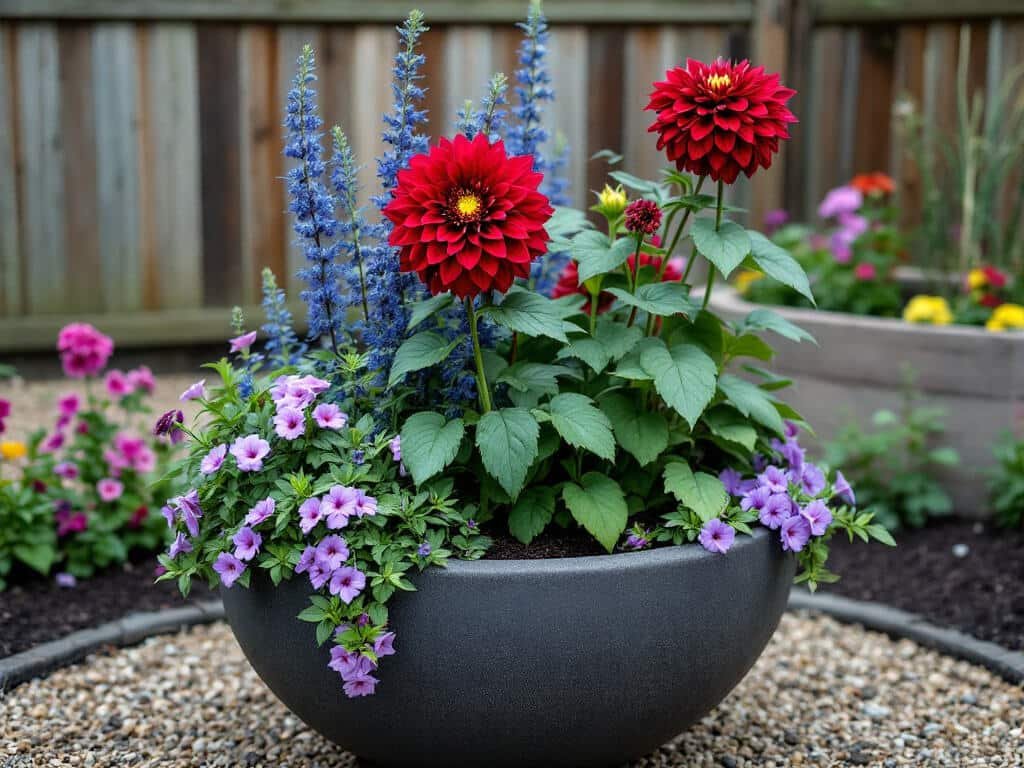
Dahlia, Salvia, and Petunia
A focal dahlia, upright salvia, and trailing petunia follow the classic structure of focal plant, upright, and trailing. The dahlia is the one your eye lands on, so give it the center of the pot.
Match all three to the same sun exposure and check the mature size of your dahlia cultivar. Dahlias vary a lot, and a large one can crowd out the rest.
Not for tiny pots. This combination needs a container with room to carry a focal plant.
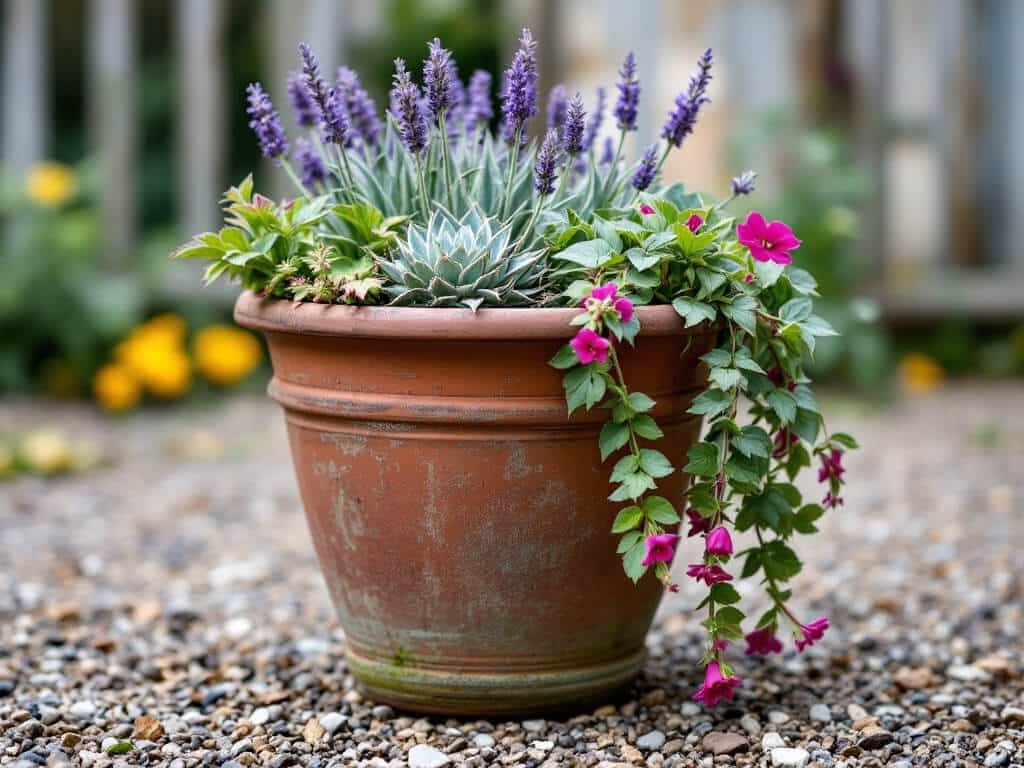
Lavender, Sedum, and Trailing Verbena
This is the dry-site design. Lavender and sedum suit sunny containers where the soil isn’t kept constantly moist, and the trailing verbena softens the rim.
Do not combine this with plants that need consistently moist soil. A pot that makes the lavender happy will rot out a moisture-lover, and the reverse is also true.
It isn’t for anyone who likes to water every day or who tends to overwater. This pot punishes that habit.
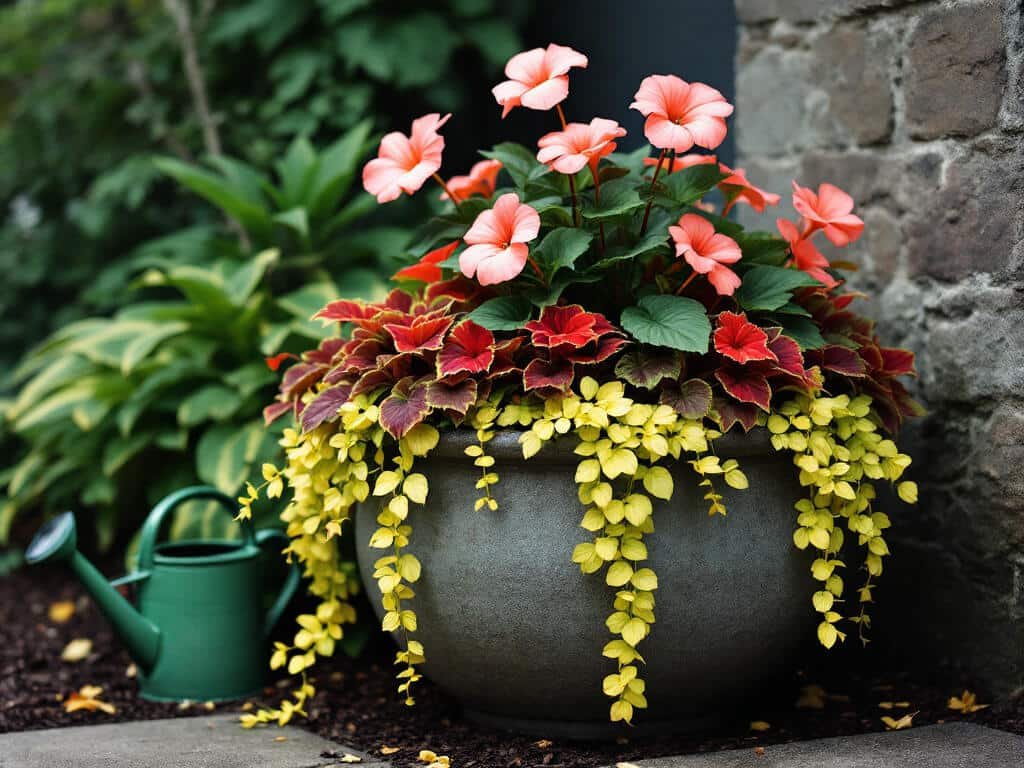
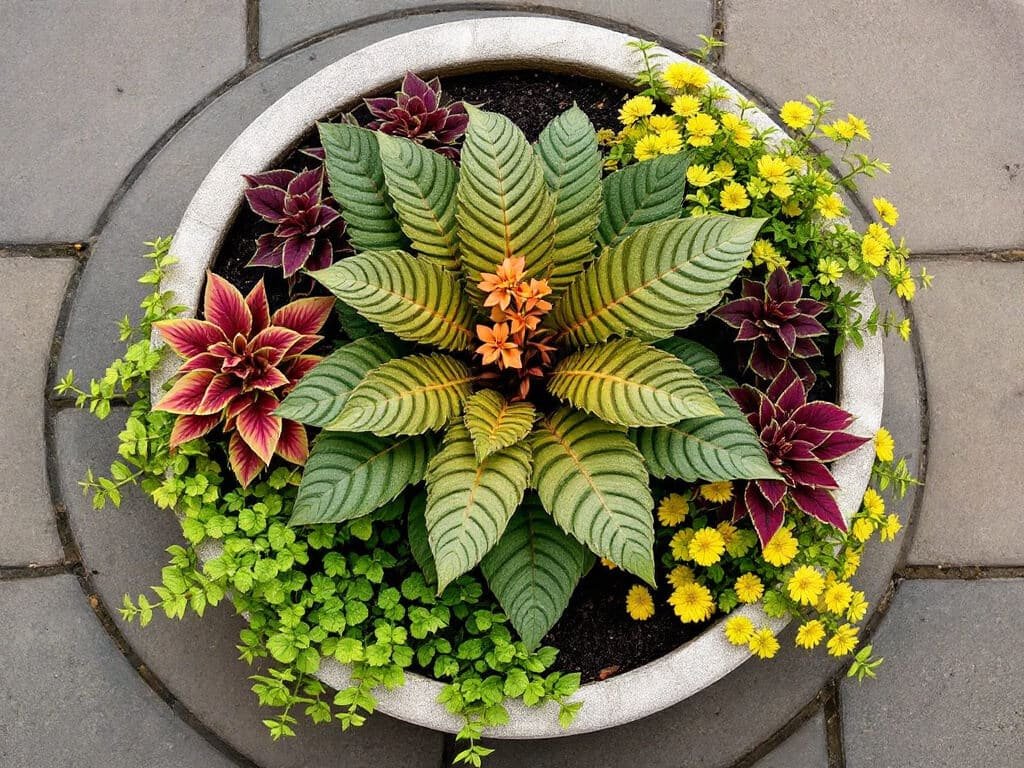
Canna, Coleus, and Creeping Jenny
A bold thriller (canna), a foliage filler (coleus), and a spiller (creeping Jenny). Where you put the canna depends on how the pot will be seen.
In a container viewed from all sides, place the tallest plant in the center. In a one-sided display against a wall or railing, push it toward the back.
Check that the coleus and creeping Jenny share a light and moisture range with the canna you’ve chosen. This is not for a small balcony pot, since a canna needs room to look in proportion.
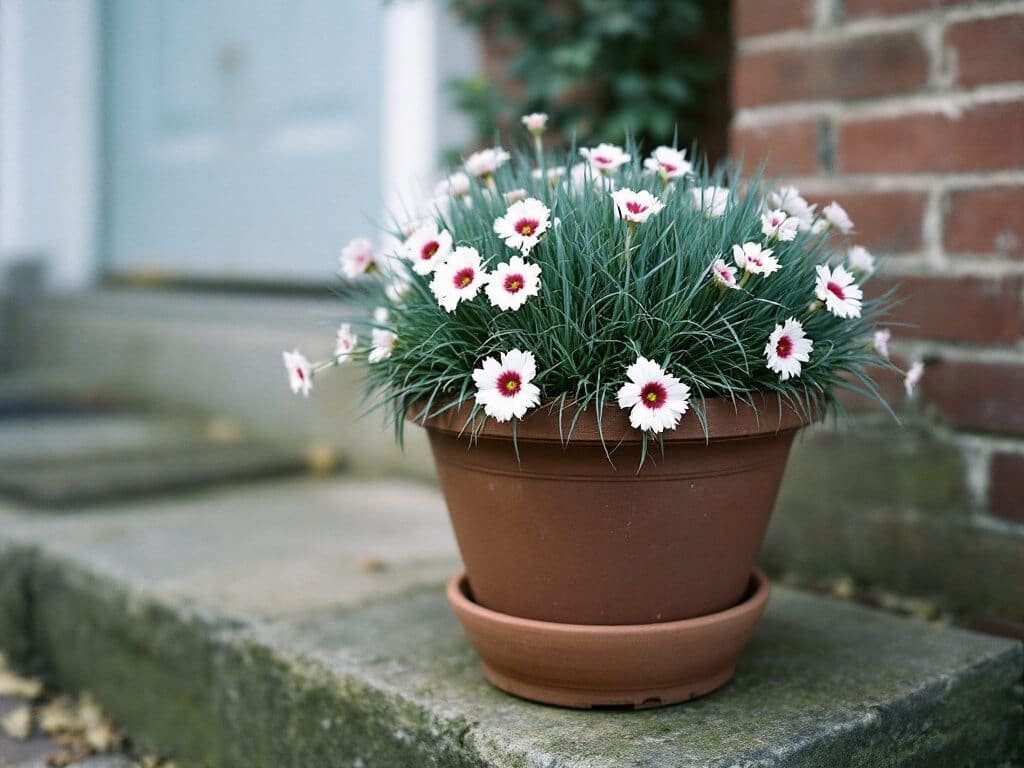
Dianthus ‘Gran’s Favourite’
Sometimes one plant in one pot is the better call. This dianthus is a sunny-container choice with fragrance and gray foliage, which suits placement near a patio or doorway where you’ll actually notice the scent.
There’s nothing to match, balance, or edit, so it’s the lowest-effort option here. You only have to give it sun and a good potting mix.
It isn’t for anyone who wants a big, layered display from a single pot. For that, pick one of the combinations above.
How to choose
Start with sun exposure, before you think about colors or flower shapes. Most summer bedding plants prefer full sun, while begonias, impatiens, coleus, bacopa, and torenia tolerate or prefer light shade. Stand in the spot at midday and decide which group you’re shopping from.
Then match water needs. Don’t put sun-loving, relatively dry-soil plants in the same pot as moisture-loving impatiens and coleus. One of them will always be unhappy.
Next, build structure with a thriller, filler, and spiller instead of three plants with the same habit. The thriller adds height, the filler occupies the middle, and the spiller trails over the rim.
Check the mature size of each cultivar so the container isn’t overcrowded, and use a proper container potting mix. Penn State lists potting mix selection as one of the four basic container-gardening principles.
Choose annuals for one-season displays. Use hardy perennials only when overwintering conditions and the container’s hardiness suit your zone.
No combination has a universal pest or disease profile. Problems depend on the plants you pick and how you grow them, so don’t count on any pairing to repel pests on its own.
FAQ
Can any flowers be planted together in one container?
No. Choose plants with similar light, water, and general growing requirements. Penn State contrasts sun-loving, relatively dry geraniums with moisture-loving impatiens and coleus as a pairing to avoid.
What is the thriller, filler, spiller method?
It combines a tall focal plant, rounded middle plants, and trailing plants near the container edge. The goal is a balanced, full display.
Should every container have three types of plants?
No. The thriller-filler-spiller approach is a useful framework, but a single perennial or a simpler combination can also work. The RHS lists both mixed seasonal displays and individual award-winning perennials for containers.