
How to Grow Raspberries in Pots
If you want to grow raspberries in pots, two choices decide most of the outcome: which type of raspberry you buy and how big a container you give it. Get those right and the rest is routine watering, feeding, and pruning. Get them wrong and you’ll have a dry, crowded pot that sulks.
Raspberries are deciduous perennial shrubs with biennial canes. That just means each cane lives two seasons, and a pot has limited room for them. The steps below keep the plant manageable while still giving you fruit.
Choose a container-friendly raspberry
Pick a compact, cold-hardy cultivar rated for your USDA zone, and favor primocane-fruiting types. Primocane-fruiting raspberries are generally the best choice for containers, and they fruit from late summer into fall.
Cultivars that reputable sources list for pots include ‘Ruby Beauty,’ ‘Glen Fyne,’ ‘Heritage,’ ‘Autumn Bliss,’ and ‘Caroline.’ Hardiness varies by cultivar, so check the tag or the nursery’s zone rating before you buy. A plant that sulks through your winter won’t be much use however good the pot is.
Buy certified, disease-free stock. Virus diseases are a known problem with raspberries, and a plant propagated from a questionable source can carry one into your pot. I’d skip the free canes from a neighbor’s patch for this reason.
Gather what you need
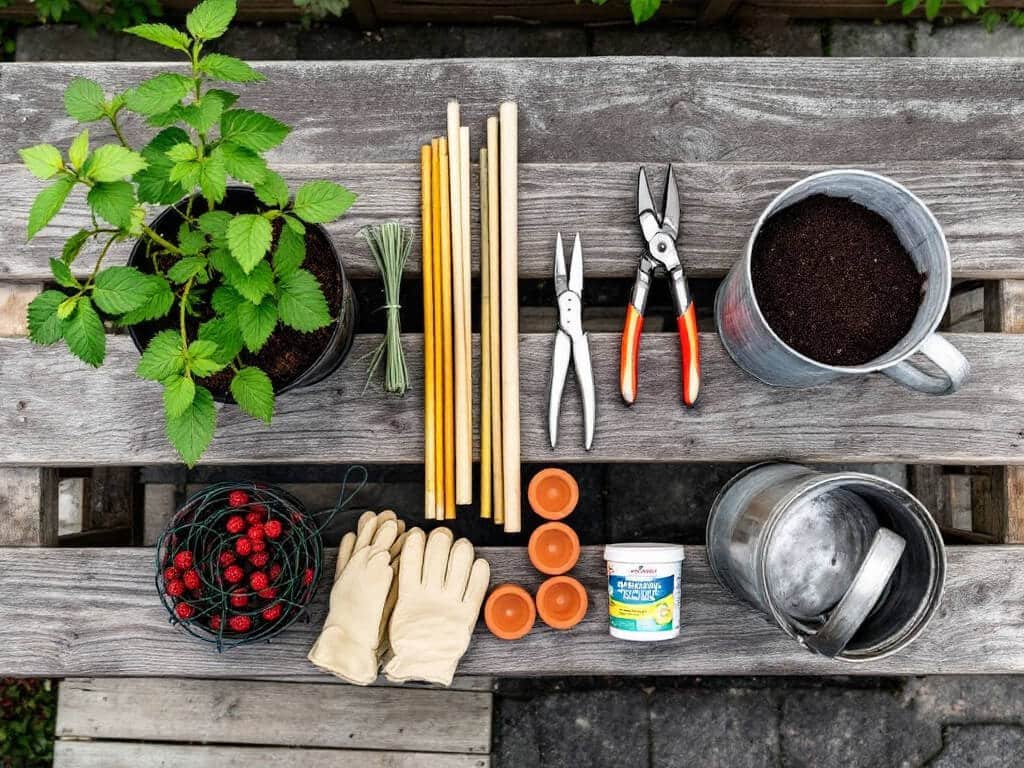
Collect everything before planting day so you aren’t improvising with a bare-root plant sitting out.
– A compact raspberry plant, preferably primocane-fruiting
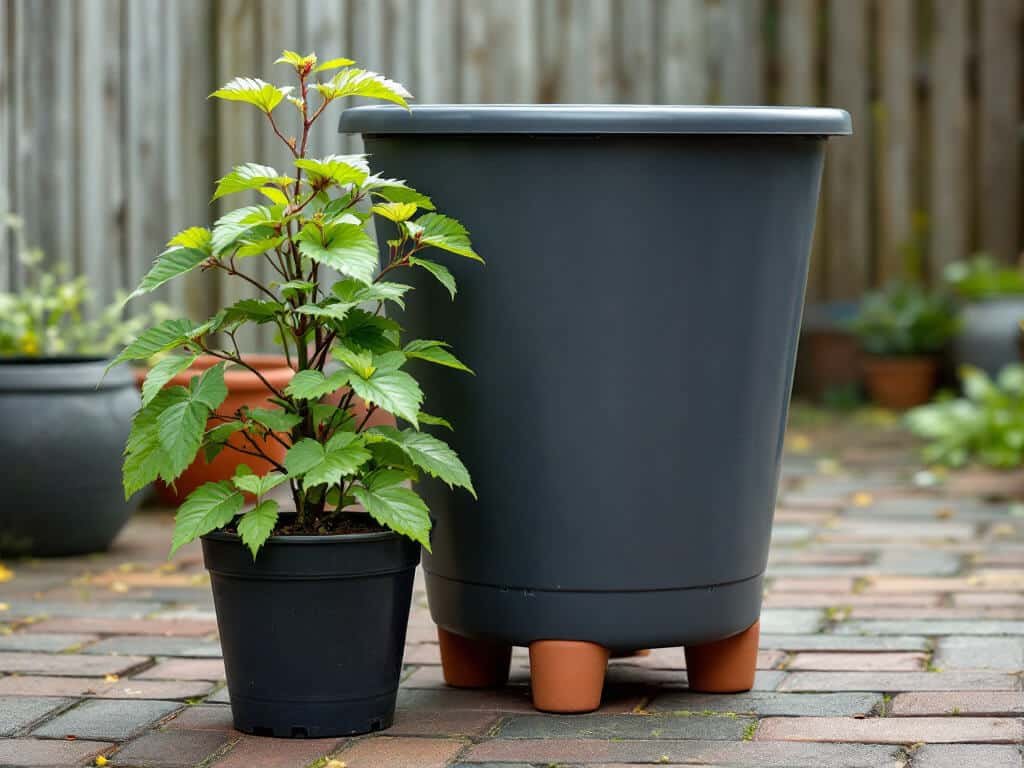
– A container at least 2 feet deep, holding roughly 20 to 30 gallons
– Pot feet or another way to keep the drainage holes clear
– One part perlite or pumice, one part finely ground bark, and two parts garden or potting soil
– Sturdy bamboo canes or poles and soft ties
– Slow-release fertilizer for containers, or a general-purpose liquid fertilizer
– Clean pruners, gloves, and water
Select a deep, well-drained pot
Raspberries are relatively deep rooted, so choose a pot at least 2 feet deep and about 20 to 30 gallons. Oregon State University recommends that size. The RHS gives a smaller minimum of 40 cm wide by 30 cm deep for compact varieties, but for a plant you want to keep for years, the larger pot is the safer call.
Drainage matters as much as size. The pot needs multiple drainage holes, and it should sit on pot feet or something similar so the holes never get blocked against a patio or deck. Roots that stay wet are the fastest way to lose a container raspberry, since root problems follow poorly drained conditions.
Prepare the growing medium
Mix one part perlite or pumice, one part finely ground bark, and two parts garden or potting soil. Raspberries want a rich, moisture-retentive, slightly acidic mix that still drains freely, and this blend is built for exactly that balance.
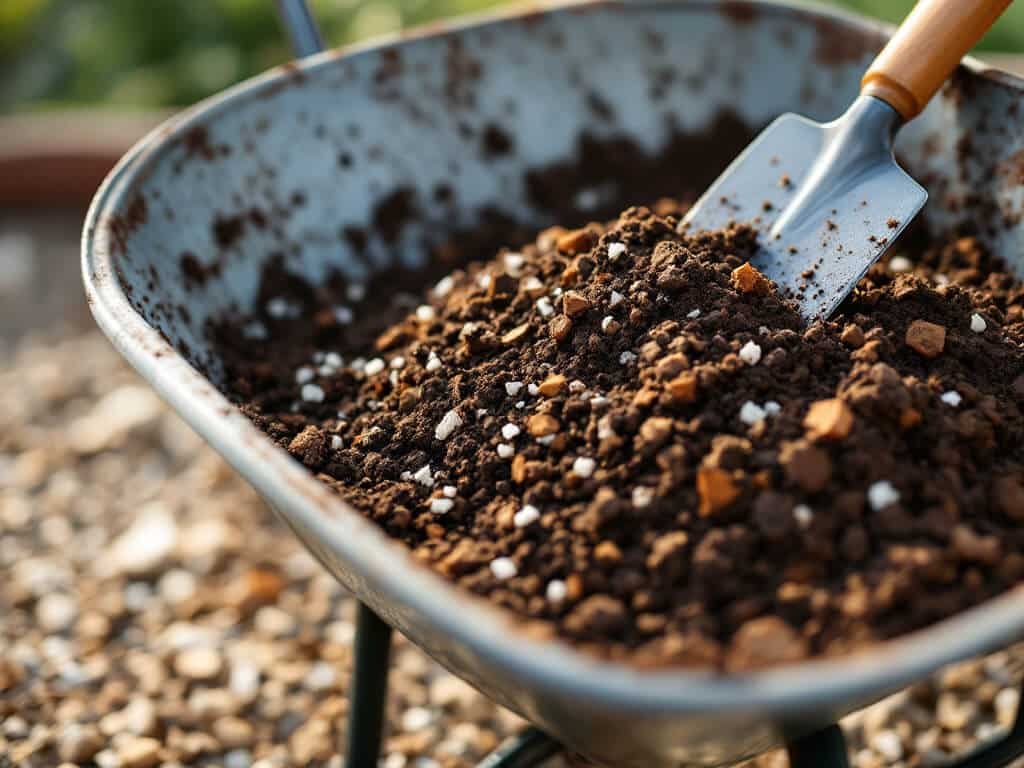
Mix it in a wheelbarrow or on a tarp before it goes in the pot, so the perlite or pumice and bark are evenly distributed rather than layered. Fill the container to a level that lets the plant sit at its original depth, which comes next.
Plant the raspberry
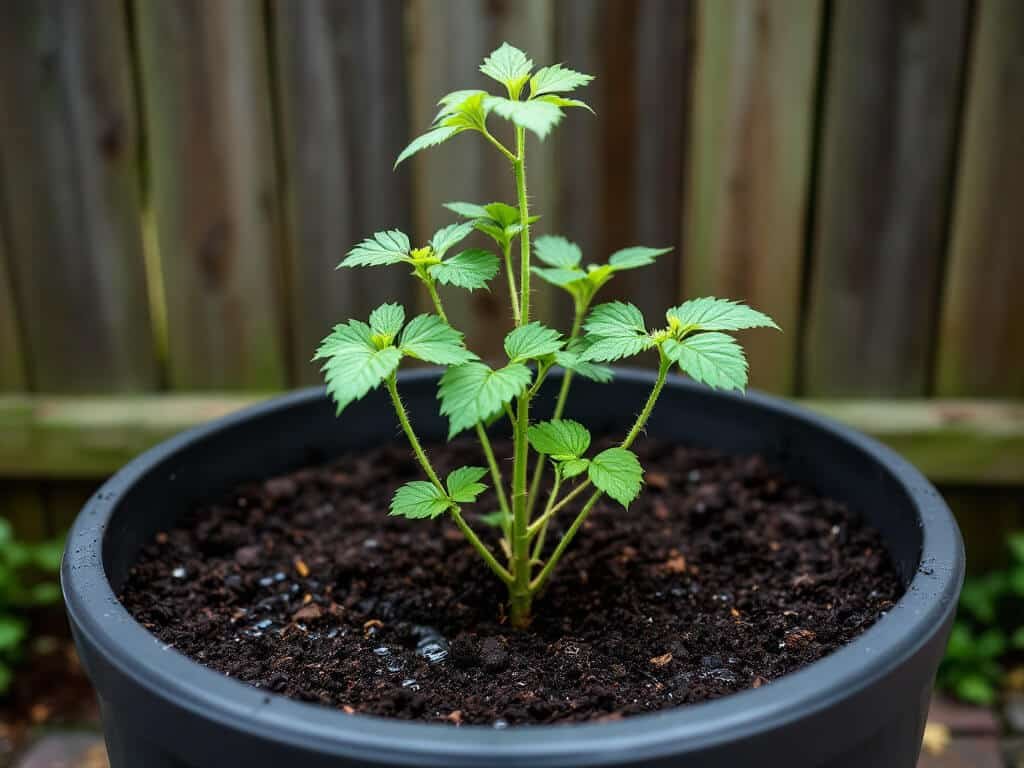
Set the plant in the center of the pot at the same depth it was growing before, then water thoroughly. Don’t bury the crown deeper than it was, and don’t leave roots exposed above the mix.
Timing is flexible with container plants. Dormant plants can go in from late fall through early spring wherever the soil is workable. Plants already growing in a nursery pot can also be planted at other times, because there’s less root disturbance.
Position the pot in full sun
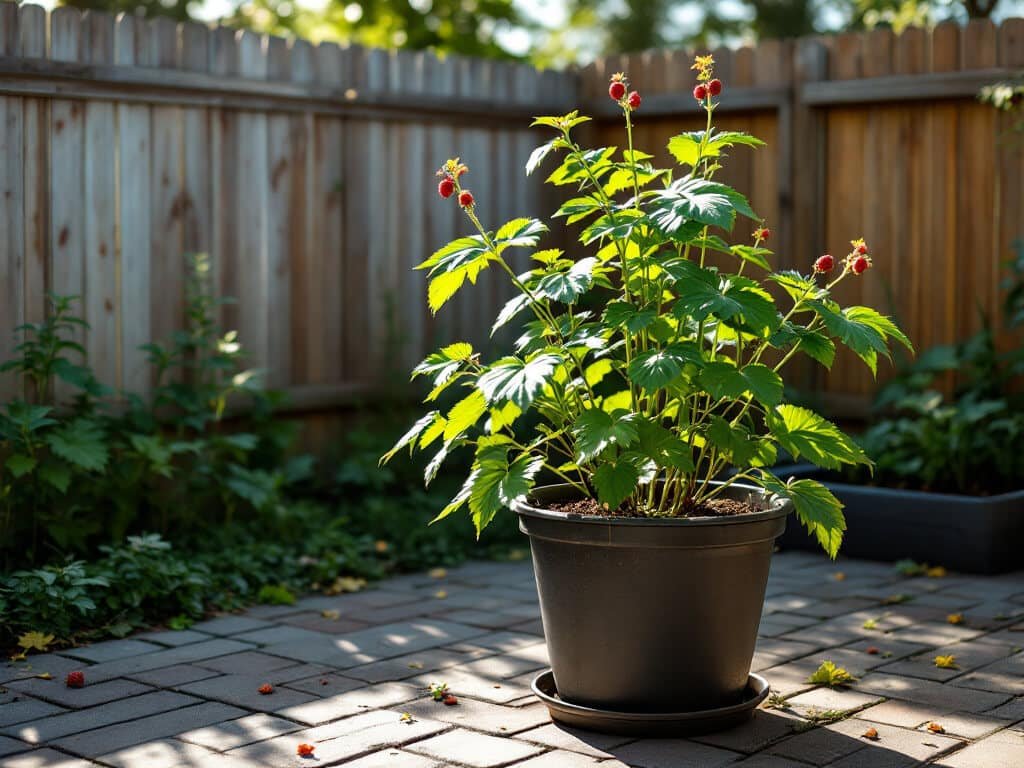
Put the container where it gets good sun, since raspberries prefer full sun. They tolerate partial shade, but fruiting suffers when light is limited, so give the pot your sunniest spot.
The advantage of a pot is that you can move it. If a spot turns out shadier than you thought, shift the container before the canes get tall and awkward. Once the pot is full of wet mix and growing canes, it’s much harder to move.
Add support
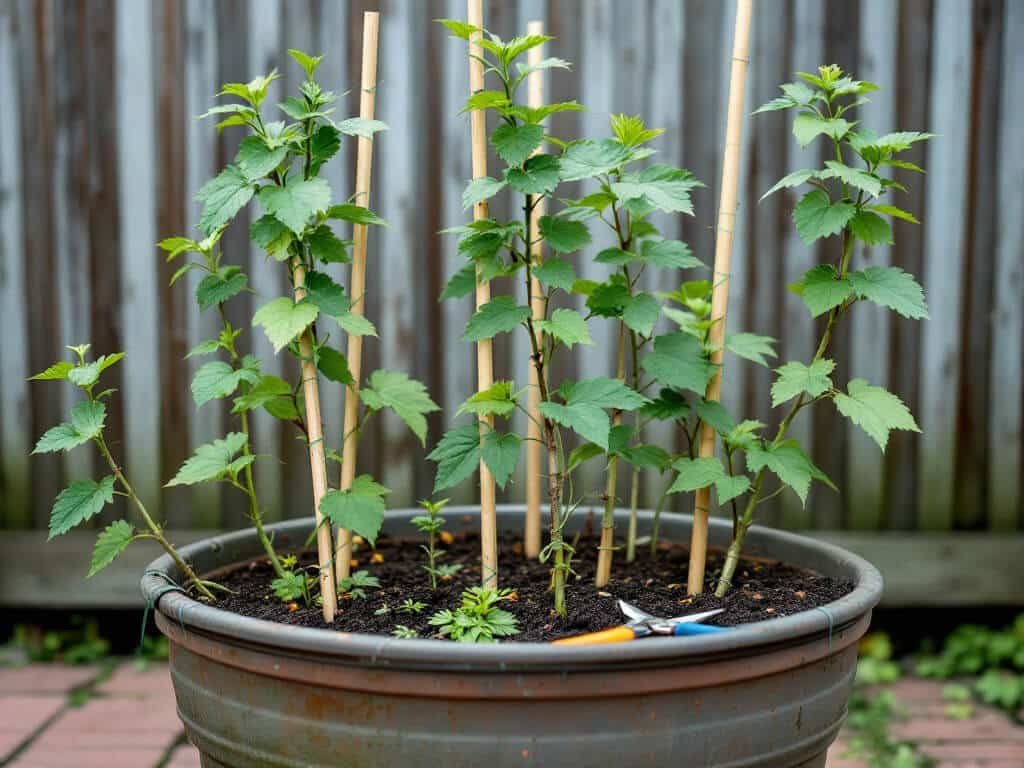
Push sturdy bamboo canes or poles into the pot and tie new growth to them as it develops. Use soft ties so they don’t cut into the stems.
Do this early rather than waiting until the canes lean. Canes that flop or snap are a common container problem, and staking before they get long is easier than rescuing them afterward.
Water and feed the plant
Check the pot often, especially in dry weather, because a container’s limited soil volume dries out quickly. The mix should stay moisture-retentive but never soggy. Water thoroughly when needed rather than giving small sips.
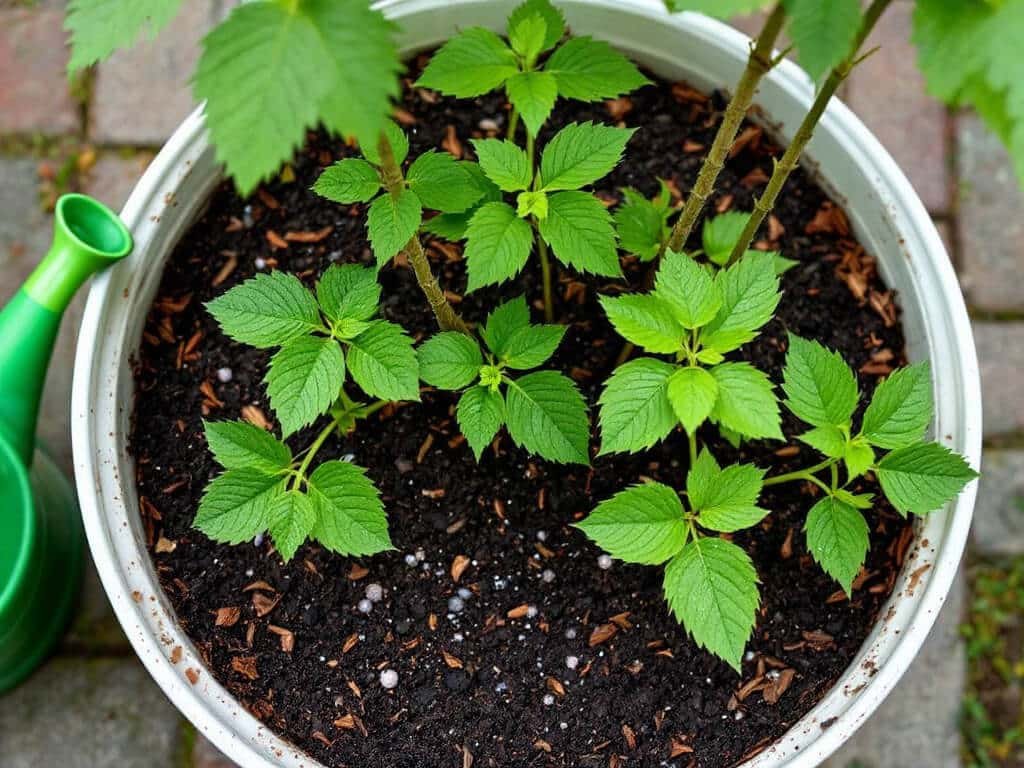
For feeding, use a general-purpose liquid fertilizer monthly through the growing season, or work in a slow-release fertilizer made for container plants. Pick one method and stick with it. Consistent watering and feeding are what carry a new plant through establishment.
Thin and prune the canes
When new primocanes reach about 2 feet tall, thin them. In a 20 to 30 gallon container, leave four or five canes for summer-bearing plants or five to eight for everbearing plants. Remove the weak ones first, and cut out any extras that crowd the pot.
Thinning keeps the plant from outgrowing its container. It also helps fruiting, because crowded canes compete for light, water, and feed. Container raspberries need this regular pruning to stay in bounds, so don’t skip it.
Common problems
Most trouble in a pot comes back to water, crowding, or plant health. Here is what to check:
– The pot dries out quickly: check moisture more often and water thoroughly. Container raspberries need closer attention than plants in the ground.
– Roots stay wet or start to rot: use a free-draining mix, keep the drainage holes open, and raise the pot slightly off the surface.
– The plant is overcrowded: thin primocanes at about 2 feet tall and remove weak or excess canes.
– Canes flop or break: install sturdy canes or poles and tie new growth as it develops.
– Fruit production is poor: check for good sun, regular feeding, and whether crowding or drought is holding the plant back.
– Vigor declines or virus symptoms appear: this points back to plant stock, so start with certified, disease-free plants. Sap-feeding insects such as whiteflies can also show up, so look over the leaves now and then.
When to expect results
Plan on patience for the first fruit. Many raspberry plants mature and produce about two years after planting, though timing depends on the cultivar and how large the plant was when you bought it.
Once established, primocane-fruiting types generally produce from late summer into fall. In suitable climates, canes that overwinter may give you an additional early-summer crop. The sources don’t give a set number of days for establishment, so judge it by growth. Keep watering and feeding steadily through the first season.
FAQ
Can raspberries grow well in pots?
Yes, but they need a deep container, a well-draining growing medium, regular watering, and careful pruning. Primocane-fruiting cultivars are generally the best choice for container production.
How large should a pot be for raspberries?
Oregon State University recommends a container at least 2 feet deep and 20 to 30 gallons, because raspberries are relatively deep rooted. The RHS gives a smaller minimum for compact cultivars, but the larger container is the more conservative recommendation.
How many raspberry canes should remain in one pot?
For a 20 to 30 gallon container, OSU recommends four to five primocanes for summer-bearing plants or five to eight for everbearing plants once new canes reach about 2 feet tall.