
Strawberry Companion Plants: What to Grow Nearby
Choosing strawberry companion plants is harder than most garden lists make it look, because the evidence for specific pairings is thin. Garlic has a documented but tentative claim behind it. Most of the other popular pairings you’ll see repeated online couldn’t be verified in extension or Royal Horticultural Society (RHS) sources.
What the sources do back up is a short list of things to avoid, mostly crops that leave disease behind in the soil. So this article gives you the few options worth trying, the plants to keep away, and a layout that protects the strawberries first. If you grow in zones 5-9, the advice applies, though you should check the hardiness of your specific variety before planting.
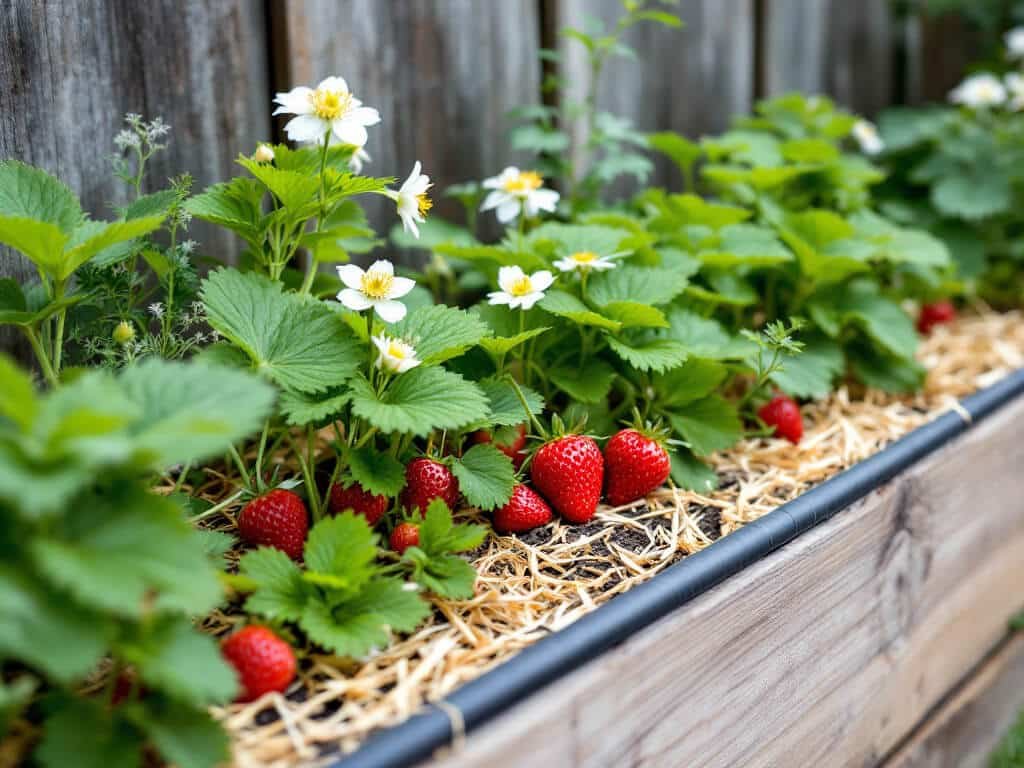
Why pairings matter for strawberry
Strawberries are a perennial fruit crop, but they’re usually grown as a short-term planting because soilborne diseases build up over time. The list of things that go wrong is long: gray mold, leaf diseases, root rots, red stele, plus pests like tarnished plant bug, slugs, thrips, spider mites, and root weevils. A neighboring plant can make some of that worse (shade, humidity, shared disease) far more reliably than it can make anything better.
That changes how you should think about companions. Three popular beliefs don’t hold up:
“Any strongly scented herb will protect strawberries from pests.” The RHS describes garlic’s aphid-repelling use as a proposal, not an established control, and it doesn’t claim broad protection for strawberries.
“Companion planting prevents strawberry disease.” Extension guidance puts the weight elsewhere: full sun, free drainage, air circulation, clean nursery plants, crop rotation, and careful irrigation.
“Tomatoes and strawberries are always compatible.” They aren’t. Both can be hit by Verticillium wilt, and extension sources say to avoid sites recently used for tomatoes, peppers, potatoes, and eggplant.
So treat any companion as a secondary planting. It doesn’t replace drainage, clean plants, weed control, or proper spacing.
Best companion plants for strawberry
Here’s the honest version: no source I could rely on gives a verified, strawberry-specific companion list with measured benefits. What follows are the options with some support, ranked by how much support that is. Where there’s no verified spacing, I’m not going to hand you a number.
Garlic
Garlic is the one pairing with a name attached. The RHS notes that growing garlic with strawberries is proposed as a way to repel aphids, but it presents this cautiously, not as proven. If you want to try it, no validated companion spacing exists, so keep the garlic from crowding the strawberry crowns and follow the spacing for your strawberry cultivar. Think of it as a low-risk experiment, not a pest plan.
Coriander
The RHS says coriander can sometimes deter unwanted insects in other crops. It does not establish a benefit for strawberries specifically. There’s no strawberry-specific spacing recommendation, so don’t trust any figure you see for it. If you grow it, keep it at the edge of the bed where it won’t shade fruit or crowd runners.
Flowering herbs or flowers that attract pollinators
Flowering plants can supply nectar and pollen, which is the logic behind this idea. The reviewed extension sources don’t verify a yield benefit for strawberries or name a species list. No strawberry-companion spacing has been verified either. If you add flowers, keep them out of the strawberry rows and away from the fruit, since anything that raises humidity around berries works against you.
Low, shallow-rooted plants as living mulch
The idea is that a low plant uses open ground that weeds would otherwise take. The sources don’t verify particular species for this or give safe spacing. The practical limit is airflow and harvest access: leave enough open ground to move through the bed, and stick to your strawberry system’s spacing instead of filling every gap. I’d skip this one in a matted-row bed, where runners need the room.
Plants outside the strawberry bed
This is the safest approach. Noncompeting border plants can add habitat without sharing the strawberry root zone. No specific species or measurable pest benefit was verified, so treat it as low-stakes. Put them outside the bed or beyond the recommended row spacing for your system.
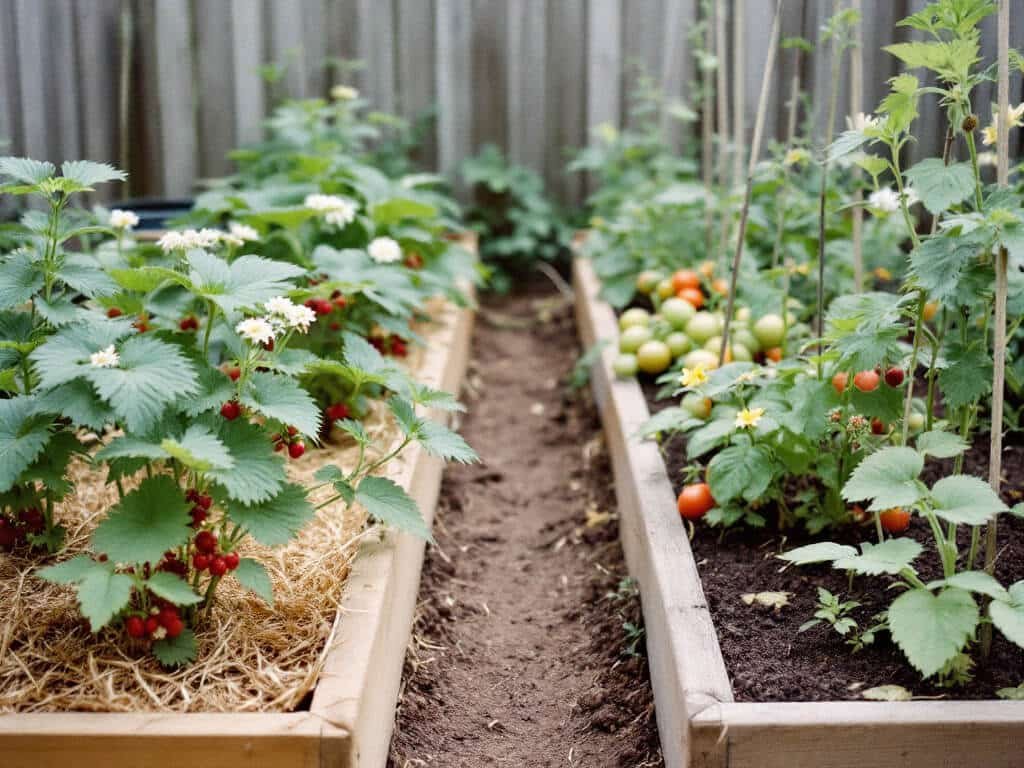
What not to plant with strawberry
Do not plant strawberries where tomatoes, potatoes, peppers, eggplant, or okra grew recently. All of these can harbor Verticillium wilt, and Utah State University Extension advises avoiding recently used sites for strawberries. The issue is mostly about what was in the soil before, though it makes sense to keep these crops out of the strawberry bed as well.
Tomato
Tomatoes and strawberries can share Verticillium wilt risk. If tomatoes grew in a spot recently, pick a different site for strawberries. Extension guidance from Minnesota advises a multi-year interval, so a single skipped season is not a safe reset.
Potato
Potatoes can harbor Verticillium wilt and are listed among the crops to avoid before planting strawberries. A freshly dug potato patch looks like ideal loose soil for a new bed. It’s the wrong choice for exactly that reason.
Pepper
Peppers are included among previous crops tied to Verticillium wilt risk at strawberry sites. Same rule as tomato: choose a different location, and don’t tuck pepper plants into the strawberry rows.
Eggplant
Eggplant sits in the same group of solanaceous crops that can harbor the wilt. If your vegetable garden is mostly tomato-family crops, the strawberry bed needs to go somewhere else.
Okra
Utah State University includes okra among the crops to avoid before strawberries because it may harbor Verticillium wilt. It’s less common in home gardens in the northern part of the range, but worth knowing if you grow it in zones 7-9.
Large trees
Trees compete with strawberries for water and nutrients, and their canopy casts shade. Strawberries want full sun, ideally at least 8 hours a day. Keep the bed beyond the root zone of large trees, not just outside the drip line of the shade.
Layout and spacing
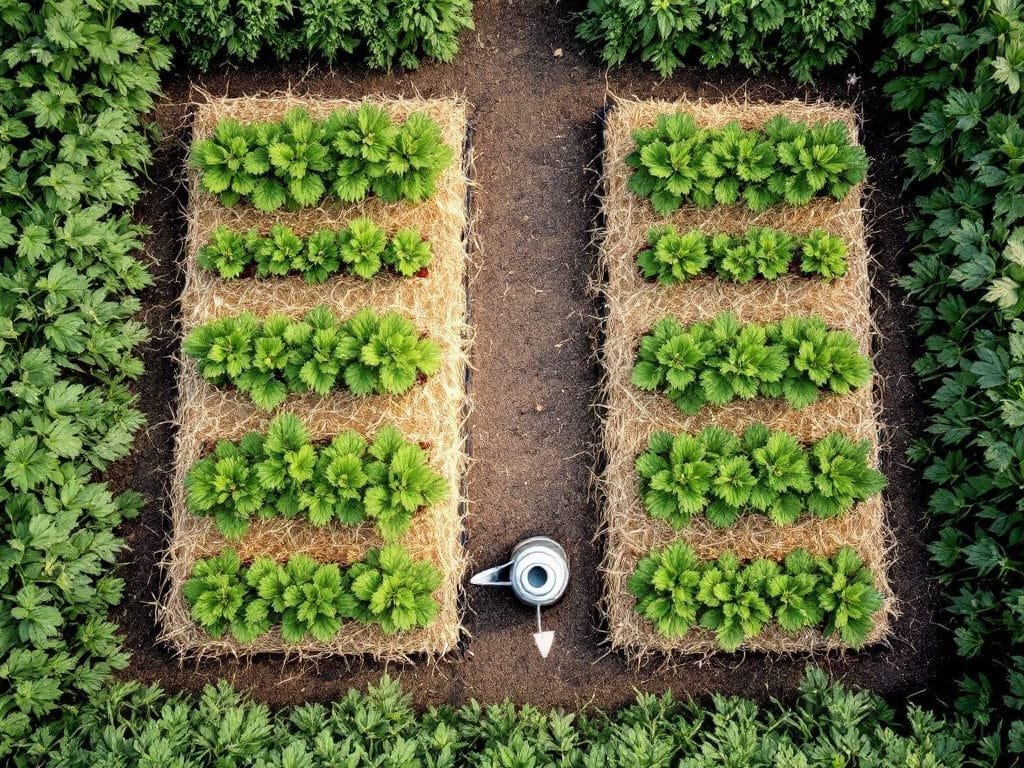
Start with the strawberry system, then fit everything else around it. Plants are typically spaced 12-24 inches apart depending on cultivar and system, and June-bearing types send out runners that expand the planting. If you test garlic or another flowering plant, place it where it won’t shade strawberry foliage, block harvest, or raise humidity around the fruit.
Site: full sun, well-drained loamy or sandy soil with organic matter. Heavy, poorly drained soil raises disease risk.
June-bearing, matted row: 18-24 inches between plants and 3-4 feet between rows.
Day-neutral or everbearing, bed style: closer spacing, about 12 inches between plants and rows.
Companions: at the bed’s edge or outside it, never in the rows.
Water: drip or soaker irrigation, so foliage stays dry where possible.
Open ground: keep enough clear space for airflow, harvesting, and runner management.
FAQ
Can garlic be planted with strawberries?
Garlic is sometimes grown with strawberries, and the RHS reports a proposed aphid-repelling effect, but it isn’t presented as proven. Keep garlic from crowding strawberry crowns and put the strawberries’ spacing and airflow first.
Can strawberries be planted after tomatoes or potatoes?
Avoid it when you can, because both crops can harbor Verticillium wilt. Utah State University recommends choosing a different site, and other extension guidance advises a multi-year interval.
How much space do strawberries need?
It depends on the system. Common guidance gives 18-24 inches between June-bearing plants and 3-4 feet between rows, while day-neutral or everbearing beds may use about 12 inches between plants and rows.