
Oregano Companion Plants: What to Grow Nearby
Choosing oregano companion plants mostly comes down to water and drainage, not pest control. Oregano wants full sun, lean soil, and a dry-down between waterings, so the best neighbors are plants that want the same thing. Anything that needs steady moisture will either rot your oregano or go thirsty beside it.
This guide sorts the good neighbors from the poor ones, and it is upfront about which popular claims have no solid evidence behind them.
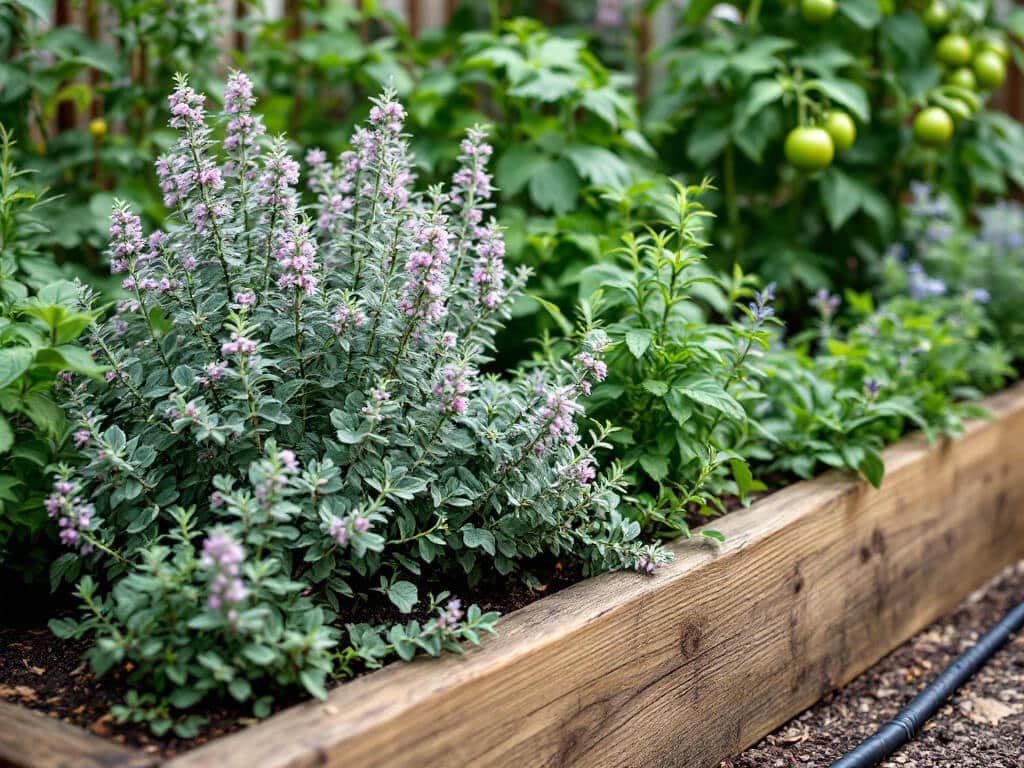
Why pairings matter for oregano
Oregano is a low, spreading herbaceous perennial, usually grown as Origanum vulgare. It is generally listed as hardy in USDA zones 4 to 9, though that varies by species and cultivar, and some types get treated as annuals outside their range. It is a Mediterranean herb, and it behaves like one: full sun, sharply drained soil, and low to moderate water.
That makes the watering schedule the thing to plan around. Excess moisture can contribute to root and stem rot, and a pot or bed shared with a thirsty plant will get watered for the thirsty plant. Don’t plant oregano with anything that wants consistently moist, rich soil, because you will end up overwatering one of them.
Now the myth. You will see claims that oregano reliably repels neighboring pests, makes tomatoes taste better, or acts as a protective barrier around vegetables. Controlled research does not back those up. Some traditional pairings are perfectly compatible, but compatible is not the same as tested pest control.
What is supported is smaller. Oregano flowers attract sweat bees and other pollinators, and extension sources list oregano among herbs associated with beneficial parasitoid wasps. That is a reason to let it bloom near your vegetables. It is not a guarantee about pests.
Best companion plants for oregano
The first five are herbs that match oregano’s conditions. The last five are vegetables and fruit that show up in extension companion-planting charts. For all of them, the spacing rule is the same: look up the mature width of the specific cultivar you bought, for both plants, and leave room for both to reach it. No universal distance has been verified, and oregano spreads, so crowding is the mistake to avoid.
Rosemary
Rosemary shares oregano’s full sun, sharply drained soil, and drought tolerance, so one watering routine suits both. Space them by their mature widths and avoid crowding. This is one of the easiest pairings to get right.
Thyme
Thyme is a Mediterranean herb with the same sun, soil, and dry-down needs. That lets you water the two together without compromising either. Follow the mature-width recommendations for both cultivars, since both can fill out more than the nursery tag suggests.
Sage
Sage likes full sun and well-drained, relatively lean soil, the same as oregano. Plant them where each can reach its listed mature width. Skip the rich compost you might give a vegetable bed, because neither plant needs it.
Lavender
Lavender is a dry-garden plant with full-sun and well-drained-soil needs that line up with oregano’s. Both plants can spread, so use the cultivar-specific mature widths when you space them. Check the tag before you plant, because lavender cultivars vary.
Marjoram
Marjoram is a close relative with comparable light and drainage requirements, so it is an easy fit. Follow the mature width of both plants. If you already have oregano and want a second herb for the same spot, this is a safe pick.
Tomato
Tomato works as a neighbor mainly because of oregano’s flowers, which attract sweat bees and other beneficial insects. Extension sources also list oregano among herbs associated with beneficial parasitoid wasps. No specific oregano-to-tomato distance for pest reduction has been verified, so plant by mature size and keep the oregano’s watering needs in mind. Tomatoes tend to want more water than oregano does, so put the oregano at the bed’s edge where it can stay drier.
Pepper
Extension companion-planting charts list pepper as a combination used with oregano. The pest benefit and the spacing are not well established, so I would not promise either. Treat it as a reasonable bed neighbor and space both plants by their mature widths.
Broccoli
Broccoli appears in extension charts alongside oregano. The charts don’t name a mechanism or a spacing, so there is nothing solid to add beyond that. If you try it, give oregano the sunny edge and keep it from being shaded or crowded by the broccoli.
Cauliflower
Cauliflower is listed with oregano in the same extension charts, again with no stated mechanism or spacing. Plant it as you normally would and leave the oregano room to reach its own mature width. Don’t expect measurable pest protection.
Strawberry
Strawberry also appears in extension charts paired with oregano. A specific benefit and spacing are not sufficiently verified. Keep the oregano at the bed’s edge, since strawberries and oregano may want different amounts of water, and space by mature width.
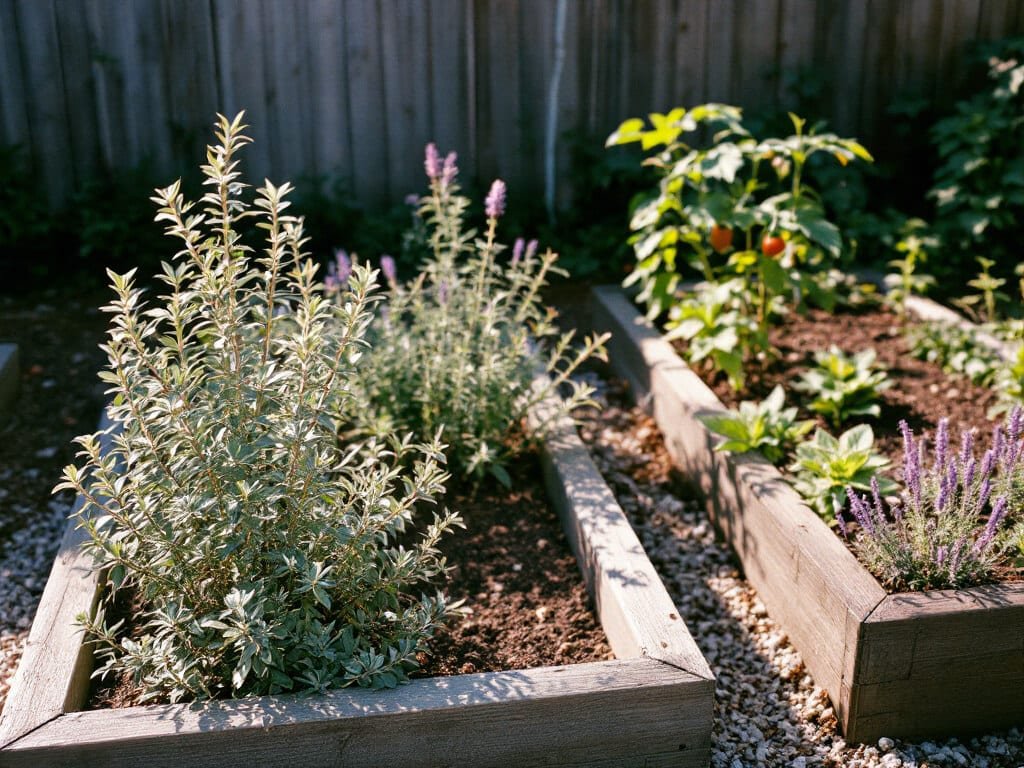
What not to plant with oregano
The problem with these plants is cultural, not chemical. Nothing here shows one plant poisoning another. They just want a different kind of soil and a different watering schedule than oregano does.
Basil
Basil prefers consistently moist, richer soil, which conflicts with oregano’s lean soil and its need to dry out between waterings. Plant them in separate containers, or in separate parts of the garden if you want both. They look like a natural kitchen pair, which is why people put them in the same pot and then lose one of them.
Cilantro
Cilantro generally prefers more consistent moisture than oregano. In a shared container or a tight bed, you end up with competing irrigation needs. Give it its own spot.
Parsley
Parsley generally likes richer soil and steadier moisture. That makes it a poor candidate for a shared low-water container with oregano. Grow it where you can water it on its own schedule.
Chives
Chives are listed among the herbs that prefer richer, consistently moist conditions rather than oregano’s drier Mediterranean ones. Put them with the basil, cilantro, and parsley instead.
Mint
Mint has two strikes against it. Its vigorous, spreading growth competes for space, and its moisture preferences are less compatible with oregano’s dry, sharply drained conditions. If you grow mint at all, a separate pot is the safer choice.
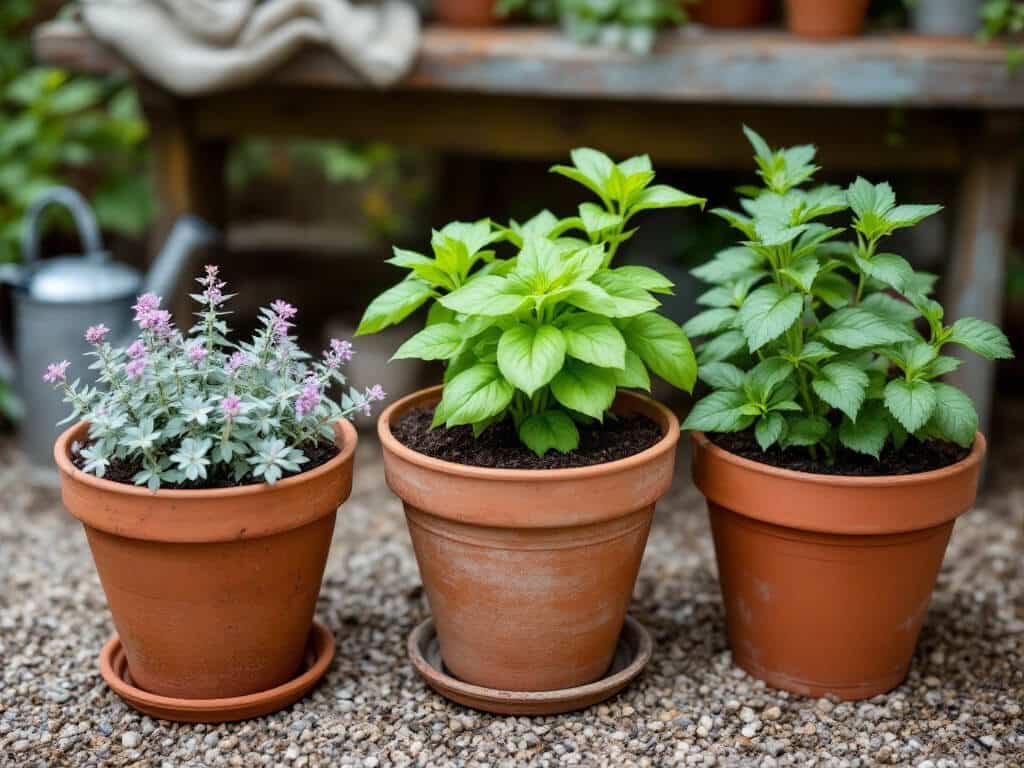
Layout and spacing
Group by water need first, and by anything else second. Put oregano at the sunny edge of a bed, or in its own container with the other Mediterranean herbs, so you can cut back on irrigation without stressing the moisture-loving crops nearby. In a mixed vegetable bed, treat oregano mainly as a flowering herb that draws pollinators, and space it by the mature width of your cultivar rather than by a pest-control radius.
– Dry corner or container: oregano with rosemary, thyme, sage, lavender, or marjoram, all in full sun with sharply drained soil.
– Vegetable bed, sunny edge: oregano beside tomato, pepper, broccoli, cauliflower, or strawberry, with room left for the mature width of both plants.
– Separate watering zone: basil, cilantro, parsley, and chives, grown where they can get steadier moisture.
– Its own pot: mint, kept away from oregano’s space.
For harvest, cut leafy stems before the plant flowers when you want the strongest culinary quality. If you want the pollinators, let some stems bloom. Exact timing depends on your climate and cultivar.
FAQ
Can oregano and tomatoes grow together?
Yes. They can share a sunny bed when you allow for their mature sizes and different watering needs. Flowering oregano may attract sweat bees and beneficial parasitoid wasps, but a guaranteed reduction in tomato pests has not been established.
What herbs grow best with oregano?
Rosemary, thyme, sage, lavender, and marjoram are the strongest choices. They share oregano’s preference for full sun, lean soil, and good drainage.
Can oregano grow in the same container as basil?
It is usually better to use separate containers. Basil generally needs steadier moisture, while oregano does better when the soil dries out between waterings.