
Okra Companion Plants: What to Grow Nearby
Choosing okra companion plants comes down to one practical question: what can share a bed with a tall, sun-hungry plant that you’ll be picking from every day or two? The honest answer is that the evidence is thin. One pairing is documented by university extension, and the rest are traditional recommendations that make sense for layout reasons more than proven biology.
This guide sorts the options by how well they fit okra’s size, sun needs, and harvest schedule. It also clears up a popular myth about “bad” neighbors.
Why pairings matter for okra
Okra (Abelmoschus esculentus) is a warm-season annual that grows as a large plant in zones 5–9. It needs full sun and unobstructed light, and many varieties take up substantial room, though exact height varies by cultivar. Anything you plant beside it has to tolerate that footprint, or stay out of its shade.
Pods are ready about 60–70 days after planting, and once picking starts you’ll harvest every 1–2 days while pods are tender and 2–3½ inches long. That means you need clear access to every plant. A companion that sprawls into the walkway or crowds the stems will make that daily job harder.
Okra also has a real pest and disease list: aphids, corn earworms, stink bugs, ants, root-knot nematodes, root-rot diseases, and pod rots. Good neighbors can add flowers for beneficial insects or use space okra isn’t using yet. No source in the brief shows that any companion reliably prevents those problems, so airflow and spacing still do most of the work.
Okra wants consistent moisture, but not soil that stays wet, since that favors root rot. Acidic soil can also cause poor pod development. Pick companions that won’t force you to overwater one plant to keep the other happy.
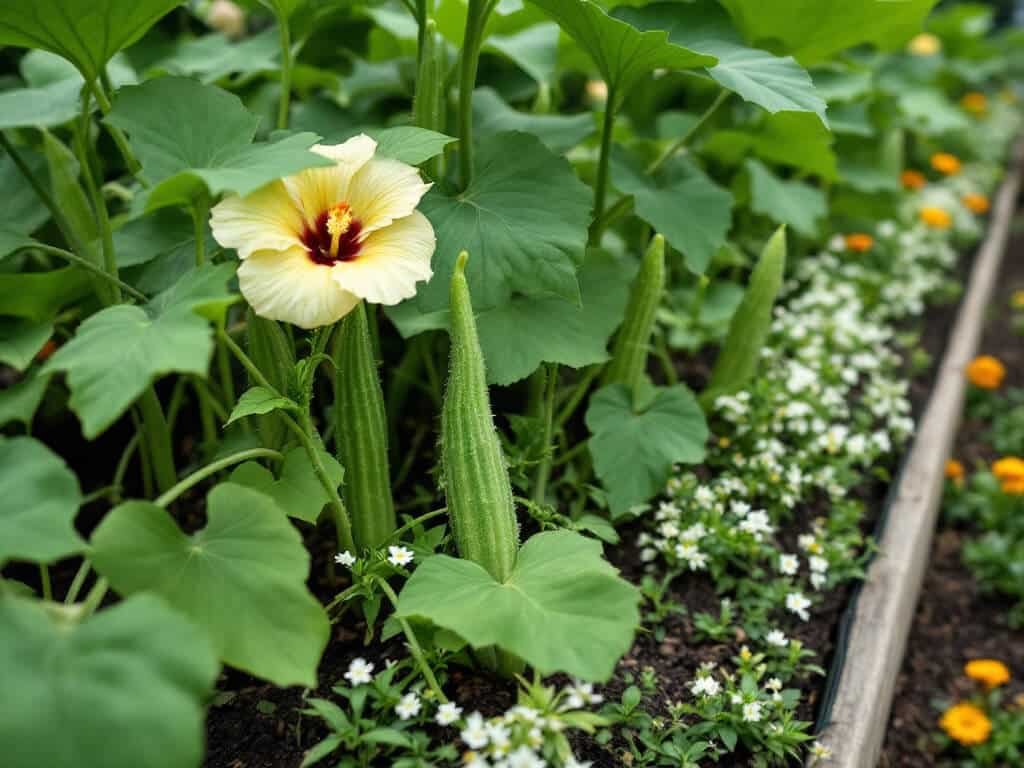
Best companion plants for okra
I’ve ordered these by strength of evidence. For most of them, no okra-specific spacing has been verified, so the rule is the same: follow the companion’s own label spacing and keep okra’s root zone and stems clear.
Sweet potato
This is the one pairing with extension backing. University of Maryland Extension documents interplanting okra with sweet potatoes, with the sweet potato acting as a groundcover beneath or around the okra. It uses a different vertical layer, so the two aren’t fighting for the same air and light.
No universal okra-to-sweet-potato distance has been verified. Leave enough room for okra’s mature canopy, and keep the vines from creeping across your harvest path.
Lettuce
Lettuce is a cool-season, low-growing crop that can fill the ground beneath young okra before the okra canopy gets big. Use the spacing on your lettuce variety’s label, since no okra-specific distance was verified. If the lettuce starts crowding the okra, pull it.
Radish
Radish is fast and low, so it can occupy early-season space that okra won’t need until later. Space it per the radish variety’s recommendation, and keep the area right around the okra stems open so the roots aren’t disturbed. Like lettuce, it’s a short-term filler rather than a season-long neighbor.
Sunflower
Sunflower flowers give pollinators something to visit. The catch is height: planted too close, a sunflower shades okra, which defeats the point of giving okra full sun. No universal spacing was verified, so place it far enough away that it never shades okra during the main growing period.
Zinnia
Zinnia flowers attract pollinators and other beneficial insects. Put them at the bed edge or anywhere their mature size won’t shade okra. No okra-specific spacing was verified, so go by the seed packet or plant tag.
Sweet alyssum
Alyssum flowers can feed beneficial insects such as syrphid flies and parasitoid wasps. Use it as a border rather than tucking it against okra stems. It stays low, which makes it an easy choice at the front of a bed. No okra-specific spacing was verified.
Basil
Basil is often listed as a warm-season neighbor for okra. The extension sources in the brief did not verify that it repels any okra pest, so grow it because you want basil, not because you expect pest control. Use basil’s own variety spacing and leave airflow around the okra.
Marigold
Marigold is common in companion planting and sometimes linked to nematode management, and root-knot nematodes are on okra’s pest list. But no extension source established a universal marigold benefit or spacing for okra. Treat it as a border plant instead of setting it directly against okra stems.
Green onion
Green onions are compact and can fit between wider-spaced okra plants. The sources did not verify a general stink-bug reduction in home gardens, so don’t count on that. Keep them away from the okra stem and leave room for air to move.
Bush bean
Bush beans are a compact warm-season crop that shows up on many okra companion lists. No extension source in the brief verified a specific benefit to okra. If you try them, use the bean variety’s label spacing and watch water, since you don’t want the two crops competing for it.
What not to plant with okra
You’ll see lists claiming that cucumber, corn, or sweet potato are flat-out incompatible with okra. The extension evidence doesn’t support that. No plant was verified as categorically incompatible with okra, and sweet potato is the pairing with the best documentation.
What follows are layout problems and unverified claims, not proven biological conflicts.
Corn
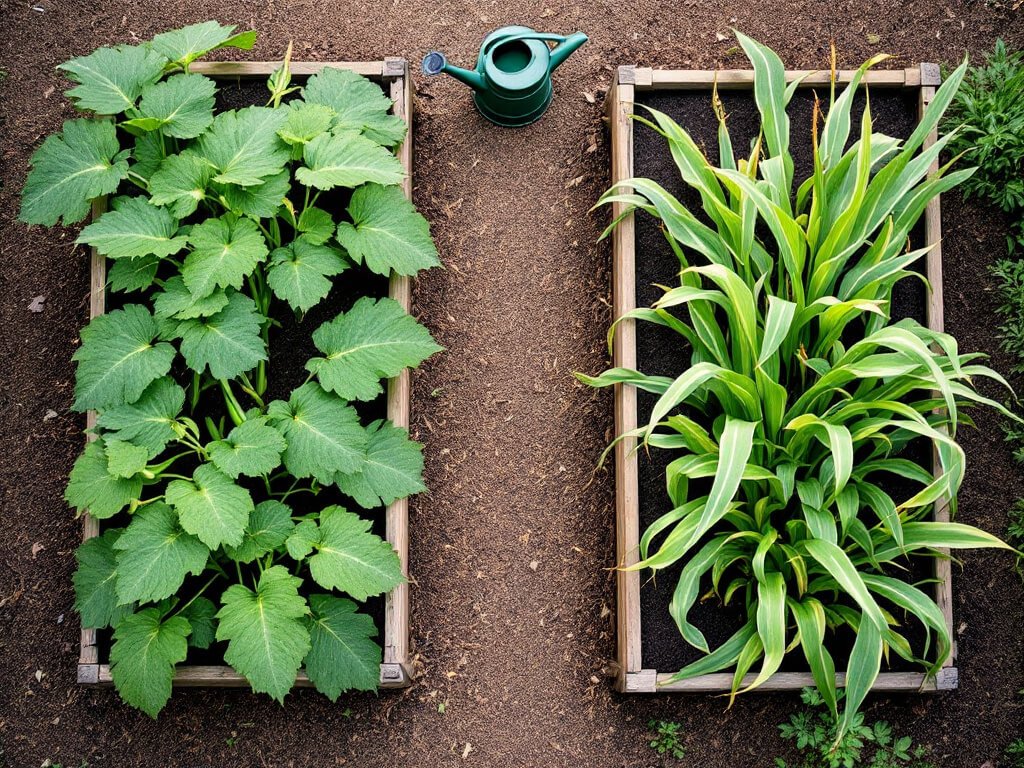
Tall, dense corn competes for light and takes up a lot of room. No unique okra-corn incompatibility was verified. Keep them separate unless the bed is big enough that neither shades or crowds the other.
Cucumber
Vining cucumbers can compete with okra for space and water. Nothing in the brief verified allelopathy or a shared-pest reason to ban the pairing. If you grow a trellised cucumber, put it in a different part of the bed and watch both crops.
Sweet potato (when it sprawls)
This one shows up on “bad” lists even though it’s the documented intercrop. The conflict is only about vines. Use it where spreading growth won’t block your access to okra pods.
Tomato
No general incompatibility was verified. The issue is that both tomato and okra want full sun and adequate water, and crowding creates competition and shade. Space each by its own variety, and don’t put tomato where mature okra will shade it.
Other mallow-family crops, such as cotton or hibiscus
Okra is in the mallow family, and shared pest or disease concerns make rotation sensible. The brief didn’t establish a universal rule against growing them side by side in a backyard bed. Avoid planting susceptible mallow crops repeatedly in the same soil, and rotate when you can.
Layout and spacing
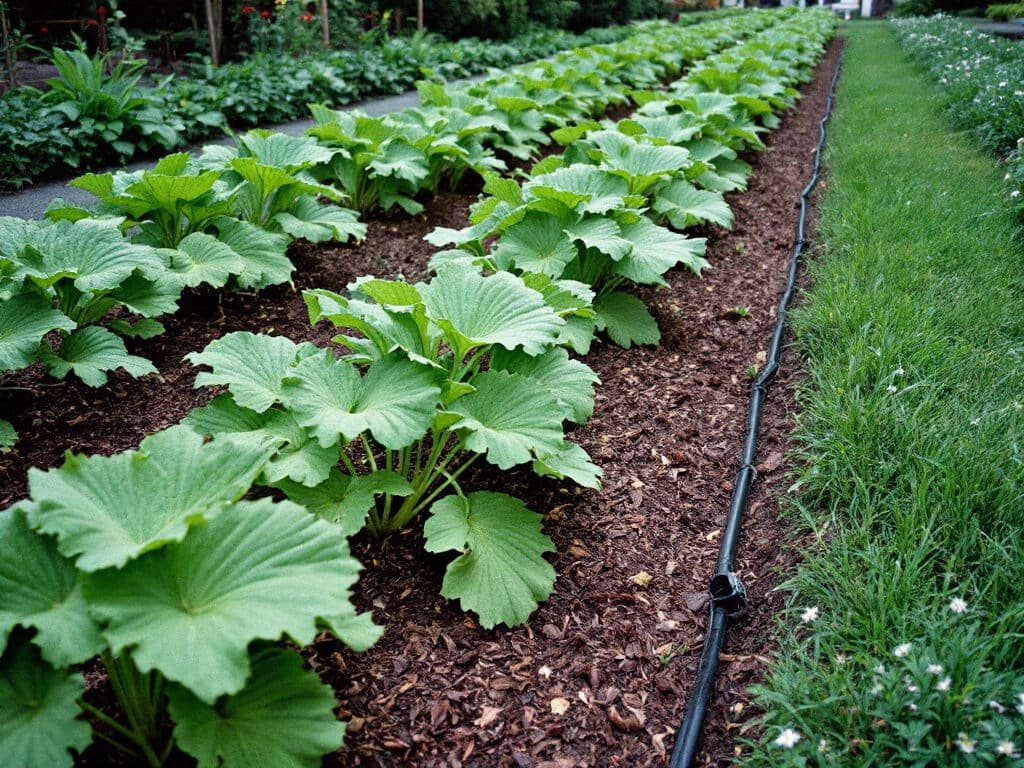
Put okra where it gets full sun and where its tall canopy won’t shade shorter crops. Low growers go along the bed edge, and okra gets the open space it needs. Don’t let a companion list stand in for okra’s own spacing.
– Plant okra about 9–15 inches apart within rows, with rows 3–6 feet apart, depending on cultivar and production system.
– Along the bed edge, use low crops such as lettuce, radish, green onion, or sweet alyssum.
– Keep taller flowers like sunflower and zinnia where their mature height won’t shade okra.
– Leave a clear path to every plant for the harvest every 1–2 days.
– In containers, grow okra alone unless the pot is large enough to protect okra’s root room and give a compact companion its own separate planting area.
FAQ
What is the best companion plant for okra?
No single best companion was verified. University of Maryland Extension specifically documents interplanting okra with sweet potatoes, while other commonly listed pairings have less direct evidence.
Can tomatoes grow next to okra?
No reliable extension source in the brief identifies tomatoes as categorically incompatible with okra. Both need full sun and adequate space, so separate them enough that mature okra doesn’t shade or crowd the tomato.
How far apart should companion plants be from okra?
Okra itself goes about 9–15 inches apart within rows, with rows commonly 3–6 feet apart. Companion-specific distances weren’t verified for most plants, so use the companion’s label spacing and keep clear access around okra for airflow and harvest.