
Zucchini Companion Plants: What to Grow Nearby
Intro
Picking zucchini companion plants is mostly about avoiding trouble, because the evidence for zucchini-specific companion planting is thin. No authoritative extension source in the research I used verifies that marigolds, nasturtiums, or other commonly listed flowers reliably repel zucchini’s major pests. Don’t count on a companion plant to control cucumber beetles, squash bugs, or squash vine borers; identify the pest you have and manage that.
What neighboring plants can do is simpler. They can use space the zucchini isn’t using, and they can stay out of its way. This article covers ten plants that fit that job, six that don’t, and a layout that keeps the whole bed workable.
Why pairings matter for zucchini
Zucchini is a warm-season annual in the squash family (Cucurbitaceae), grown as an annual in zones 5 through 9. It’s frost-sensitive and wants full sun in a warm spot. It also gets big: allow about 3 feet per plant, and some varieties need roughly 1 square metre.
That size is what drives every pairing decision. The plant wants fertile, well-drained soil and consistent moisture, applied to the soil rather than the leaves to cut down on fungal disease. It’s also prone to powdery mildew, anthracnose, angular leaf spot, viruses, and Choanephora rot, and good drainage and air movement help limit all of them.
So a good neighbor doesn’t crowd the foliage, doesn’t shade the plant, and doesn’t need a different watering routine. You’ll also be in there often, since frequent harvesting of young fruit encourages continued production. Anything that blocks your access to the plant is a poor neighbor.
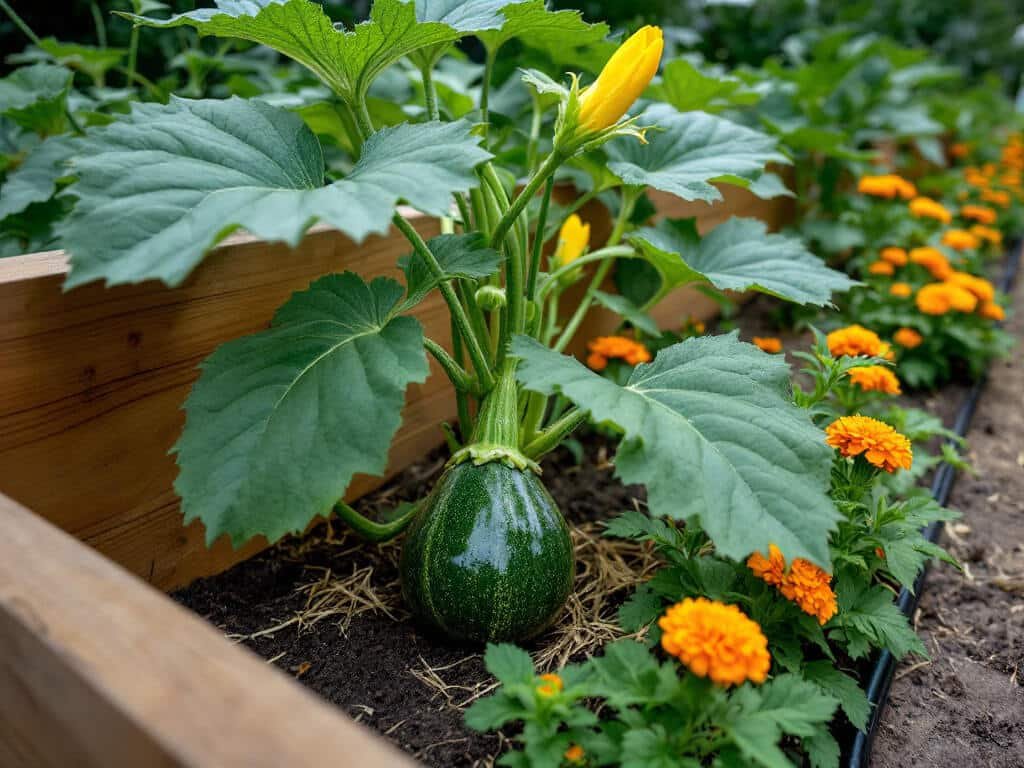
Best companion plants for zucchini
Every plant below is chosen for a documented garden function, shared growing conditions, or compatible use of space. None of them is a proven pest repeller. I’d start with the beans and root crops, which do something practical, and treat the flowers as optional.
Bush beans
Bush beans come from a different plant family and grow upright and compact, so they don’t compete with the zucchini’s sprawl the way another vine would. Keep the bean row outside the zucchini’s roughly 3 foot spread. Planted too close, they cut into the airflow around zucchini leaves.
French beans
French beans give you a compact vertical crop that uses space beside the zucchini rather than under its leaves. Put the supports outside the zucchini canopy. Leave yourself a clear path so you can still reach both crops at harvest.
Carrots
Carrots are a small, below-ground crop that can occupy the ground before zucchini foliage fills in. Grow them in their own row beyond the zucchini’s main root and foliage zone. Don’t tuck them under the leaves, where they’ll get shaded and you’ll lose track of them.
Beets
Beets are a compact root crop with a different growth habit and a different harvest area than zucchini. Keep the beet row outside the plant’s 3 foot spacing zone. That keeps the two crops from tangling when you’re harvesting.
Lettuce
Lettuce is low-growing and cool-season, so it can be picked before the zucchini reaches full size. Use it as an early-season edge crop only. A dense lettuce underplanting holds moisture and blocks air right where the zucchini crown needs it dry.
Marigolds
Marigolds add flowers that may support garden biodiversity. No verified zucchini-specific pest-repellent effect turned up, so plant them because you like them. Put them at the bed edge, not crowded against the zucchini.
Zinnias
Zinnias give you flowers for a pollinator-friendly garden. They shouldn’t be treated as a proven cucumber beetle control. Plant them outside the zucchini canopy so they don’t interfere with airflow.
Nasturtiums
Nasturtiums provide flowers and ground-level cover, but a zucchini-specific pest benefit wasn’t verified. Their spreading growth can compete with the zucchini, so use them sparingly. I’d skip them entirely in a small bed.
Dill
Dill contributes to insect diversity when you let it bloom. Grow it at the bed edge, and keep it from shading the zucchini. It gets tall, so the position matters more than with the low flowers.
Borage
Borage has bee-attracting flowers, and the benefit to zucchini is indirect. It can become a substantial plant, so give it its own space rather than squeezing it in beside the zucchini. In a small bed, this is the one I’d leave out.
What not to plant with zucchini
These aren’t universally incompatible. They’re poor choices for close pairings because they share diseases, compete for space, or make moisture management harder.
Cucumber
Cucumber is in the same family as zucchini and can share its diseases and insect problems. You can grow both in one garden, but don’t plant them cheek by jowl. Rotate squash-family crops instead of putting them in the same spot year after year.
Pumpkin
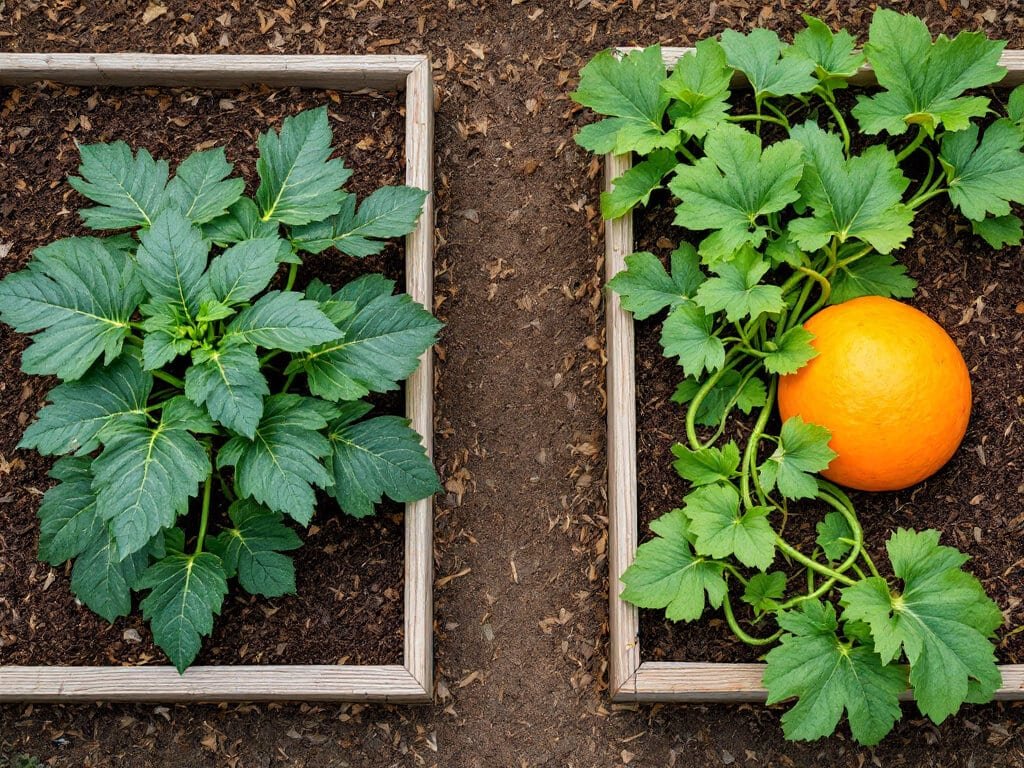
Pumpkin shares squash-family pests and diseases, and its expansive growth competes for space and airflow. Two big sprawlers in one footprint means more crowding and more humid, shaded leaf surface. That’s the setup for the diseases listed above.
Winter squash
Winter squash is another squash-family crop, so it adds to crowding, disease risk, and insect-management problems. If you grow both, give them separate beds or well-separated corners.
Melons
Melons are sprawling warm-season vines that compete for space. They also make airflow and disease management harder near zucchini. Treat them like pumpkins and keep them apart.
Water-intensive plants packed into the same container
Zucchini needs consistent moisture, and a thirsty neighbor in the same pot sets up root competition. You end up either overwatering the smaller crop or shorting the zucchini. Give zucchini its own container.
Tall, dense plants immediately south of zucchini
A tall, dense crop on the south side shades a plant that performs best in full sun. It also restricts airflow around the leaves and flowers. If you have tall plants in the bed, put them north of the zucchini.
Layout and spacing
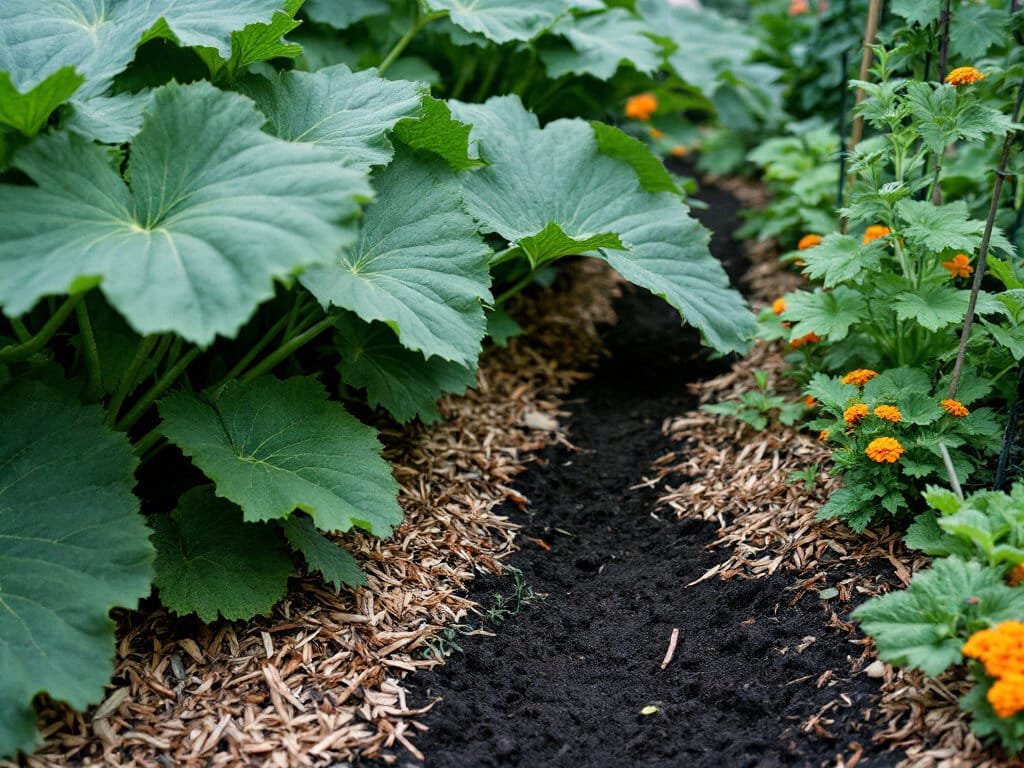
In a bed, put zucchini at an edge or corner so the foliage can spread into a path or unused space. Plant compact crops beyond the canopy, never underneath it, and keep flowers at the perimeter instead of around the crown.
– Allow about 3 feet around each standard zucchini plant, and check the seed packet for bush versus vining types.
– Put carrots, beets, or early lettuce in separate rows beyond the main canopy.
– Set bean supports outside the zucchini’s spread, with a walking gap for harvesting.
– Place marigolds, zinnias, or dill at the bed edge, not at the base of the plant.
– Keep tall, dense crops north of the zucchini, not south.
– In containers, grow zucchini alone unless the pot is very large, and choose only compact or early crops if you add anything. Nothing should cut into root space, airflow, or harvest access.
FAQ
Which flowers are best near zucchini?
Marigolds, zinnias, nasturtiums, dill, and borage can add flowers to a diverse garden, but extension sources don’t verify that they reliably repel zucchini pests. Plant them at the bed edge so they don’t crowd the zucchini or restrict airflow.
Can zucchini grow beside cucumbers?
They can share a garden, but both are in the squash family and can share pests and diseases. Space them generously, avoid crowding, and rotate squash-family crops so the same family isn’t planted in one spot repeatedly.
How much space does zucchini need?
Allow at least 3 feet between standard plants. Some guidance recommends about 1 square metre per plant because mature zucchini spreads broadly. Bush and vining types differ, so go by the mature size on the seed packet.