
Russian Sage Companion Plants for Dry-Sun Gardens
Choosing Russian sage companion plants comes down to one thing: whatever you plant beside it has to be fine with sharp drainage and not much water. Russian sage is a deciduous perennial subshrub that wants full sun and soil that dries out. Put it next to something thirsty and one of the two plants will lose.
The good news is that the list of plants that suit those conditions is long. Below are ten that share its needs, five kinds of plants to keep away, and a simple layout for fitting them together.
Intro
Most Russian sage trouble starts below ground, not above it. The plant tolerates average, clay, alkaline, or sandy soil, but only if the water moves through. Wet roots are the main way a healthy plant goes bad.
That makes companion choice mostly a water decision. Pick plants that want the same dry, sunny conditions, space them for mature size, and you avoid most of the problems before they start. The rest of this article covers which plants do that, which don’t, and how far apart to set them.
Why pairings matter for russian sage
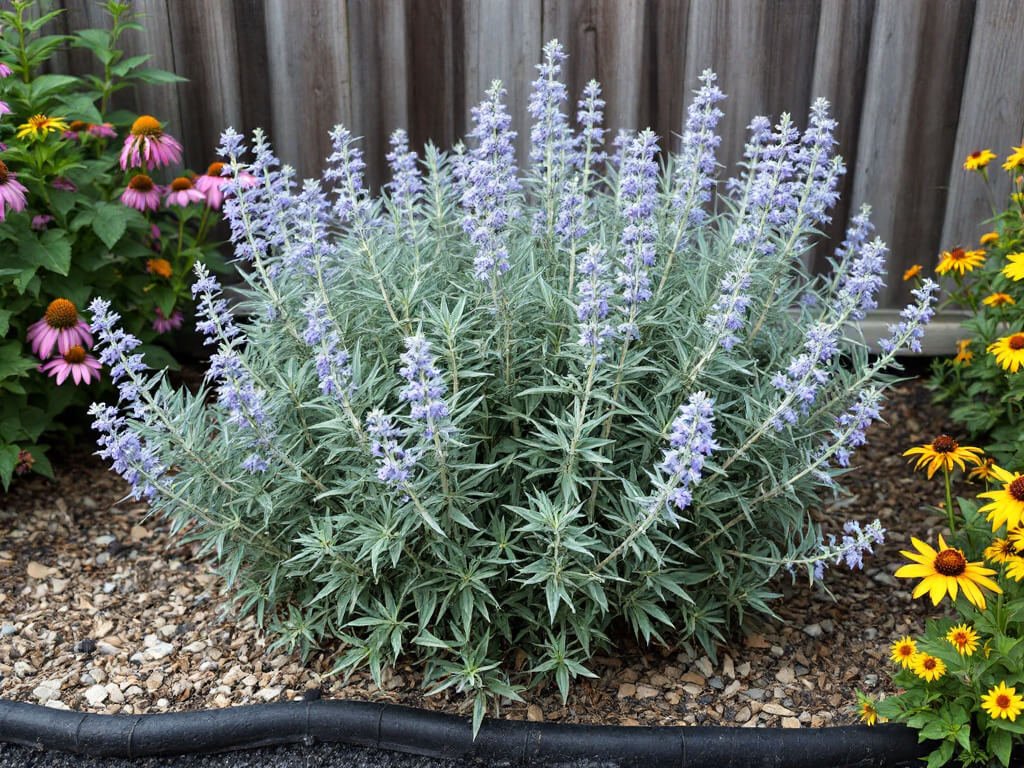
Russian sage grows about 3 to 4 feet tall and wide. Compact cultivars can stay under 3 feet, and older types can pass 4 feet. That is a lot of plant, so crowding it affects airflow, light, and how long the soil stays damp around the crown.
It also needs regular watering only during the first growing season, while roots develop. After that, water needs are low. A neighbor that needs steady moisture pulls you into watering the whole bed on its schedule, which is exactly what the sage doesn’t want.
Light matters too. In partial shade, Russian sage can still flower, but the growth gets weaker and more sprawling. A companion tall enough to shade the sage’s crown works against you.
One caution on expectations: the sources support these pairings as a cultural match, meaning same sun, same soil, same water. They do not support claims that any of these plants protects Russian sage from pests. Russian sage has few serious pests anyway. Its occasional problems are fungal leaf spot, stem canker, and root trouble in wet soil.
Hardiness is generally zones 5 to 9, with some sources listing zone 4. If you garden at the cold end, check the cultivar you buy, because hardiness can vary by cultivar and site.
Best companion plants for russian sage
Coneflower (Echinacea spp.)
Coneflower likes the same full sun, well-drained soil, and dry spells that Russian sage does. Its blooms overlap with the sage’s summer flowering and give you a different flower shape beside it. Plant it about 3 feet from the sage so neither plant crowds the other as it matures.
Black-eyed Susan (Rudbeckia spp.)
Black-eyed Susan adds yellow flowers that contrast with the sage and tolerates sunny, relatively dry sites. That makes it an easy partner that won’t ask for extra water. Set it about 3 feet away.
Stonecrop (Hylotelephium or Sedum spp.)
Stonecrop suits dry, well-drained conditions and fills the lower layer of the planting. It is a good choice for the front of the bed, where it keeps low ground covered without competing for the sage’s space. Plant it at least 2 to 3 feet away, depending on how large your variety gets at maturity.
Catmint (Nepeta spp.)
Catmint shares the sage’s sun and drainage needs and works well as an edging layer in front of it. Check the mature width on the tag for your cultivar. As a planning range, leave roughly 2 to 3 feet between plants.
Agastache (Agastache spp.)
Agastache is drought tolerant like the sage, and it attracts bees, which adds pollinator value to a bed that is already mostly sage. Cultivar size varies, so allow about 2 to 3 feet between plants according to the variety you pick.
Switchgrass (Panicum virgatum)
Switchgrass gives you grass texture and warm-season structure, and it tolerates sunny conditions. Its narrow, upright form contrasts with the sage’s airy stems. Keep it roughly 3 feet from the sage, unless you choose a notably compact cultivar, in which case you can tighten that up.
Maiden grass (Miscanthus spp.)
Maiden grass adds vertical texture and color contrast in a sunny border. Because it can get wide, base your spacing on the cultivar’s mature spread. Plan on approximately 3 feet or more of separation.
Salvia (Salvia nemorosa and similar hardy salvias)
Hardy salvias want the same sunny, well-drained spot, and their upright flower form echoes the sage’s. They are a low-risk pairing because the growing conditions match so closely. Allow about 2 to 3 feet between plants, based on the mature width of the salvia you choose.
Asters (Symphyotrichum spp.)
Asters extend flower interest later into the season in a sunny border. They are worth adding if you want the bed to keep going after other plants have slowed down. Allow about 2 to 3 feet between plants, depending on cultivar size.
Flowering roses
Roses can share a sunny border and give you a shrub layer that contrasts with the sage. They are the trickiest pairing here, because roses are usually watered more than Russian sage tolerates. I’d plant them only where you can aim irrigation at the rose and keep the sage dry. Separate them by the rose’s mature width, commonly at least 3 feet.
What not to plant with russian sage
Persistently wet soil is the one thing Russian sage won’t forgive, and it can lead to root problems. Everything on this list is a version of that problem, or a shade problem.
Bog or water-garden plants
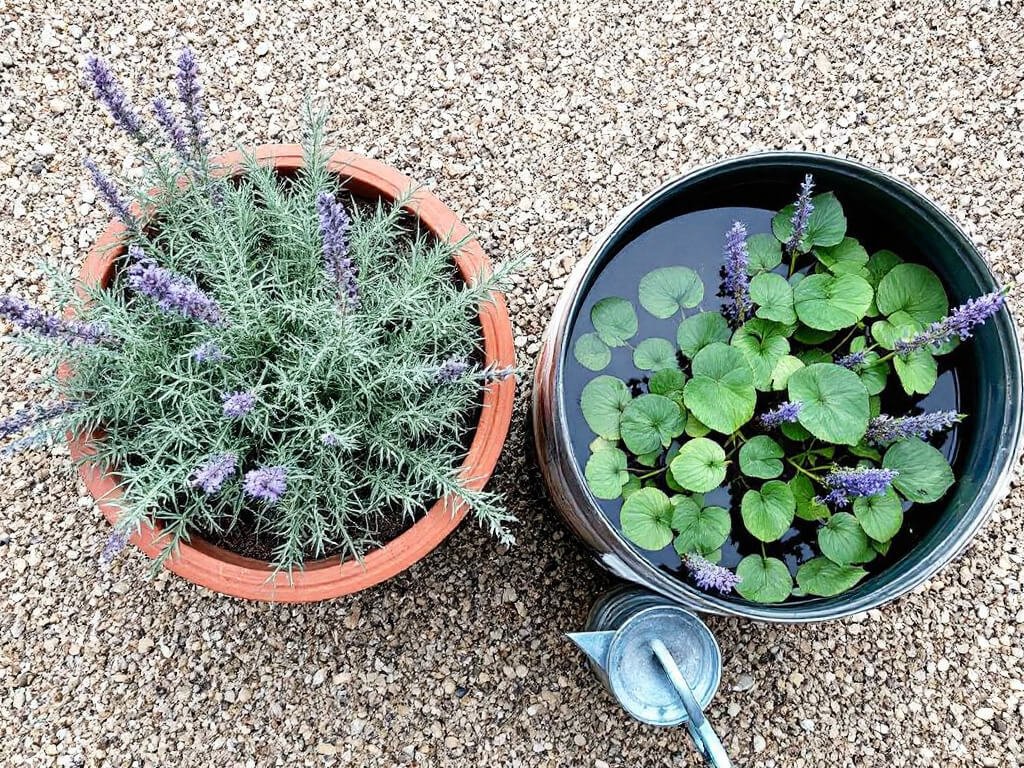
These plants depend on consistently wet soil, and Russian sage needs sharply drained soil. Sharing a bed means one of them is always in the wrong conditions, and the sage’s risk of root problems goes up. Keep them in a separate wet area.
Plants that require frequent irrigation in the same root zone
Constant moisture can reduce Russian sage’s performance and contribute to root rot. If a plant needs frequent watering, give it its own irrigated spot rather than sharing a root zone with the sage.
Large, highly vigorous moisture-loving plants
These compete for space, and they can also create a wetter, shadier pocket around the sage. That combination encourages weak growth and can lead to winter loss. A big, fast-growing plant that wants water is a poor neighbor on both counts.
Dense, low-light plantings
Russian sage may flower in partial shade, but it tends to go lax and sprawling. Avoid companions that will shade its crown, and don’t tuck the sage into a dense planting where light barely reaches it.
Plants with no tolerance for dry, lean soil
Plants that can’t handle dry, lean soil usually need different fertility and watering than the sage. A shared bed becomes hard to manage because you are always compromising for one or the other. Choose plants that are comfortable with lean conditions from the start.
Layout and spacing
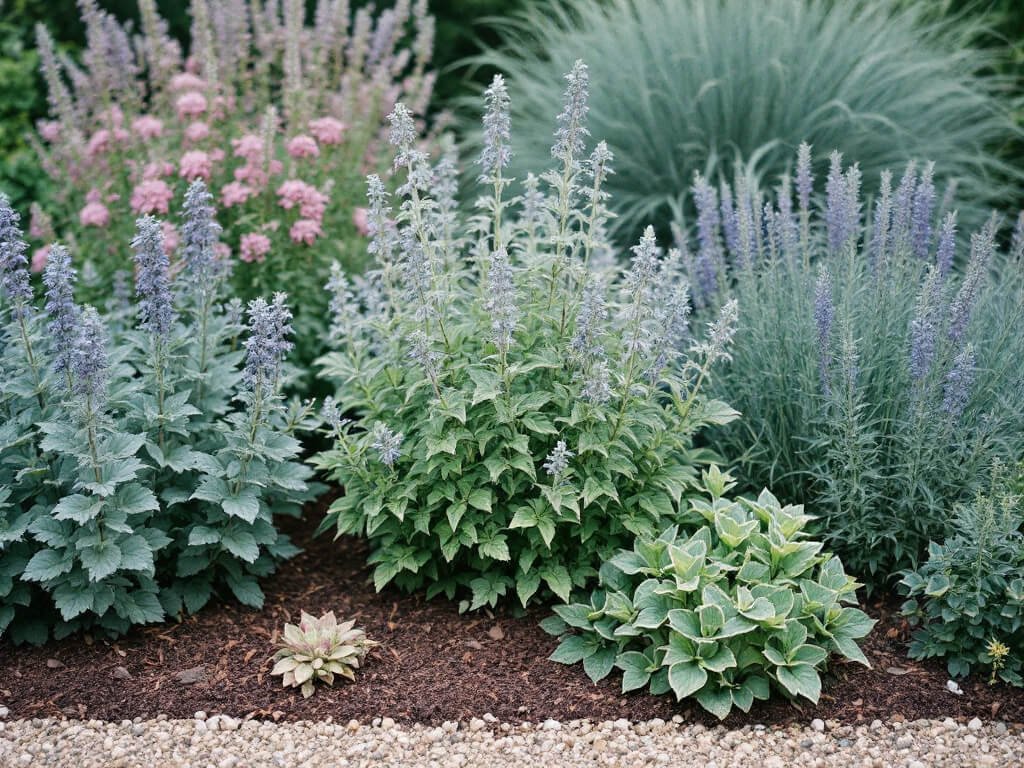
Put Russian sage toward the middle or back of a full-sun border, with lower plants in front and taller plants behind. Keep the sage’s crown and its neighbors in fast-draining soil, group plants with similar water needs, and use about 3 feet as a starting point for a full-size plant unless your cultivar is compact.
Front: stonecrop (at least 2 to 3 feet out) and catmint (roughly 2 to 3 feet, per cultivar)
Beside the sage: coneflower and black-eyed Susan (about 3 feet), agastache, salvia, and asters (about 2 to 3 feet)
Behind: switchgrass (roughly 3 feet), maiden grass (3 feet or more), and roses (at least 3 feet, with irrigation aimed at the rose)
FAQ
What grows well with Russian sage?
Coneflower, black-eyed Susan, stonecrop, catmint, agastache, ornamental grasses, and asters are reasonable choices because they can share sunny, well-drained conditions. The support for these is the cultural match, not any proven pest control.
How far should companion plants be from Russian sage?
A practical starting point is about 3 feet for full-size Russian sage, and Iowa State Extension recommends that distance from other plants. Adjust for the mature width of your specific cultivar and the companion.
Can Russian sage grow beside plants that need regular watering?
It can, but avoid sharing irrigation when you can. Russian sage needs regular water while establishing and then little, and persistently wet soil can cause root problems. Use separate irrigation zones or plant the moisture-loving plants elsewhere.