
Asparagus Companion Plants: What to Grow Nearby
Asparagus companion plants are a tricky call because the bed stays put for years and anything you plant beside it either leaves the crowns alone or gets in their way. Most of the advice online is stronger than the evidence behind it. This article sticks to what extension sources actually say, and where they say little, it tells you so.
The short version: asparagus does best in its own wide bed, and companions belong along the edge, not over the crowns.
Why pairings matter for asparagus
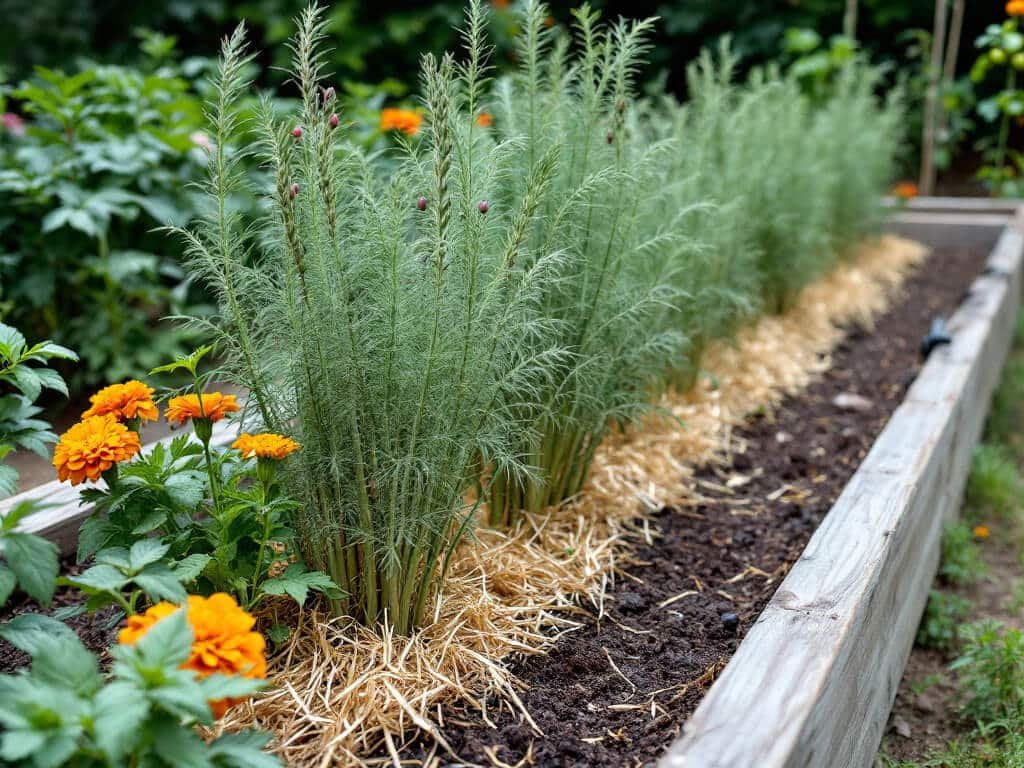
Asparagus is a long-lived perennial. You harvest spears in spring, then let the plants grow into tall summer ferns that feed the crowns for next year. That fern can shade neighboring crops, which is why extension guidance puts asparagus at the north end of a garden.
The plant also wants specific conditions: full sun, fertile and loose well-drained soil with a pH of 6.2 to 7.0, and about 1 inch of water a week when rain falls short. It is commonly grown in zones 3 to 8, and some sites in zone 9 work, depending on winter chilling and local conditions. Anything you plant nearby should not compete for that water or crowd the crown row.
Two myths are worth clearing up before you plan anything.
First, the claim that tomatoes repel asparagus beetles while asparagus protects tomatoes. Extension sources list tomatoes as compatible with asparagus, but none of the material cited here verifies the pest-control part. Treat tomatoes as a reasonable neighbor, not a beetle defense.
Second, the idea that companion planting reliably boosts asparagus yield. Extension guidance presents companions as a possible strategy. Asparagus production guidance puts the weight on drainage, weed control, crop rotation, irrigation, and disease management. Those are the things that move your harvest. The main pests and diseases to watch are asparagus beetles, asparagus aphids, cutworms, Japanese beetles, Fusarium root rot, and rust, and no companion plant has been shown to prevent them.
Best companion plants for asparagus
None of these companions comes with an asparagus-specific spacing figure from the sources. Where a spacing is given below, it is a placement rule, not a measurement. The common thread is simple: keep every companion off the crown row and out of the way of spring harvest.
Tomato
Several extension companion-planting guides list tomato as compatible with asparagus, and its growth habit is different enough that it can use nearby space productively. No asparagus-specific spacing was found, so plant it outside the asparagus row and leave enough room that you never disturb the crowns. Position it so the tomatoes do not shade the asparagus fern.
Basil
Extension guidance lists basil as an asparagus companion. The defensible benefit is compatible use of space, not proven pest control. Grow it at the bed edge or in a separate container next to the bed.
Parsley
Parsley is listed as compatible, and its shallow, leafy growth can fill a bit of nearby space. It is not a plant for the crown row itself. Put it at the bed edge and do not dig near the crowns to do it.
Pot marigold (calendula)
A University of Wisconsin Extension companion-planting guide lists pot marigold as an ally that may deter beetles. Note the word “may.” Grow it along the sunny margin of the bed, not over the crowns.
Dill
Dill is suggested as a plant for beneficial insects, but the extension sources do not establish a specific benefit to asparagus. If you grow it, keep it at the bed edge where mature plants will not shade the fern or get in the way of maintenance. I’d put it low on the list.
Cilantro (coriander)
Cilantro can feed beneficial insects, though an effect on asparagus is not verified by extension sources. Plant it along an accessible edge of the bed. No asparagus-specific spacing was found.
Thyme
Thyme is suggested for the sunny margin of an asparagus bed, where its low growth uses edge space. The cited source does not establish a measured benefit to the asparagus. Keep it at the margin and away from the crown row.
Carrot
Deep-rooted crops occupy a different soil layer from shallow-rooted ones, and carrots are named as an example of a crop that can help with soil compaction. No asparagus-specific performance benefit was established. Skip carrots anywhere that harvesting would mean repeated digging among the crowns.
If you want a practical starting point, I’d go with basil and parsley along the edge, and tomatoes in the adjacent bed. They are the best supported of the group and the least likely to cause trouble.
What not to plant with asparagus
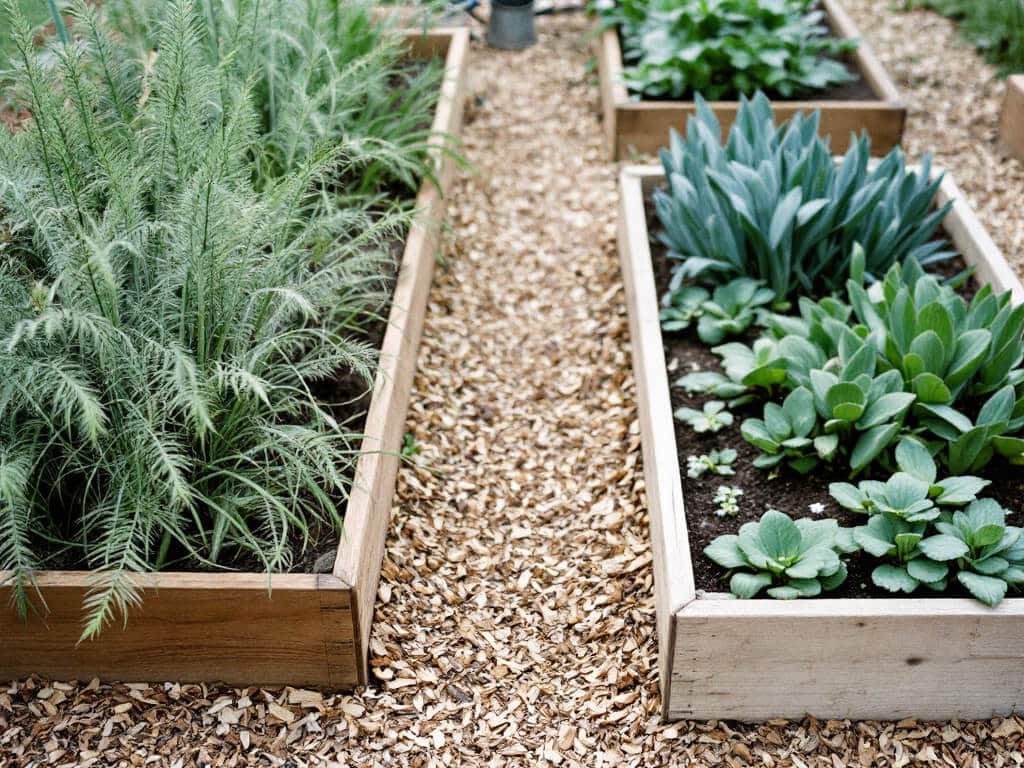
Onion
Virginia Cooperative Extension lists onion as incompatible with asparagus. The source does not say whether the problem is allelopathy, competition, or something else. Without a known mechanism, I’d simply keep onions in a different bed.
Garlic
Garlic gets the same listing from Virginia Cooperative Extension, again with no mechanism given. Since the asparagus bed is permanent, there is no reason to test the point. Grow garlic elsewhere.
Potato
Potato is also listed as incompatible by Virginia Cooperative Extension, with no stated reason. Harvesting potatoes also means digging, which is a poor idea anywhere near perennial crowns.
Dense groundcover pressed against the crowns
Dense groundcover can compete with asparagus and hold moisture around the crown area, a condition associated with greater disease risk. Keep the crown row open. This is a better reason to avoid a “living mulch” than any pairing list.
Asparagus after asparagus
Asparagus is self-allelopathic, so old plantings can leave behind compounds and soilborne disease problems that suppress new crowns. Plant a new bed on ground that has not held asparagus before. This is the one “bad companion” with a documented mechanism.
Layout and spacing
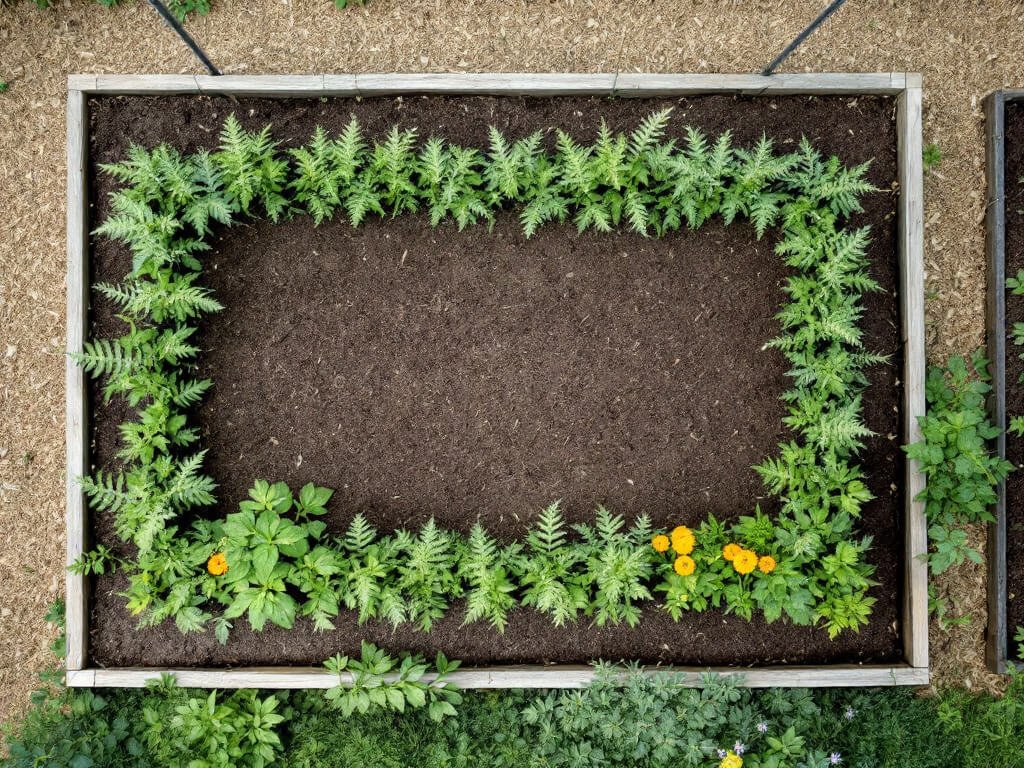
Give asparagus a dedicated, wide bed with a clear crown row, and put companions along the outer edge or in neighboring beds. Don’t dig over or among the crowns to fit in a companion. Because the sources give no asparagus-specific spacing, the rule is to leave a clear margin and keep your trowel out of the crown row.
– Place asparagus at the north end of the garden so the tall fern does not shade other crops.
– Keep the crown row open and free of groundcover and other plantings.
– Put basil, parsley, pot marigold, and thyme along the sunny bed margin.
– Grow dill and cilantro only at an accessible edge, away from the fern.
– Keep tomatoes outside the crown row, positioned so they do not shade the fern.
– Use a separate bed or container for onion, garlic, and potato.
– For containers, grow asparagus by itself in a large, deep pot. The sources give no reliable container dimensions or companion spacing, so don’t crowd the crowns with other plants.
FAQ
Can tomatoes be planted with asparagus?
Yes, several extension companion-planting guides list tomatoes as compatible. The popular claim that tomatoes repel asparagus beetles is not verified by those sources. Plant tomatoes outside the crown row so annual digging does not disturb the perennial crowns.
What should not be planted beside asparagus?
Virginia Cooperative Extension lists onions, garlic, and potatoes as incompatible, though it does not specify why. Also avoid dense plants that compete with the crowns or hold moisture against them.
Where should companion plants go in an asparagus bed?
Put them at the bed edge or in adjacent rows and keep the crown row open. Set the asparagus at the north end of a mixed garden so its tall fern does not shade other crops.