
Lettuce Companion Plants: What to Grow Together
Intro
Picking lettuce companion plants comes down to spacing and timing more than any magic pairing. The research behind most companion claims is thin, and a few pairings have better support than the rest. Alyssum has the strongest case, and fast crops like radish and spinach make practical sense because they share lettuce’s cool-season window.
This guide sorts the solid reasons from the folklore. You’ll get eight plants that work beside lettuce, what to watch for, and a layout you can copy in a bed or a container. It’s written for USDA zones 5 to 9, where lettuce is grown as a seasonal crop and exact planting dates depend on your local climate.
Why pairings matter for lettuce
Lettuce is a cool-season annual that wants full sun, with light afternoon shade once the weather warms. It also wants fertile, moisture-retentive soil that stays evenly moist without staying soggy. Several days above about 75°F can trigger bolting, so the plant is on a clock from the day you sow it.
Its pest list is also short and specific: slugs and snails, cutworms, flea beetles, damping-off, bottom rot, and aster yellows. A good neighbor either gives something back, like drawing in insects that eat aphids, or stays out of the way by using space the lettuce doesn’t need. A bad neighbor crowds it and holds moisture around the leaves.
A word on the claims you’ll read elsewhere. Extension guidance says many companion recommendations are anecdotal or poorly tested, and that real pest control may depend on having enough companion plants in the right arrangement. The marigold story is the most common one. University of Minnesota Extension notes that marigolds sometimes deter insects and sometimes don’t, so plant them if you like them, not as a guarantee.
Best companion plants for lettuce
Alyssum
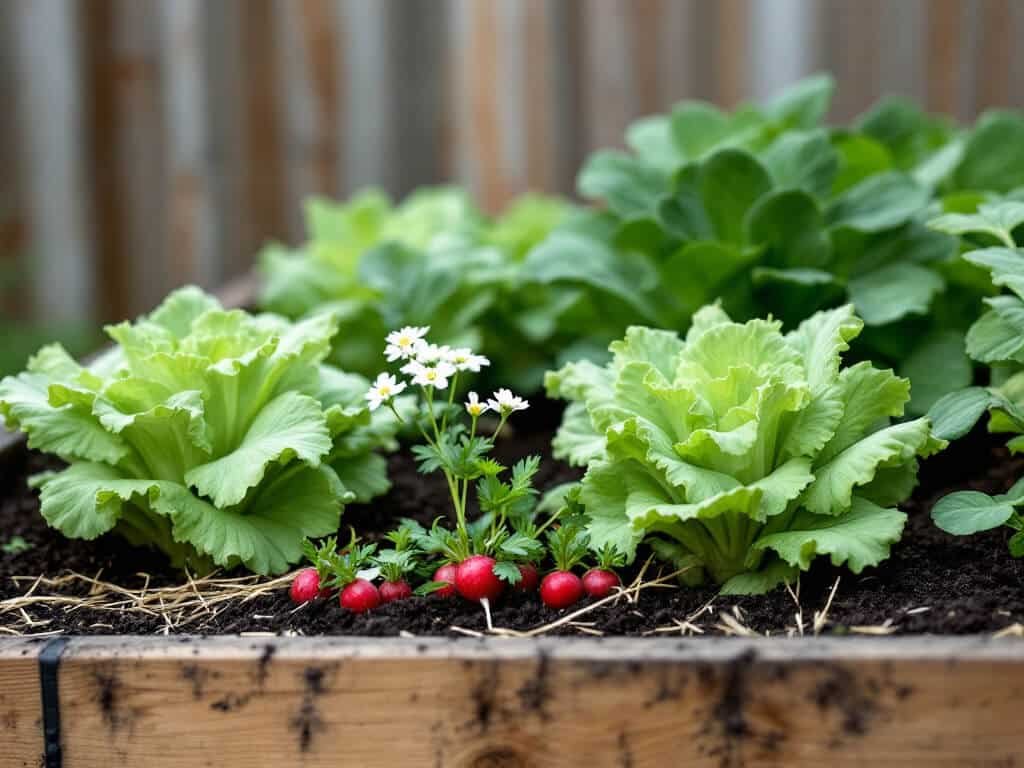
Alyssum is the best-supported choice here. RHS cites research showing that alyssum grown with lettuce reduced aphid numbers, because its nectar and pollen attract beneficial insects that prey on aphids. Plant it outside the lettuce’s final spacing area, so the lettuce keeps its 6 inches (loose-leaf) or 10 to 12 inches (full-size heads).
Radish
Radish is a fast crop, so you can harvest it before slower plants fill the bed. That makes it a space-saver more than a pest fighter. Sow or thin radishes according to the seed packet, and keep the lettuce at 6 to 12 inches depending on type.
Spinach
Spinach shares lettuce’s cool-season growing period and works well as an early crop in the same bed. Don’t let it crowd the lettuce as it grows. Give lettuce 6 to 12 inches, depending on whether you’re growing loose-leaf or heads and how large you let them get.
Basil
Basil has been included in studies of herbs for possible insect-management benefits, but the evidence isn’t specific enough to promise it will protect lettuce. Treat it as a neighbor you grow for the kitchen. It prefers warmer weather and has its own water and space needs, so plant it only where it won’t crowd the lettuce, and keep lettuce plants 6 to 12 inches apart. A separate container is the safer spot.
Marigold
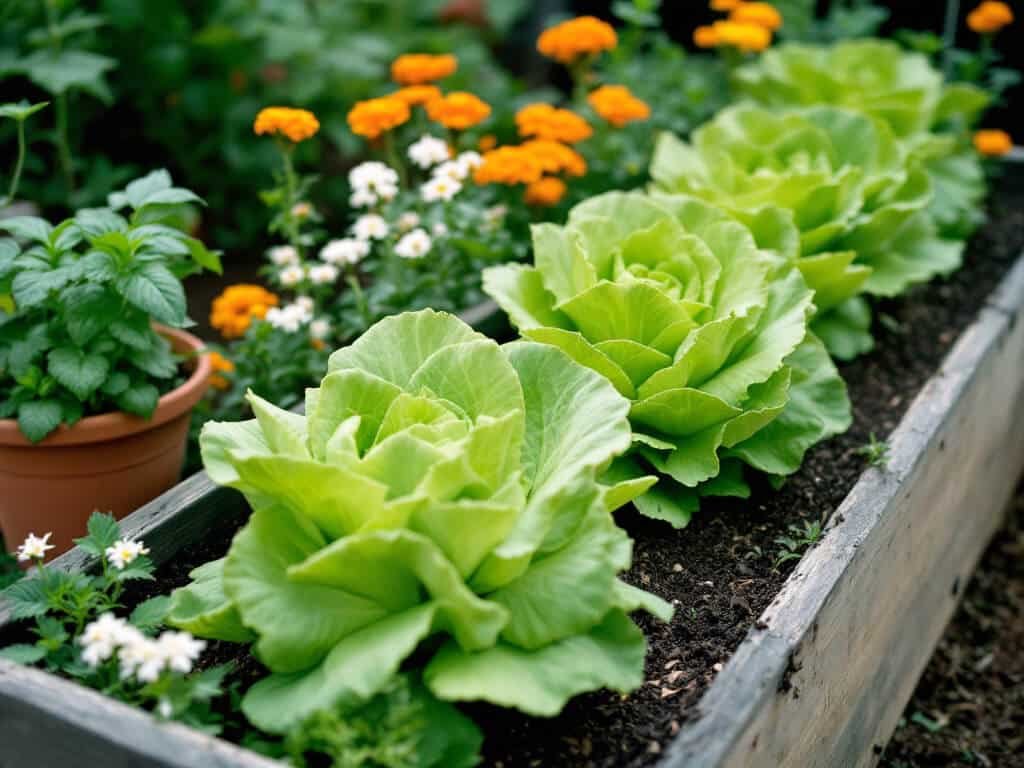
Marigolds are widely promoted for deterring insects, but results are inconsistent, and nothing guarantees a benefit for lettuce. If you want them, use them as an edge plant rather than tucking them inside the lettuce spacing. Keep the lettuce itself at 6 to 12 inches apart.
Nasturtium
Nasturtium gives you a flowering plant in a mixed planting, but a lettuce-specific pest benefit hasn’t been established. Its main value is that it can fill an edge. Put it at the bed border or in its own container so its growth doesn’t crowd the lettuce.
Coriander
Coriander (cilantro) fits the same small-space, cool-season approach as lettuce. If you let it bloom, the flowers may attract beneficial insects, though a direct benefit to lettuce hasn’t been verified. Keep it outside the lettuce’s mature canopy and follow the seed packet for its own spacing.
Parsley
Parsley can fill a small gap beside lettuce, and RHS lists it among crops suited to early and late sowings. No specific lettuce pest benefit has been verified, so think of it as a tidy neighbor. Plant it at the edge and preserve roughly 6 to 12 inches for the lettuce, depending on cultivar.
What not to plant with lettuce
Here’s the surprise: the sources reviewed don’t establish any plant as a universally bad companion for lettuce. Extension guidance warns that many companion claims are untested, so I’d be wary of any list that names enemies without evidence. The real problems come from how plants are arranged, not from which species you pick.
No plant is proven incompatible
If you see a list of plants said to harm lettuce, treat it as unverified. The better question is whether a neighbor will shade, crowd, or soak the lettuce. A plant that stays at the edge and doesn’t hold water against the leaves is unlikely to cause trouble.
Crowded plantings
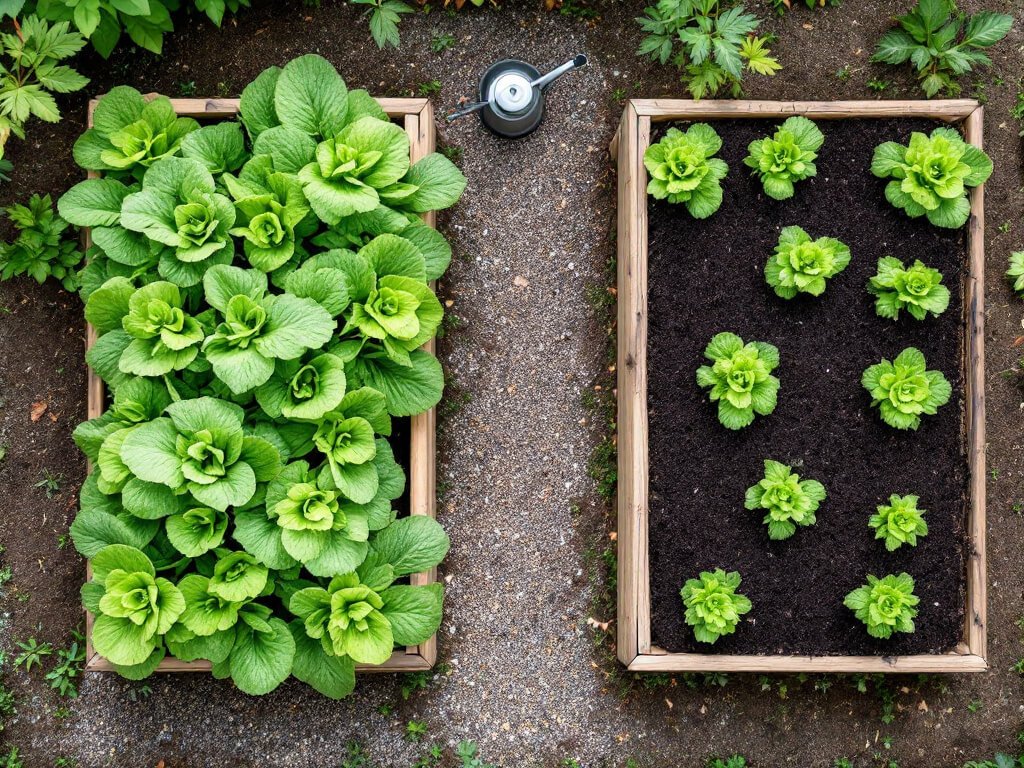
Don’t squeeze lettuce in tighter to fit more companions. Crowding sets plants against each other for light, water, and nutrients, and it cuts airflow. That can reduce yield and raise disease pressure. Stick to the spacing for your cultivar: about 6 inches for loose-leaf and about 10 to 12 inches for full-size heads.
Dense, moisture-trapping plantings
Thick plantings hold moisture, and excess moisture can increase damping-off, bottom rot, and slug pressure. Those are three of lettuce’s main problems. Leave room for air to move through the bed, and water to keep the soil evenly moist rather than wet. If a neighbor plant has high water needs, move it to its own container.
Layout and spacing
Think of lettuce as a short-season filler. Plant it between slower-growing crops and harvest it before those crops shade the bed. Put flowering companions at the edges, and use separate containers for vigorous or warm-season plants like basil. Succession sowing keeps the harvest going from spring through autumn.
– Lettuce: about 6 inches apart for loose-leaf, about 10 to 12 inches for full-size heads.
– Alyssum: along the bed edge, outside the lettuce’s final spacing.
– Radish: between lettuce plants or rows, sown or thinned per the seed packet, and pulled before the lettuce fills in.
– Spinach: as an early crop nearby, kept from crowding the lettuce.
– Marigold and nasturtium: at the bed border or in a separate container.
– Coriander and parsley: at the edge, outside the lettuce’s mature canopy.
– Basil: in its own container, where its warm-season water and space needs won’t crowd the lettuce.
– Between slower crops: sow lettuce in the gaps and harvest it before the larger plants cast heavy shade.
FAQ
Does alyssum help lettuce?
RHS cites research showing that alyssum grown with lettuce reduced aphid populations. Its nectar and pollen attract beneficial insects that prey on aphids.
Can marigolds repel pests from lettuce?
Not reliably. The University of Minnesota says marigolds are widely promoted for insect deterrence, but their effectiveness varies.
Can lettuce grow between larger crops?
Yes. Lettuce is a fast, small crop, so you can grow it between slower plants and harvest it before the larger ones take over the space or cast heavy shade.