
Hosta Companion Plants for a Moist Shade Garden
Choosing hosta companion plants comes down to matching light, moisture, and drainage, not just picking whatever looks good next to a hosta. Get that match right and the bed mostly looks after itself. Get it wrong and you end up watering one half of the bed to death or letting the other half dry out.
Hostas are easy to pair with the right plants and hard to pair with the wrong ones. This guide covers what shares their conditions, what doesn’t, and how to lay it out so nothing crowds anything else.
Introduction
Hostas are herbaceous perennials that generally grow in Zones 3–9, though hardiness varies by species and cultivar. They want partial shade to shade, fertile and organic-rich soil, and consistent moisture during active growth. Some cultivars tolerate morning sun, but hot afternoon sun can scorch the leaves.
Whatever you plant beside a hosta has to be comfortable with those same terms. The good companions below all do well in shade and moist soil, and each adds something the hosta lacks: fine texture, spring flowers, height, or a different leaf shape. Before you buy anything, look up the mature width of your specific hosta, because that number drives every spacing decision.
Why pairings matter for hosta
Hostas are mostly leaf. They flower in summer, but the show is broad, solid foliage, and a bed of nothing but hostas can look flat. Companions with fine, upright, or arching growth give the eye something to land on and make each hosta leaf look bolder by contrast.
Pairing also has a practical side. Hostas need consistent moisture with good drainage, and they don’t tolerate prolonged waterlogging. A neighbor that needs the opposite treatment forces you to compromise, and one of the two plants loses.
One myth to clear up: some sources claim certain companion plants repel slugs or protect hostas from pests. The extension-based guidance I reviewed doesn’t support that. Slugs, snails, deer, and rabbits are still your problem, and no companion reliably solves it. Choose companions for matching conditions and mature size, and handle pests separately.
Best companion plants for hosta
All of these suit the shade and moisture hostas prefer. Where a plant has a specific caveat, I’ve noted it.
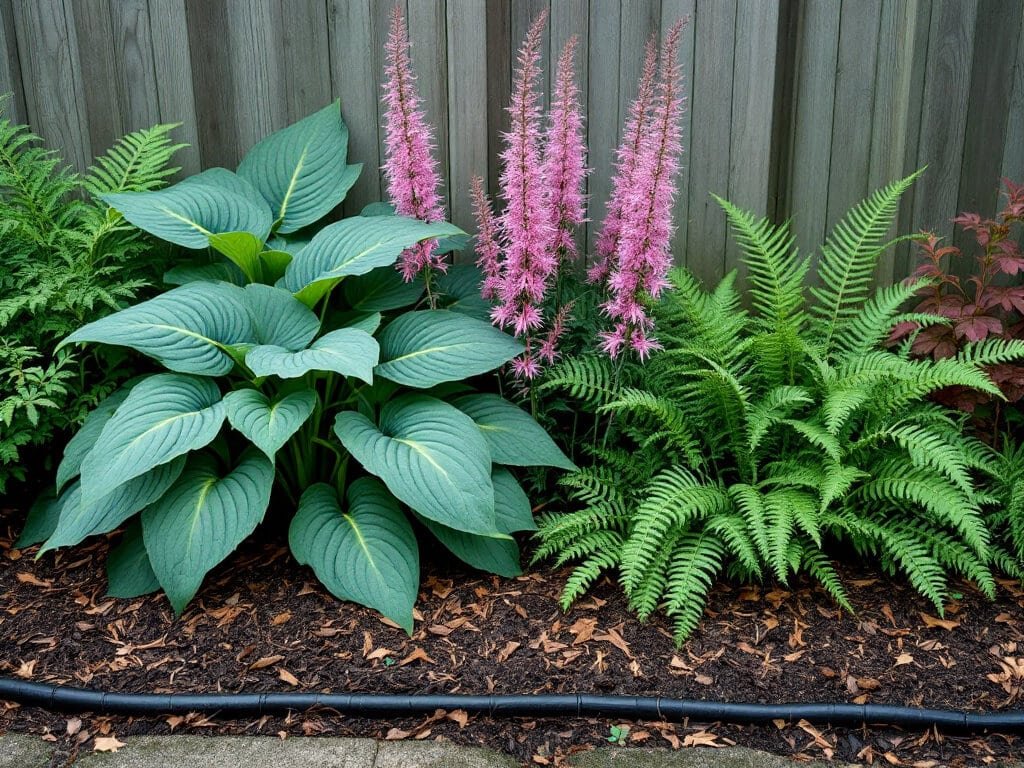
Astilbe
Astilbe shares the hosta’s liking for shade and consistently moist soil. It adds upright flower plumes and fine foliage against the hosta’s broad leaves. Space it according to its mature width, and check the cultivar tag first since sizes vary.
Ferns
Ferns are the most dependable pairing. Their feathery fronds contrast with broad hosta leaves, and they suit shaded, moist beds. Plant them outside the hosta’s mature spread, with the exact distance depending on the size of both the fern and the hosta.
Coral bells (Heuchera)
Coral bells form compact mounds and bring contrasting foliage to the bed. They can take the better-drained edge, which makes them useful where the soil near a path or border dries out a little faster. Space them by their own mature spread, not by a generic hosta measurement.
Brunnera (Siberian bugloss)
Brunnera, also sold as Siberian bugloss (Brunnera macrophylla), offers spring flowers and heart-shaped leaves in similar shade conditions. Its leaf shape is different enough from most hostas to read as a separate plant. Leave room for both plants to reach their listed mature widths.
Bleeding heart (Lamprocapnos spectabilis)
Bleeding heart adds spring flowers and a different growth form to a shade border. Position it outside the hosta’s mature spread, and verify the final width of the cultivar you buy.
Japanese forest grass (Hakonechloa macra)
Japanese forest grass gives you fine, arching foliage, which is a strong contrast to bold hosta leaves. Allow room for its mature clump, and keep it from crowding the hosta crown.
Ligularia
Ligularia brings bold foliage and yellow flowers, a color contrast you don’t get from most shade plants. Use it only where the soil stays reliably moist. Space it based on its mature size.
Rhododendron
Rhododendron works as a taller, woody background layer in part shade with moderate moisture. Plant it behind the hostas, and account for the shrub’s much larger mature size so it doesn’t shade out or crowd the front of the bed.
Northern sea oats (Chasmanthium latifolium)
Northern sea oats supplies upright, grasslike texture and seed heads for structure. Use it as a background or side layer. I’d skip it next to miniature hostas, since its mature height can overwhelm smaller plants.
What not to plant with hosta
The rule here is simple: if a plant wants dry soil or full sun, it doesn’t belong in a hosta bed. Don’t plant drought-adapted, full-sun plants beside hostas just because they look good in a catalog photo.
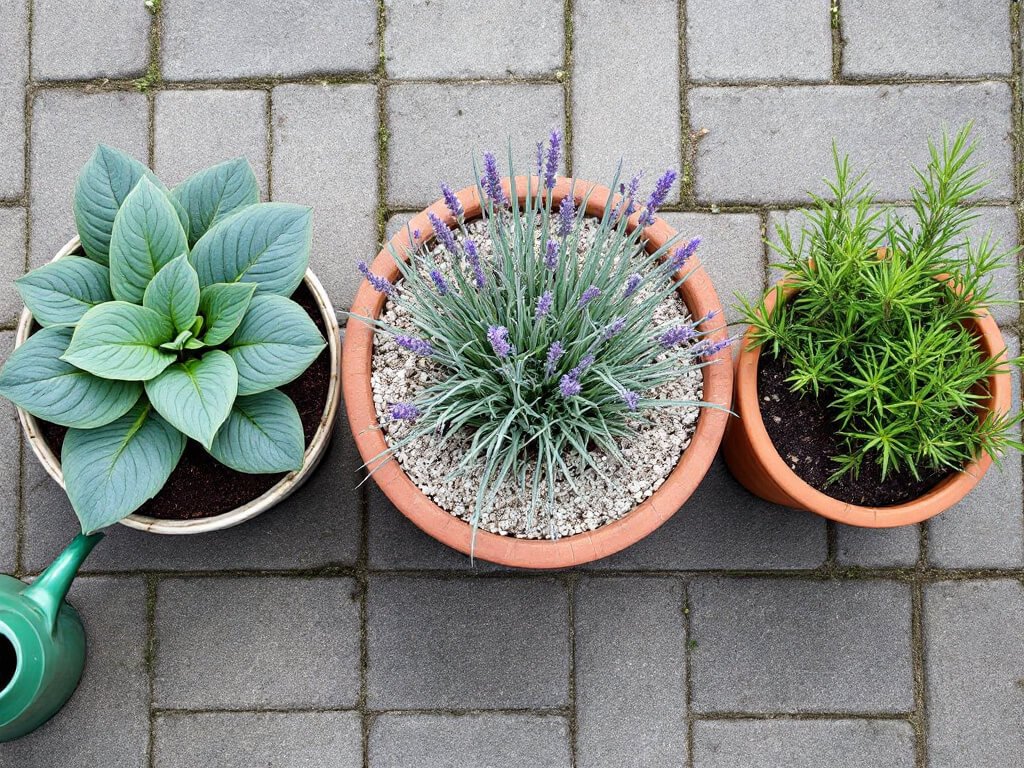
Lavender
Lavender prefers drier, sharply drained conditions than hostas do. The water needs are incompatible, so one of the two will always be unhappy.
Rosemary
Rosemary favors dry, well-drained soil and full sun. A shaded, consistently moist hosta bed is the opposite of that.
Sedums
Sedums generally suit sunnier, drier sites and may decline in the moist shade hostas prefer. Don’t treat them as a default pairing. If you want to try one, confirm that the specific plant tolerates your conditions first.
Succulents
Succulents usually need bright light and low-moisture, fast-draining soil. Those requirements clash with hosta care on both light and water.
Plants with aggressive spreading roots
Aggressive spreaders can compete with hostas for water, nutrients, and space. Judge each species individually before planting it near a hosta. If you can’t say how far it will travel in a few years, put it somewhere else.
Layout and spacing
Start by finding each hosta’s mature width, since hostas range from miniature plants to clumps several feet wide and there is no universal spacing rule. Then use the hostas as broad foliage anchors and build around them in layers, grouping plants with similar moisture needs together.
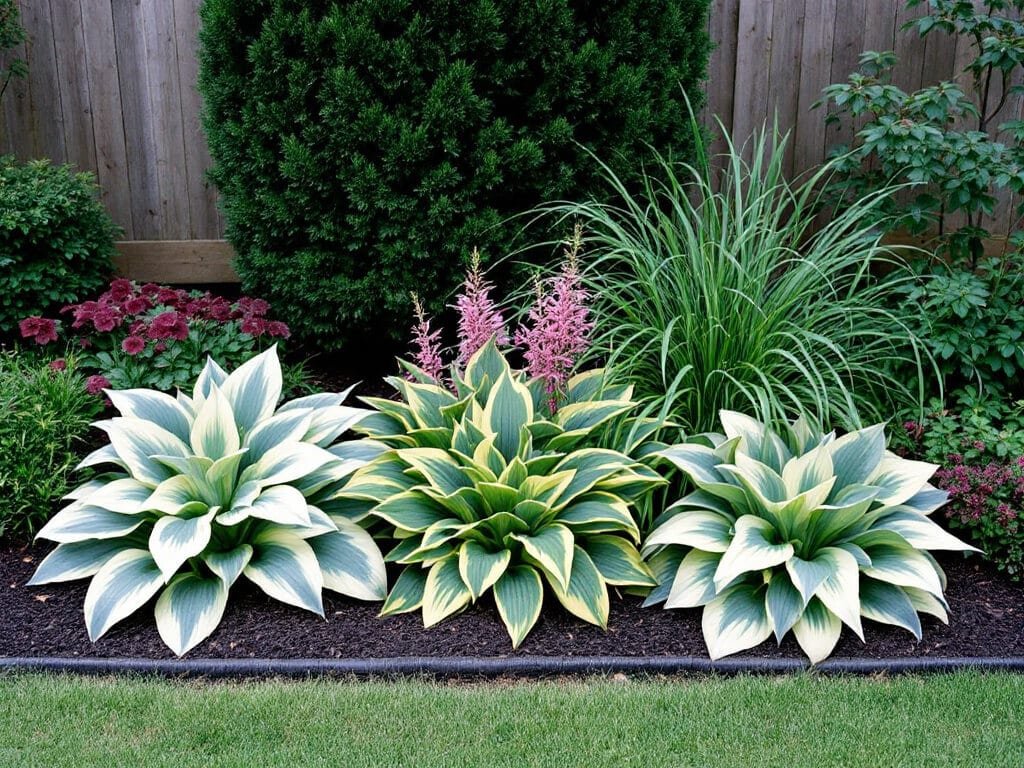
– Anchor the bed with hostas, sized and placed by their listed mature spread.
– Put fine-textured plants (ferns, astilbe, or grasses like Japanese forest grass) beside the hostas, outside their mature spread.
– Use coral bells along the better-drained edge of the bed.
– Place taller plants and shrubs, such as rhododendron or northern sea oats, behind the hostas.
– Keep ligularia only in spots where the soil stays reliably moist.
– Don’t force dry-site plants into the bed. Give them their own location.
FAQ
Can hostas grow with ferns?
Yes. Ferns suit shaded, moist garden conditions and add fine, feathery texture that contrasts with hosta leaves.
What flowers grow well beside hostas?
Astilbe, bleeding heart, Brunnera, and ligularia can add flowers or seasonal color in conditions suitable for hostas. Check that the specific cultivars have compatible moisture and light needs.
Should hosta companions have the same water needs?
Generally, yes. Hostas perform best with consistent moisture and good drainage, so drought-adapted plants such as lavender, rosemary, and many succulents are poor default companions.