
Introduction
Choosing iris companion plants comes down to matching the neighbor to the type of iris you actually have. Bearded iris wants full sun and well-drained soil. Japanese, Siberian, and Louisiana types want more consistent moisture. Pair them with the wrong plants and something ends up too wet, too dry, or too shaded.
You may have read that a certain companion repels iris borer or prevents rot. The extension sources behind this article don’t support that for any plant, so treat those claims as unverified. Pick companions for sun, water, and elbow room, and handle pests directly.
Why pairings matter for iris
Iris is an herbaceous perennial, and the common garden types are either rhizomatous or bulbous. Most do best with at least 6 hours of direct sun a day, though a few species tolerate partial shade. Many bearded and beardless irises grow in Zones 3 to 9, so they fit most of the country.
Water is where pairings go wrong. Bearded iris needs well-drained soil near pH 6.5 to 7 and should not stay wet. Japanese iris prefers rich, acidic, consistently moist soil. Siberian, Louisiana, and other beardless types also generally want steadier moisture than bearded iris.
Iris is prone to bacterial soft rot, rhizome rot, leaf spot, botrytis, iris borer, iris weevil, thrips, aphids, slugs, and snails. Crowded, damp plantings make the rot and leaf diseases more likely. So a good companion shares the iris’s light and water needs and stays out of its way.
Most of the companions below suit bearded iris, since that is the most common garden type. If you grow a moisture-loving iris, jump to the layout section.
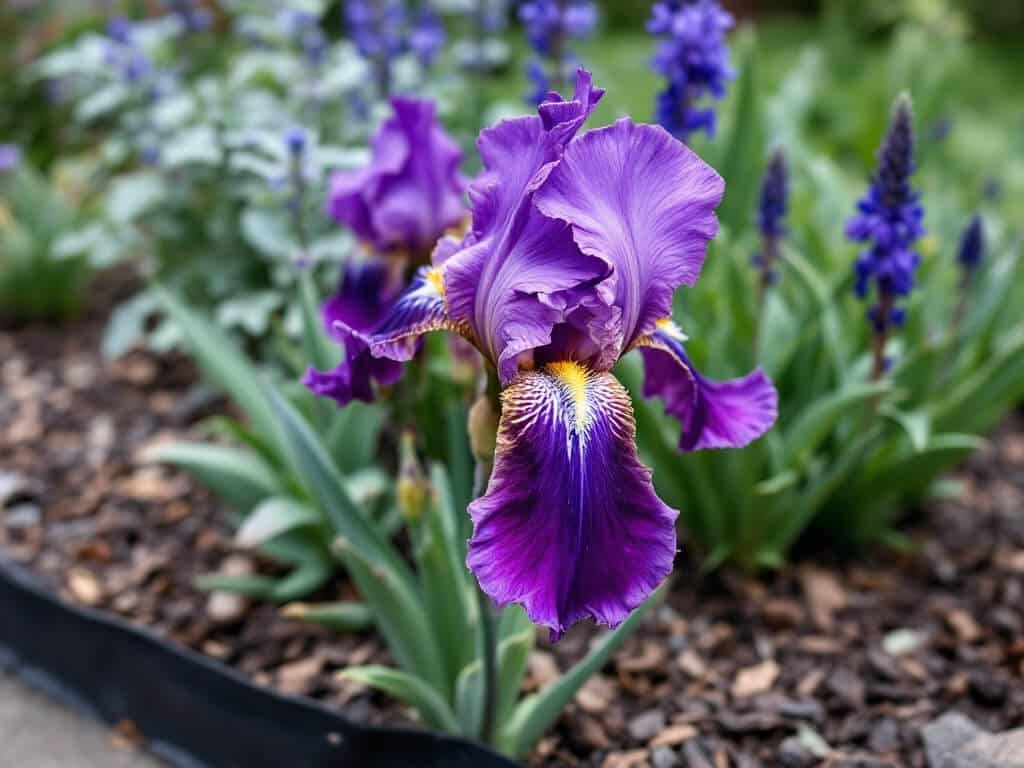
Best companion plants for iris
The spacing below is a practical separation, not a verified companion-planting rule. It is based on the roughly 18-inch spacing bearded iris rhizomes get and the mature spread of each companion.
Catmint (Nepeta spp.)
Catmint takes the same well-drained, full-sun position as bearded iris and gives pollinators flowers to visit. Keep it about 18 inches from iris rhizomes so it doesn’t crowd them.
Salvia (Salvia spp.)
Salvia likes the same full-sun, well-drained conditions, so you won’t need to water one differently from the other. It adds pollinator-friendly flowers beside the iris. Plant it about 18 inches from the rhizomes.
Lavender (Lavandula spp.)
Lavender suits sunny, sharply drained beds, which is exactly what bearded iris wants. Its rounded foliage form also contrasts with the upright iris fans. Give it about 18 inches from the rhizomes.
Yarrow (Achillea spp.)
Yarrow tolerates sunny, well-drained conditions and adds a flower form that looks nothing like an iris bloom. It also attracts pollinators. Keep it about 18 inches from the rhizomes.
Coneflower (Echinacea spp.)
Coneflower uses the same sunny border conditions and keeps flowers going after many irises have finished. That helps with the iris’s biggest weakness in a mixed bed, which is a bare stretch once bloom ends. Space it about 18 inches from the rhizomes.
Black-eyed Susan (Rudbeckia spp.)
Black-eyed Susan tolerates full sun and well-drained soil, and it supplies later-season flowers. It’s a good partner for the same reason as coneflower. Plant it about 18 inches from the rhizomes.
Daylily (Hemerocallis spp.)
Daylily shares full-sun conditions and adds a clumping form that differs from iris fans. Keep it about 18 inches from the rhizomes. Divide it when it gets crowded, since an overgrown daylily clump is exactly the kind of neighbor that smothers iris.
Peony (Paeonia spp.)
Peony can share a sunny, well-drained perennial border and gives you a spring flower display that complements iris. It gets big, so allow about 3 feet between a mature peony and the iris rhizomes. This is the widest gap on the list.
Allium (Allium spp.)
Allium grows in sunny, well-drained soil and brings a different flower shape and season to the bed. The risk is crowding between bulbs and iris clumps. Keep about 18 inches between the iris rhizomes and neighboring plants.
Stonecrop (Sedum spp.)
Stonecrop suits sunny, well-drained sites and fills low ground-level space. Place low forms 12 to 18 inches from the rhizomes so the foliage doesn’t crowd them. Of everything here, it is the best choice for the front edge of the bed.
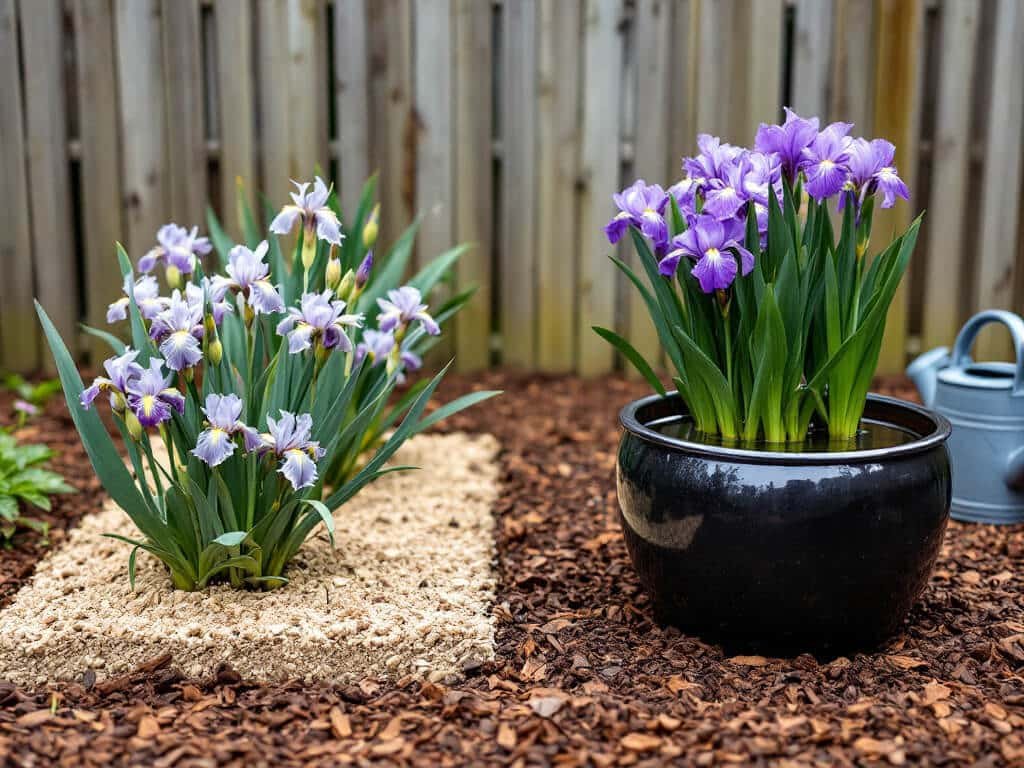
What not to plant with iris
Japanese iris near bearded iris in the same soil zone
Japanese iris wants rich, acidic, consistently moist soil. Bearded iris needs well-drained soil and is vulnerable to rot when wet. Both are irises, but they can’t share one watering routine, so separate them by soil and irrigation instead of forcing one regime on both.
Siberian iris near drought-adapted plants in dry soil
Siberian iris performs best in moist, well-drained soil. Plants chosen for dry conditions want the opposite. If you want both in the same area, put them on separate irrigation zones.
Dense, sprawling groundcovers over bearded iris rhizomes
Dense groundcover cuts air circulation and can keep the rhizome area damp, which raises the risk of disease and rot. Bearded iris does better with the rhizome exposed and the ground around it open. Skip anything that mats or spreads over the top.
Tall shrubs or trees that shade bearded iris
Too little sun reduces how well bearded iris performs. Root competition from shrubs and trees also makes the bed harder to manage. Keep bearded iris in an open, sunny spot.
Plants that need frequent overhead irrigation
Wet foliage and persistently moist rhizome areas can encourage leaf spot and soft rot. If a neighbor needs regular sprinkling from above, don’t plant it next to bearded iris. Water at soil level, or put the thirsty plant in a separate watering zone.
Layout and spacing
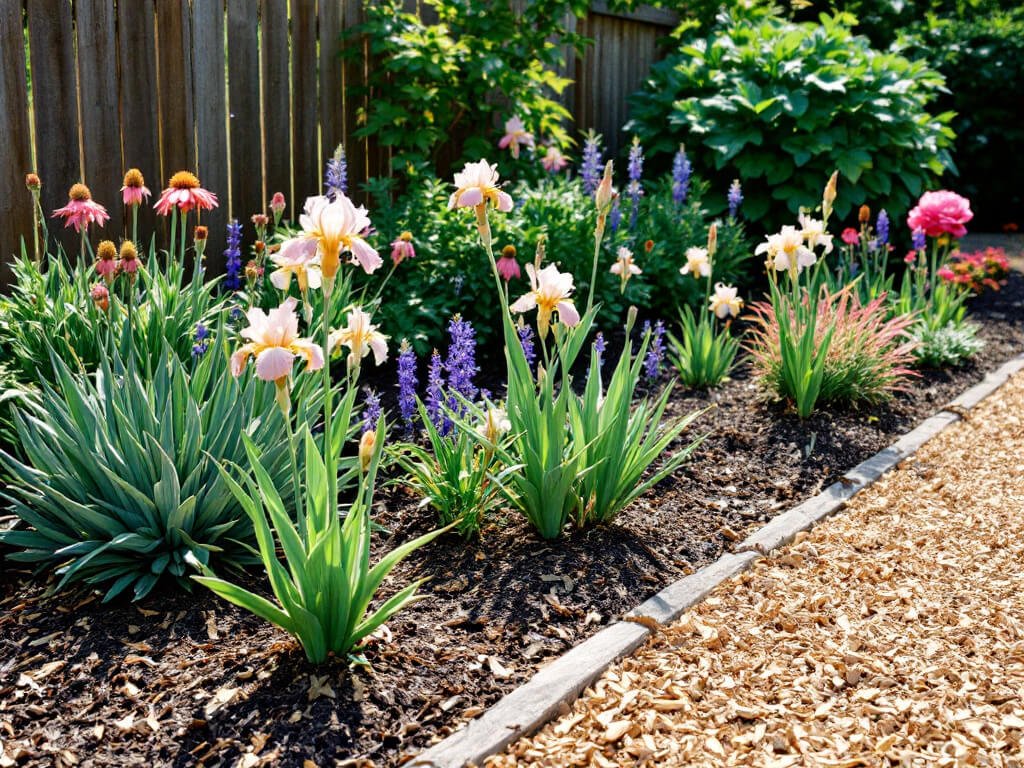
For a bearded iris bed, put the rhizomes in the sunniest, best-drained spot you have, about 18 inches apart. Set them at or barely above the soil surface. Don’t bury them or let neighbors grow over them. Leave enough open ground for air to move and for dividing the clumps later.
– Front of the bed: low companions such as stonecrop, 12 to 18 inches from the rhizomes.
– Middle and back: taller perennials such as salvia, coneflower, and black-eyed Susan, about 18 inches from the rhizomes.
– Wide neighbors: peony at about 3 feet from the rhizomes.
– Bulbs and clumpers: allium and daylily at about 18 inches, with daylily divided when it crowds.
– Japanese, Siberian, or Louisiana iris: group companions by their moisture needs instead of copying the dry-bed layout above.
FAQ
Can iris and lavender grow together?
They can share a sunny, well-drained bed, especially with a bearded iris. Keep them from crowding each other, and don’t try this pairing with a moisture-loving Japanese or Siberian iris.
What should not be planted next to bearded iris?
Avoid plants that create persistent moisture, dense shade, or heavy crowding around the rhizomes. Bearded iris performs best in full sun, well-drained soil, and an open planting with good air circulation.
How far apart should companion plants be from iris?
Bearded iris rhizomes are commonly planted about 18 inches apart, so use that as a starting point for nearby smaller perennials. Increase the distance for plants with a larger mature spread. The exact spacing depends on the companion and the iris type.