
Raspberry Companion Plants: What to Grow Nearby
Raspberry companion plants are harder to pick than most garden lists admit, because the research behind those lists is thin. Extension sources give clear guidance on what to keep away from raspberries and how far apart to space the plants themselves. They don’t back up the long lists of herbs and flowers you’ll see online.
This article sticks to what can be supported. That makes the “best companions” section short, and the “what not to plant” section the one worth reading closely.
Why pairings matter for raspberry
Raspberries are perennial. The crown stays put for years while the canes come and go, so whatever you plant next to them shares the same soil, water, and air for a long time. A bad neighbor is hard to fix later.
Three things matter most here. Raspberries want full sun, moderate and consistent moisture, and fertile, well-drained soil (sandy loam or clay loam). Heavy, wet soil raises the risk of Phytophthora root rot, so any neighbor that holds water or crowds the bed works against you.
The second thing is disease carryover. Verticillium wilt affects raspberries and also affects several common vegetable crops, which is why the previous crop in a spot matters as much as the current neighbor.
The third is airflow and access. Raspberries need room for harvesting and for air to move through the canes, and anything that crowds the row takes that away. Documented problems include spotted-wing drosophila, spider mites, raspberry bushy dwarf virus, Verticillium wilt, and Phytophthora root rot, and a tight, damp planting doesn’t help with any of them.
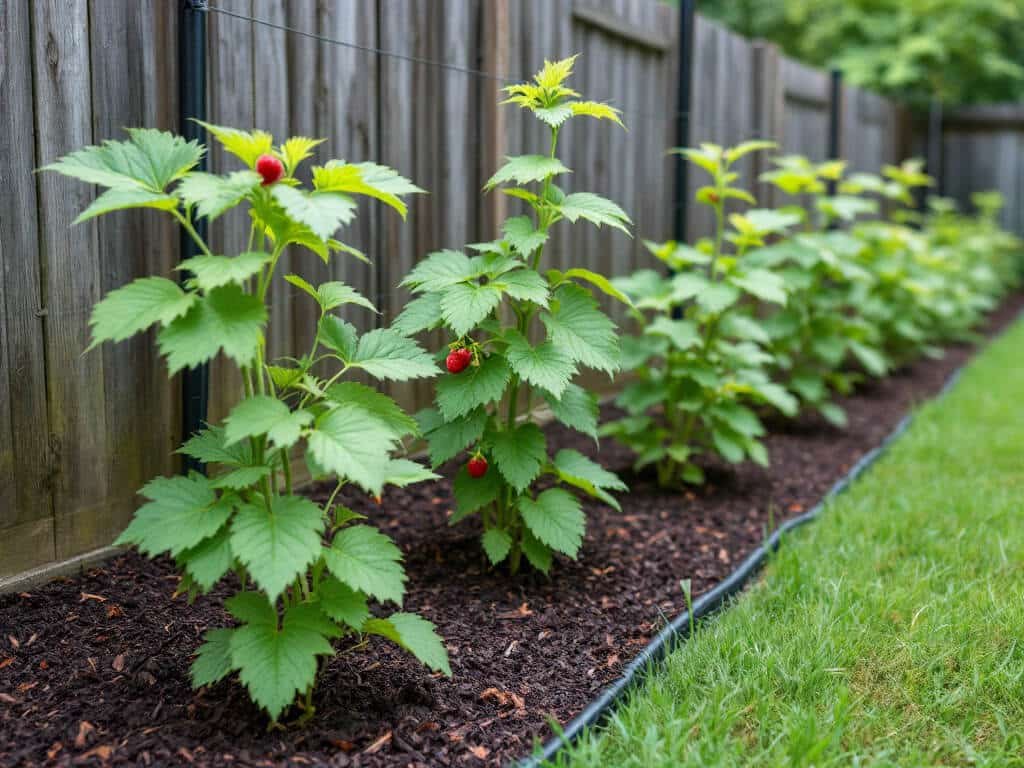
Best companion plants for raspberry
No extension or botanical-garden source in the available research verifies a specific plant pairing with a documented raspberry benefit and a recommended spacing. That rules out a tidy list of ten. What the research does support is below, and it’s short.
Other raspberries of the same planting system
This isn’t a companion in the usual sense, but it’s the one documented way to use the space. Plant red and yellow raspberries 2–3 feet apart in the row. Plant black and purple raspberries about 3–4 feet apart.
Keep types together instead of mixing spacing styles in one row. Check hardiness for your cultivar before you buy, since the zone range varies by cultivar and there’s no single range for all raspberries.
Managed groundcover or grass
No raspberry-specific benefit or safe spacing was verified for any groundcover. If you want something living around the planting, keep it mowed or managed and keep it out of the row itself.
Don’t let spreading grasses run loose. Quackgrass is documented as a troublesome weed in raspberry plantings, and an unmanaged lawn edge is exactly where it gets established.
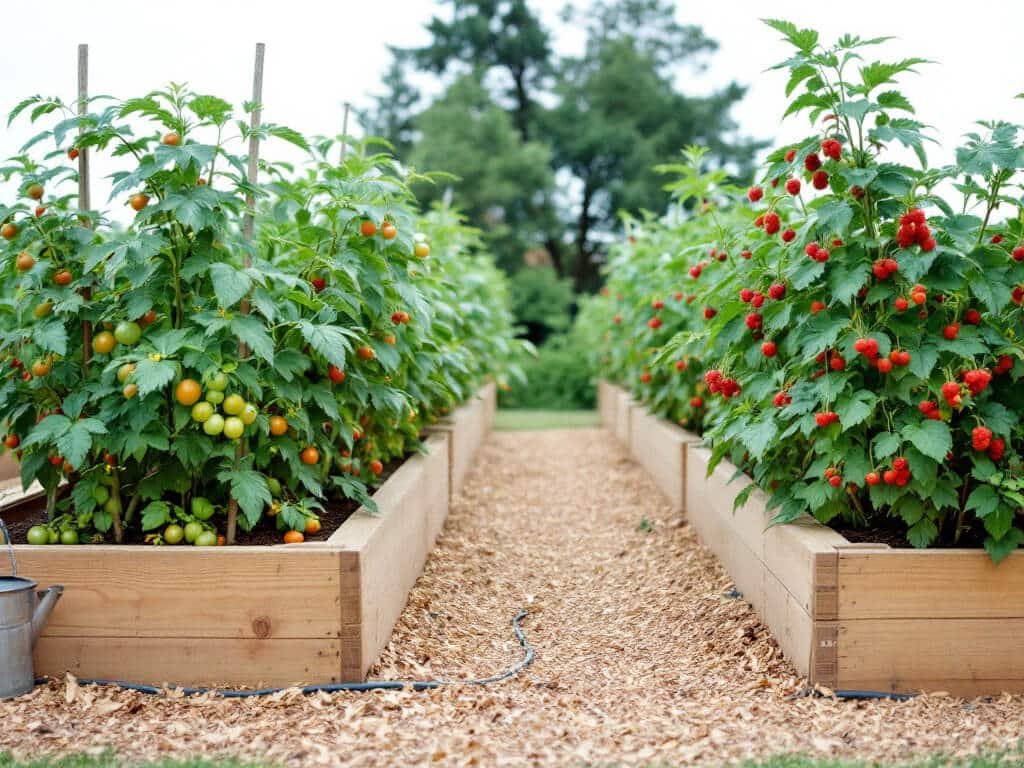
What about garlic, chives, borage, marigolds, yarrow, clover, and comfrey?
These show up on nearly every raspberry companion list, with claims that they repel pests, raise yields, fix nitrogen for raspberries, or improve flavor. None of that was verified by the extension sources available. The exact spacing numbers on commercial gardening sites weren’t corroborated either.
That doesn’t mean these plants will hurt anything. It means I can’t tell you they’ll help, and I’d rather not invent a benefit. If you already grow them, keep them out of the row and out of the root zone, and don’t expect them to change your pest or yield picture.
What not to plant with raspberry
Several of the common vegetable-garden crops are the ones to avoid, and the reason is Verticillium wilt. Oregon State University advises avoiding raspberry sites where tomatoes, potatoes, eggplant, strawberries, or related crops grew within the previous five years. Don’t plant raspberries in soil where tomatoes, potatoes, eggplant, or strawberries grew in the last 5 years.
Tomato
Tomatoes can host Verticillium wilt, a soil pathogen that also affects raspberries. Don’t put raspberries in a bed where tomatoes recently grew, and don’t use tomatoes as a neighbor in the same bed. If your only sunny spot is last year’s tomato patch, pick a different spot.
Potato
Potatoes share the Verticillium risk and are on the same list of crops to avoid before planting raspberries in that soil. A former potato patch is a common spot for a new berry planting, so it’s worth checking your own garden history before you dig.
Eggplant
Eggplant carries the same Verticillium risk and falls under the same five-year warning. If eggplant is part of your rotation, keep that bed out of the running for raspberries.
Strawberry
Oregon State lists strawberries among the crops that may precede Verticillium problems in raspberry beds. The source supports rotation caution. It doesn’t give a safe distance between established strawberry and raspberry plantings, so I can’t give you a number. I’d keep them in separate beds, and I’d never plant raspberries into an old strawberry bed.
Quackgrass
Quackgrass is a spreading weed that competes with raspberry plantings, and extension guidance names it as troublesome. Once it’s threaded through the row, it’s hard to remove without disturbing the raspberry roots. Clear it before planting and keep the edges of the bed clean.
Bindweed
Bindweed is also named as a troublesome spreading weed in raspberry plantings. Treat it as something to remove, not a groundcover. Pull it early and keep after it, because it comes back from what you leave behind.
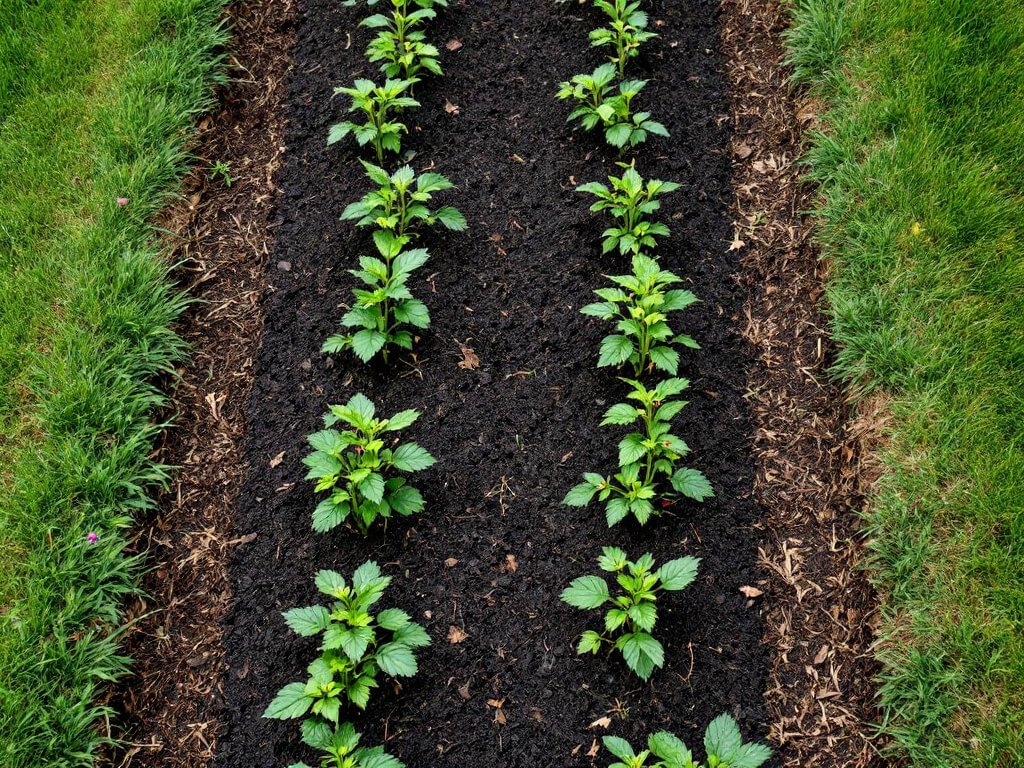
Layout and spacing
Treat raspberries as the main crop and leave the row to them. Keep the planting open enough for picking and airflow, and put your effort into the soil and the site, not into filling gaps with unverified neighbors.
Red and yellow raspberries: 2–3 feet apart in the row.
Black and purple raspberries: about 3–4 feet apart in the row.
Rows: 8–10 feet apart.
Site: full sun, fertile and well-drained, with no recent tomatoes, potatoes, eggplant, or strawberries in that soil.
Edges: keep quackgrass and bindweed out, and manage any grass or groundcover nearby.
Containers: grow raspberries alone unless a companion can be shown to share the same light, moisture, and root-space needs.
FAQ
Can tomatoes grow near raspberries?
They shouldn’t share a bed, and they shouldn’t be the previous crop where Verticillium wilt is a concern. Oregon State University recommends avoiding sites where tomatoes and other listed hosts grew within the previous five years.
Can herbs such as garlic, chives, or mint improve raspberry health?
The available extension sources don’t verify reliable raspberry-specific benefits or planting distances for these herbs. Mint shouldn’t be treated as a safe default, because its spreading habit can create competition and management problems.
How far apart should raspberry plants be planted?
Red and yellow raspberries are commonly planted 2–3 feet apart, and black and purple raspberries 3–4 feet apart. Rows are generally 8–10 feet apart.