
Peas Companion Plants: Best and Worst Neighbors
Choosing peas companion plants comes down to light, water, and timing, not folklore. Peas want full sun, steady moisture, and cool weather, and anything you plant beside them has to fit those conditions or stay out of the way. Most of the pairings below work because of how the plants use space and season, not because of any mysterious chemistry.
Peas (Pisum sativum) are a cool-season annual legume, commonly grown across USDA zones 5–9. Vining types reach roughly 16–48 inches depending on variety and need a trellis, so you’re really planning around that support structure.
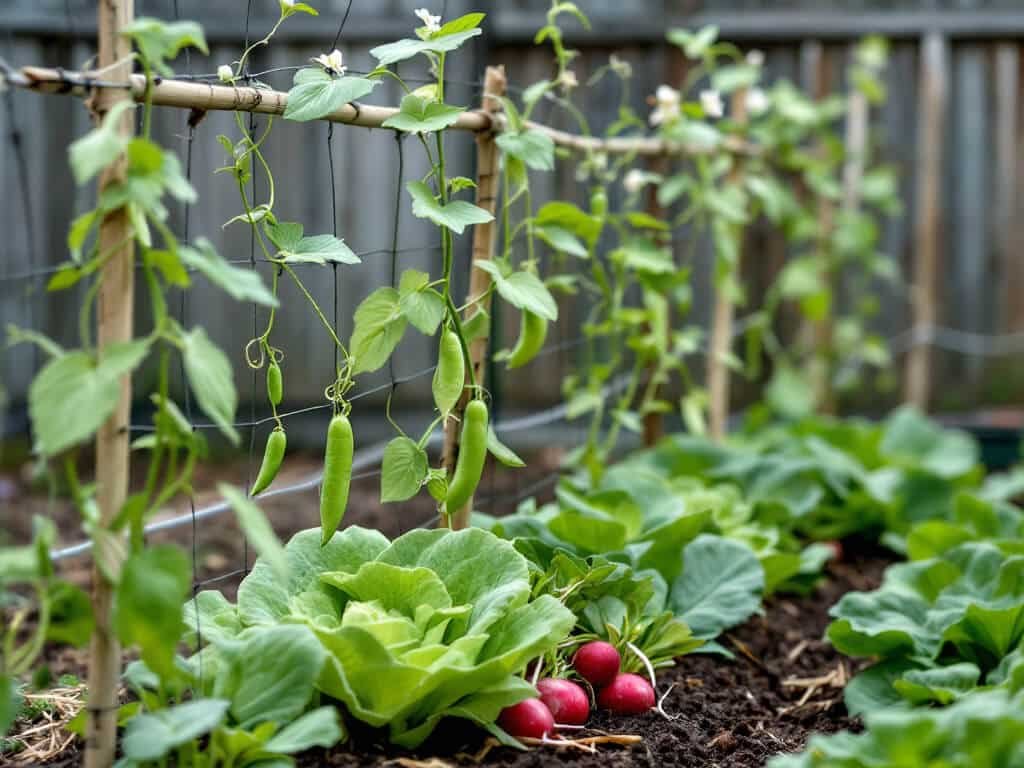
Why pairings matter for peas
Peas are in the ground in cool weather and harvested from spring into early summer. That short window is the main reason pairings matter. A good neighbor either shares that window, like radishes, lettuce, and spinach, or moves in after peas are done, like tomatoes.
There’s also a popular claim that every commonly listed pea companion repels a specific pest. The extension sources behind this article don’t support that. Companion planting can improve space use, provide support, attract beneficial insects, or add to soil health, but a specific pest-control claim needs evidence for that exact pairing.
Peas do get aphids, pea and bean weevil, pea moth, and powdery mildew, and mice and pigeons go after them too. No neighbor on this list is a substitute for watching your plants and giving them airflow.
Best companion plants for peas
Carrots
Carrots occupy a different root zone and can share a cool-season bed with peas. No extension-verified pest-repellent effect turned up, so grow them for the space, not the folklore. Use the spacing each crop calls for, and don’t tuck carrots right against pea stems. No reliable universal pea-to-carrot distance was verified.
Radishes
Radishes mature quickly, so they use space in a pea bed that would otherwise sit empty while the vines get going. Sow them between the pea rows, not at the crown of the plants, and follow the seed-packet spacing for your radish variety. Don’t expect them to protect peas from any particular pest.
Lettuce
A pea trellis casts partial shade, and lettuce can use it to stay cooler. Leave enough room for the lettuce’s mature head or leaf spread. A universal pea-to-lettuce measurement wasn’t verified, so go by the lettuce variety’s own spacing.
Spinach
Spinach suits the same cool-season window and can fill space under or beside a trellis. Follow the variety’s mature-spacing recommendation and keep it clear of the pea crown so you can still reach the base of the vines.
Corn
Corn can give peas something to climb, though timing and competition need managing. No reliable home-garden pea-to-corn distance was verified. Keep the corn far enough away that it doesn’t shade the peas, and treat this as a pairing to try on a small scale first.
Tomatoes
Early peas can grow at the base of tomato cages before the tomatoes fill in, and they may act as a temporary windbreak. Plant the peas on the north side of the cage and follow your tomato variety’s spacing. The peas are done by the time the tomatoes need the room, which is what makes this work.
Cucumbers
West Virginia University Extension lists cucumbers as compatible with English peas, and the two can share a trellised arrangement. Give each crop its own support and follow the cucumber variety’s spacing. No universal pea-to-cucumber distance was found.
Cabbage-family crops
Brassicas are cool-season crops, so they share the calendar with peas. Peas are legumes and can contribute nitrogen to the garden system, but don’t count on that feeding a neighboring cabbage during the same season (see the FAQ). Give brassicas their full mature spacing and keep them from crowding the pea trellis.
Flowering plants
Flowers near vegetables can attract beneficial insects that prey on pests. Plant them near the pea row, not inside it, so airflow and harvest access stay open. No pea-specific distance was verified, so use the flower’s own spacing.
Oats or barley
Field peas can be companion-seeded with a spring cereal grain, which gives them something to climb and reduces lodging. That recommendation is for field peas, not necessarily garden peas, and it relies on a tested mixture rate rather than backyard row spacing. I’d skip it for a vegetable bed and treat it as a farm-scale technique.
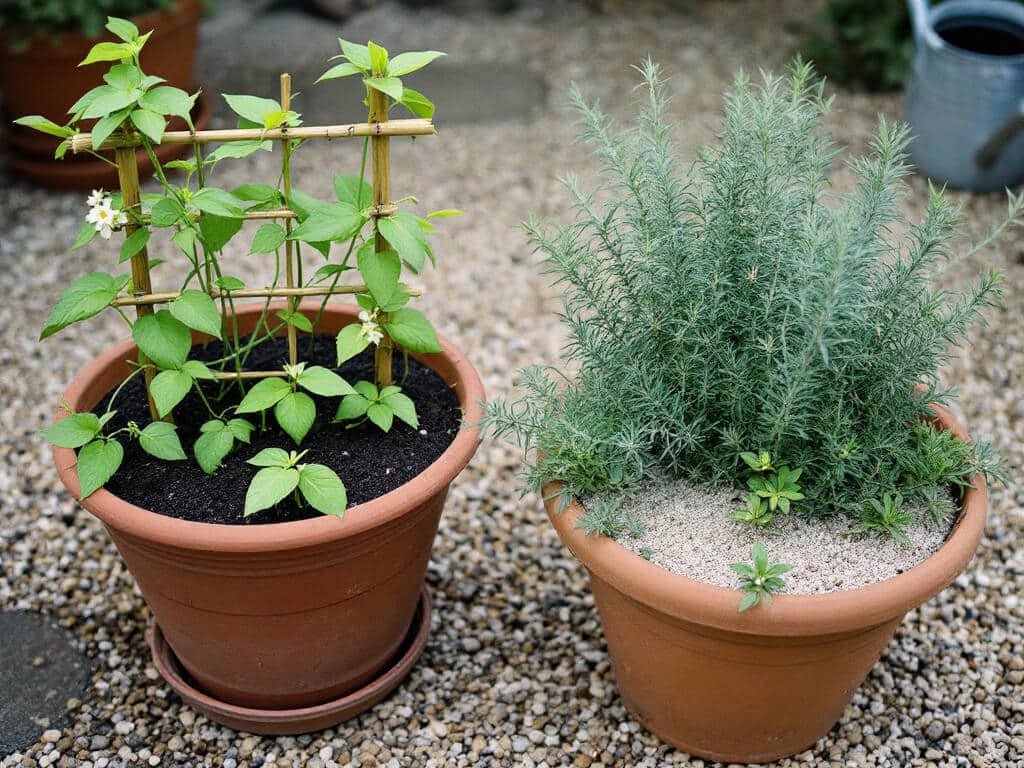
What not to plant with peas
The extension sources don’t give a fixed blacklist, and I’d be wary of any article that does. What they support is a short list of situations to avoid.
Rosemary, sage, and thyme
These herbs prefer sharper drainage and drier conditions than peas, which need steady moisture, especially during flowering and pod development. Put them in the same bed or container and one of the two will be unhappy. Give the herbs their own spot. No universal separation distance was verified.
Tall, dense crops on the sunward side
Anything tall and dense on the sun side of the peas can shade them and compete for water and nutrients. Peas prefer full sun, so keep the light open to them.
Big blocks of a single crop
Planting large blocks of one crop close together can let pests or disease spread faster. Mix crops and leave space between plantings. That does more for you than an unsupported list of enemies.
Warm-season crops planted too early
Tomatoes, peppers, eggplant, and similar crops don’t share peas’ cool-season timing. Treat them as succession crops or separate plantings, not same-time companions. The tomato-cage method works only because the peas go in early and the tomatoes come in later.
Layout and spacing
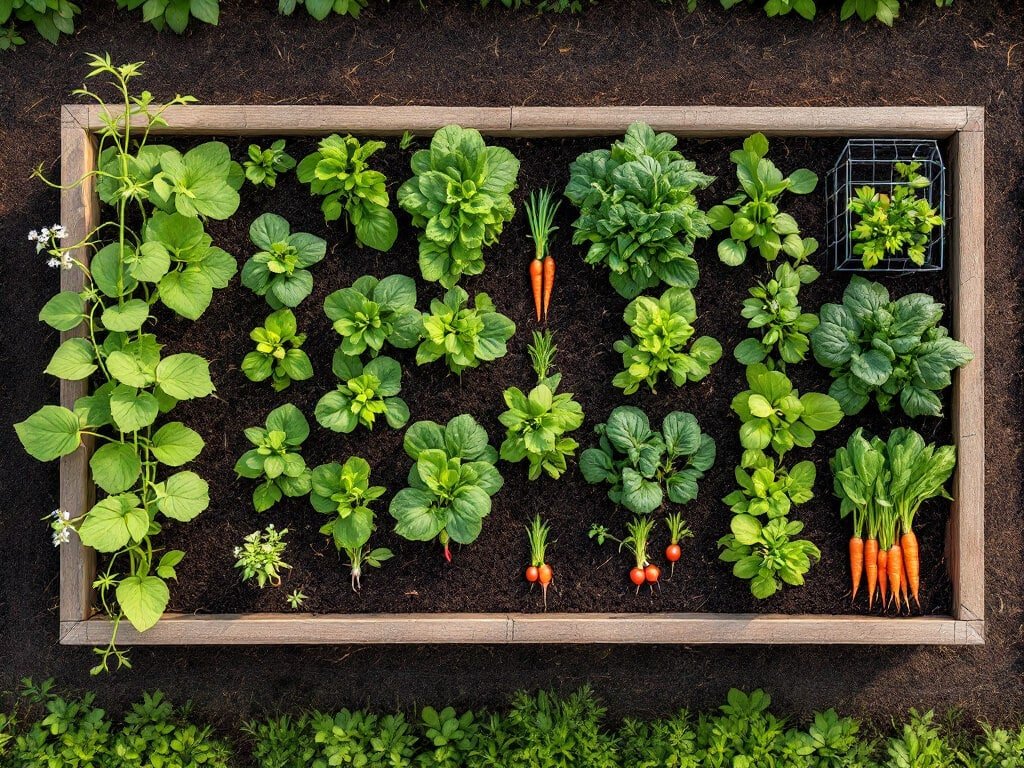
Start with the trellis, because it casts the shade and sets the layout for everything else. Place it where it won’t shade shorter crops, then fill the space beside or between the rows with cool-season plants.
• Trellis position: Don’t put the pea trellis on the sunny side of shorter crops. Put it where its shade falls on lettuce or spinach you want kept cool, not on anything that needs full sun.
• Between rows: Sow radishes, lettuce, spinach, or carrots between or beside the pea rows, and keep them off the pea crown.
• Tomato cages: Plant early peas on the north side of the cage, and follow the tomato variety’s spacing.
• Brassicas and cucumbers: Give each its mature spacing and its own support, away from the pea trellis.
• Flowers: Place them near the row, not in it, so air moves and you can reach the pods.
• Containers: Give peas one dedicated trellis, and don’t combine them with dry-soil herbs.
FAQ
Can peas and tomatoes grow together?
Yes. University of Maryland Extension describes planting peas at the base of tomato cages, preferably on the north side, so the early pea growth can act as a temporary windbreak before tomatoes fill the space.
Do peas improve the soil for nearby plants?
Peas are legumes that fix atmospheric nitrogen, which can reduce fertilizer needs over time. That nitrogen isn’t automatically passed to neighboring plants during the same crop, so don’t skip feeding hungry neighbors.
Should peas be planted with onions or garlic?
The reviewed extension sources did not establish a reliable pea-specific incompatibility with onions or garlic. Without a specific mechanism or trial result, I wouldn’t call the pairing harmful.