
Azalea Companion Plants for Acidic Shade Gardens
Choosing azalea companion plants comes down to matching three things: light, moisture, and soil acidity. Azaleas are woody shrubs in the rhododendron group, and they want partial or dappled shade, humus-rich acidic soil, and moisture that never fully leaves the root zone. Anything you plant beside them has to be happy with those same conditions.
This article sticks to what is known about azalea needs. The plants below are chosen for habitat and layering, meaning they share the same shade and soil preferences and fill a different level of the bed. There’s no evidence here that any of them repel azalea pests or feed the shrub, so I won’t claim it.
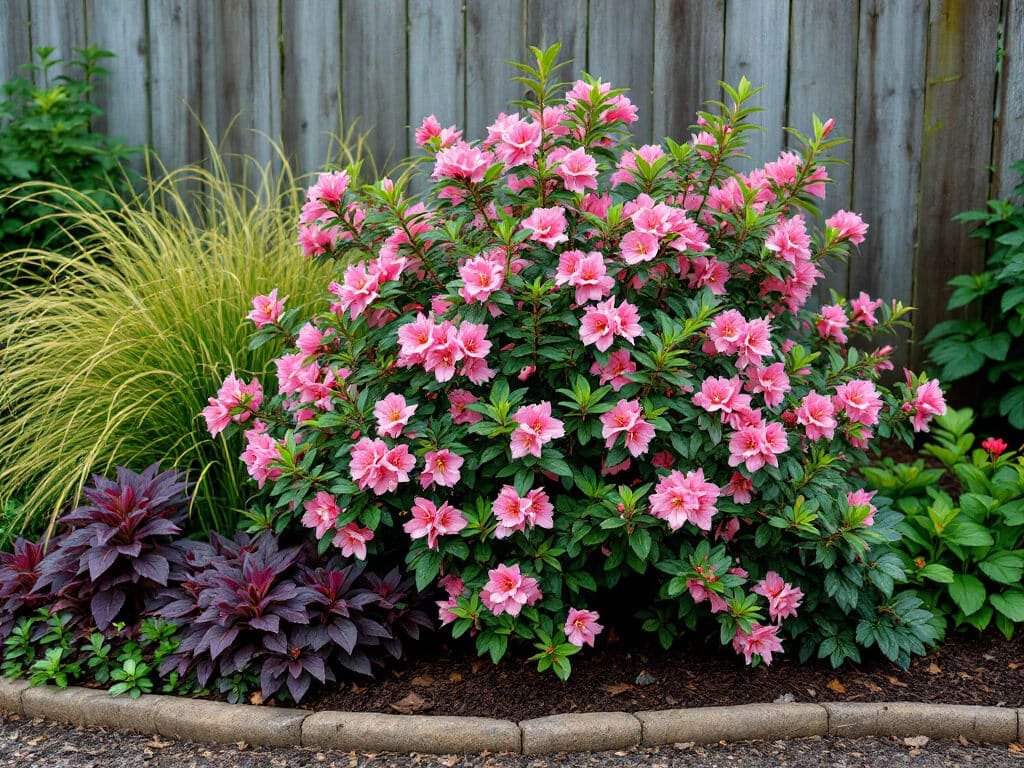
Why pairings matter for azalea
Azaleas are fussy about their roots. They need soil that is moist but drains well, and the root zone should never be allowed to dry out. A neighbor plant that wants dry feet, or one that soaks up water faster than the soil can supply it, puts the shrub under stress.
Soil chemistry matters just as much. Azaleas need acidic soil, so a companion that wants alkaline or lime-rich conditions will pull your care routine in two directions. Group plants that agree on soil and water, and the bed is much easier to manage.
Light is the third factor. Azaleas do best in dappled or partial shade and need protection from scorching midday sun. Tall, dense neighbors can overshade them, while a bed with no shade at all is hard on them. Aim for the in-between.
One more reason to be picky: azaleas are open to a long list of pests and diseases. These include vine weevil, azalea or rhododendron whitefly, rhododendron leafhopper, lacebug, scale insects, caterpillars, aphids, powdery mildew, honey fungus, silver leaf, and Phytophthora. Crowded planting that traps damp air around the foliage doesn’t help, so airflow counts when you pick and place companions.
Zone hardiness and size vary by species and cultivar, so check the tag on your specific azalea before you plan the bed around it. That also means there’s no one-size spacing number, which comes up again below.
Best companion plants for azalea
All ten plants here are low or herbaceous, shade-tolerant, and suited to moisture-retentive beds. Use them to fill the layers below and around the shrub, not to crowd it.
Japanese forest grass (Hakonechloa macra)
This grass fills the lower layer in partial shade without turning into a competing woody canopy. It gives you fine texture beside the azalea’s heavier leaves. Space it using the mature size of both the grass and your azalea, since no universal distance has been verified.
Heuchera
Heuchera provides low foliage contrast in the same bright-shade setting azaleas prefer. It stays out of the way of the shrub’s branches. Space it by its mature spread, not by a fixed number.
Hosta
Hosta occupies the ground layer and tolerates shade. Keep it outside the azalea’s root flare, and space it according to its mature spread. Hostas have the largest leaves on this list, so give them room to open up without smothering the shrub’s base.
Christmas fern (Polystichum acrostichoides)
This fern adds a shade-tolerant layer beneath or near the shrub. It suits the same cool, moist conditions azaleas like. Leave enough room for the mature frond spread so the fronds don’t press against the azalea’s stems.
Foamflower (Tiarella cordifolia)
Foamflower gives you low, shade-adapted foliage and flowers at the front of the bed. Plant it according to its mature spread. Keep it from burying the azalea’s crown, because soil or plant growth piled against the base is a problem for the shrub.
Wild ginger (Asarum canadense)
Wild ginger forms a low groundcover for shaded, moisture-retentive beds, which makes it a good living mulch under and around azaleas. Keep it from covering the shrub’s base. If it creeps in, pull it back by hand.
Bleeding heart (Lamprocapnos spectabilis)
Bleeding heart takes the herbaceous middle layer while the azalea supplies the woody structure. That split means the two plants aren’t fighting over the same space. Allow separation based on the mature width of each.
Japanese painted fern (Athyrium niponicum var. pictum)
This fern adds foliage color in partial shade and uses a different vertical layer from the shrub. It works well in front of an azalea where you want something to look at when the shrub isn’t in bloom. Space it by mature clump width.
Virginia bluebells (Mertensia virginica)
Virginia bluebells supply spring flowers before many azaleas finish their seasonal display, so they extend the show instead of competing with it. Plant them outside the azalea’s root flare and use mature spread to set the spacing. Azalea bloom timing varies by species and cultivar, so how much overlap you get depends on which azalea you have.
Lungwort (Pulmonaria spp.)
Lungwort offers low foliage and early flowers in cool, shaded conditions. Use mature spread to set spacing, and keep the soil around the shrub’s crown open instead of planted solid.
What not to plant with azalea
The common thread is simple: avoid anything that wants different soil, different water, or the same pests.
Plants that need alkaline soil
Many lime-loving garden plants conflict directly with the azalea’s acidic-soil requirement. One of them will either sulk in acidic soil or tempt you to amend the bed in a way that hurts the azalea. Keep them in a different bed.
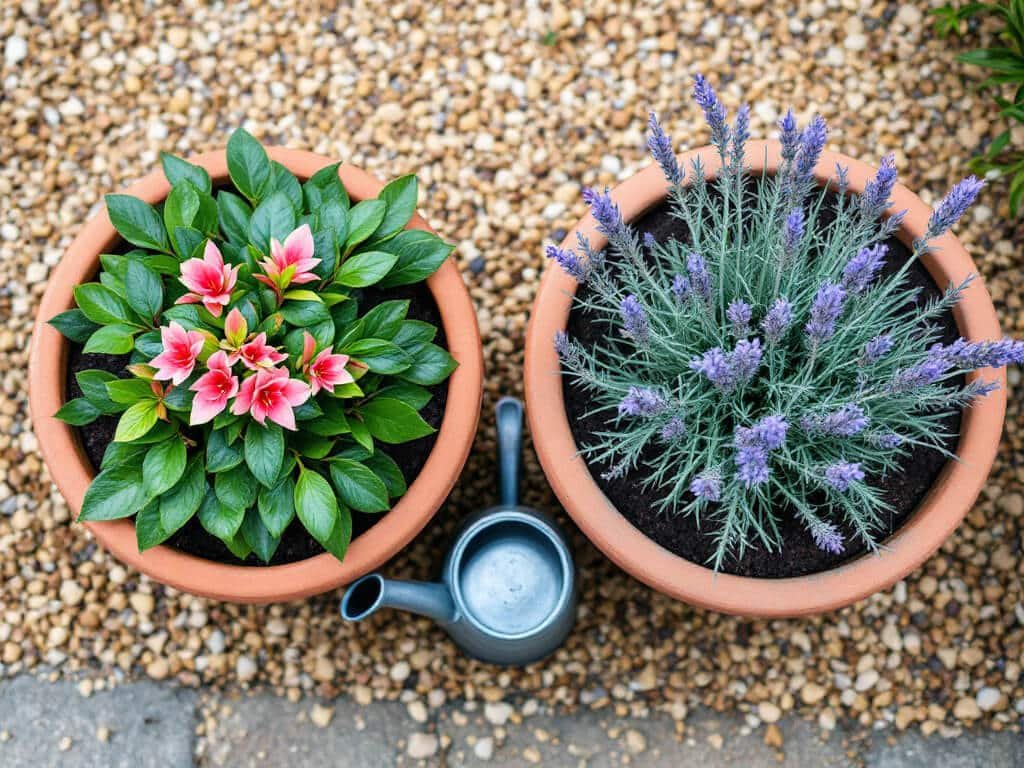
Drought-tolerant Mediterranean plants, such as lavender
Lavender and similar plants generally want sharp drainage and less frequent watering. Azaleas need consistently moist, well-drained soil, so the two sets of needs don’t overlap. If you want both, put them in separate beds or containers where each can be watered on its own schedule.
Large, shallow-rooted trees or shrubs planted close by
These can compete with the azalea for moisture and light. The sources establish the azalea’s moisture and partial-shade needs but don’t give an exclusion distance, so use judgment. If a neighbor’s roots are visibly crowding the azalea’s, or its canopy leaves the shrub in full shade, move one of them.
Plants that share the azalea’s pests and diseases
Other susceptible rhododendron relatives can raise the concentration of shared problems, since whitefly, leafhopper, lacebug, scale, and several fungal and root diseases affect azaleas. I’d skip massing related shrubs tightly together unless you’re ready to inspect them regularly.
Plants that require waterlogged soil
Azaleas need moist but well-drained conditions. A plant that wants standing wet soil forces you into a drainage setup that works against the azalea, and it may create conditions associated with root disease.
Layout and spacing
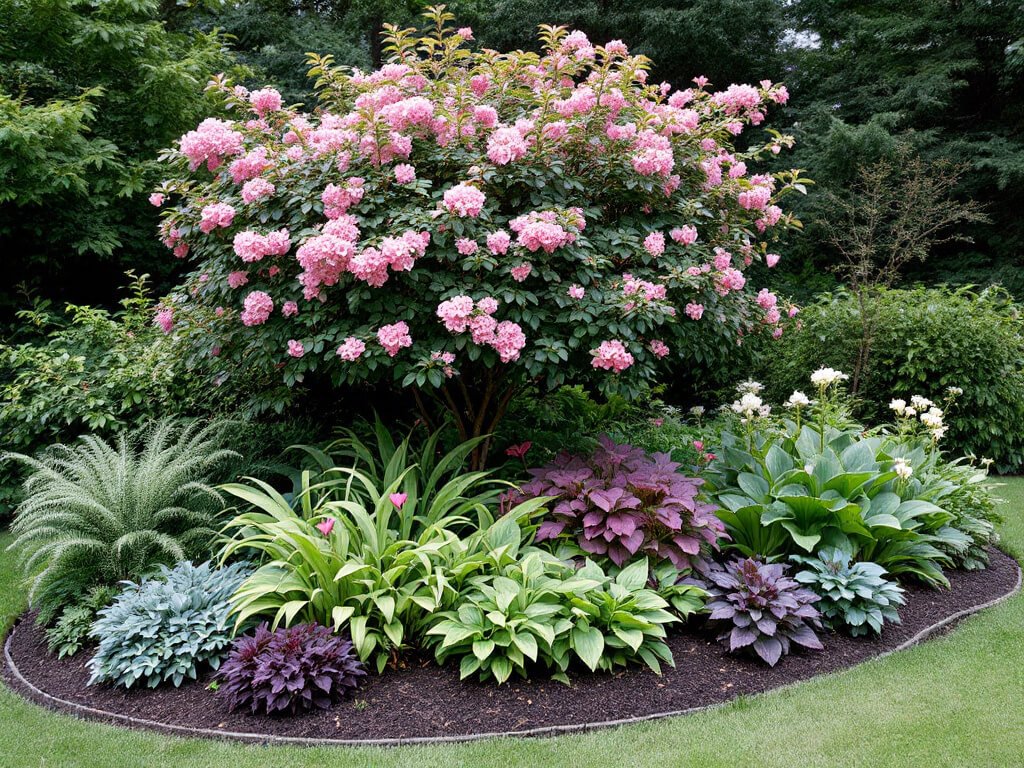
Treat the azalea as the woody framework of the bed, then fill in around it with low groundcovers and ferns that stop short of the root flare. There’s no verified azalea-to-companion distance in the research, so set spacing from the mature size of each plant on its tag, and leave the area directly around the crown open.
Back or center: the azalea, in bright or dappled shade with protection from midday sun.
Middle layer: herbaceous perennials such as bleeding heart, with room for mature width.
Front layer: ferns, hosta, heuchera, and Japanese forest grass, kept clear of the stems.
Ground layer: foamflower, wild ginger, and lungwort as low cover, pulled back from the base.
Around the crown: keep the soil open, and keep companions off the root flare.
Overall: group plants with similar moisture and acidic-soil needs, and avoid dense planting that blocks airflow or keeps foliage wet.
FAQ
Can azaleas grow with hostas?
Yes. Hostas are a reasonable match for a shaded bed as long as the site stays moist but well drained and the hostas don’t cover the azalea’s base. Azaleas do best in partial or dappled shade and acidic, humus-rich soil.
Should companion plants for azaleas also prefer acidic soil?
Yes. Companions with compatible acidic-soil and moisture needs are the safer choice, because azaleas need acidic, humus-rich, well-drained soil that stays moist.
Can azaleas be planted beside drought-tolerant plants?
Usually not, unless you can manage their root zones separately. Azaleas shouldn’t be allowed to dry out, while drought-tolerant plants commonly want less frequent watering and sharper drainage.