
Garlic Companion Plants: What to Grow Nearby
Choosing garlic companion plants is harder than most garden lists admit, because very little of what gets repeated has been tested. The reliable information is about garlic itself: it wants full sun, fertile and well-drained soil, and steady moisture while it grows. A neighbor in the bed matters mostly to the extent that it helps or hurts those conditions.
So this article is short on pairings and long on what actually holds up. Two traditional combinations have some history behind them, nothing has been shown to be a bad match, and the layout rules are where you’ll get real results.
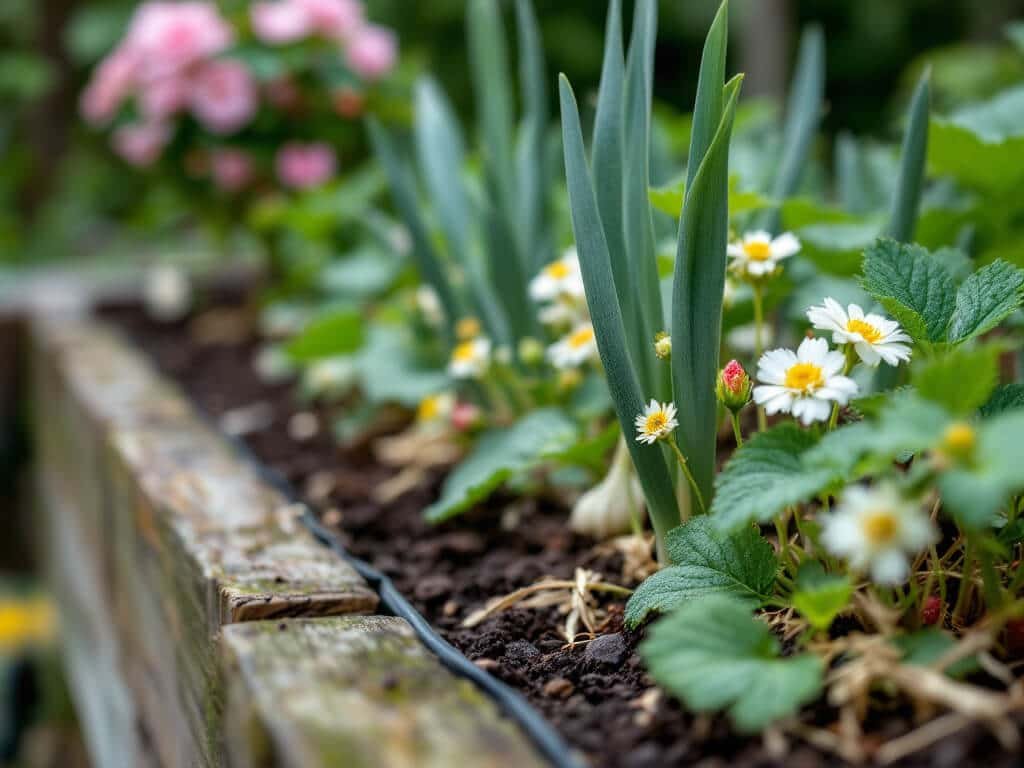
Why pairings matter for garlic
Garlic is a hardy perennial usually grown as an annual, and it is fussy about a few things. It needs full sun, soil rich in organic matter that drains well, and regular water during active growth. For fall-planted garlic, that usually means little water at first, then about 1 to 1½ inches per week once spring growth begins. You stop watering as the lower leaves yellow or shortly before harvest.
That watering pattern is what a companion has to fit around. A plant that shades the bed, crowds the bulbs, or needs constant moisture into early summer works against garlic, however friendly the pairing sounds on paper.
Then there’s the claim you’ll see most often: that garlic repels aphids from the plants around it. The Royal Horticultural Society describes garlic near strawberries and roses as a proposed or traditional practice, not a confirmed result. Treat it as a maybe, not a pest-control plan.
Garlic’s documented problems are thrips, onion maggots, and neck rot. The sources I’m working from don’t show any companion plant preventing them, so don’t count on a neighbor to do that job.
Best companion plants for garlic
The honest list is two plants long. Both come with the caveat that the benefit is proposed, not proven.
Strawberries
Garlic has been grown in strawberry growbags, and chopped garlic leaves have been suggested as a mulch to deter aphids. The RHS frames this as a proposed benefit, not a confirmed one. No companion-specific spacing has been verified, so use garlic’s own spacing: keep cloves about 3 to 4 inches apart, and don’t crowd the strawberry planting.
If you try it, I’d treat it as a low-risk experiment. Plant the garlic in its own rows or pockets at its normal spacing and see what the strawberries do.
Roses
Gardeners sometimes plant garlic near roses hoping to discourage aphids. The RHS presents that as a traditional claim, not established proof, and no spacing for the pairing has been verified.
I’d only do this if you have a sunny, well-drained spot at the edge of the rose bed. Give the garlic its own spacing, and make sure the roses don’t cast shade over it. If the garlic doesn’t get full sun, it isn’t worth the trouble.
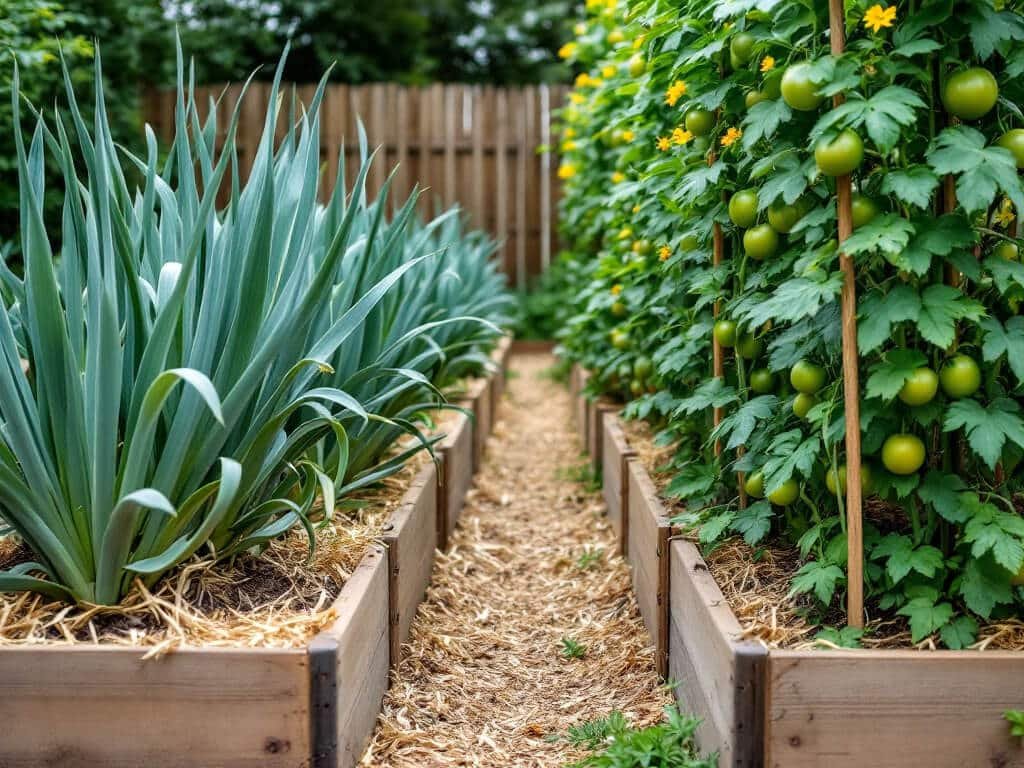
Everything else
No other plant-specific garlic pairings, benefits, or spacing were verified by the sources behind this article, so I’m leaving out the usual lists of herbs, vegetables, and flowers. If a list names a dozen “perfect” neighbors for garlic, ask what it’s based on. In most cases the answer is repetition.
What not to plant with garlic
No plant has been verified as a bad companion for garlic. The available sources cover garlic’s soil, water, pest, and disease needs but don’t establish any botanical incompatibility.
That includes beans and peas, which often get blamed. I couldn’t find a verified finding of toxicity, shared pests, or nutrient competition, so I won’t put them on a no-plant list. What you can avoid are the practical problems below.
Plants that shade the bed
Garlic needs full sun, and a tall or bushy neighbor on its south or west side can take that away. Place any companion where it won’t create persistent shade. Check the spot at midday in late spring, when the garlic is growing fastest.
Plants planted too close
Garlic has shallow roots and wants its bulbs left alone to size up. A companion set within the recommended clove spacing competes for the same top few inches of soil. Keep companions outside garlic’s own spacing, not squeezed into it.
Plants that need water when garlic wants to dry out
Garlic needs regular moisture while it grows, then drier conditions as the lower leaves yellow before harvest. A companion that needs frequent watering through early and midsummer makes that late-season drying difficult. Pick neighbors you can water separately, or skip the pairing.
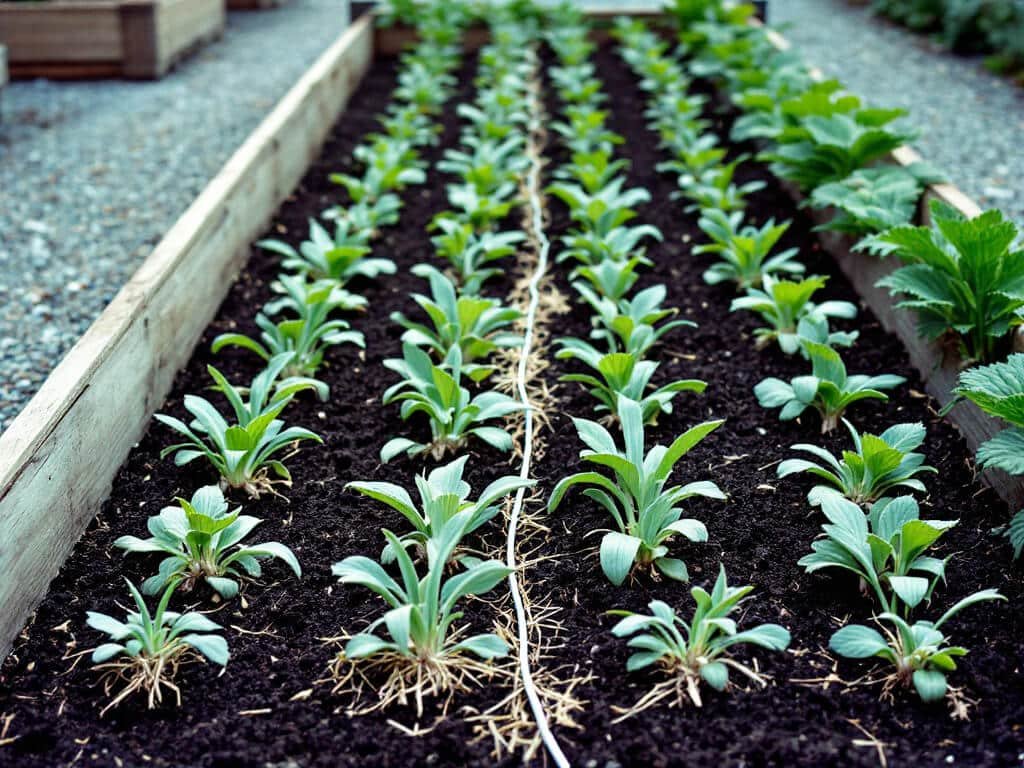
Layout and spacing
Start with garlic’s spacing and fit companions around it, not the other way around. The extension and RHS guidance differ a little, which is normal, so use the numbers on your cultivar’s label if it has them.
Sun: full sun, in a bed or container with fertile, well-drained soil.
Clove spacing (Utah State University): 3 to 4 inches between cloves, 6 to 10 inches between rows.
Clove spacing (RHS): about 6 inches between cloves, 12 inches between rows.
Companions: keep them outside the garlic’s spacing and out of its shade.
Water: about 1 to 1½ inches per week after spring growth starts, then stop as lower leaves yellow.
Harvest: early to late summer, when leaves begin turning yellow or falling over, before the foliage is completely dry.
FAQ
Does garlic repel aphids from nearby plants?
Not reliably, according to the available RHS guidance. Garlic is sometimes used near strawberries or roses for this purpose, but the effect is presented as unconfirmed.
How far apart should garlic cloves be planted?
Utah State University recommends 3 to 4 inches between cloves and 6 to 10 inches between rows. The RHS recommends about 6 inches between cloves and 12 inches between rows. Use the spacing given for your cultivar and conditions when you have it.
Can garlic share a container with another plant?
It can work if the container gives garlic full sun, fertile and well-drained soil, enough root space, and its recommended spacing. The sources don’t verify a specific container pairing, so keep any second plant from crowding or shading the garlic.