
Grape Companion Plants: What to Grow and Avoid
Grape companion plants are a shorter list than most gardening articles would have you believe. Extension sources focus on sunlight, trellising, pruning, airflow, irrigation, sanitation, and pest monitoring. They do not point to a named plant that reliably protects grapes or boosts yield.
That doesn’t mean you have to leave the space around your vine bare. It means the job changes from “what helps my grapes” to “what can sit nearby without causing harm.” This article sorts plants by that standard and shows where to put them.
Why pairings matter for grape
A grapevine is a deciduous woody perennial that needs a trellis or other support and full sun to grow well and ripen fruit. Plants near it can interfere with all three: light, airflow, and the soil under the vine. That is where a bad pairing costs you.
Disease is the main concern. Black rot, downy mildew, powdery mildew, anthracnose, and phomopsis cane and leaf spot all do better when leaves stay wet and air barely moves. Add pests like Japanese beetles, grape flea beetles, grape phylloxera, yellow jackets, and multicolored Asian lady beetles, and you have plenty to manage without a crowded planting making it harder.
Water is the other piece. Young vines need about ½ to 1 inch per week during the growing season. Established vines usually need little supplemental water unless your soil is very sandy or fast-draining. A neighbor plant that wants regular watering pulls you toward overwatering the vine.
So the realistic goal is a companion that stays out of the way. Most of the plants below earn their spot for pollinator forage or color, not for any proven benefit to the grapes. I’d rather say that plainly than repeat folklore.
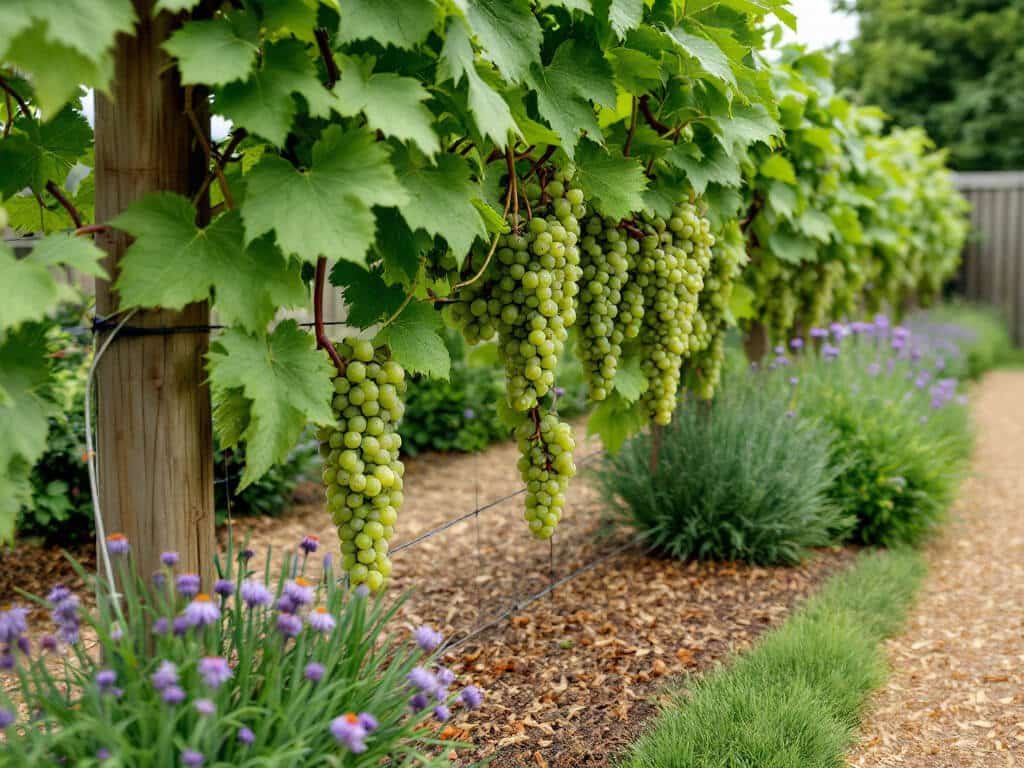
Best companion plants for grape
None of these has a verified grape-specific benefit. They are plants that can share the area if you place them correctly. In every case, keep the soil directly beneath the vine clear.
Low-growing annual herbs and flowers
No reliable extension evidence shows that these repel grape pests or raise yield. Use them only for visual interest, and only outside the vine’s cleared root zone. Plant at the outer edge of the trellis area, not against the trunk.
Pollinator plants
Flowering plants can provide forage for pollinators, though no grape-specific yield benefit has been verified. Place them outside the root zone and away from the canopy so air can still move through the vines. There is no dependable spacing figure, so judge by keeping the canopy open.
Native perennial flowers
Native perennials suit sunny conditions and can support beneficial insects. No grape-specific pest-control effect has been verified, so treat them as habitat, not protection. Use them only beyond the cleared area under the vine, and set the distance by the perennial’s mature width.
Compact culinary herbs
Compact herbs can fill nearby space without trying to climb or crowd the vine. No grape-specific pest-repellent effect was found, so grow them for the kitchen. Plant beyond the roughly 6 feet allotted to each vine, and keep them off the trunk and root zone.
Short annual flowers
Short annuals can add seasonal color beside a trellis. Don’t count on them for disease or pest control, since nothing site-specific supports that. Keep them out from directly under the canopy so airflow stays open.
Shallow-rooted seasonal plants
Plants with shallow roots can use space outside the vine’s main root zone. Root-competition data for grapes specifically wasn’t verified, so give them extra room to be safe. Follow each plant’s mature spread and leave the vine’s immediate root zone unplanted.
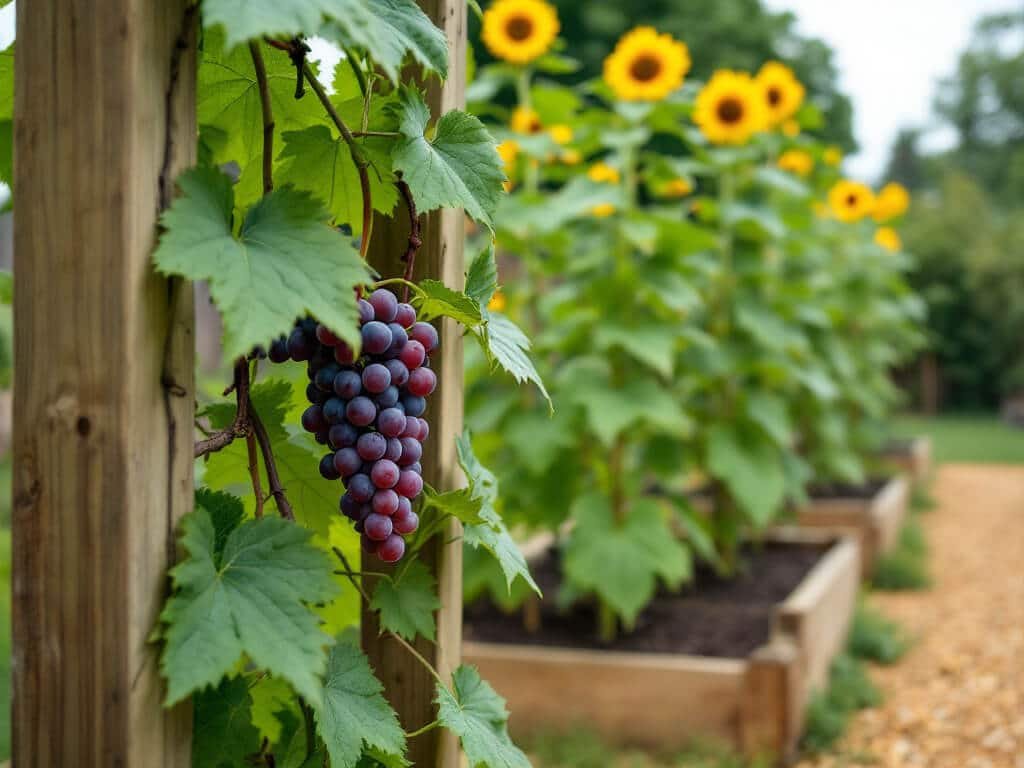
Drought-tolerant sun plants
These are a better match for established grapes than moisture-loving plants, because established vines need little added water. No grape pairing trial was verified, so this is a judgment call based on watering habits. Plant them beyond the cleared root area and irrigate them separately from the vine.
Container herbs or flowers
Containers are the easiest way to add color or pollinator forage near grapes without planting into the root zone. Set them outside the trellis footprint. Keep them from blocking sunlight or airflow, and water them on their own schedule.
What not to plant with grape
The problems here are straightforward: shade, competition, and moisture. If a plant does any of those three, it doesn’t belong near the vine.
Dense groundcovers directly beneath grapes
Groundcovers compete with the vine for water and nutrients. They also conflict with the extension recommendation to keep the ground under grapevines clear during the growing season. Don’t plant anything under the vine. A bare strip is easier to manage and gives the roots no rivals.
Tall plants that shade the canopy
Grapes need full sun for heat and fruit ripening. Tall neighbors cut the light and slow the air moving through the leaves. If a plant will top the trellis or cast shade across it at any point in the day, put it somewhere else.
Plants requiring consistently wet soil
Their watering needs clash with how grapes are managed, especially established vines that need little extra water. Wet foliage and humid conditions also encourage disease. Moisture lovers belong in a different bed, not on the same hose line as your trellis.
Plants that create a dense, humid canopy
Anything that fills in thick and holds humidity works against you. Poor air circulation and long periods of leaf wetness favor downy mildew, powdery mildew, black rot, and anthracnose. Choose open, upright, or compact plants over sprawling ones.
Other vigorous perennial vines used as supports
Grapes need their own dedicated trellis. A second vigorous vine on the same structure crowds the canopy and makes pruning and airflow harder to manage. Give each plant its own support.
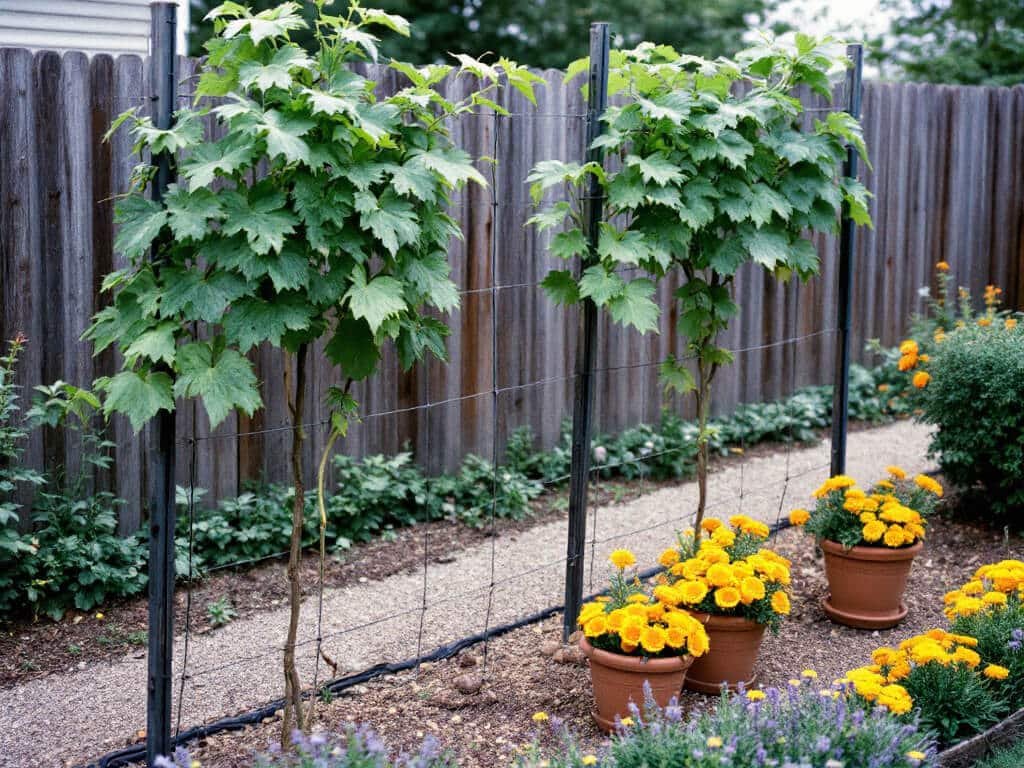
Layout and spacing
Build around the vine first, then fit companions in at the edges. Use a dedicated trellis in full sun and keep the ground directly under the vine relatively clear. Anything extra goes at the outer edge of the trellis area or in containers, where it can’t shade the canopy, crowd the roots, or block air.
– Allow about 6 feet per vine, plus room for the trellis and canopy.
– Keep the soil beneath each vine clear through the growing season.
– Plant companions at the outer edge of the trellis area, sized to their mature width.
– Put herbs or flowers in containers outside the trellis footprint if space is tight.
– Water companions separately so you don’t overwater established vines.
– Skip tall plants on the sun side of the trellis.
If you amend soil, do it before planting. Go easy on mulch, since heavy mulch can keep grape roots and soil too cool.
FAQ
Can flowers improve grape production?
Flowering plants may provide forage for pollinators, but no verified source here shows that any particular flower increases grape yield. Grape production comes mainly from cultivar choice, full sun, trellising, pruning, airflow, irrigation, and disease monitoring.
Should plants grow directly under a grapevine?
Usually not. University of Minnesota Extension recommends keeping the ground under grapevines clear during the growing season to reduce competition and simplify management.
Can grapes share a trellis with another vine?
No, give the grapevine its own support. Grapes need a trellis to train the vine and carry the weight of the canopy and fruit, and another vigorous vine adds crowding that gets in the way of pruning and airflow.