
Lemongrass Companion Plants: What to Grow Nearby
Choosing lemongrass companion plants comes down to water, sun, and elbow room, not pest control. Lemongrass wants full sun, rich soil, and steady moisture that drains well, so the best neighbors are plants that want the same conditions and stay out of its way.
One myth is worth clearing up first. The extension sources I rely on do not show that lemongrass reliably repels mosquitoes or protects nearby plants from pests. Claims that it suppresses neighbors through allelopathy turn up in non-extension material but are not confirmed by extension sources. Pick companions for layout and care, not for a pest-control payoff.
Why pairings matter for lemongrass
Lemongrass is a tender, clump-forming grass. The clump gets dense, and the foliage can reach about 3 feet long, though the final size depends on your climate and growing conditions. A plant that size shades what is close to it and competes for water and nutrients.
It also has specific needs. It wants full sun, rich and fertile soil, and regular moisture, with good drainage so the roots are never sitting in water. Any plant you put nearby has to be happy with that routine, or one of the two will always be getting the wrong care.
Climate matters for planning too. Lemongrass is generally perennial in zones 9–10. In zones 5–8, treat it as an annual or bring it indoors for winter, because frost can kill or badly damage it. If you plan to lift or pot it up in fall, don’t tangle its roots together with permanent perennials.
Lemongrass usually has few pest problems. Spider mites can show up on indoor plants, and leaf blight and other leaf diseases can appear when conditions are poor. Crowding cuts air circulation and raises disease pressure, so spacing is part of disease prevention, not just tidiness.
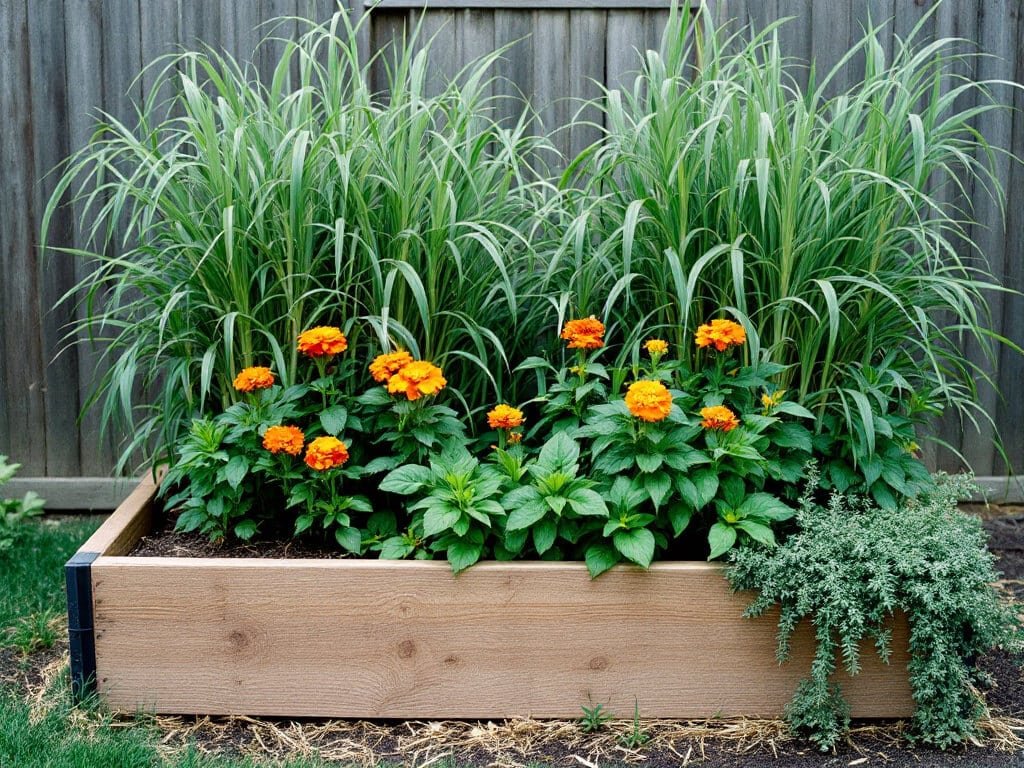
Best companion plants for lemongrass
I could not find a verified lemongrass-specific spacing figure for any of these plants. The practical rule is the same for all of them: give each plant room for its mature size, keep air moving, and don’t plant under the densest part of the clump.
Basil
Basil likes the same warmth, full sun, and regular moisture that lemongrass does, which makes it the easiest pairing on this list. There is no reliable extension evidence that either plant repels pests from the other, so choose it for compatibility. No verified spacing figure exists, so leave room for each plant’s mature size and for airflow.
Cilantro
Cilantro is a low grower that can fill the space beside a tall lemongrass clump. The catch is that it prefers cooler weather while lemongrass wants heat, so the two may not peak at the same time. Keep it near the clump rather than crowded against it, since no verified spacing figure exists.
Dill
Dill adds height and a different season of interest, and its flowers can draw beneficial insects. Treat this as a space-use pairing, not a proven pest-control combination. No verified lemongrass-specific spacing exists, so give dill its own room instead of tucking it into the clump.
Parsley
Parsley fills the lower herb layer while lemongrass takes the vertical space. Both need well-drained soil, though parsley generally tolerates cooler conditions than lemongrass does. No verified spacing figure exists, so plant it at the edge of the clump’s spread, not under the leaves.
Thyme
Thyme stays low and wants well-drained soil, so it doesn’t fight lemongrass for vertical space. The one thing to watch is water: don’t put it where frequent irrigation leaves the soil saturated. No verified spacing figure exists, so keep it toward the bed margin where it can dry out between waterings.
Oregano
Oregano covers low horizontal ground and tolerates well-drained soil, while lemongrass forms the tall center. It works as an edging herb around the base of the planting. No verified lemongrass-specific spacing exists, so give it room to spread outward without running into the clump.
Marigold
Marigold adds flower color and pollinator resources. The extension sources reviewed did not verify a pest-repellent benefit for lemongrass, so grow it because you like it, not as pest insurance. No verified spacing figure exists, so keep it at the front of the planting.
Nasturtium
Nasturtium is a low, spreading or trailing plant that does well along a container edge or bed margin. No lemongrass-specific pest benefit has been verified. No verified spacing figure exists, so let it trail outward and keep it off the lemongrass stems.
Calendula
Calendula brings flowers and fills the bed edge while lemongrass grows up and out behind it. This pairing is about layout, not a demonstrated biological interaction. No verified spacing figure exists, so plant it at the outer edge where it won’t be shaded.
Bee balm
Bee balm’s flowering stems offer pollinator resources, but it can get large. Don’t use it where it will crowd the lemongrass clump. No verified spacing figure exists, so I’d give it the far side of the bed, well away from the lemongrass, or skip it in containers.
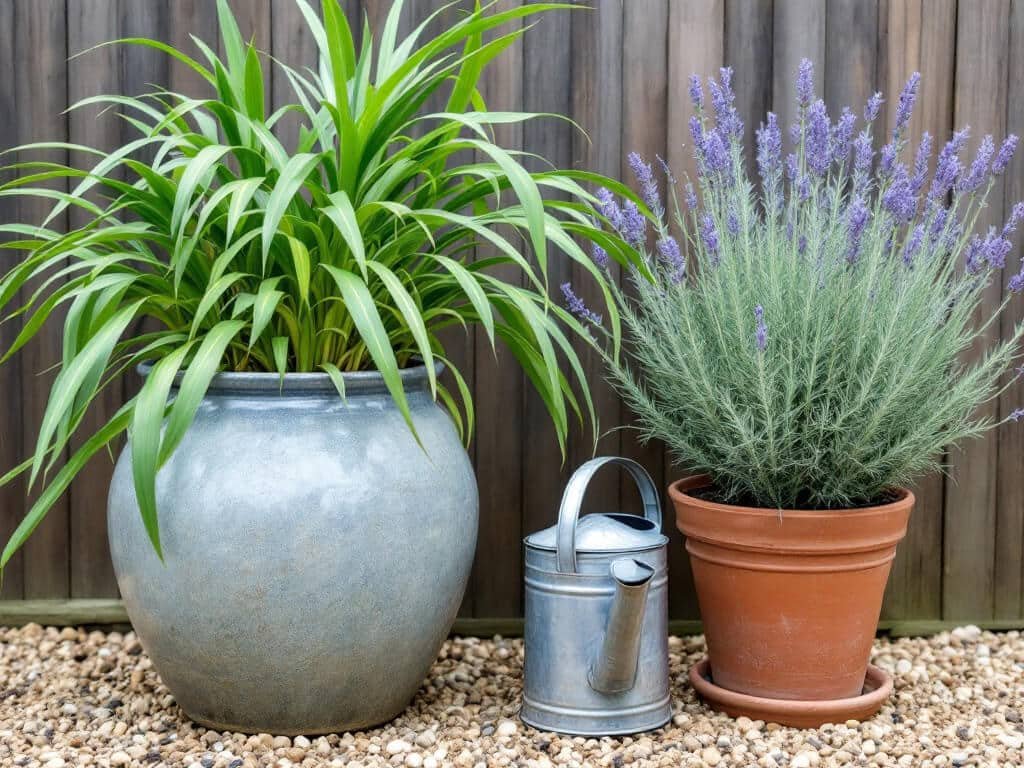
What not to plant with lemongrass
Do not pair lemongrass with plants that need soggy soil or plants that need dry soil. Lemongrass needs moisture that is regular but well drained, and neither extreme works for it.
Water-loving bog or pond plants
Persistently saturated soil is something to avoid with lemongrass. Bog and pond plants want exactly that, so the two can’t share a bed or a pot. Keep them in separate spots.
Drought-adapted plants such as lavender
Lavender prefers dry conditions, while lemongrass needs regular moisture. Water for one and you either drown or starve the other. Thyme and oregano are on the good list because they only need well-drained soil, but lavender is a different case.
Small plants sown directly beside an established clump
A reliable extension-based allelopathy claim was not verified, so I wouldn’t blame chemistry. The real problem is physical: the dense, expanding clump creates shade and root competition. Seeds sown right against it are unreliable, so start companions at the bed edge or set them in as transplants away from the clump.
Plants that need cool, shaded conditions
Lemongrass requires warmth and full sun. A site that suits it is probably wrong for shade-loving crops, so don’t try to tuck those in beside it.
Plants with severe shared disease risk in poorly ventilated beds
Crowding reduces air circulation and increases disease pressure. For lemongrass production, adequate spacing and avoiding overhead irrigation are recommended. If a neighbor plant is prone to leaf disease, don’t pack it tightly against the clump.
Layout and spacing
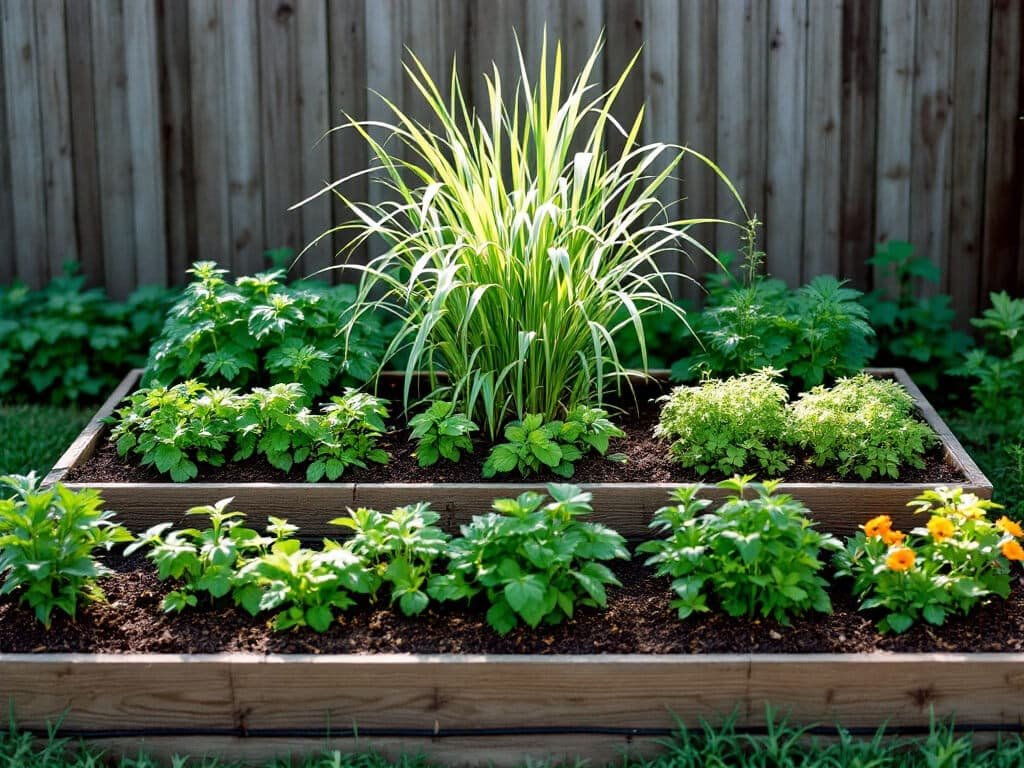
Use lemongrass as the tall plant at the center or back of the bed, with lower herbs and flowers around the outer edge instead of under the densest part of the clump. In a container, put one lemongrass plant in a large pot and add companions only if their moisture needs match and they have enough room. No universal companion spacing figure was verified.
Back or center: one lemongrass clump, with room to expand and a clear path to cut stalks.
Middle ring: basil, parsley, or dill, set outside the clump’s spread.
Front edge: thyme, oregano, marigold, calendula, or nasturtium, kept where they get full sun and drain well.
Containers: one lemongrass per large pot, with a low companion only if it likes the same watering.
Water: water at the soil, not overhead, to keep leaf disease down.
FAQ
Can lemongrass and basil grow together?
Yes, they can share a warm, sunny site if the soil drains well and stays regularly moist. A pest-repellent benefit from planting them together has not been verified by the extension sources reviewed.
Does lemongrass repel mosquitoes from nearby plants?
The extension sources describe lemongrass’s growing needs and pests but do not establish that a garden planting reliably repels mosquitoes or protects neighboring plants. Treat that claim as unverified.
How much space does lemongrass need from companion plants?
No reliable, universal companion-spacing figure was found. Leave enough room for the clump to expand, keep air circulating, and avoid shading smaller plants.