
Spinach Companion Plants: What to Grow Nearby
Spinach companion plants are best chosen for timing and space, because the evidence that any neighbor improves spinach growth or protects it from pests is thin. Extension sources list plenty of compatible crops, but none of them document a spinach-specific yield boost or pest effect for a particular pairing.
That still leaves you with a useful decision. Spinach is a cool-season crop that bolts when days lengthen and temperatures stay above about 75°F, so the best neighbors are plants that fit that same short window or that move into the bed after spinach is done. This guide sorts the options by what they actually do for your layout.
Why pairings matter for spinach
Spinach has a short season. In spring you can harvest baby leaves in about 35-40 days, and repeated sowings work until outdoor temperatures reach about 80°F. Fall crops go in roughly two months before your average first frost. In zones 5-9, that leaves gaps in the bed on either side of the crop, and good pairings fill those gaps.
There is also a popular claim to deal with: that the right herb or flower will repel spinach pests. University of Minnesota Extension reports that many commonly recommended pest-repelling combinations have little research behind them, and some evidence contradicts them. No spinach-specific study turned up showing that a named herb or flower reliably protects spinach.
So treat companion planting as a way to use space well. For pests, you are still relying on the basics, which the FAQ covers.
Spinach’s own needs set the ground rules for any neighbor. It wants fertile, well-drained soil that stays evenly moist, about 1 inch of water per week if rain falls short, and full sun in cool weather. Some afternoon shade helps stretch the harvest as it warms up. Any companion that steals water or throws heavy shade early works against you.
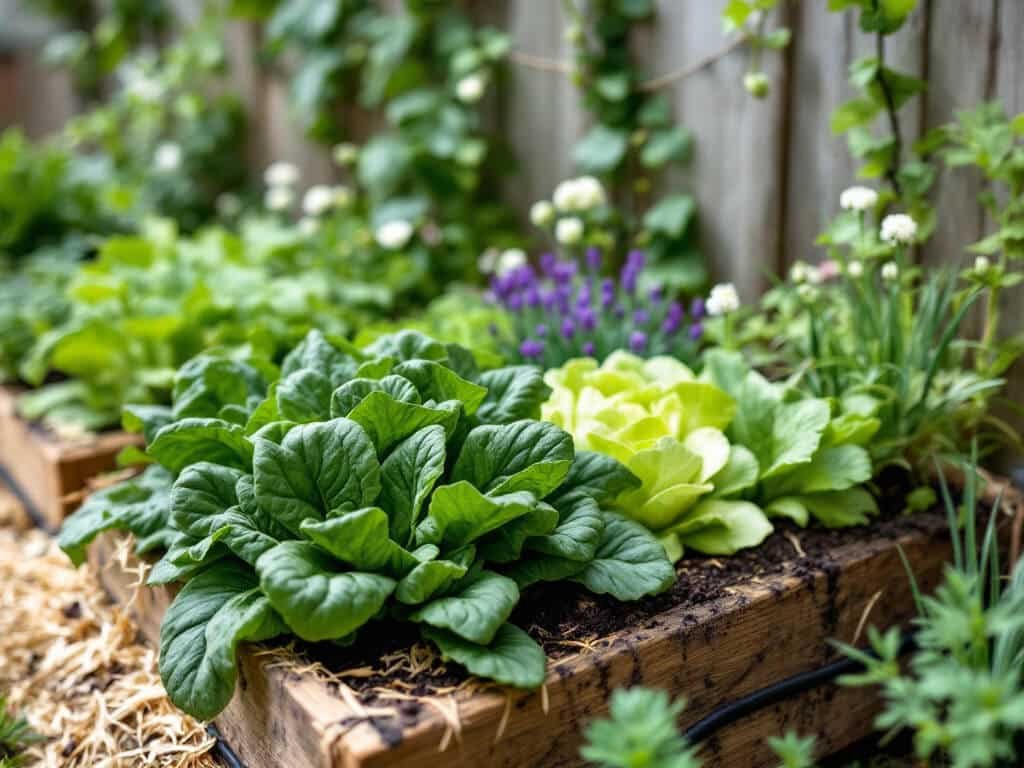
Best companion plants for spinach
Every plant below is listed in extension guidance as compatible with spinach. Where a benefit is only plausible rather than documented, I say so. In every case, keep spinach at 2-4 inches apart in the row: closer for baby leaves, wider for bigger plants.
Peas
Peas are the best fit on this list because both crops are early-season, and Minnesota Extension specifically mentions harvesting spinach alongside peas. The value is shared timing, not pest control. Keep the pea rows separate enough from the spinach that you can trellis and pick without trampling leaves.
Lettuce
Lettuce is another cool-season crop that can be interplanted with spinach or grown in succession with it. The benefit is efficient use of space and a shared harvest window. Space spinach at 2-4 inches and follow the spacing on your lettuce variety’s seed packet.
Chives
Minnesota Extension lists chives among the early crops that can be harvested along with spinach. No spinach pest-repelling effect has been verified, so grow them because they are ready when spinach is. Give chives their own perennial clump spacing so the clump does not crowd the spinach as it fills out.
Green onions
Green onions appear in extension companion guidance for spinach’s crop group, with no spinach-specific benefit confirmed. They are narrow and easy to tuck in. Grow them as a separate row or a border along the bed edge, and keep spinach at 2-4 inches.
Strawberries
West Virginia University Extension lists strawberries as a spinach companion, though the source does not establish any pest or yield benefit. Plant them nearby without crowding. Use the 2-4 inch in-row spacing for spinach and the strawberry’s own recommended spacing for the berries.
Beets
Beets are a compatible pairing in extension rotation guidance. Spinach and beets differ in form (leafy greens above ground versus a root crop), which can diversify the planting, but a spinach-specific benefit is not established. Keep spinach 2-4 inches apart and space the beets separately according to the cultivar.
Carrots
Carrots are listed in extension companion guidance. Their deeper, tap-rooted growth can complement other crops in principle, but a spinach-specific benefit is not verified. Leave carrot rows far enough apart for root development, and keep spinach at 2-4 inches in its own row.
Cabbage-family crops
West Virginia University lists spinach among the compatible plants for cabbage-family crops. The practical payoff is crop diversity and seasonal use of space, not a proven increase in spinach yield. Follow each brassica’s own spacing, and make sure mature brassica foliage does not shade the spinach.
Bush beans
Bush beans are listed as a spinach companion in crop-family guidance, with no verified spinach-specific benefit. The thing to watch is their mature canopy. Place them where they will not shade or crowd the spinach while it is still being harvested in cool weather.
Cucumbers
West Virginia University guidance lists cucumbers as compatible with spinach, and no pest or yield effect is documented. This pairing works as a handoff. Plant spinach where you can harvest it before cucumber vines move into the space, and hold spinach to 2-4 inches while it is there.
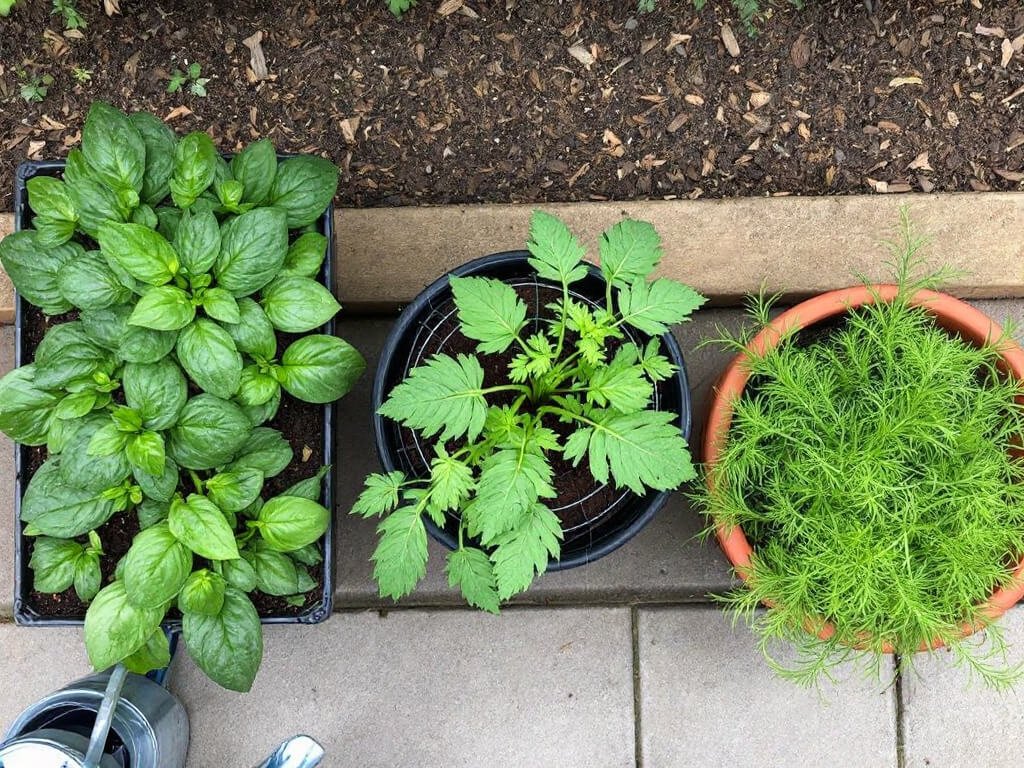
What not to plant with spinach
The honest answer here is short. The extension sources list several compatible plants but do not provide a reliable, spinach-specific “do not plant” list. Two names come up often enough that they deserve a closer look.
Nothing is verified as a bad neighbor
None of the cited extension sources identifies a plant that harms spinach when grown next to it. If you see a long blacklist online, the sources behind it are not the extension research used here. You can plan your bed around timing and spacing rather than avoidance.
Tomatoes and potatoes
These two get labeled bad companions for spinach, and the label does not hold up. Virginia Cooperative Extension uses tomatoes and potatoes as an example of crops that should not be planted together because they share pests and diseases with each other. That is a finding about tomatoes and potatoes, not about spinach.
The real issue is timing. Spinach is done before tomatoes get big, and tomato plants will shade it later if you try to keep both going.
Fennel
Fennel is widely described in general companion-planting materials as problematic for some crops. No spinach-specific allelopathy or spacing evidence was verified for it. I’d skip putting it in the spinach bed because there is nothing to gain, but you do not need to treat it as a known hazard.
Layout and spacing
Grow spinach in a short row or a small cool-season block, with enough access to harvest repeatedly. The layout that has the best support is succession: spinach goes in early, then larger warm-season plants take over the bed. Extension guidance backs this approach, though it does not claim the pairings raise spinach yield.
– Plant spinach 2-4 inches apart in the row, closer for baby leaves and wider for full-size plants.
– Put peas, lettuce, chives, or radishes alongside it, since they are on the same cool-season schedule.
– Keep taller or vining crops (peas, bush beans, cucumbers, brassicas) on the side where their shade will not land on the spinach.
– Mulch the bed to hold moisture and suppress weeds, and water to about 1 inch per week if rain does not.
– Plan to pull or replace spinach once temperatures push past about 75-80°F, and let the next crop take the space.
FAQ
Which plants are the most reliable spinach companions?
Peas, lettuce, chives, and other cool-season crops are the practical choices because they share the season or allow efficient succession planting. Extension sources also list strawberries, beets, carrots, cucumbers, bush beans, green onions, and cabbage-family crops, but do not establish a spinach-specific yield or pest-control benefit for each.
Can spinach grow beside tomatoes or potatoes?
The cited sources do not verify that tomatoes or potatoes are bad companions for spinach. Spinach works well as an early crop before tomatoes mature, as long as you manage spacing and later shade so the warm-season plants do not crowd it.
Do companion plants prevent spinach pests?
No reliable spinach-specific pest-prevention effect was verified. Do not count on a companion plant to protect your spinach. UMN Extension cautions that many popular companion-pest claims have little research support or are contradicted by evidence, so row covers, sanitation, crop rotation, and regular inspection remain the more dependable approaches. Watch for cutworms, slugs, snails, leafminers, and flea beetles.