
Blueberry Companion Plants: What to Grow Nearby
The best blueberry companion plants are the ones that want the same strongly acidic, moist soil and stay out of the shrub’s light. That narrows the list quickly. Most vegetables and many other berries want something different, and a few ornamentals fit the bed so well you’d think they were planted together on purpose.
This guide covers what works beside blueberries, what to keep away, and how to lay it out so nothing crowds the shrubs.
Why pairings matter for blueberry
Blueberry is picky about soil. It wants loose, organic, well-drained ground with a pH of about 4.0–5.5, and about 1–2 inches of water a week during the growing season, more in hot or dry spells. It also wants 6–8 hours of direct sun for good flowering and fruiting.
Any neighbor has to share that soil, tolerate that watering, and leave the sun alone. A plant that needs sweeter soil will either struggle or pull you into amending the bed in ways the blueberry won’t like. A plant that grows tall or wide will shade the shrub and compete for moisture and nutrients.
Don’t let any companion cut your blueberries below 6–8 hours of direct sun.
One more thing, because you’ll run into it online. Plenty of sites claim that certain herbs, mint, corn, peppers, potatoes, or tomatoes repel blueberry pests or change the flavor of the fruit. No extension source backs any of that up, so don’t plant for it. Choose companions for soil and light compatibility, which are the reasons that hold up.
Best companion plants for blueberry
Most of the good options are acid-loving ornamentals and fellow members of the heath family. For almost all of them there is no verified fixed distance from blueberry, so the rule is the same: space each plant by its own mature width and keep it clear of the blueberry’s crown.
Azalea
Azalea shares blueberry’s preference for acidic soil, so the two can sit in the same broad acid-soil bed. You don’t need to build a separate planting for it. Space it according to your azalea cultivar’s mature width, since no universal distance from blueberry has been established.
Rhododendron
Rhododendron tolerates acidic soil and works as a background planting behind the blueberries. Keep it far enough back that its mature foliage doesn’t shade the fruiting shrubs. Check the tag for mature size before you choose a spot, because this is a plant people tend to put too close.
Mountain laurel
Mountain laurel is an acid-loving ornamental that suits the same soil conditions. Use it only where its mature size won’t shade or crowd the blueberry. If your bed is small, I’d skip it and pick something lower.
Cranberry
Cranberry is a Vaccinium relative, like blueberry, and it does well in acidic conditions. It works as a low groundcover in a site that stays moist but drains well. No reliable blueberry-to-cranberry spacing exists, so plant it at the bed’s edge and let it fill in from there.
Lingonberry
Lingonberry is a low-growing acid-soil berry that can use the space beneath or near taller blueberry shrubs. Give each plant room for its mature spread instead of following a fixed distance. It’s a good pick if you want a second edible crop in the same bed.
Wintergreen
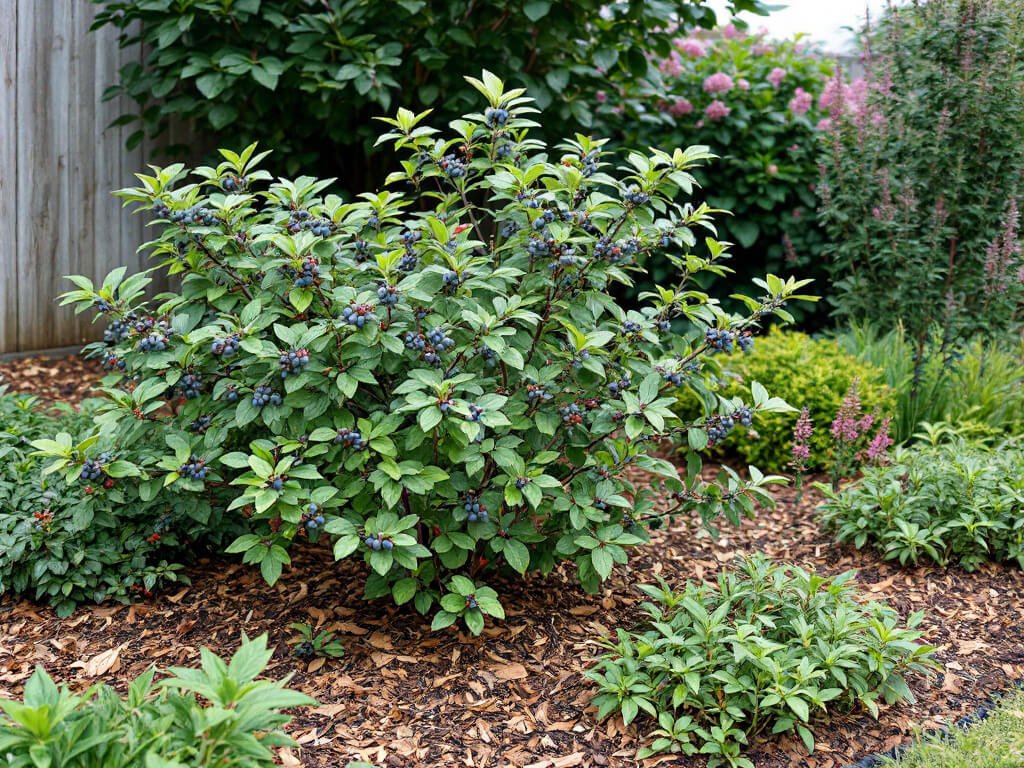
Wintergreen is a low woodland plant associated with acidic soils. It fills open ground without competing for overhead light, which is the main thing you want from a groundcover here. No verified spacing from blueberry was found, so plant it around the bed’s perimeter and give it room to spread.
Heather
Heather tolerates acidic soil and gives low seasonal cover around the blueberry root zone, but not against it. Use cultivar-specific spacing, and leave yourself access for pruning and harvesting. If you can’t reach the shrub without stepping on the heather, it’s too close.
Heath
Heath is another low-growing, acid-soil option, and it suits the edge of a blueberry bed. Base its spacing on the mature width of the cultivar you buy, since no authoritative blueberry-specific distance exists. Treat it as a border plant rather than something to tuck under the shrubs.
Ferns
Ferns can fill a shaded edge outside the blueberry’s main fruiting canopy. They should never reduce the 6–8 hours of sun the shrub needs, so use them only on the side that was going to be shady anyway. Keep them beyond the shrub’s root and harvest area.
Native spring wildflowers
Native spring wildflowers may support early-season pollinators at the bed edge. Use only species that tolerate acidic, consistently moist conditions, because anything that wants dry or sweet soil will fail. No general spacing figure is appropriate here, so check each species individually and keep them at the margin.
What not to plant with blueberry
The problems here come down to soil preference, shade, and competition. Some of these plants are fine crops that just need their own bed.
Trees
Trees shade blueberries and compete with them for soil moisture and nutrients. Illinois Extension specifically advises against planting blueberries near trees. If your only sunny spot is under a tree’s reach, the blueberry won’t get the light it needs, so pick another location.
Raspberries
Raspberries have different soil preferences than blueberries, and they’re reported to share some pest concerns. Growing them together puts both crops in one bed with conflicting needs. Separating them is easier to defend than treating them as a close pairing.
Blackberries
Blackberries generally prefer less acidic conditions than blueberries. That sets up incompatible root-zone requirements if they share a bed. Give them their own space and soil.
Strawberries
Strawberries have different soil preferences, and planting them in a strongly acidic blueberry bed complicates management of both. It looks like a natural berry-patch pairing, but it’s easier to run them separately. A strawberry bed and a blueberry bed side by side is fine. One shared bed is the problem.
Tomatoes
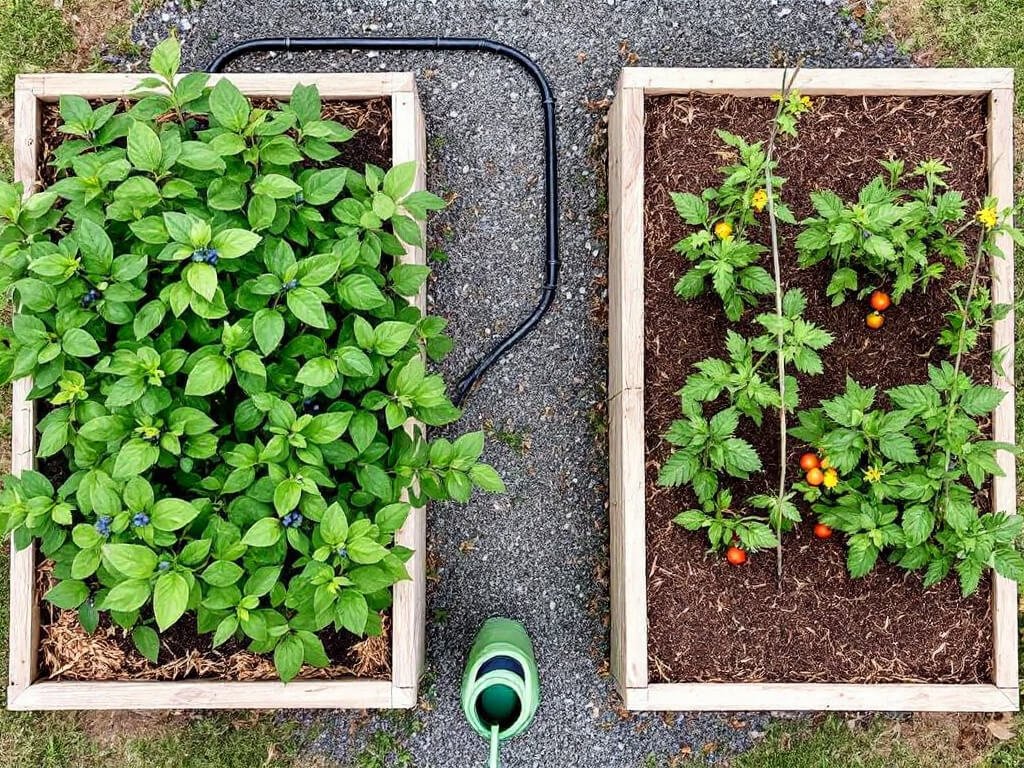
Tomatoes prefer a much less acidic soil range than blueberries. One shared bed can’t be set up to suit both crops. Grow them in a separate bed where you can adjust the soil for tomatoes.
Brassicas
Brassicas such as cabbage and broccoli are heavy-feeding vegetables, and they’re reported to compete for nutrients. You may see a claim that they should be kept 10 feet from blueberries, but that figure wasn’t verified. Skip the guesswork and use separate beds.
Layout and spacing
Put the blueberries in the sunniest part of the bed and build the rest of the planting around them. The low plants go on the outside, the taller shrubs go only where they won’t throw shade, and everything stays out of reach of the crown.
– Plant blueberries in the sunniest spot, with 6–8 hours of direct light.
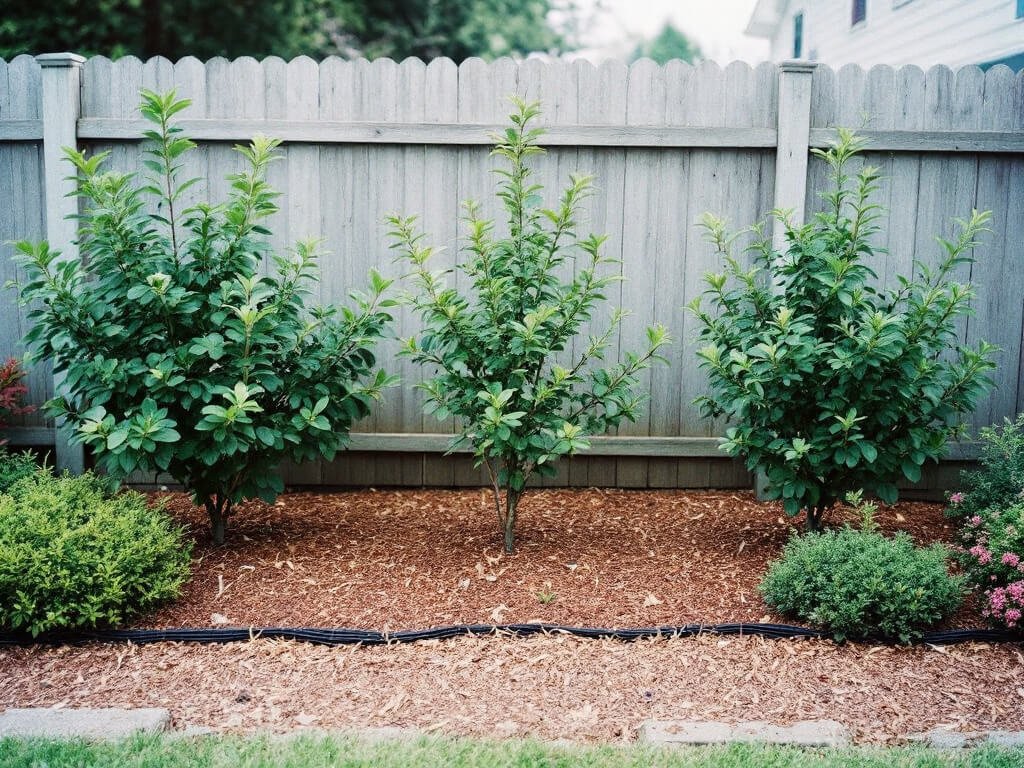
– Space blueberry plants about 3–6 feet apart, depending on cultivar and planting purpose. Larger types, such as rabbiteye (5–10 feet tall at maturity), may need more room.
– Keep each shrub’s cultivar-specific mature spread clear. Lowbush types stay around 1–2 feet, and highbush commonly reach about 4–7 feet.
– Put lingonberry, cranberry, heather, or wintergreen at the outer edge of the bed, not directly against the crown.
– Use azalea, rhododendron, or mountain laurel only where their mature size won’t shade the blueberries or take their water.
– Keep ferns and wildflowers on a shaded edge, beyond the root and harvest area.
– Leave a clear path to every shrub for pruning and picking.
Blueberries produce little during their first 2–3 years, so the bed will look sparse for a while. Resist filling the gaps with vegetables or other crops that need different soil. Edge plants from the list above are a better use of that space.
FAQ
Can blueberries grow beside other fruiting shrubs?
They can grow near other acid-tolerant plants. Raspberries, blackberries, and strawberries don’t share blueberry’s strongly acidic soil preference, so separate beds are usually easier to manage.
Can flowers or herbs improve a blueberry harvest?
No reliable extension-backed evidence shows that any particular flower or herb consistently increases blueberry yield or repels its major pests. Pick plants for soil and light compatibility instead.
How close can companion plants be to blueberries?
There is no single safe distance for all companion species. Keep the blueberry’s cultivar-specific mature spread clear, protect its shallow root zone from competition, and put low-growing companions at the bed edge. Blueberry plants themselves are commonly spaced about 3–6 feet apart, depending on cultivar.