
Dahlia Companion Plants: What to Grow Nearby
Choosing dahlia companion plants is mostly a question of space, light, and water, not of finding some magic pest-repelling partner. Dahlias want full sun, steady moisture, good drainage, and open air around the foliage. Anything you plant nearby has to fit inside those terms.
Below are ten fillers that work for different reasons, five things to keep away, and a simple layout. The brief behind this article is honest about the limits: most of the popular pairings have no verified pest benefit for dahlias. That doesn’t make them bad choices, only choices to make for the right reasons.
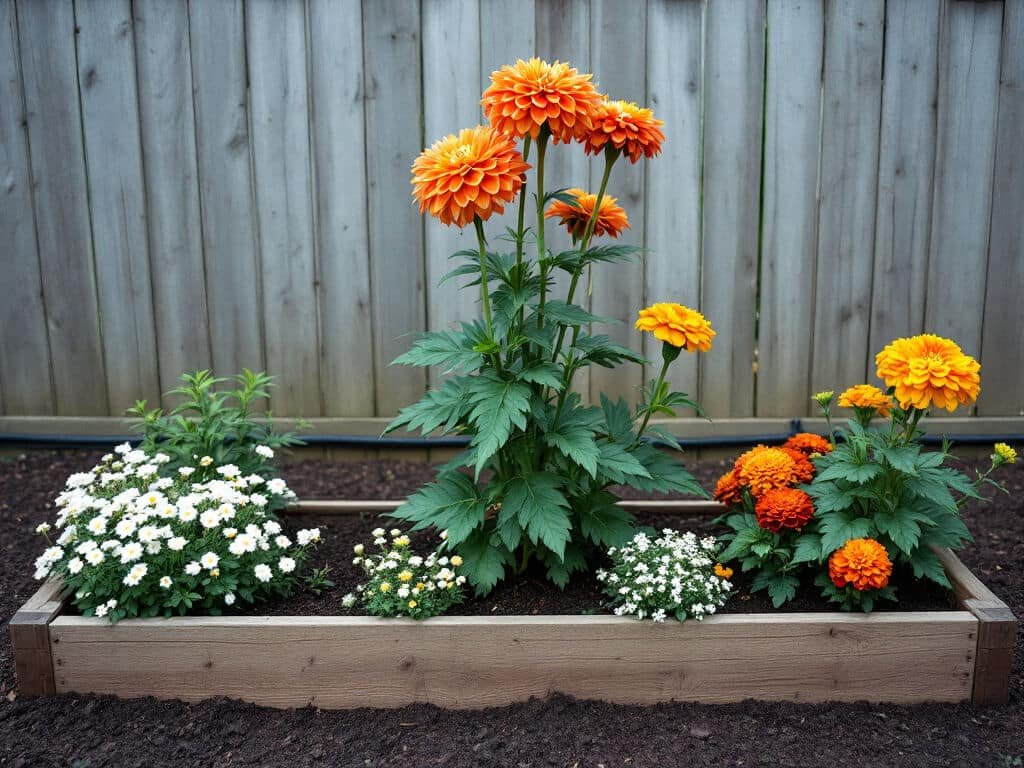
Why pairings matter for dahlia
Dahlias have a long list of problems: aphids, thrips, leafhoppers, spider mites, cucumber beetles, slugs, earwigs, powdery mildew, Botrytis blight, root rots, wilts, crown gall, and viruses. Several of those, mildew and Botrytis in particular, get worse when air can’t move through the plants. A companion that crowds the stems works against you.
Then there is the water question. Established dahlias generally want about 1 inch of water per week when rain falls short, in soil that is moist but well drained. A neighbor that wants bone-dry soil or soggy soil will be unhappy, or will make the dahlia unhappy.
One myth is worth clearing up. The extension sources reviewed do not support the idea that marigolds, basil, or other commonly recommended companions automatically repel dahlia pests. Companions can add flowers, habitat, or a different use of space, but they don’t replace checking your plants and cleaning up debris.
Best companion plants for dahlia
Dahlias bloom from late summer until the first frost, and tall types can pass 36 inches and need staking. The companions below mostly work by using the space the dahlia doesn’t: the front edge, the container rim, or the weeks before the dahlia fills out.
Sweet alyssum
A low groundcover for the front edge of the bed. It stays under the dahlia’s upper canopy, so the two don’t compete for the same space. No specific dahlia spacing was verified for alyssum, so give the dahlia its own full spacing and keep the alyssum from crowding the base.
French marigold
A compact filler that suits the same sunny conditions. The only evidence tied to dahlias is a controlled observation involving thrips, not a general claim of pest repellency. Keep it far enough back that it doesn’t cut off airflow around the dahlia.
Basil
Basil is a warm-season, low-to-medium-height herb that likes the same full sun. No reliable extension evidence says it repels dahlia pests, so grow it because you want basil. Space it by the label for your cultivar and keep the dahlia’s own 18–24 inches or more intact.
Calendula
Calendula is a cool-season flower, so it can use lower bed space before the dahlias peak or after they slow down. No dahlia-specific benefit or spacing figure was verified. Treat it as a visual and space-use pairing, nothing more.
Nasturtium
Nasturtium trails over a container edge or the front of a bed, using horizontal space instead of fighting the dahlia’s upright growth. No dahlia-specific pest benefit was found. Keep it outside the dahlia’s main root and stem zone.
Chives
Chives are an upright, clumping herb with foliage that sits in different space from a tall dahlia. Nothing verified suggests they protect dahlias from pests. Plant them by the label for your cultivar and leave the air moving.
Dwarf zinnia
Dwarf zinnias like heat and full sun, so light needs match. They fill a lower or adjacent layer. That is a compatible profile, not a proven pest benefit. Follow the spacing on the zinnia label.
Compact ornamental grasses
Grasses add texture and use narrow or vertical space. Pick clumping, noninvasive types only, and don’t let them shade the dahlias or pull moisture from the same soil. Follow the label spacing for the grass.
Low-growing thyme
Thyme is a ground-level filler for sunny, well-drained soil. It prefers drier conditions than dahlias, so put it at the outer edge of the bed, not right beside the dahlia stems. Keep it outside the dahlia’s root zone.
Leaf lettuce
Lettuce is a cool-season, shallow-rooted edible that can use the space early, before the dahlias reach full size. Harvest it before it gets crowded, and don’t disturb the tubers or surface roots while you do. It’s a short-term tenant, not a permanent neighbor.
What not to plant with dahlia
Most of the bad pairings come down to competition: for light, for water, or for the air between leaves.
Walnut trees
Black walnut produces juglone, a documented allelopathic compound that can injure susceptible plants. Dahlia-specific tolerance couldn’t be verified, so the sensible move is to keep dahlias and their companions out of the tree’s root zone.
Large trees and established shrubs
Their roots take water and nutrients, and their canopy cuts the direct light dahlias need. Dahlias seldom do well in competition with trees. Choose an open spot with at least 6 hours of direct sun instead.
Mint
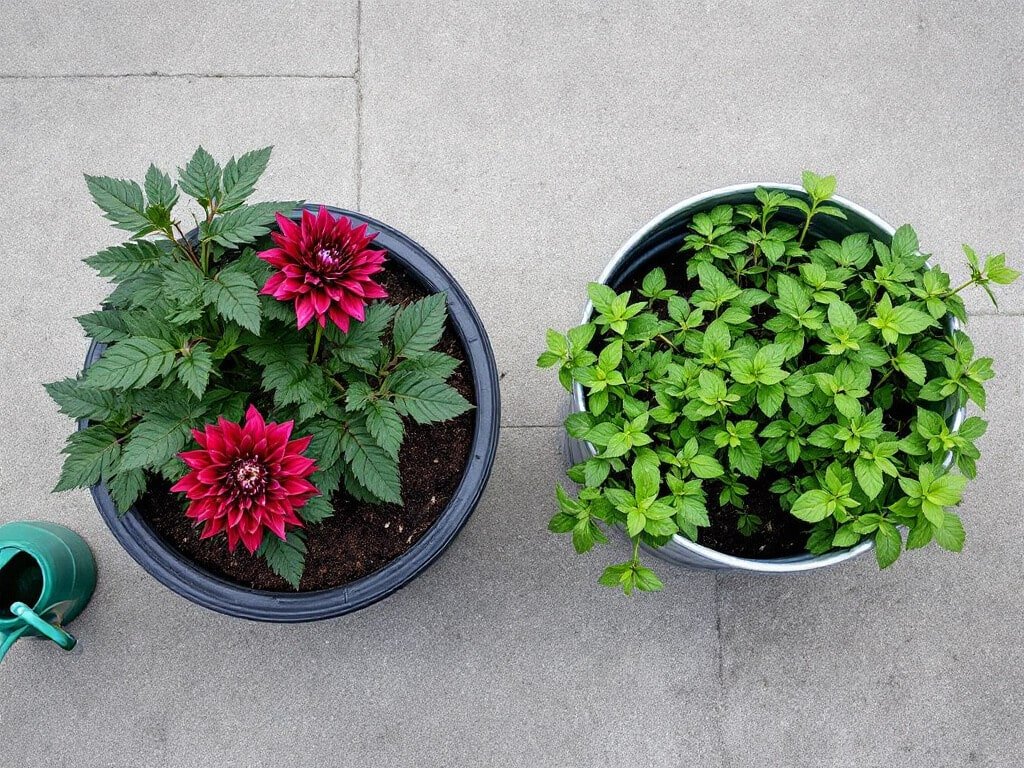
Mint spreads by underground stems and can overrun a dahlia bed. A dahlia-specific allelopathy claim was not verified, so the objection is simply aggressive spread. If you want mint nearby, keep it in a contained pot.
Water-loving bog plants
Plants that need saturated soil conflict with the drainage dahlias require. Wet ground is also associated with tuber and root rot. Keep them in a different part of the yard.
Crowded, mildew-prone plantings
Any dense combination that blocks airflow raises the risk of powdery mildew and Botrytis. This is less about one specific plant and more about how tightly you pack the bed. Dahlias shouldn’t be crowded, whatever surrounds them.
Layout and spacing
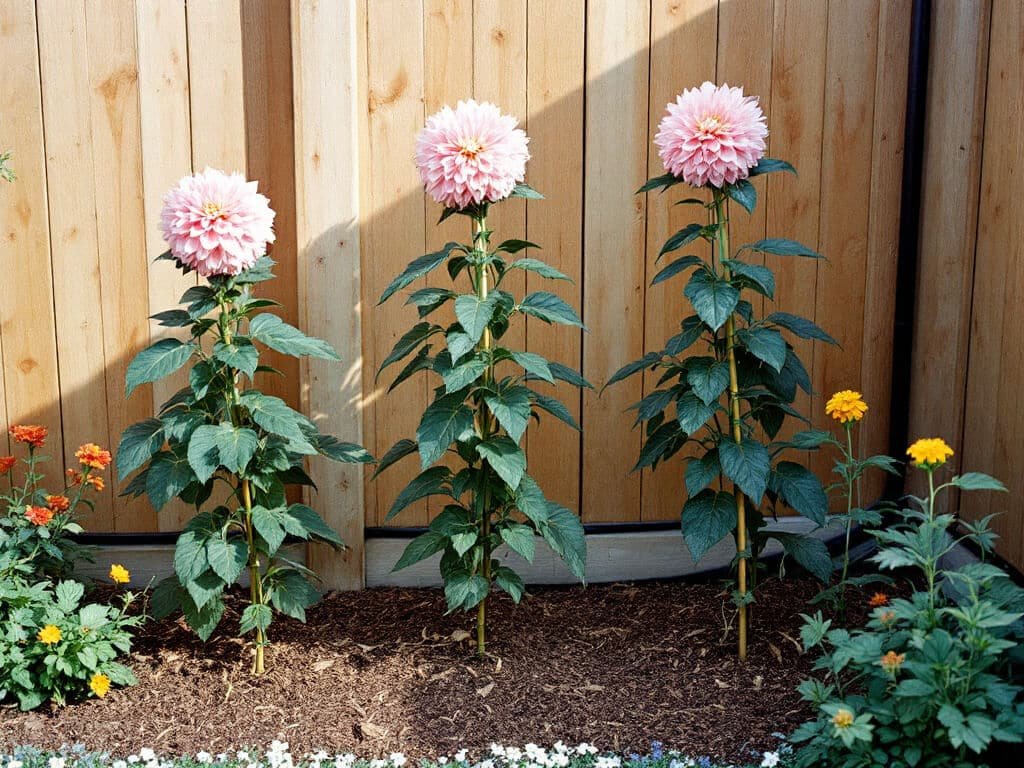
Give each dahlia at least 18–24 inches of room, and more for larger cultivars. Some sources recommend 3–4 feet for large-flowered types. Don’t fill that space with companions. Crowding is the one mistake that can undo every other good choice here.
– Put low plants (sweet alyssum, nasturtium, thyme) at the bed edge or container rim, outside the dahlia’s root zone.
– Keep taller plants, including ornamental grasses, from casting shade on the dahlias.
– Leave open soil around each stem so you can water at the base and look for pests and disease.
– Use cool-season fillers like lettuce and calendula early, then pull them as the dahlias fill out.
– Check the label spacing for every companion, and treat the dahlia’s spacing as the minimum, not the target to squeeze under.
FAQ
What is the best companion plant for dahlias?
There is no single extension-verified best companion for every dahlia. Low-growing plants such as sweet alyssum can fill the front of a bed, as long as they don’t crowd the dahlia or reduce airflow.
Can dahlias and marigolds grow together?
Yes, provided both get enough light and air. A controlled observation with French marigolds found western flower thrips drawn away from nearby ornamentals, but that doesn’t mean marigolds repel every dahlia pest.
How much space should a dahlia have from companion plants?
Dahlias are commonly spaced 18–24 inches apart, and larger cultivars may need 2–4 feet. Keep companions outside that space unless their label and growth habit allow closer planting without crowding.