
Sage Companion Plants: What Grows Well Together
Intro
Picking sage companion plants mostly comes down to one thing: sage wants sun and dry feet, and most of the vegetable garden wants the opposite. Put it next to a thirsty crop and you will water for the neighbor and rot the sage.
This guide sorts out what makes a good match, which popular pairings are backed by solid reasoning and which are mostly garden lore, and how to lay everything out so the sage stays healthy. Where the evidence is thin, I’ll say so.
Why pairings matter for sage
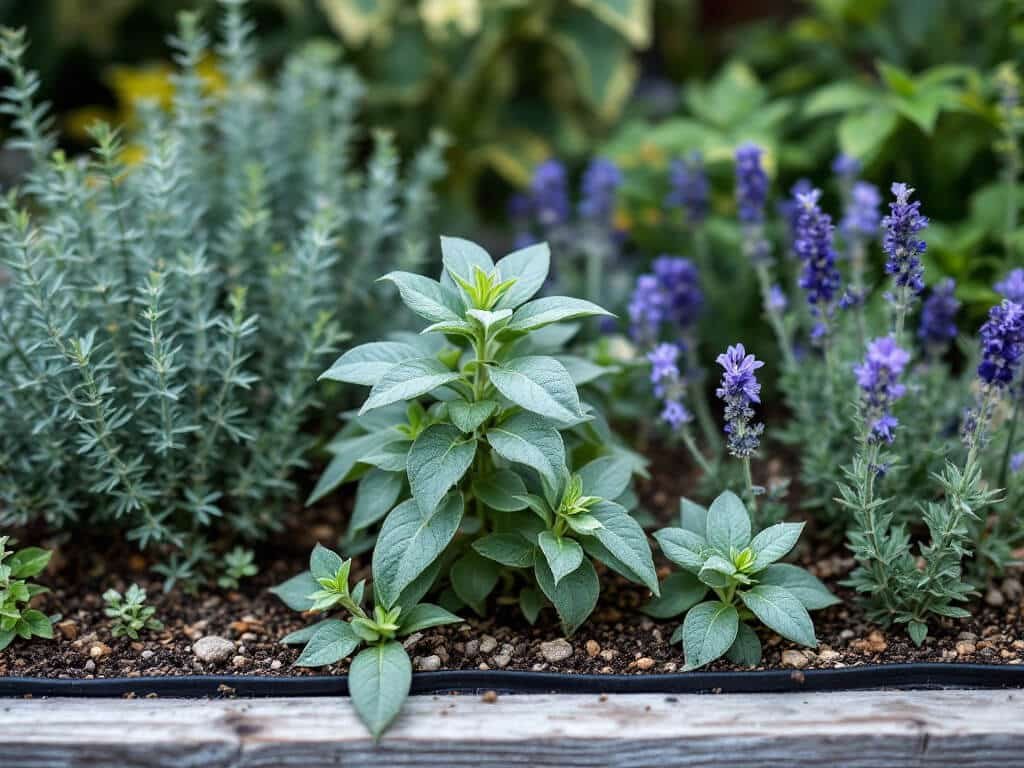
Common sage (Salvia officinalis) is a woody, evergreen, short-lived perennial that behaves like a small shrub. It is generally hardy in zones 4 to 8, wants at least 6 hours of direct sun, and grows about 12 to 30 inches tall. Winter survival depends heavily on drainage, exposure, and cultivar.
The big risk is excess moisture. Once established, sage needs only low to moderate water and does best when the soil dries slightly between waterings. Wet or poorly drained soil leads to root rot and stem rot, and those are the most common ways a sage plant declines.
Sage can also get powdery mildew, aphids, whiteflies, spider mites, and verticillium wilt. You can’t pair your way out of all of those, but you can avoid the setups that invite them: soggy soil and crowded, stagnant air.
So the rule for choosing neighbors is simple. Pick plants with the same sun and water needs, and give everything enough room.
One myth to clear up first. No extension source I reviewed verifies that sage universally repels insects or improves the flavor, growth, or yield of every crop nearby. Plant sage next to something because the growing conditions match, and treat any pest benefit as a possible bonus.
Best companion plants for sage
The strongest companions are the ones that want the same conditions sage does. The vegetable pairings you’ll see recommended are further down, with honest notes on how much evidence stands behind them. Leave about 2 feet between each of these and a mature sage plant.
Rosemary
Rosemary likes the same full sun, drought tolerance, and sharply drained soil as sage, so you can water and site them as one unit. I couldn’t find an extension source that verifies a special pest-repellent effect between the two, so choose it for the matching conditions. Keep it about 2 feet from sage.
Thyme
Thyme shares sage’s preference for sun and well-drained soil. No specific pest-control benefit was verified, but it’s an easy fit for the same bed or pot. Space it about 2 feet from sage.
Oregano
Oregano’s dry-soil requirements are similar to sage’s, which makes it a practical neighbor in a bed or container. No sage-specific benefit was verified. Give it about 2 feet from sage, and keep an eye on it if it starts crowding.
Lavender
Lavender has compatible sun and drainage needs, so it won’t pull you toward overwatering. No specific companion effect for sage was verified, so think of it as a safe pairing rather than a helpful one. Plant it about 2 feet from sage.
Yarrow
Flowering yarrow can supply nectar for beneficial insects. A sage-specific effect wasn’t verified, so don’t count on it to solve pest problems. Keep both plants in a sunny, well-drained spot, about 2 feet apart.
Carrots
Carrots are one of the most frequently recommended sage pairings. The extension sources I reviewed don’t establish what the benefit actually is. If you try it, plant carrots about 2 feet from sage and use the row spacing recommended for your carrot cultivar. Remember that carrots usually get more water than sage likes, so don’t let their needs set the watering schedule.
Cabbage
Cabbage shows up on nearly every sage companion list, but evidence that sage protects it from a particular pest wasn’t verified. It’s fine to try, as long as you keep about 2 feet between the cabbage and the sage and follow your cabbage cultivar’s own spacing. Treat any pest reduction as a maybe.
Brussels sprouts
Sage has been reported in secondary coverage as reducing diamondback moth pressure on Brussels sprouts. The underlying extension field research wasn’t available in what I reviewed, so this is preliminary and not universal protection. Plant them about 2 feet from sage and follow the spacing for your Brussels sprout cultivar.
What not to plant with sage
Most of the “bad companion” advice comes down to water and airflow. A couple of items are lore, and I’ll flag which.
Cucumber
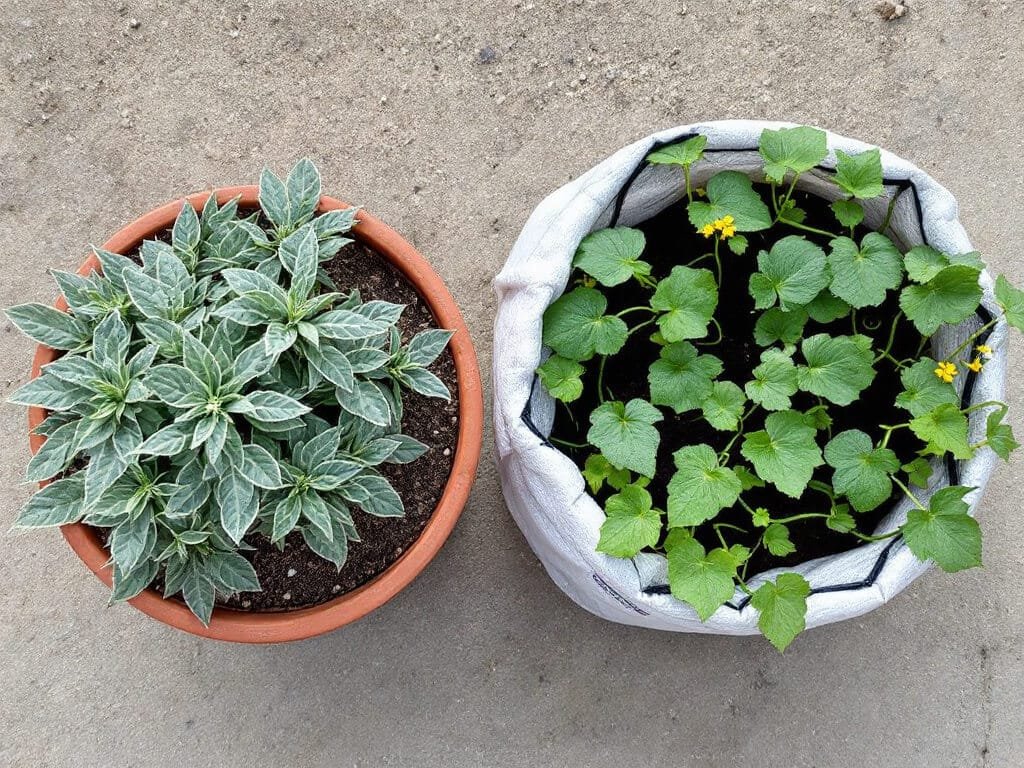
Gardening references often say to keep sage away from cucumber. The extension sources I reviewed didn’t verify allelopathy, shared pests, or any defined spacing mechanism, so this is an unconfirmed recommendation and not a proven incompatibility. The most defensible reason to separate them is practical: cucumbers generally need more consistently moist soil than sage tolerates.
Moisture-loving plants
Anything that needs consistently wet soil is a poor match. Sage performs best slightly dry and is vulnerable to root rot, so a wet-soil neighbor means you either drown the sage or starve the neighbor. Put thirsty plants in a different bed or a different pot.
Dense, closely planted crops
Crowding cuts air circulation around sage, and that raises the risk of powdery mildew and other foliar diseases. If you tuck sage into a packed row of leafy vegetables, you’re giving up the open airflow it needs. Give it a clear perimeter instead.
Aggressively spreading plants
Vigorous spreaders compete with sage for light, water, and root space. This is a general layout concern and not a demonstrated chemical incompatibility with sage. Still, a shrubby herb that likes full sun won’t win against a plant that sprawls over it, so keep spreaders out of its footprint.
Layout and spacing
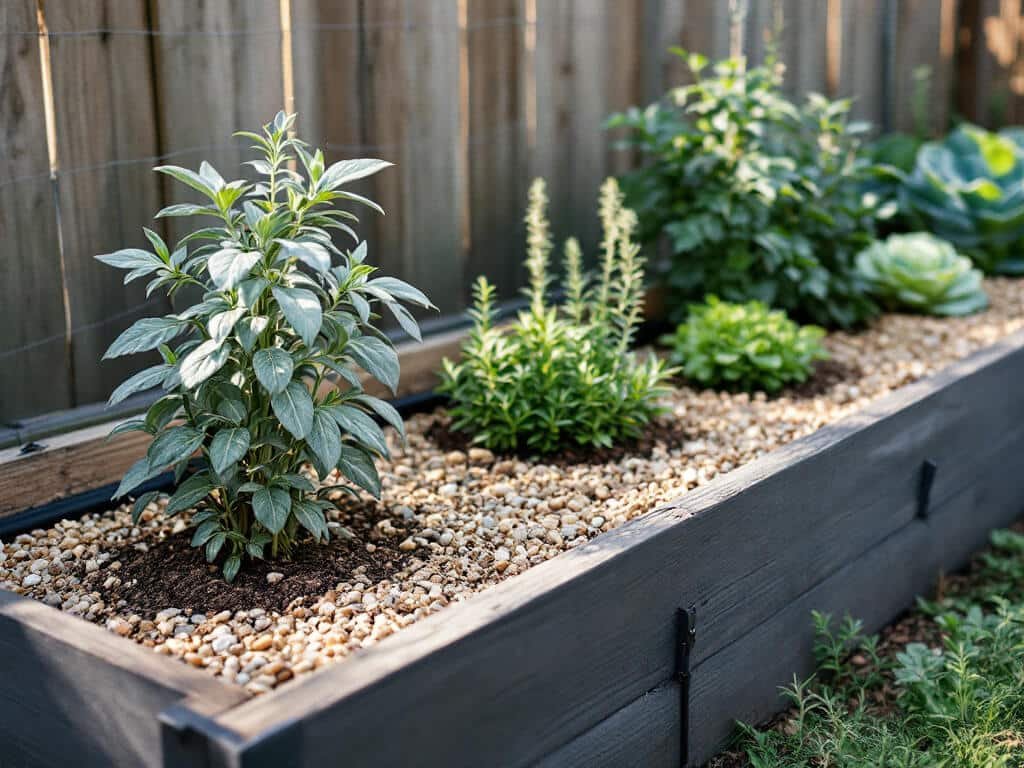
Put sage at the sunny, well-drained edge of a bed, or give it its own container alongside other Mediterranean herbs. Keep the crown and foliage open instead of surrounding the plant with dense, frequently irrigated crops. Use each companion’s own spacing recommendation, while leaving roughly 2 feet around a mature sage plant.
– Sage at the sunny, well-drained edge of the bed, with at least 6 hours of direct sun.
– Rosemary, thyme, oregano, or lavender as neighbors, each about 2 feet away.
– Vegetables such as carrots, cabbage, or Brussels sprouts, if you want to try them, set about 2 feet from sage and spaced by their own cultivar guidance.
– Thirsty or fast-spreading plants in a separate bed or pot.
– Open air on all sides of the sage, so foliage dries quickly after rain or watering.
FAQ
Can sage grow with rosemary?
Yes. Both prefer full sun and well-drained soil, so rosemary is a practical neighbor for sage. The sources I reviewed don’t establish a special pest-repellent effect between them.
How much space should be left around sage?
Plan on about 2 feet for a mature common sage plant, and follow each companion crop’s own spacing guidance. Good spacing also helps air circulation and reduces foliar disease risk.
Should sage be planted near cucumber?
Some gardening references advise separating them, but the extension sources I reviewed didn’t verify an allelopathic, pest, or nutrient-competition explanation. The best reason to separate them is that cucumbers generally need more consistently moist soil than sage tolerates.