
Dill Companion Plants: What to Grow and Avoid
Choosing dill companion plants is mostly a question of sun, water, and elbow room, not scent or folklore. Dill is a warm-season annual herb, commonly grown across USDA zones 5 to 9, and it wants full sun and evenly moist, well-drained soil. Any neighbor that can live with those conditions is a reasonable candidate.
This guide sorts the usual pairings into plants that fit dill’s needs and plants that need more thought. It also says plainly where the evidence runs out. For most pairings there is no tested spacing figure, so I’ll tell you when I’m giving you a rule of thumb and when I’m not.
Why pairings matter for dill
Dill does two things to its neighbors. It flowers, and the flowers draw pollinators and beneficial insects. It also gets tall, and it can crowd nearby plants if you sow it thickly.
The first is the real reason to plant it among vegetables. The second is the reason to think about placement.
You’ll often read that dill’s scent repels pests from nearby vegetables. Oregon State University Extension says there isn’t enough research to support that claim for dill or other strongly scented herbs. Dill does attract pollinators and beneficial insects, and it hosts swallowtail butterflies, but attracting helpful insects is not the same as proven pest control. Don’t count on dill to protect a crop from pests, and plan your pest management as if it weren’t there.
Spacing matters for another reason. Overcrowding cuts air movement, which can encourage fungal problems such as gray mold and damping off. Drought also pushes dill to flower early, so a neighbor that competes hard for water works against you.
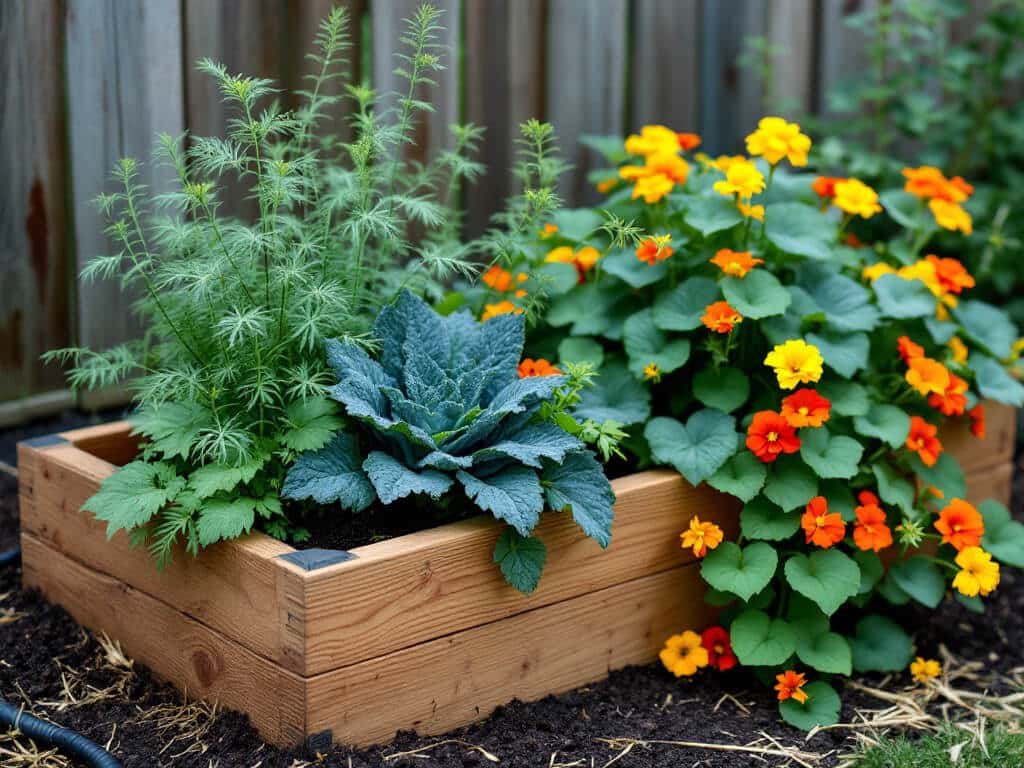
Best companion plants for dill
Every plant below shares dill’s growing conditions or has a traditional pairing with it. For none of them did I find a verified spacing figure from dill. Where that’s the case, I say so and fall back on the neighbor’s own spacing needs.
Cabbage-family crops
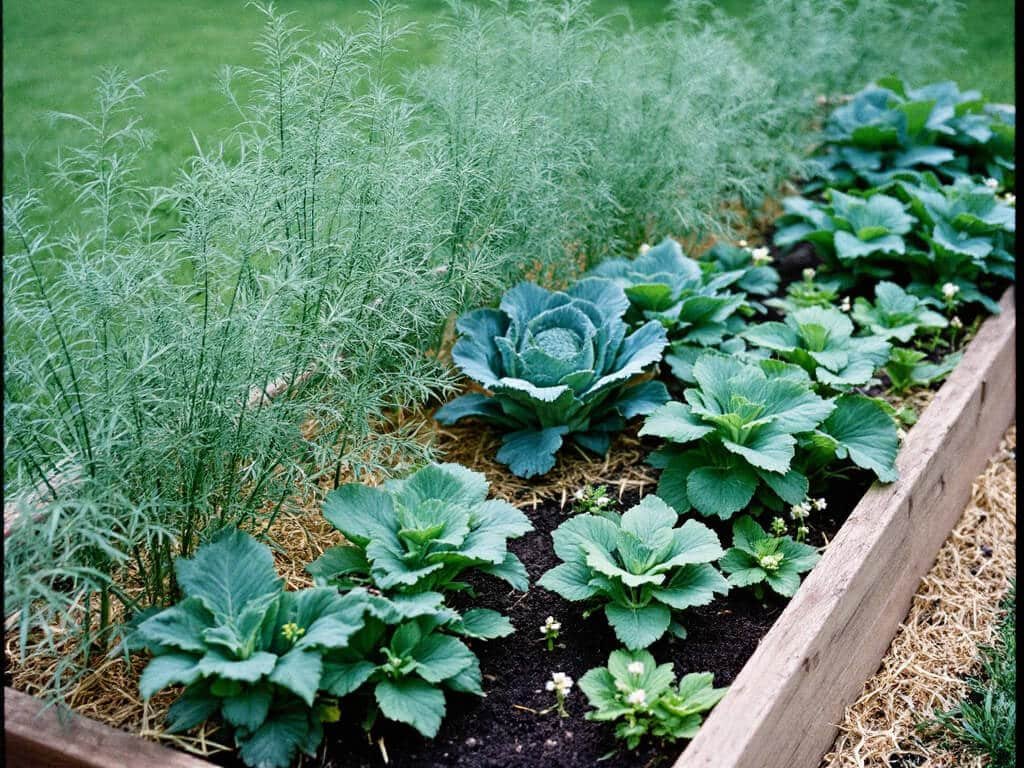
Traditional companion charts list dill with the cabbage family, and dill’s flowers bring in pollinators and beneficial insects. That habitat value is the benefit, not pest control. No dill-specific spacing was verified, so give the cabbage-family crop at least the spacing it normally requires and keep dill from crowding it.
Kale
Kale falls in the same traditional pairing category as the rest of the cabbage family. The proposed benefit is habitat for beneficial insects, not a proven barrier against pests. There’s no verified spacing, so use kale’s usual spacing and keep dill thinned.
Broccoli
Dill’s flowers can attract beneficial insects to a broccoli bed. The pest-repellent version of the story is the one OSU Extension says lacks sufficient research. No verified spacing exists, so let broccoli’s own spacing set the layout and keep dill off to the side where its stalks won’t shade the heads.
Brussels sprouts
This is another traditional cabbage-family pairing. Use dill here for its flowers, not as a confirmed pest barrier. No spacing from dill was verified, so follow the spacing Brussels sprouts need and thin dill so it doesn’t crowd the stalks.
Cucumber
Dill and cucumber are often grown together in home gardens, and their harvest seasons overlap, which is handy if pickles are the plan. The sources I reviewed don’t verify a pest-repellent effect or a special spacing. Both like sun and steady moisture, so they’re easy to water as one bed. Keep air moving between them.
Tomato
Dill brings in pollinators and beneficial insects, but nothing I reviewed verifies that it repels tomato pests. The pairing is fine for sun and water, since both want a sunny spot. No verified spacing exists, so give tomatoes their usual room and don’t let dill become a tall, dense wall beside them.
Carrot
Traditional charts list dill with carrot. Claims about root depth or nutrient complementing for this pair weren’t verified, so I’d treat it as a harmless traditional pairing, not a proven one. No spacing figure is available, so thin both crops to their own recommendations.
Basil
Basil and dill are both warm-season herbs that want sun and well-drained soil, which makes them easy to manage together, especially in a container or an herb bed. The sources I reviewed don’t establish a dill-specific biological benefit. The fit here is practical, not mystical. No verified spacing exists, so keep leaves from overlapping.
Nasturtium
Traditional charts list nasturtium with some vegetable crops, and dill is documented as beneficial-insect habitat. A specific dill and nasturtium benefit was not verified. It’s a reasonable filler plant, but I wouldn’t promise results. No spacing figure was found.
Strawberry
Traditional companion literature lists dill with strawberries, but no specific benefit or spacing recommendation was verified. If you try it, keep dill’s tall flower stalks from shading the berry plants.
What not to plant with dill
The “bad companion” lists you’ll find online are mostly thinner than they look. Nothing here is a proven prohibition. These are cases where growing conditions or habits make the pairing harder, and where the evidence doesn’t back the myth.
Fennel
Fennel is the plant most often named as dill’s enemy. I found no reliable source that verifies a dill-specific conflict, so I won’t call it a proven bad companion. If you want to grow both, give them separate spots anyway, since dense planting causes its own problems.
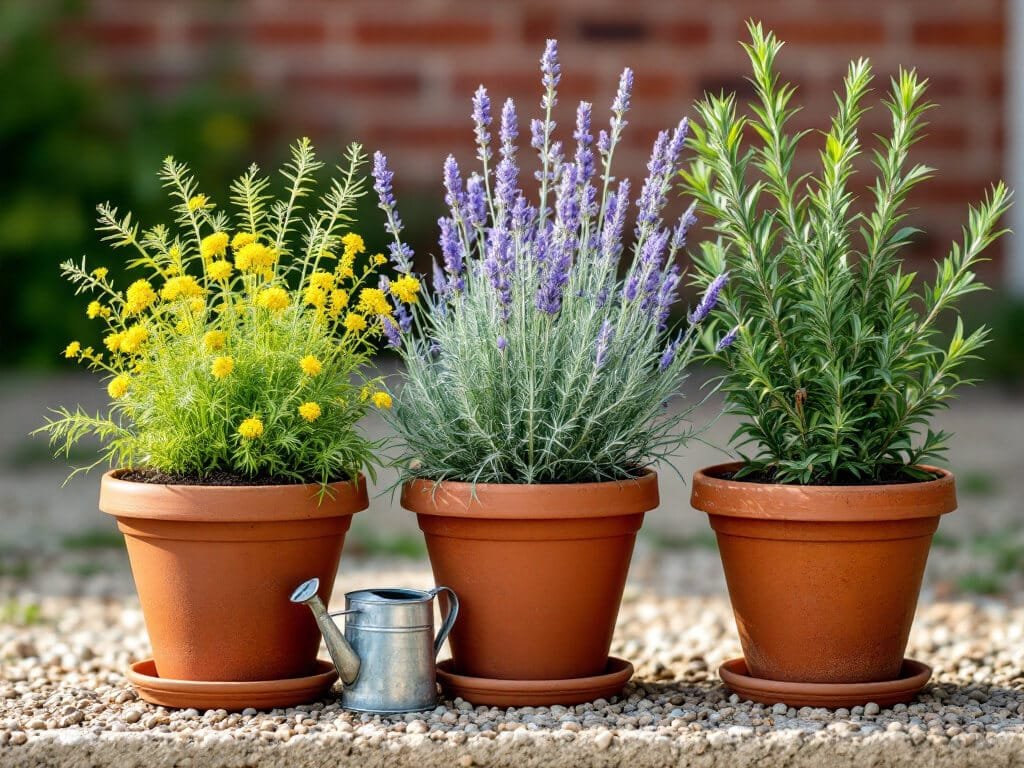
Lavender
Lavender prefers drier, leaner conditions than the fertile, moisture-retentive soil dill likes. That mismatch is the reason to keep them apart, because one of the two will be watered wrong. A specific dill and lavender incompatibility was not verified, so this is a watering issue, not a feud.
Rosemary
Rosemary also generally favors drier conditions than dill. If you water for dill, rosemary may sit too wet, and if you water for rosemary, dill may dry out and bolt early. No tested dill-specific spacing or failure threshold exists, so the simplest fix is to plant them in separate beds or containers.
Mint
Mint spreads aggressively and will compete with dill for space. The sources I reviewed don’t establish a unique incompatibility with dill, so the problem is mint’s habit, not a chemical effect. If you want mint nearby, keep it in its own pot.
Any densely planted crop
This is the one that actually has support. Overcrowding can encourage bolting and fungal problems by reducing air movement. It isn’t tied to any species, so it applies to any neighbor planted too close. Thin dill seedlings and leave gaps.
Layout and spacing
Put dill in a sunny, well-drained section of the bed where its eventual flower stalks won’t shade shorter crops. In containers, group it with plants that tolerate regular watering and leave open space for air movement. Don’t claim a special companion effect unless you’ve tested the pairing in your own garden.
– Choose a full-sun spot with fertile, well-drained, moisture-retentive soil.
– Thin dill seedlings to at least 20 cm (8 in) apart. One RHS source gives this figure for thinning. Mature size varies with variety and conditions, so treat it as a minimum, not a universal companion distance.
– Place dill where tall stalks won’t shade lower crops such as strawberries or carrots.
– Give cabbage-family crops, tomatoes, and cucumbers their own normal spacing, then add dill around the edges.
– Water during hot, dry spells, since drought encourages premature flowering.
– Let a few plants set seed if you want more dill next year. Dill can self-sow when mature seeds drop, and ripe seed is commonly collected in late summer or autumn.
FAQ
Does dill repel pests?
Dill is often promoted as an insect-repelling companion, but Oregon State University Extension says there is not enough research to support that claim for dill and other strongly scented herbs. Dill is better documented as a plant that attracts pollinators and beneficial insects and hosts swallowtail butterflies.
Can dill grow beside tomatoes and cucumbers?
Yes, dill can share a sunny, well-drained growing area with tomatoes or cucumbers. The sources I reviewed don’t verify a special pest-control benefit or a dill-specific spacing for either pairing, so keep plants from becoming overcrowded and maintain air movement.
How much space does dill need?
One RHS source recommends thinning dill seedlings to 20 cm (8 in) apart. Because mature size varies with variety and growing conditions, use that as a minimum thinning reference, not a universal companion-planting distance.