
Potato Companion Plants: What to Grow Nearby
Potato companion plants are a shorter list than most garden charts suggest, and the evidence behind them is thin. What the research does support is practical: use different soil layers, fill gaps with quick crops, and keep potatoes away from relatives that share their diseases. This article sticks to that.
Why pairings matter for potato
Potatoes get hit by a long list of problems: Colorado potato beetle, cutworms, slugs, wireworms, potato cyst nematodes, scab, blight, rot, blackleg, and stem canker. Most of the real damage comes from disease and soil-borne pests that build up, not from a missing “protector” plant. So the useful questions are which neighbors share those diseases, which ones compete for water and light, and which ones fit into the space potatoes leave open.
Marigolds are the usual answer to beetles, and it doesn’t hold up. UMN Extension notes that multiple studies found the claim that marigolds deter Colorado potato beetles to be untrue. Plant marigolds if you like them, but don’t count on them to protect the crop.
None of the pairings below are proven pest repellents. They are sensible neighbors based on rotation, root structure, and how space gets used over a season.
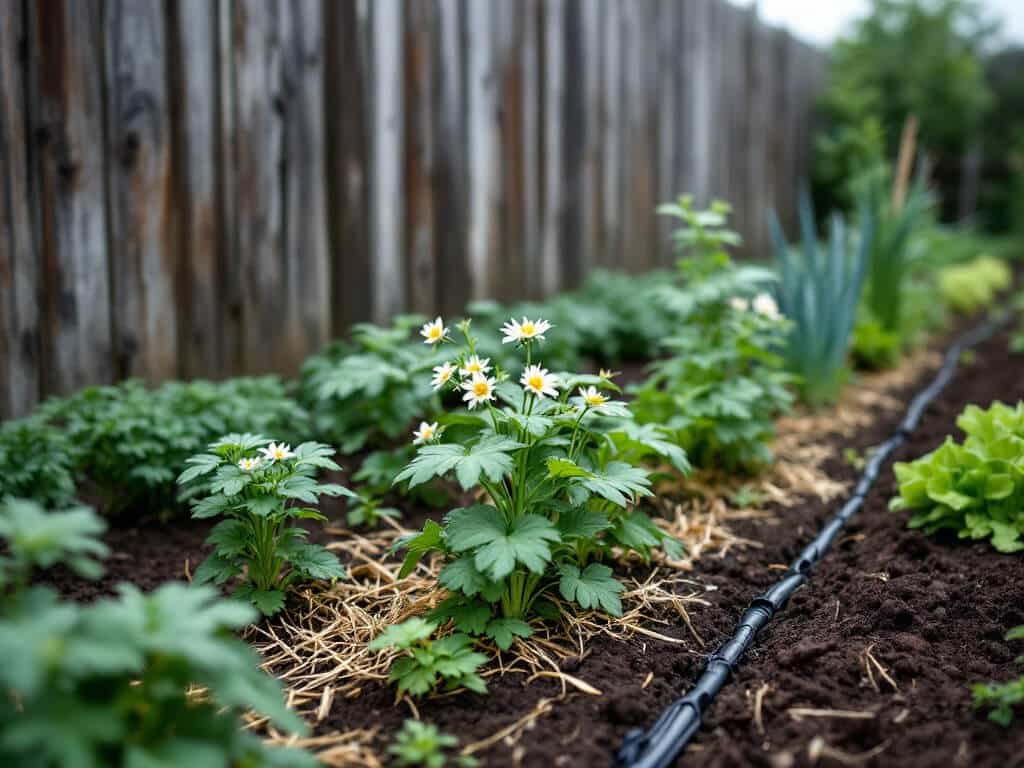
Best companion plants for potato
Potatoes want full sun, deep fertile soil, and steady moisture without waterlogging. Anything you plant nearby has to live with that. Keep companions in their own strips beside the potato row, not inside it.
Carrots
Carrots root differently than potatoes, so the two can draw on different soil layers. UMN Extension identifies carrots as a crop that complements potatoes this way. Keep them outside the potato row. No potato-specific spacing was verified, so use the standard carrot spacing in a neighboring strip.
Onions
RHS lists onions alongside potatoes as a practical planting combination. That is a planning point, not proof that onions repel anything. Space onions by the recommendation for your variety, and keep the potato row spacing intact.
Garlic
RHS also lists garlic sets alongside potatoes in its crop-planning guidance. Use your garlic supplier’s spacing and give the potato row room. Don’t tuck cloves into gaps between potato plants.
Lettuce
Lettuce is a fast crop that can use open ground before potato foliage fills in. This is the intercropping idea RHS describes: harvest the quick crop before the slow one expands. Plant it where you can finish picking before the potato tops close over it. No potato-specific spacing was verified.
Peas
RHS points to peas as a crop you can sow in succession to get more from a plot. For potatoes, the main concern is shade. Put peas where their trellis won’t shade the potato foliage. No potato-specific spacing was verified.
Beans
Beans fit into a productive garden plan, according to USU, and they can sit near potatoes if you manage the support. Give climbing types their own support, away from the potato row, so they don’t shade or crowd the plants. No potato-specific spacing was verified.
Brassicas
Rotation guidance puts brassicas in a different year from potatoes. That makes them a good fit for a separate bed, or for the same ground after the potato crop comes out, rather than for tight interplanting. Give them the spacing your cabbage, kale, or broccoli cultivar calls for.
Quick-maturing salad crops
Radishes and other fast salad crops follow the same logic as lettuce. Harvested early, they use space without competing for long. Plant them only in accessible gaps, and avoid digging around developing tubers to reach them. No potato-specific spacing was verified.
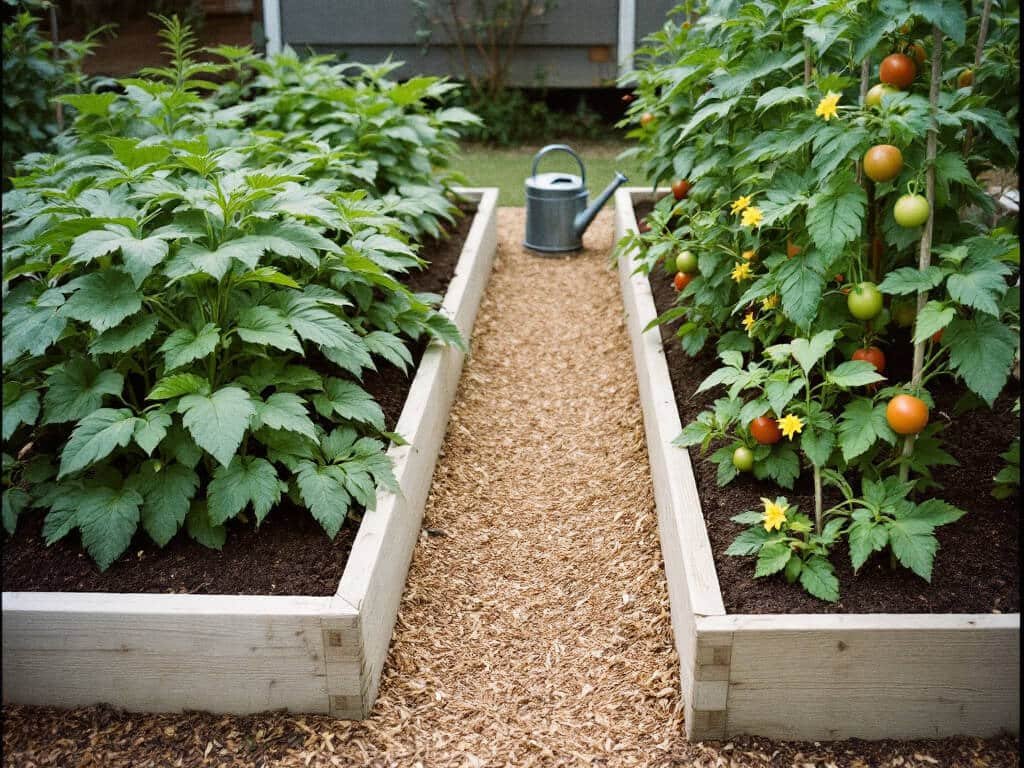
What not to plant with potato
Tomatoes
Potatoes and tomatoes share important diseases, including early blight. Keep tomatoes out of the potato bed, and where early blight has shown up, UMN recommends waiting two years before planting tomatoes or peppers in that spot. This is the pairing most worth avoiding, and charts that put them side by side are wrong.
Peppers
Peppers are in the same plant family and can share early blight pathogens with potatoes. Close association is a bad idea anywhere disease is a concern. Give peppers their own bed.
Eggplant
Eggplant is another family member, and it is associated with the potato beetle. A UMN trial of eggplant transplants as a trap crop found no useful effect. Don’t plant it near potatoes hoping to lure beetles away.
Potatoes planted repeatedly in the same bed
Potatoes after potatoes lets soil-borne pests and diseases build up. Rotation is the recommendation from both RHS and UMN sources. Move the crop to a new bed each year when you can.
Any densely planted, thirsty crop
Potatoes need consistent moisture, and a crowded neighbor competes for it. Crowding also cuts airflow, which works against disease control. UMN recommends adequate spacing to help manage early blight, so leave the gaps.
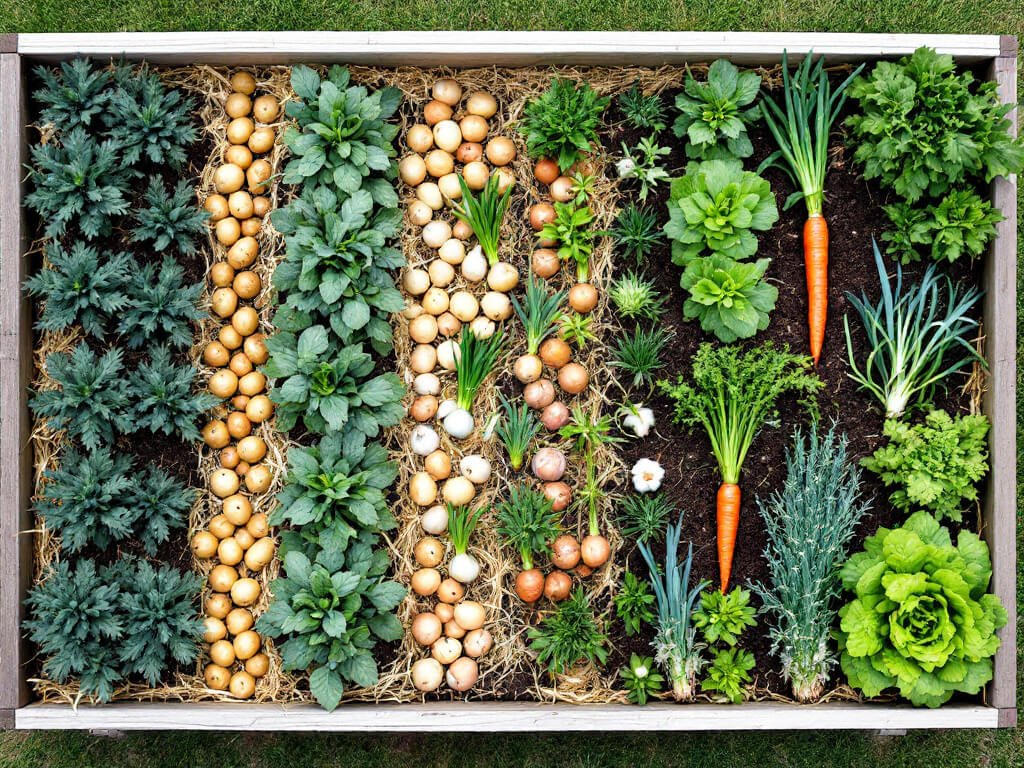
Layout and spacing
Give potatoes their own distinct rows, and put companions in adjacent strips. For solanaceous crops, a separate bed on a rotation is the cleanest answer.
Early potatoes: about 12 in between plants and 24 in between rows.
Maincrop potatoes: about 15 in between plants and 30 in between rows.
Onions, garlic, carrots, quick greens: in strips beside the potato rows, at their own recommended spacing.
Peas and climbing beans: on a separate support so the foliage doesn’t shade the potatoes.
Tomatoes, peppers, eggplant: in a different bed, rotated.
For containers, grow potatoes alone in a large pot or potato grow bag. That keeps hilling, watering, and harvest manageable. Put any companion crops in neighboring containers instead of crowding the potato pot.
FAQ
Do marigolds protect potatoes from Colorado potato beetles?
No reliable protection should be expected. UMN Extension reports that multiple studies found the commonly repeated marigold claim to be untrue.
Can potatoes be planted with tomatoes?
It is better to keep them apart, especially where early blight has occurred, because both crops can host the same pathogens. UMN recommends leaving two years before planting tomatoes or peppers in the same location as affected potatoes.
Can potatoes and onions grow together?
RHS includes onions and garlic in practical planting guidance alongside potatoes, but that does not prove they repel potato pests. Keep each crop at its own recommended spacing and don’t crowd the potato rows.