
Choosing thyme companion plants comes down mostly to sun and water, because the evidence for pest-repelling pairings is thin. Thyme is a small, woody perennial herb for USDA zones 5-9. It wants full sun, light and fast-draining soil, and very little water once established.
So the safest neighbors are plants that like the same dry, bright conditions. A few vegetable pairings have some research behind them, and I’ll flag exactly how far that research goes. Where the evidence runs out, I’ll say so instead of guessing at numbers.
Why pairings matter for thyme
Thyme tolerates drought but performs poorly in wet soil. Overwatering and poor drainage lead to root rot, which is the main problem you’re trying to avoid. A neighbor that needs frequent watering will drown your thyme. That is the one pairing mistake worth losing sleep over.
Mature thyme is about 6-12 inches tall and 6-16 inches wide, depending on the type. It is low and mounding, so it can be crowded out by vigorous plants that spread over it. Crowding also cuts airflow around the plant.
Now the myth. You’ll see claims that thyme repels pests from everything around it, improves the flavor or yield of nearby plants, or pairs well with nearly every Mediterranean herb. None of that has been verified, and Penn State Extension lists no companion-planting information for thyme at all. What exists is a handful of tested combinations and some traditional pairings.
Best companion plants for thyme
I’ve sorted these by how strong the case is. The first four share thyme’s growing conditions, which is the most reliable reason to plant things together. The vegetable pairings come with research, but it is limited. For nearly all of them, no validated thyme-to-neighbor spacing was found, so I give the practical rule from the research instead of a number.
Sage
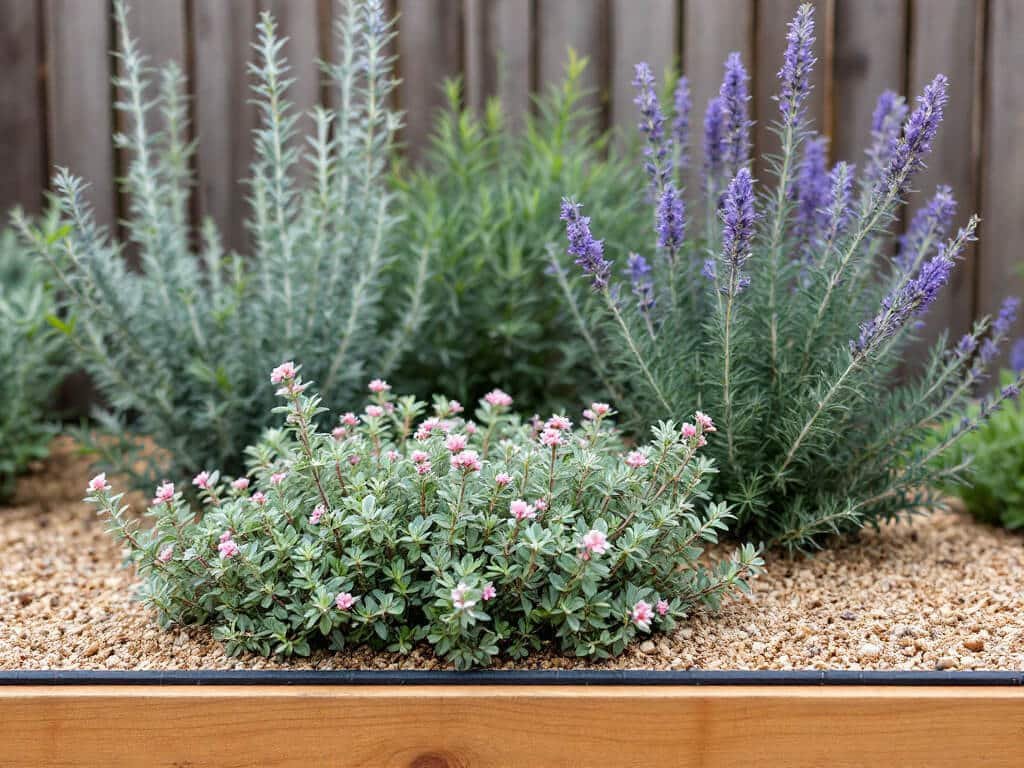
Sage likes the same full sun and relatively dry, well-drained soil, so the two can share a bed without a watering conflict. In a greenhouse study, sage and thyme grown together were associated with fewer diamondback moths. No evidence-based spacing exists for the pair, so give each plant room for its mature size.
Rosemary
Rosemary wants full sun, sharply drained soil, and little water after establishment, which matches thyme closely. Treat it as a separate woody herb and plant it so the mature plants don’t overlap. No validated universal spacing was found.
Oregano
Oregano also prefers sunny, well-drained conditions, and it adds flowering ground cover. The catch is that both oregano and thyme cover ground, and I’d keep them from merging into one tangle. No evidence-based spacing was found, so watch how far each one creeps and give them a visible gap.
Lavender
Lavender suits the same sunny, dry-site planting and adds upright flower stems for pollinators. Place it far enough from the thyme to preserve airflow and keep the canopies from overlapping. No validated universal spacing was found.
Broccoli
In a cited Iowa trial, a planting that included thyme reduced cabbage looper and imported cabbageworm damage on broccoli. Use broccoli’s recommended spacing and don’t cram thyme into the broccoli row. No universal thyme-to-broccoli spacing has been validated.
Keep in mind that broccoli wants more regular water than thyme does. If you try this, keep each plant on its own watering schedule.
Brussels sprouts
A greenhouse study found fewer diamondback moths when sage and thyme were grown together with Brussels sprouts. Keep the crop’s normal spacing and put the thyme where it won’t shade the brassica. No universal spacing for the thyme was found.
A greenhouse result is not a backyard guarantee, so treat this as a reasonable experiment rather than pest control you can count on.
Onion
Thyme, onion, and nasturtium were all part of the Iowa planting that reduced cabbage looper and imported cabbageworm damage on broccoli. Plant onions at their normal spacing. Don’t treat the combination as a guaranteed control, and no universal spacing from thyme was found.
Nasturtium
Nasturtium was the third plant in that same Iowa trial, alongside thyme and onion around the broccoli. The finding applies to that tested combination, not necessarily to nasturtium beside thyme on its own. No validated spacing was found, so plant it as a member of the broccoli bed instead of expecting it to do anything for the thyme.
Strawberry
Some growers use creeping thyme as living ground cover between strawberries. A yield or pest-control benefit was not verified, so do it because you like the look and the low maintenance, not for a promised payoff. No validated spacing was found.
Other dry-site herbs
Thyme can share a container or bed with any plant that tolerates full sun and fast drainage. That compatibility is about culture, though, and it does not prove any pest-repelling effect. Use separate plants with enough room to prevent crowding, since no universal spacing was verified.
What not to plant with thyme
The bad matches follow the same logic as the good ones. Anything that needs steady moisture or that overruns a small mound is a problem.
Mint
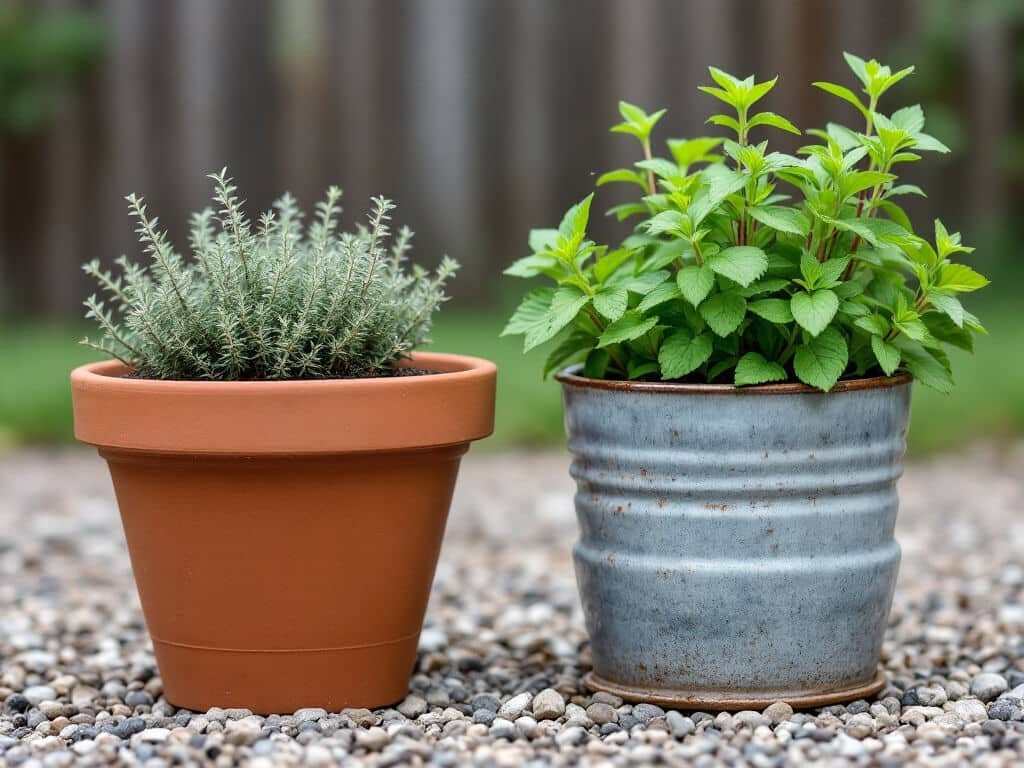
Mint spreads aggressively and prefers consistently more moisture than established thyme. That is two problems at once, competition for space and a mismatch in watering. I’d skip it in any bed where thyme is planted.
Cucumber
Cucumber generally needs more regular moisture than thyme, which prefers soil that dries between waterings. Put them in the same irrigation zone and one of the two ends up unhappy. Since thyme is the one that rots, it is usually the loser.
Moisture-loving plants generally
Anything that wants continually damp soil is a poor match, because thyme is intolerant of wet soil and poor drainage. You don’t need a list. If a plant’s care instructions say “keep evenly moist,” plant it somewhere else.
Dense, vigorous ground covers
Plants that overrun thyme compete for space and reduce airflow around it. No specific list of such plants was verified in the extension sources I reviewed, so use judgment. If a neighbor will spread over a 6 to 16 inch mound within a season or two, it’s the wrong neighbor.
Layout and spacing
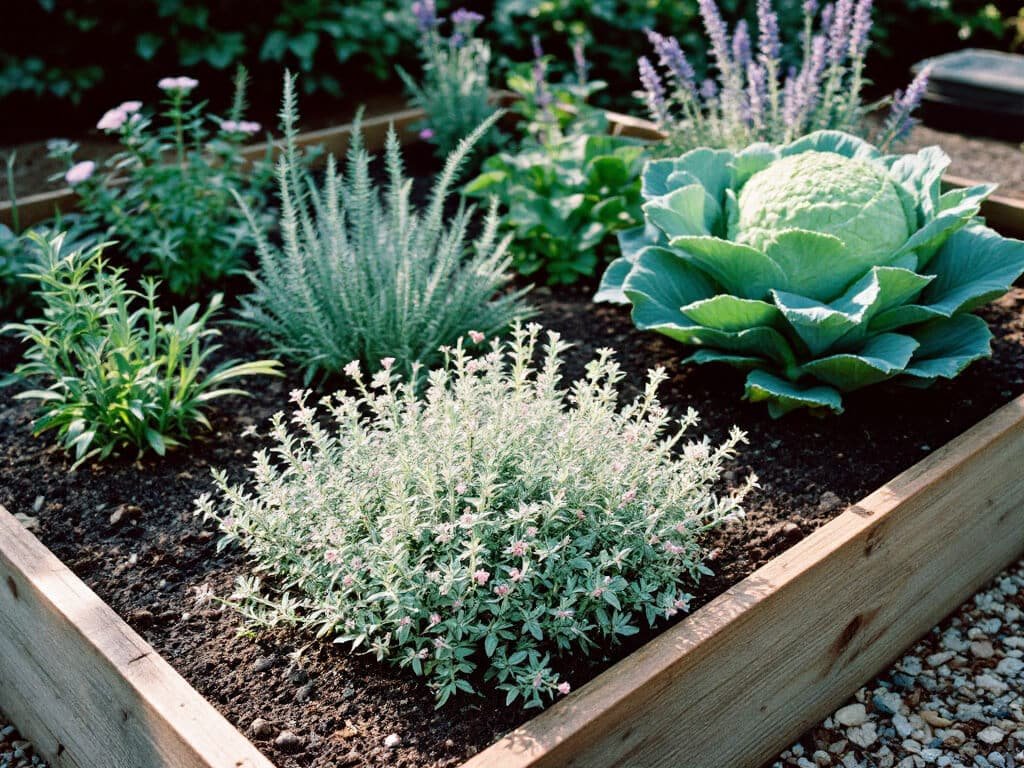
Put thyme at the sunny, well-drained edge of a bed, or in its own container where you can limit irrigation after it establishes. Group it with other dry-site herbs and keep wetter crops like broccoli in their normal irrigation zone. The research supports particular thyme and brassica trial combinations, not a universal spacing chart, so I won’t hand you one.
Edge of the bed: Thyme at the sunniest, best-drained spot, with at least 6 hours of direct light.
Next to it: Sage, rosemary, lavender, and oregano, each with room for its mature canopy.
Oregano: Kept clear enough that it and the thyme don’t merge.
Vegetable zone: Broccoli, Brussels sprouts, onion, and nasturtium at their own normal spacing and on their own watering.
Container option: Thyme alone or with other dry-site herbs, watered sparingly once established.
FAQ
Does thyme repel pests from every nearby plant?
No. The evidence reviewed supports limited thyme-containing trials involving broccoli and Brussels sprouts. Many broader pest-repellent claims remain traditional or unverified.
Can thyme grow with rosemary and sage?
Yes, they have broadly similar preferences for full sun and well-drained soil, so they can share a dry herb bed. No universal thyme-to-herb spacing standard was verified, so leave room for each plant’s mature size.
Can thyme grow beside vegetables that need regular watering?
It can be planted nearby, but separate irrigation is better. Established thyme should stay on the dry side, while moisture-demanding crops may need water more often.