
Choosing viburnum companion plants comes down to matching light, moisture, drainage, and mature size, not finding a famous pairing. Extension and horticultural sources agree on that approach, but none of them publish a viburnum-specific companion list or a fixed spacing figure. Anyone who gives you an exact number of inches is guessing.
Viburnum is a big genus. Some species are deciduous, some evergreen, and some grow into small trees. Hardiness varies by species and cultivar, so check the tag on your plant for its zone instead of assuming one range covers all of them.
This article sorts companions by the conditions they need and tells you where in the bed each one belongs. Use the plant label for each companion’s mature width.
Why pairings matter for viburnum
Viburnum wants reasonably fertile, well-drained soil. Many tolerate chalky soil, but poor, dry ground and persistently wet ground both cause trouble. A companion that pulls the bed toward either extreme works against the shrub.
Water is the other piece. A newly planted viburnum needs regular watering for the first year or two, and shallow-rooted or summer-flowering types often need extra water in dry weather. Established evergreen types are usually more drought tolerant. If you plant a drought-lover in the same watered root zone, one of the two plants loses.
Then there are the problems viburnums already get: viburnum beetle, scale, whitefly, aphids, honey fungus, leaf spot, downy and powdery mildew, and cankers. Companions can’t prevent those, but a sensible bed makes the shrub easier to inspect and keeps you from stacking more susceptible host plants in one spot.
Best companion plants for viburnum
Most viburnums take full sun to light or partial shade, so the companions below split into two groups. Shade-tolerant foliage plants go under and near the canopy. Sun-lovers go on the open edge. In every case, use the companion’s own label for spacing and keep it off the shrub’s base.
Woodland phlox
Woodland phlox takes the lower layer and tolerates the light shade under an established viburnum. No spacing has been verified for all viburnum species, so follow the phlox label. Keep it outside the shrub’s mature root flare.
Hosta
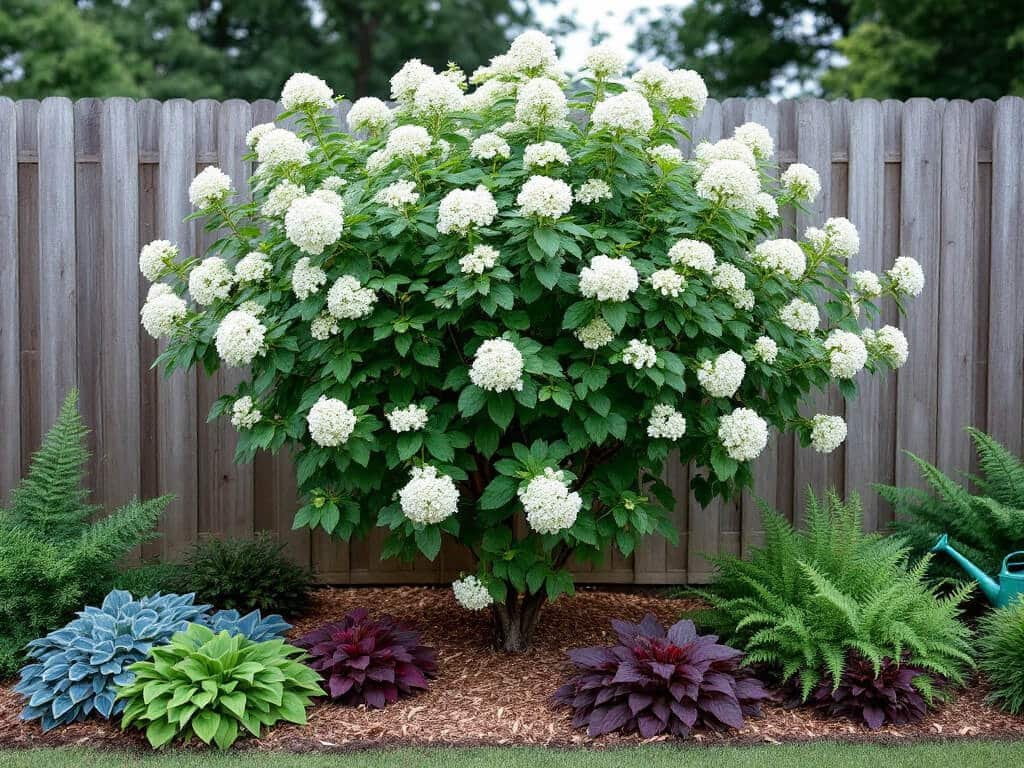
Hosta gives you a shade-tolerant foliage layer where the viburnum canopy casts light shade. Use cultivar-specific spacing, since hosta sizes vary a lot. Don’t plant it directly against the base of the shrub.
Heuchera
Heuchera adds a low foliage layer in partial shade and doesn’t compete with the shrub for vertical space. Space it by the cultivar’s mature spread. It works well at the outer edge of the canopy.
Christmas fern
Christmas fern suits light shade and fills the ground layer beneath or near a suitable viburnum. Use the fern’s mature spread to set the distance, not a fixed number. It is a good pick if you want something evergreen at ground level without a lot of fuss.
Astilbe
Astilbe fits moist, well-drained, partly shaded sites, especially near viburnums that need steady moisture. Keep it out of dry, drought-prone spots, where it will struggle. Follow the label for spacing.
Lady’s mantle
Lady’s mantle makes a low edging layer in fertile, well-drained soil and doesn’t repeat the shrub’s height. Space it by the mature width on the plant label. It suits the front of the bed, where it softens the line between shrub and lawn or path.
Catmint
Catmint belongs on the sunnier, drier edge of a viburnum bed, where it provides flowers for insects. Don’t put it in the wetter, shaded center of the planting. Use the label’s mature width for spacing.
Yarrow
Yarrow also wants a sunny, well-drained edge and adds a contrasting flowering layer. Don’t pair it with moisture-demanding viburnums in the same consistently moist zone. Pick a spot at the bed’s margin and space it by the label.
Bee balm
Bee balm adds a tall herbaceous flowering layer and suits soil that stays fertile and evenly moist. Give it the cultivar’s labeled spacing and good air circulation, so don’t wedge it tightly against the shrub. It makes the most sense beside or behind a viburnum that is getting regular water anyway.
Golden alexanders
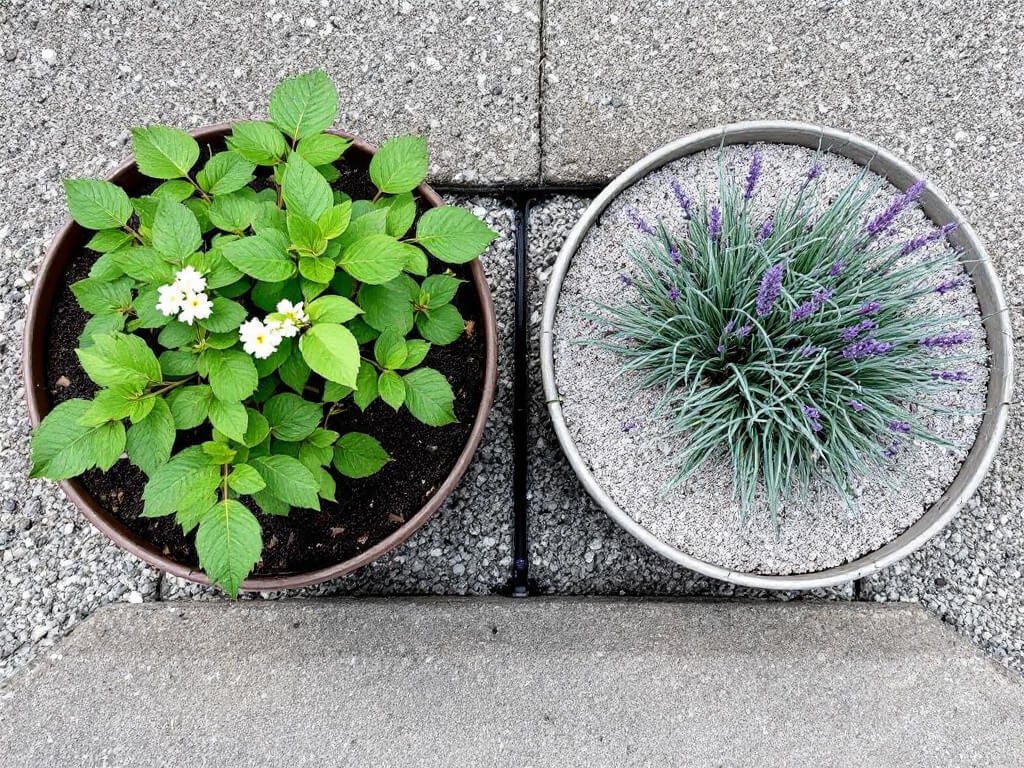
Golden alexanders is a flowering native perennial for pollinator-oriented plantings. Put it in an open position, not dense shade, and use its labeled mature spread for spacing. It is a better fit for the sunny side of the bed than the shaded understory.
What not to plant with viburnum
The brief found no verified evidence that any named ornamental companion is allelopathic to viburnum, so the problems below are about conditions and crowding, not chemistry.
Plants that need permanently wet or poorly drained soil
Viburnum prefers well-drained conditions, and sitting water can increase root and fungal disease risk. Don’t plant viburnum in a spot that stays wet, and don’t pair it with plants that require one. If you have a low, soggy corner, put something else there.
Drought-adapted plants in the same irrigated root zone
A plant that wants a dry border will have trouble beside a shrub that needs regular water. The two have incompatible needs. Keep dry-border plants separate from the area you water for the viburnum.
Large, aggressive shrubs within the viburnum’s mature spread
Big shrubs planted inside the viburnum’s eventual footprint compete for light, water, and root space. Because viburnum size varies so much by species and cultivar, no single spacing figure is safe. Look up the mature dimensions of your specific plant before you decide where anything else goes.
Other plants that host viburnum leaf beetle
Where viburnum leaf beetle is present, a dense grouping of susceptible viburnums concentrates host material for it. The risk depends on the species you grow and whether the pest is in your area. Avoid packing susceptible viburnums together, and inspect the plants regularly.
Layout and spacing
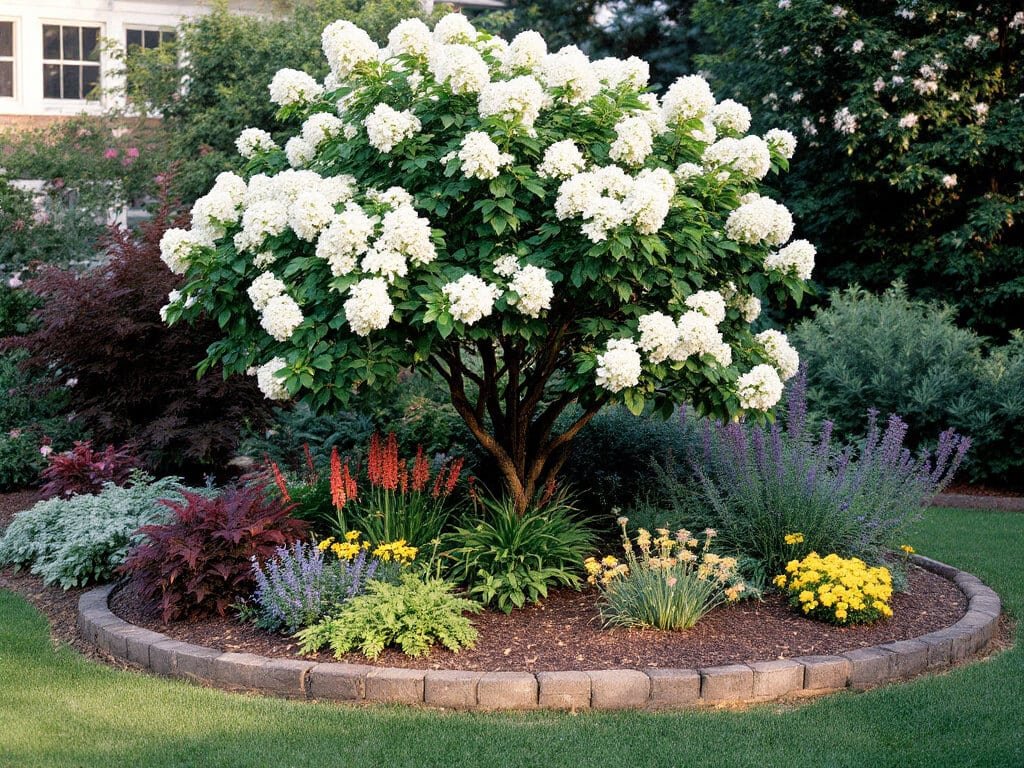
Start with the viburnum, placed where it gets the light and drainage its species needs. Then build around it in layers, using each companion’s labeled mature width instead of a generic rule.
– Taller plants, such as bee balm, go behind or beside the shrub.
– Lower perennials, such as heuchera or lady’s mantle, go near the outer edge of the canopy.
– Moisture-compatible ground-layer plants, such as astilbe or Christmas fern, go around the edge.
– Sun-lovers like catmint and yarrow go on the sunny, drier margin, away from the wet center.
– Keep the trunk base open and avoid crowding.
FAQ
Can viburnum grow in shade?
Most viburnums grow in sun or light shade, but deep shade reduces flowering. Match the planting spot to the species or cultivar.
Do viburnums need another viburnum for berries?
Many viburnums are generally self-incompatible. They fruit more reliably when two or more compatible plants have overlapping bloom periods.
How much water does a newly planted viburnum need?
Water it as needed through the first year or two, especially in dry spells. Established plants may still need extra summer water when the soil dries out, particularly shallow-rooted types.