
Coral Bells Companion Plants for Shade Gardens
Choosing coral bells companion plants is mostly a matter of matching light and water, then worrying about leaf color and flower shape. Coral bells (Heuchera) are clump-forming, evergreen or semi-evergreen perennials, generally hardy in USDA zones 4–9, though hardiness varies by species and cultivar. Check the label on the one you buy.
This article covers ten plants that suit the same conditions, the one kind of pairing to avoid, and how to lay them out. It sticks to what the research supports, and where there is no verified spacing number, it says so and sends you to the plant label.
Introduction
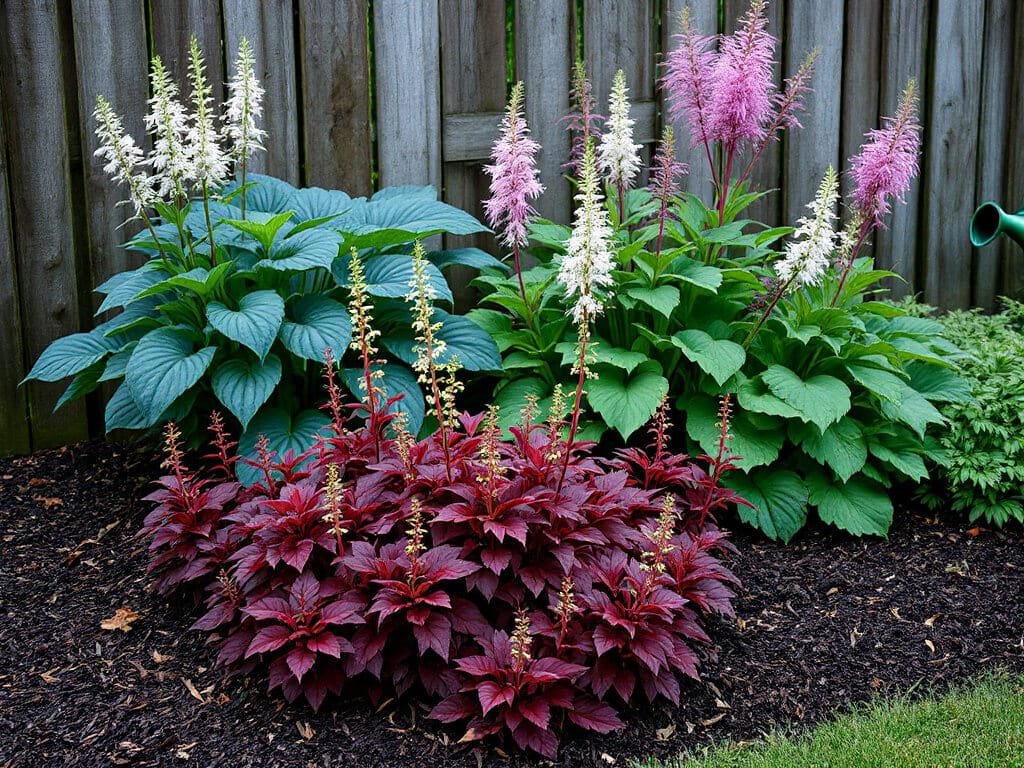
Coral bells earn their place in a bed with foliage, not flowers. The leaves form a low mound, often about 12–18 inches tall and wide, with flower stems rising above it. Size varies considerably by cultivar, so that range is a starting point, not a rule.
That mound shape is why companions matter. A low, rounded plant looks best next to something with a different outline: an upright spike, a bold broad leaf, or a loose ground-hugging sprawl. The plants below do that job, and each one tolerates light or partial shade like coral bells do.
Why Pairings Matter for Coral Bells
Coral bells are not fussy, but they do have a clear set of preferences. Pair them with plants that share those preferences and you can water, feed, and site the whole bed as one unit.
Here is what coral bells want:
Light: Partial or dappled shade for most cultivars. Dark-leaved types often tolerate more sun, while pale-leaved types may scorch.
Water: Moderate. Keep new plants regularly watered, then let established plants dry somewhat between waterings.
Soil: Fertile, neutral to slightly acidic, moist but well-drained.
Bloom: Usually late spring through summer, depending on cultivar and climate.
The trouble list is also worth knowing: vine weevil, leaf and bud eelworms, slugs, fungal problems, and crown or root rot in wet conditions. Nothing in the research says a particular companion will prevent any of these. What it does say is that wet conditions drive the rot problems, so a companion that needs constant moisture works against you.
The practical takeaway: group plants by light and moisture first. Everything else on this list is a bonus on top of that.
Best Companion Plants for Coral Bells
None of the sources gives a single spacing distance that works for every coral bells pairing. For each plant below, use the mature width printed on the plant label and measure from there. That is more reliable than guessing, especially with coral bells, where cultivar size varies so much.
If you want the safest starting point, I’d begin with foamflower and heucherella. Both are specifically identified as good partners because they enjoy similar growing conditions.
Foamflower (Tiarella spp.)
Foamflower shares coral bells’ preference for partial or dappled shade and moist, well-drained soil. Its foliage contrasts with coral bells, and its flower spikes add vertical texture to a low mound. Space it by the mature width on its label, since no universal coral bells spacing has been verified.
Heucherella (× Heucherella spp.)
Heucherella is closely related to coral bells and suited to similar growing conditions, which makes it an easy foliage companion. Follow the mature spread listed for each cultivar when you space it. No universal distance has been verified.
Hosta (Hosta spp.)
Hosta gives you bold foliage contrast next to the finer mound of coral bells. It works as long as the site meets both plants’ light and moisture needs. Place it according to the cultivar’s mature spread, not a fixed distance.
Columbine (Aquilegia spp.)
University of Minnesota Extension lists columbine among perennials suited to light or partial shade, which matches many coral bells sites. Use the cultivar’s labeled mature width. No coral bells-specific spacing has been verified.
Astilbe (Astilbe spp.)
Astilbe handles light or partial shade and sends taller flower plumes up above low coral bells foliage. That height difference is the reason to plant it. Use the astilbe cultivar’s mature width and leave room for its clump.
Lady’s Mantle (Alchemilla spp.)
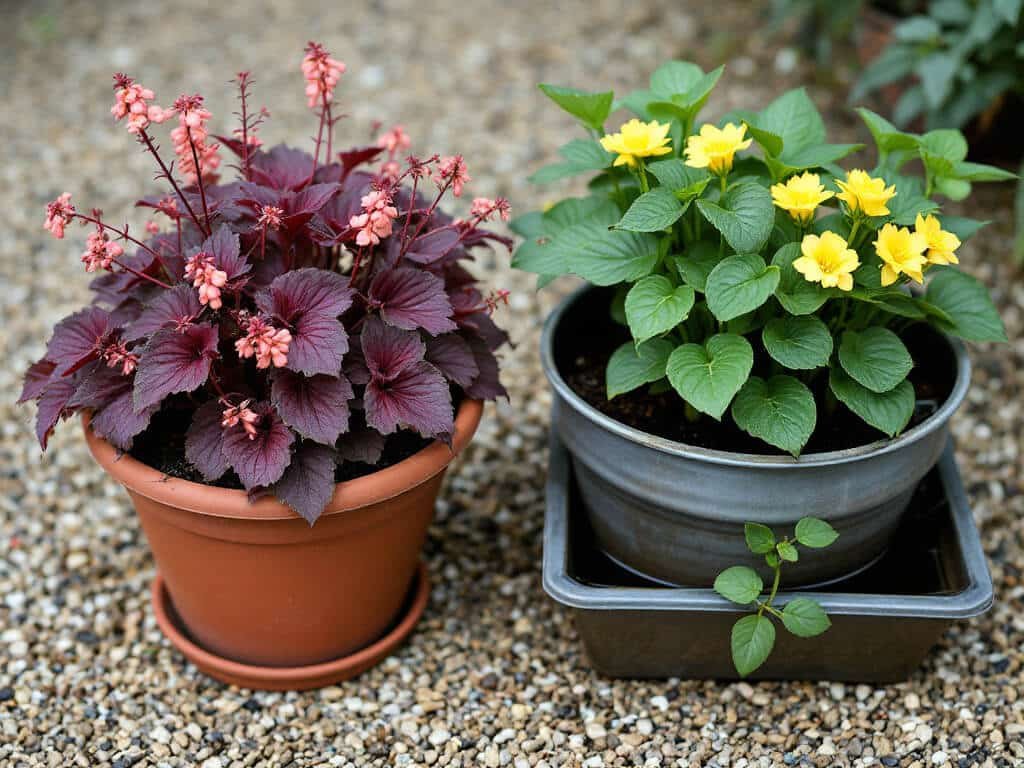
Lady’s mantle tolerates light or partial shade and supplies rounded foliage that contrasts with coral bells’ leaf shapes. Follow the mature width of the species or cultivar you choose when spacing it.
Cranesbill (Geranium spp.)
Cranesbill is a compatible light-to-part-shade option with a spreading, ground-layer habit. Follow the cultivar’s mature spread, and avoid crowding the coral bells crown, since the crown is the part that suffers when conditions get wet.
Bugbane (Actaea spp.)
Bugbane suits light or partial shade and gives you height behind coral bells. That makes it a good back-of-the-bed plant. Use the label’s mature width and height, because no fixed coral bells spacing has been verified.
Turtlehead (Chelone spp.)
Turtlehead fits light or partial shade and contributes late-season flowers and upright structure. Coral bells bloom late spring through summer, so turtlehead extends interest later. Use the selected turtlehead’s mature width for spacing.
Catmint (Nepeta spp.)
Catmint is listed for light or partial shade and gives a looser, more open flowering contrast where the site is not overly shady. It is the best fit for the brighter edge of a coral bells planting. Follow the cultivar’s mature width and keep the soil from becoming waterlogged.
What Not to Plant With Coral Bells
The research found no specific plant that harms coral bells through allelopathy, shared pests, or nutrient competition. So there is no blacklist of species to give you. The risk is a mismatch in growing conditions, and there are two versions of it.
Do not put coral bells in permanently wet soil, because poor drainage can cause crown or root rot.
Plants That Need Permanently Wet Soil
If a plant requires soggy ground to do well, it does not belong in a bed where coral bells are meant to dry somewhat between waterings. You would either drown the coral bells or starve the other plant. Pick a different spot for the moisture lover instead of compromising the bed.
Drought-Loving Plants in Constantly Moist Soil
The reverse also holds. Newly planted coral bells need regular watering, and a plant that wants dry conditions will struggle in soil kept continuously moist for them. Keep the two apart rather than splitting the difference.
Anything You Have Not Checked Against the Label
This is the general rule behind both examples. Before you plant, compare the label’s light, water, and soil needs against coral bells’ list above. If they conflict, choose a different companion. Even the plants on the good list, such as catmint, come with a caveat about site conditions.
Layout and Spacing
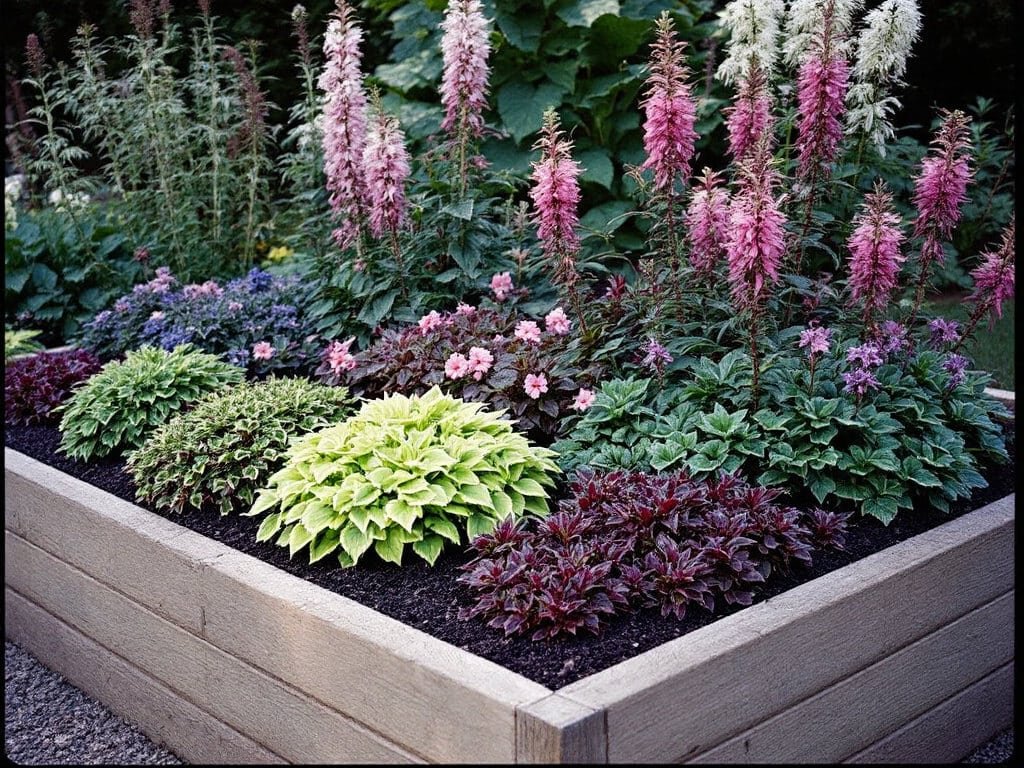
Put coral bells toward the front or middle of the bed, where their foliage mounds can contrast with taller plants behind them. Group plants with similar moisture and light requirements, and measure spacing from the mature width on each label, not from one assumed distance.
Front or middle: Coral bells, with foamflower or heucherella nearby for similar conditions and different foliage.
Behind: Astilbe, bugbane, turtlehead, or hosta for taller flowers or bolder leaves.
Ground layer: Cranesbill or lady’s mantle, kept off the coral bells crown.
Brighter edge: Catmint, where the site is not overly shady.
Light check: Put dark-leaved coral bells in the sunnier spots and pale-leaved ones in more shade, since pale leaves may scorch.
FAQ
Can coral bells grow with hostas?
Yes. RHS lists hostas as a foliage-contrast option for heucheras, provided the site meets both plants’ light and moisture needs.
Do coral bells need full shade?
No. Most coral bells prefer partial or dappled shade, while some dark-leaved cultivars tolerate more sun. Pale-leaved cultivars are more prone to scorching.
Can coral bells and foamflower grow together?
Yes. RHS specifically identifies foamflower and closely related heucherellas as good companions because they enjoy similar growing conditions.