
How to Make Organic Fertilizer at Home
How to make organic fertilizer comes down to one practical answer for most backyard gardeners: build a compost pile, let it finish, and apply it in measured amounts. What comes out is mostly a soil amendment. It improves soil structure and water-holding capacity, but it is a relatively low-analysis fertilizer and may not supply everything a crop needs.
That distinction matters because it changes how you use the stuff. Treat finished compost as the base of your soil care, and let a soil test tell you whether anything else is missing. The method below works in USDA zones 5 through 9 and beyond, since timing depends more on your local temperature and moisture than on your hardiness zone.
What You Need
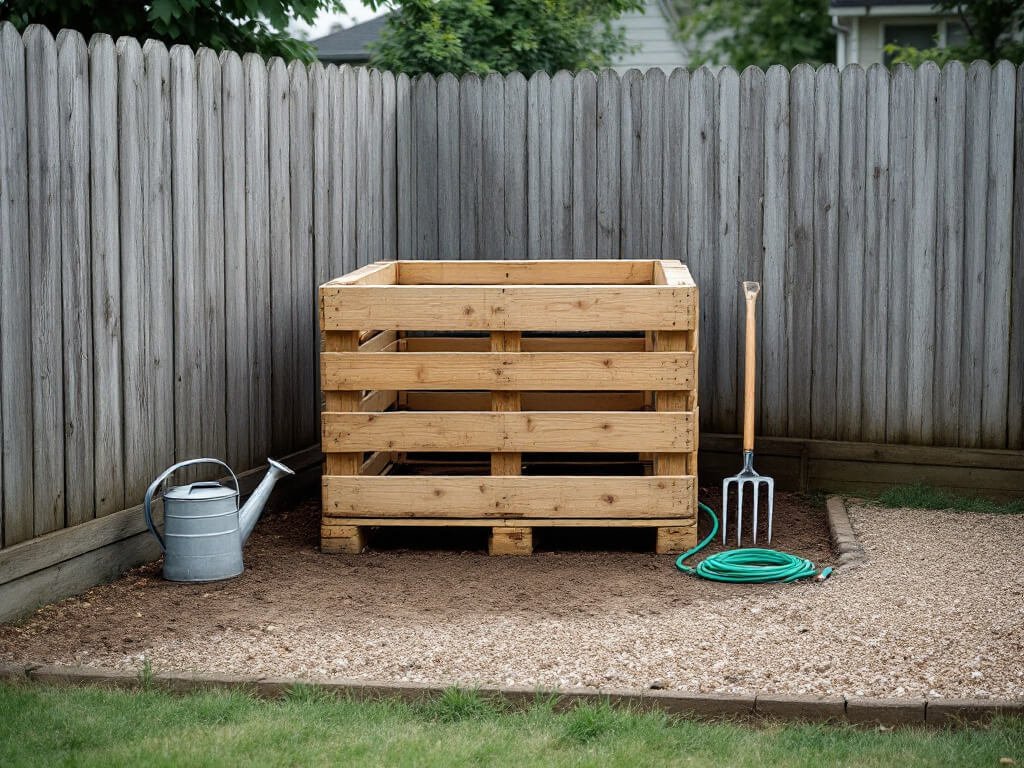
Gather the gear before you start the pile. Most of it is cheap or already in the shed.
– A compost bin, tumbler, or contained pile with enough room to turn the material and let air move through it
– “Brown” carbon-rich materials: dry leaves, straw, untreated sawdust
– “Green” nitrogen-rich materials: fresh plant waste, grass clippings, suitable kitchen scraps
– Water, a garden fork or compost aerator, and a compost thermometer
– Gloves, hand-washing supplies, and separate tools if you handle manure or unfinished compost
– Optional: manure from herbivorous livestock or poultry, used only after proper composting
– A soil test, ideally before you add anything beyond compost
The soil test is the item people skip. Nutrient needs vary from yard to yard, and excess nutrients can damage plants or pollute water.
Choose a Composting Site
Pick a spot where you can actually manage the pile, because a pile you avoid turning is just a heap. Sun or shade both work, so choose based on convenience: close enough to carry kitchen scraps and a hose or watering can without a chore.
Contain the pile in a bin, tumbler, or defined enclosure sized to the materials you really have. Leave room around it to get a fork in and turn the contents. A bin too small to turn is the most common reason a pile stalls.
Add Carbon- and Nitrogen-Rich Materials
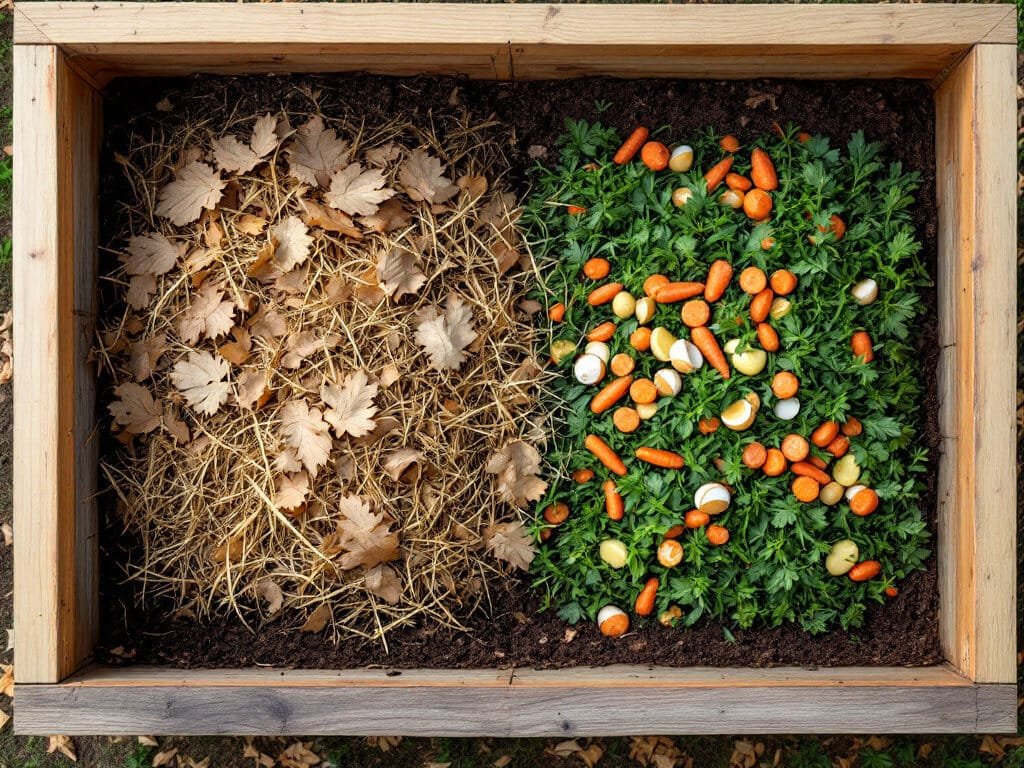
Build the pile from a mix, not a single ingredient. Combine browns (dry leaves, straw, untreated sawdust) with greens (fresh plant cuttings, grass clippings, kitchen scraps). A pile of only grass clippings or only leaves will not behave well.
Keep meat scraps out entirely. They attract rats and other pests. For the kitchen scraps you do add, bury them under carbon-rich material so they are covered rather than sitting on top.
Balance the Compost Mix
Aim for a starting carbon-to-nitrogen ratio of roughly 25:1 to 40:1. That is the range used under controlled organic composting standards, and it means the pile should contain a lot more carbon material than nitrogen material by their makeup, not by a simple half-and-half scoop.
You can’t measure that ratio at home, so use the pile as your gauge. If it won’t heat up, add more nitrogen-rich greens, fix the moisture, and mix the ingredients so microorganisms can work all the way through. If it turns slimy or smells bad, add dry browns and turn it.
Moisten the Pile
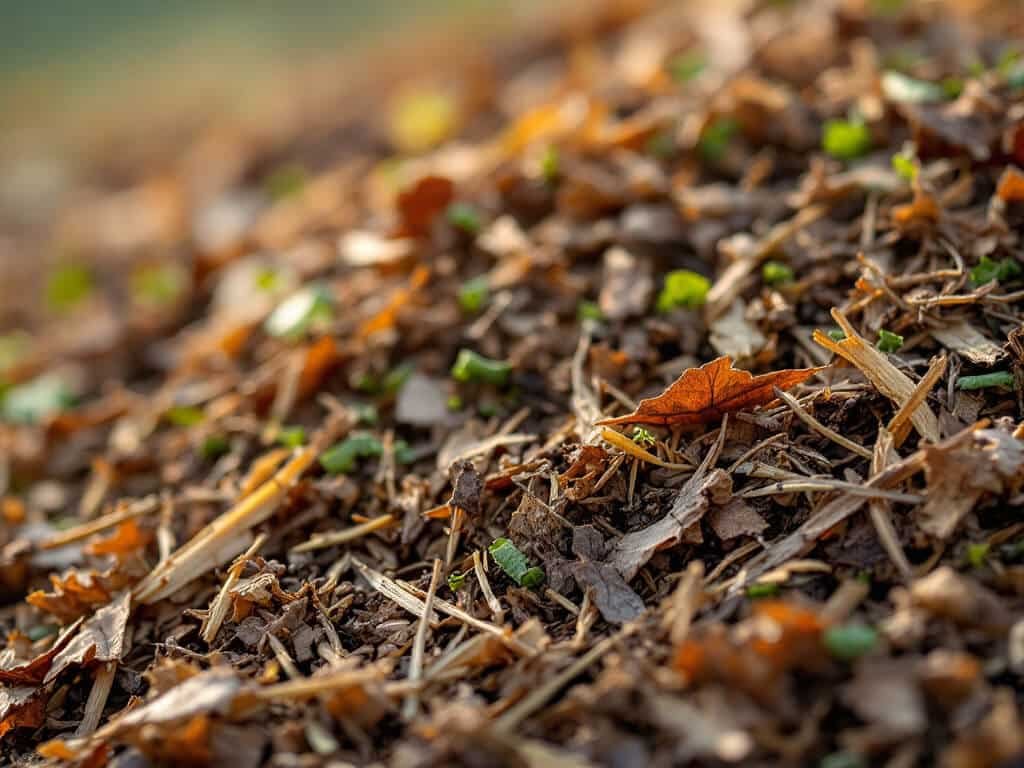
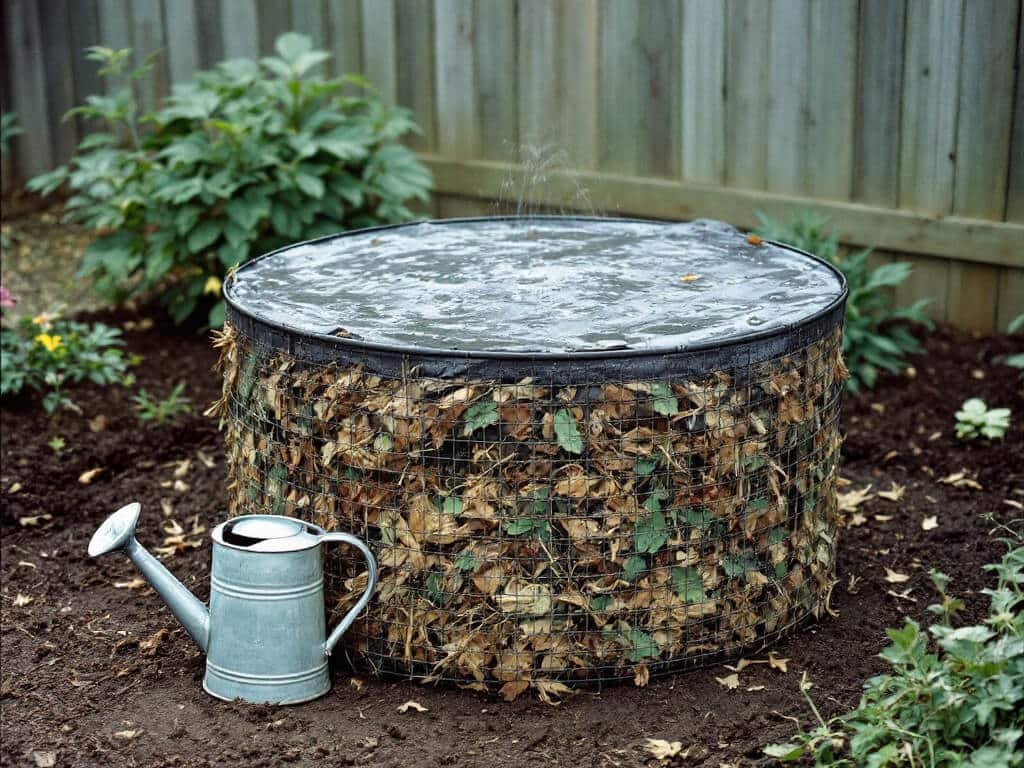
Keep the materials evenly moist, about like a wrung-out sponge, which is my rule of thumb rather than a measured standard. The brief’s real rule is simpler: moist, but not saturated. Too much water pushes out the air, and the pile goes airless.
Water as you build, mixing dry browns as you go, since dry leaves and straw soak up water slowly. Check again after heavy rain. A soggy pile needs dry carbon material and a good turning, not more patience.
Monitor Heat and Turn the Compost
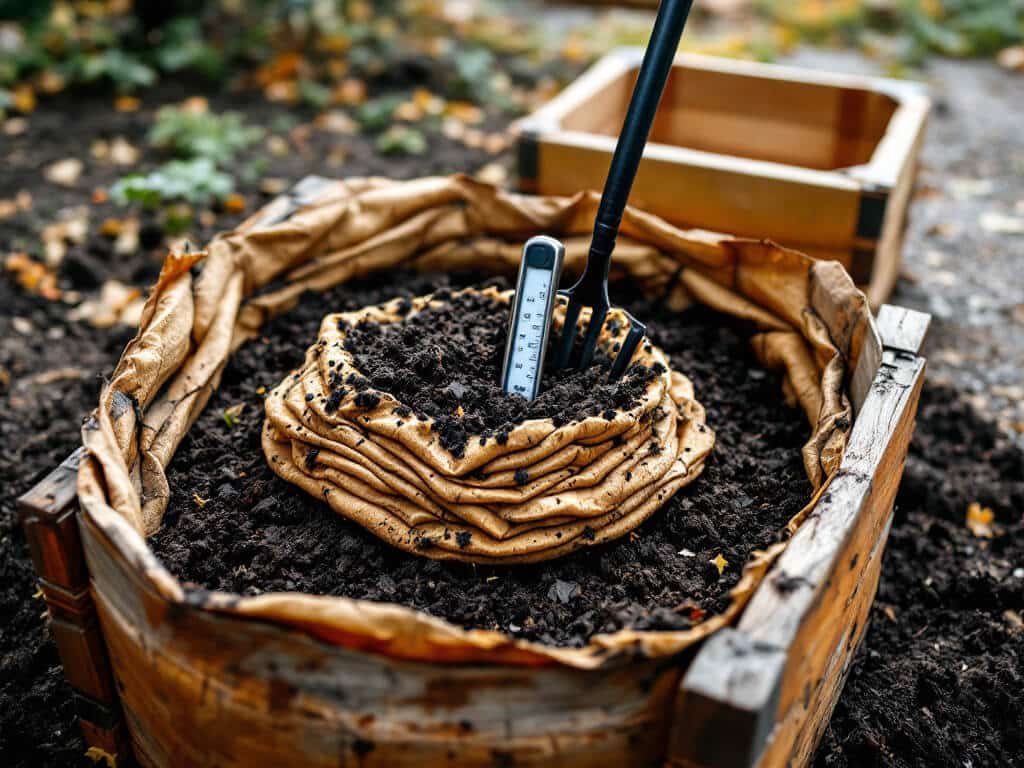
Turn the pile regularly and watch it with a thermometer. Managed composting standards call for 131 to 170°F for 15 days, with at least five turnings during that period. That is the target for a controlled windrow system, and a household pile may not match it exactly.
Turning does two jobs. It brings fresh oxygen into the pile, and it moves cooler outer material into the hot center so everything gets exposed to heat. Push the fork in, flip the outside to the middle, and break up clumps.
Household piles generally need extra curing time after the hot phase before the compost is ready to use.
Compost Manure Safely
Never put raw manure on beds where you grow food. Fresh manure can carry pathogens, excess nitrogen, and salts, so it has to be composted first.
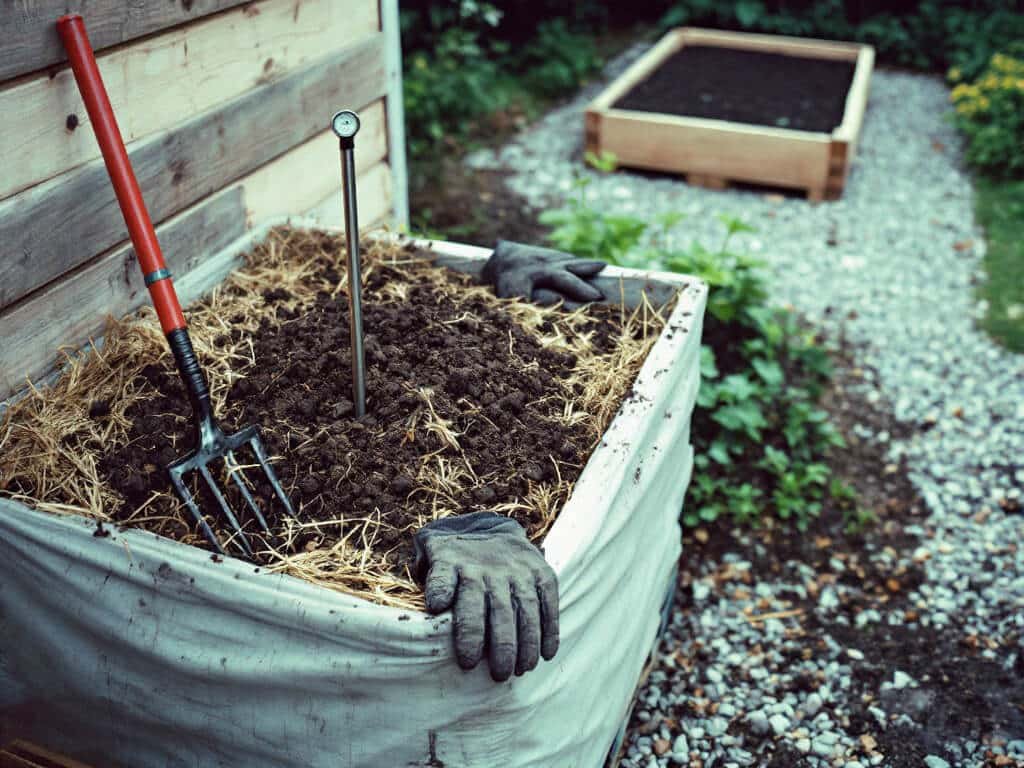
If you include manure from herbivorous livestock or poultry, the pile should reach about 140°F, which also helps neutralize weed seeds. High-temperature composting is what reduces pathogens, so the thermometer matters here more than anywhere else.
Do not use raw poultry, pig, dog, cat, or human waste on food gardens at all. Wear gloves, wash your hands afterward, and keep a separate set of tools for manure and unfinished compost so you aren’t carrying it onto clean beds.
If you do apply raw manure anyway, wait at least 90 days before harvesting crops whose edible parts don’t touch the soil, and 120 days for crops whose edible parts do. Composting it first is the better route.
Wait for Finished Compost
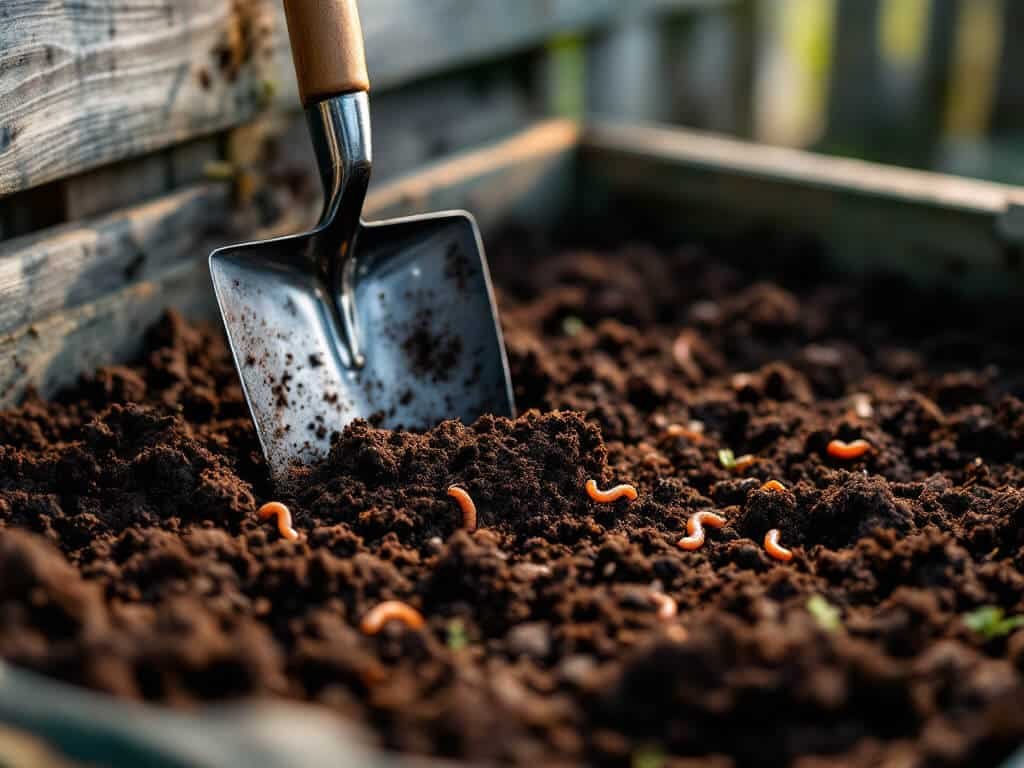
Use mature compost, not fresh or half-decomposed material. The hot phase is not the finish line. Finished compost is stable, and its nutrient content can vary widely depending on what went in.
The exact timeline depends on your ingredients, pile size, moisture, aeration, and temperature, so the brief gives no single number for a household pile. Judge by the material rather than the calendar. If it is still hot, still full of recognizable scraps, or smells sour, it isn’t done.
Immature compost can hurt plants. Waiting is cheaper than replacing seedlings.
Apply Organic Fertilizer Carefully
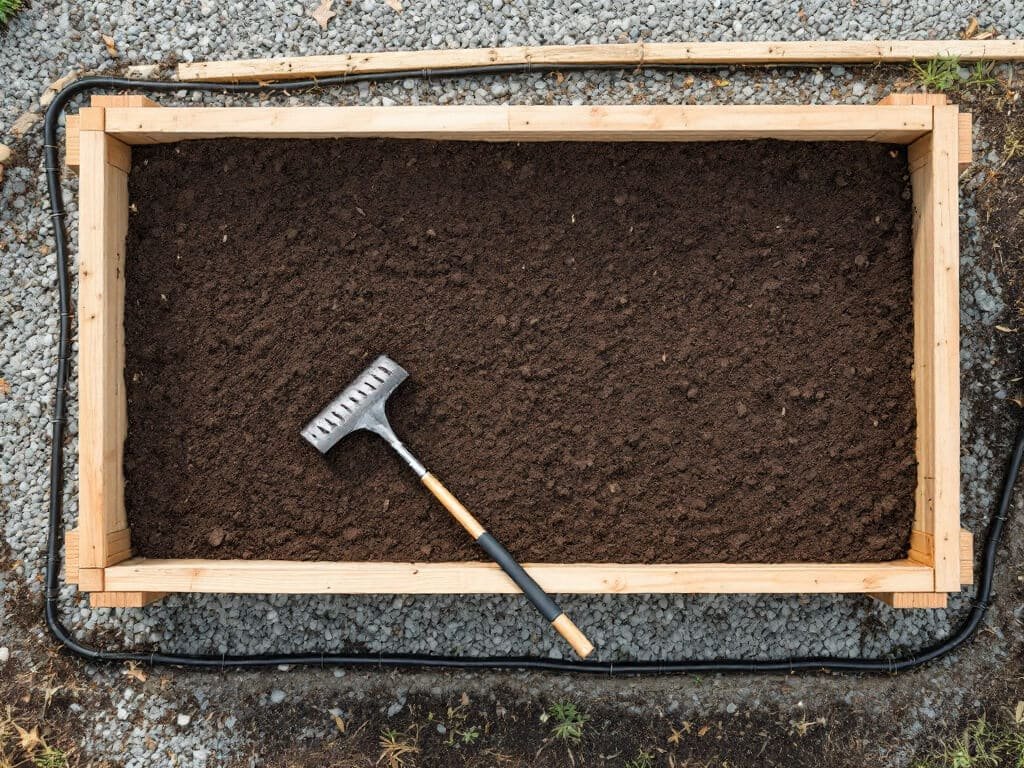
For new beds, spread a layer 3 to 4 inches deep and work it into the top 8 to 12 inches of soil. For established beds, apply about ¼ to 1 inch a year. Then adjust any supplemental nutrients based on a soil test rather than guessing.
More is not better here. Overapplied compost or manure can be salty and can stress plants, and excess nutrients can run off and pollute water. Apply before planting, or once a year to beds that are already planted.
Common Problems
Bad odor or slimy material. The pile is probably too wet or short on oxygen. Add dry carbon materials and turn it.
Pile does not heat. Add nitrogen-rich greens, correct the moisture, and mix the ingredients thoroughly.
Rats or other pests. Remove any meat scraps and keep food waste covered with carbon-rich material.
Weeds sprout from the compost. The pile didn’t get hot enough. Monitor the temperature and turn it so all the material cycles through the hot center.
Plants suffer after application. The compost or manure may be immature, salty, or overapplied. Stop adding it, test the soil, and go back to smaller amounts of finished compost.
Food-safety worries. Stick to properly composted materials, keep raw animal waste out of food beds, and observe the 90- and 120-day intervals if you use raw manure.
When to Expect Results
Active composting in a controlled system runs 15 days at 131 to 170°F, but household piles need more time to cure. Plan on the pile being finished when it is mature and stable, not on a fixed date.
Once you apply it, the gains you can count on are better soil structure and better water-holding capacity. Don’t expect it to feed heavy crops on its own, since it is a low-analysis fertilizer. Apply compost before planting or annually to established beds, and use your soil test to decide whether anything else is needed.
FAQ
Is compost the same as fertilizer?
Compost is mainly a soil amendment, and its fertilizer value is generally low compared with concentrated commercial fertilizers. Nutrient levels vary, so get a soil test or lab analysis when precise fertilizing matters.
Can fresh manure be used directly in a vegetable garden?
No. Fresh manure may contain pathogens, excessive nitrogen, or salts. If you use raw manure, wait at least 120 days before harvesting crops whose edible parts contact soil, or 90 days for other edible crops.
Can kitchen scraps be turned into organic fertilizer?
Yes. Compost them with yard materials, but leave out meat scraps, which attract rats and other pests. Let the compost mature before mixing it into garden soil.