
How to Grow Greenhouse Tomatoes Successfully
Greenhouse tomatoes fail in a handful of predictable ways: seedlings started too early, plants set out before the nights are warm enough, uneven watering, and flowers that never get pollinated in a closed space. This guide walks through each stage in order so you can avoid them.
Tomato is a tender perennial, but in zones 5 to 9 you grow it as a warm-season annual. It wants full sun in a sheltered greenhouse, even moisture, and moderately fertile, well-drained soil or a good growing bag. Cordon (indeterminate) types get tall and need support, while bush types stay more compact.
Most of the work is timing and consistency, not special equipment.
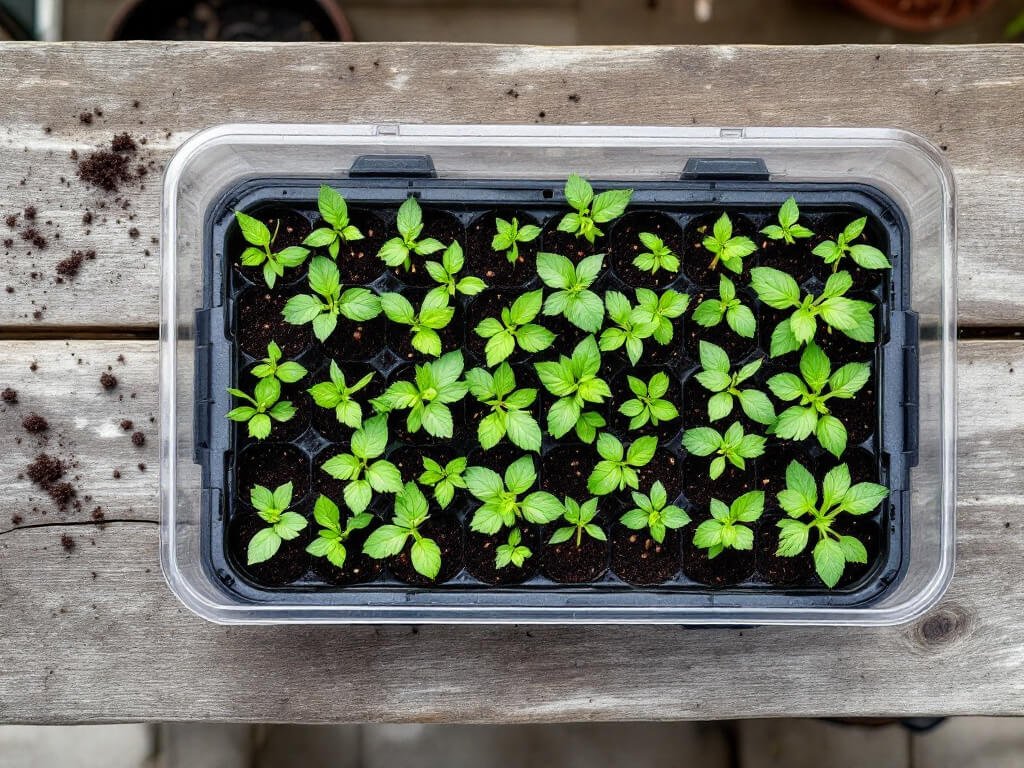
What You Need
Gather the basics before you sow anything:
Tomato seeds, or sturdy young plants if you would rather skip the seedling stage
A heated propagator or other warm germination setup that holds about 18°C (64°F)
Clean seed trays or small pots and a seed-starting medium
Final containers, growing bags, or a prepared greenhouse bed
Moderately fertile, well-drained growing medium or enriched greenhouse soil (a peat-free growing bag works)
Stakes, strings, or other supports for cordon plants
A watering can or irrigation system
High-potassium tomato fertilizer
A maximum-minimum thermometer
Disinfectant for supports and greenhouse surfaces
If you want to try ring culture, you will also need bottomless containers about 25 cm (10 in) wide and 30 cm (12 in) tall. More on that in the site preparation step.
The thermometer is the cheap item people skip. It shows you the overnight low, which is the number that decides when plants can safely go in.
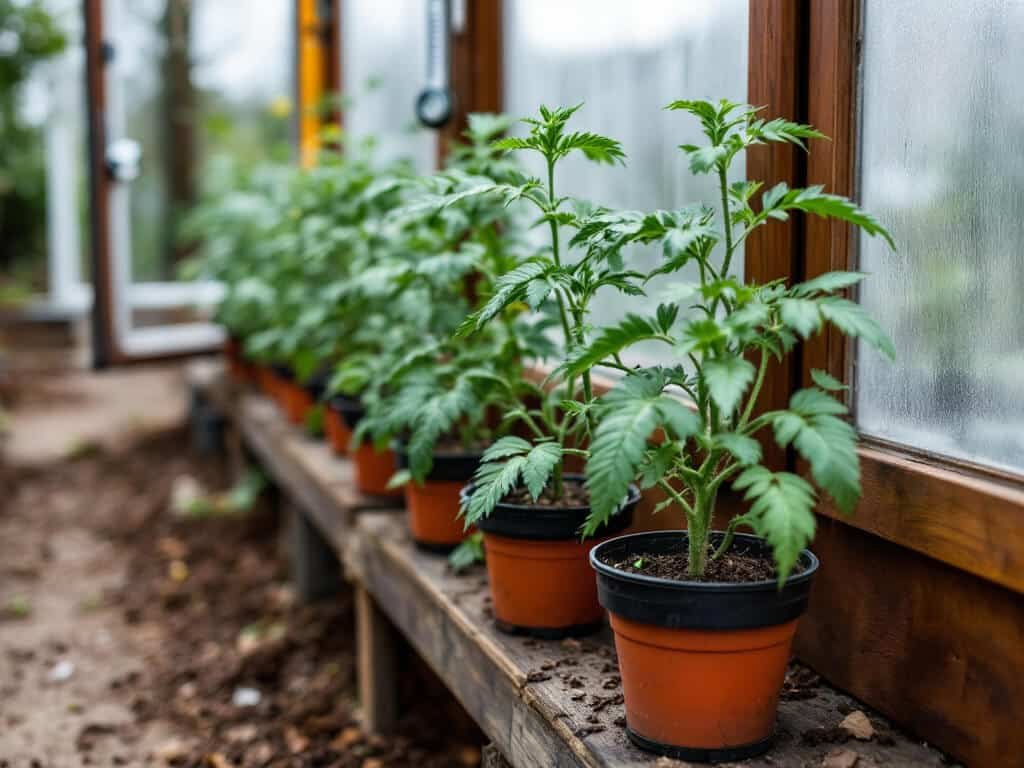
Sow Seeds at the Right Temperature
Sow greenhouse tomatoes from late February to mid-March, and hold the seed trays at about 18°C (64°F). A heated propagator makes this easy. Without one, you need another spot that stays reliably that warm.
Once seedlings are up, keep them in bright conditions at no less than 16°C (60°F). Light matters as much as warmth here. Seedlings in dim conditions turn leggy and weak, and sowing too early for the light you actually have is a common cause.
If your greenhouse is unheated and cold in late winter, I’d sow toward the later end of that window. A smaller, sturdy plant beats a tall, stretched one every time.
Harden Off Young Plants
Before plants move into their final positions, acclimatize them to greenhouse conditions rather than moving them straight from a warm propagator. The number to watch is 16°C (60°F), the minimum the plants need to keep growing well.
Do not put plants in an unheated greenhouse until frost danger has passed and temperatures are reliably suitable.
Check the maximum-minimum thermometer for a stretch of nights before you commit. If a cold snap shows up in the forecast after you have planted, you are better off having waited.
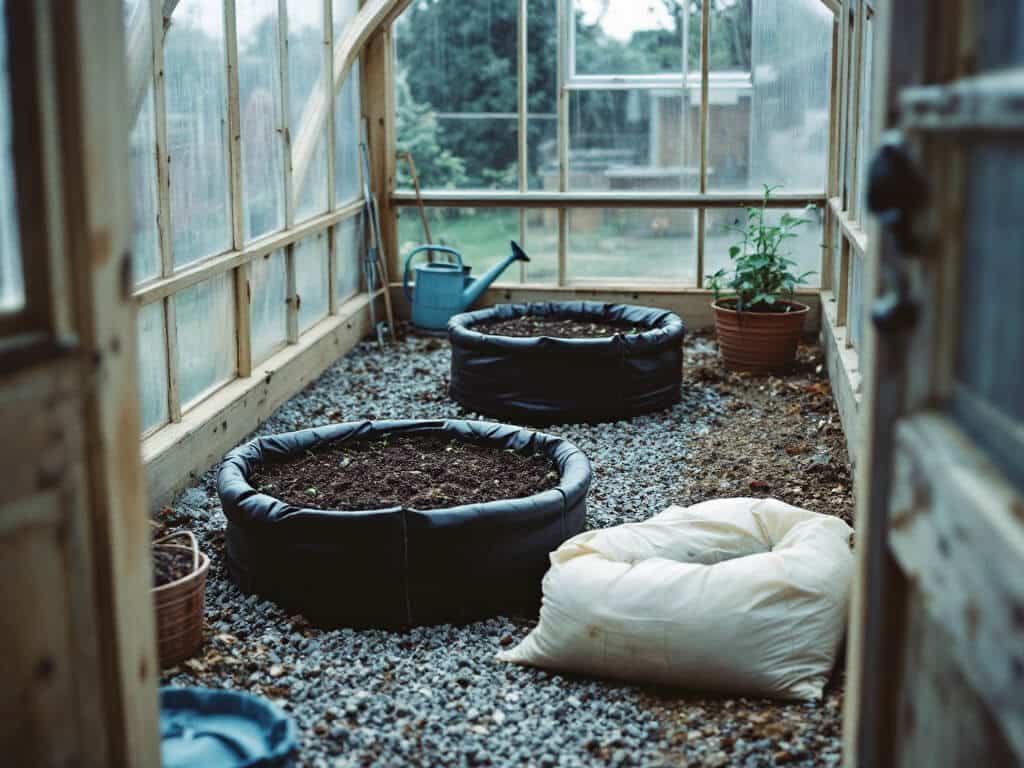
Prepare the Planting Site
You have three options: soil in a greenhouse bed, growing bags, or ring culture. Whichever you choose, the medium should be moderately fertile and well-drained. Moist is fine, saturated is not.
For ring culture, prepare a drained aggregate bed 15–25 cm (6–10 in) deep about two weeks before planting. The bottomless containers mentioned above (about 25 cm wide and 30 cm tall) sit on that bed.
If you use growing bags, choose a peat-free one. Disinfect any reused supports and wipe down greenhouse surfaces before the new crop goes in, since soil-borne pests and diseases are among the main problems with greenhouse tomatoes.
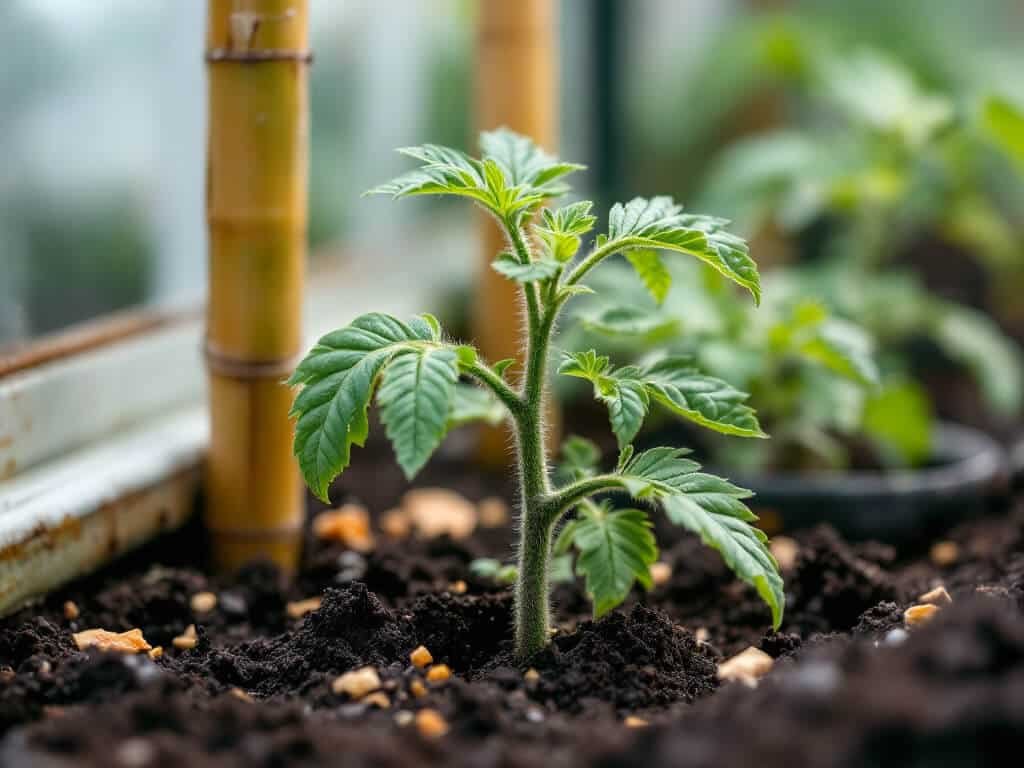
Plant Deeply and Space Correctly
Set each plant deeply, with the first leaves just above the soil, and space plants about 45–60 cm (18–24 in) apart in beds. Adjust within that range for the size of your cultivar. A tall cordon type wants the wider spacing, and a compact bush type can sit closer.
Do not crowd them. Overcrowding is one of the listed causes of leggy, weak plants, and it also cuts airflow, which works against you later when you are trying to keep humidity down.
Plant only sturdy, well-rooted plants, and only once conditions in the greenhouse are reliably above 16°C (60°F). In an unheated greenhouse, that usually means somewhere from April to early summer, depending on where you live.
Support and Train Plants
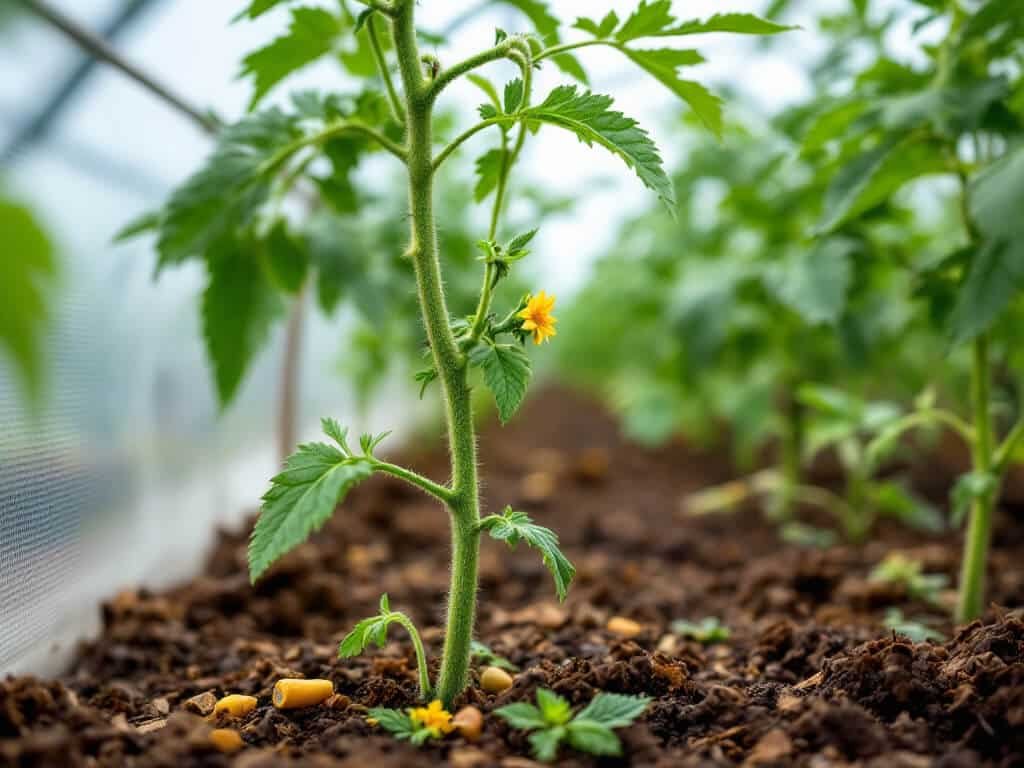
Install stakes or strings early, at planting time or soon after, so you are not driving a stake through established roots later. Cordon plants become tall and need that support for the whole season.
For single-stem cordon tomatoes, remove side shoots as they appear. Keep checking, because they keep coming. Bush types stay more compact and do not need the same attention.
Disinfect stakes and strings if you are reusing them from a previous season. It is a small job that helps keep disease from carrying over.
Ventilate and Pollinate
On warm days, open the doors and vents. Ventilation brings pollinating insects in, lowers excess heat, and helps control humidity.
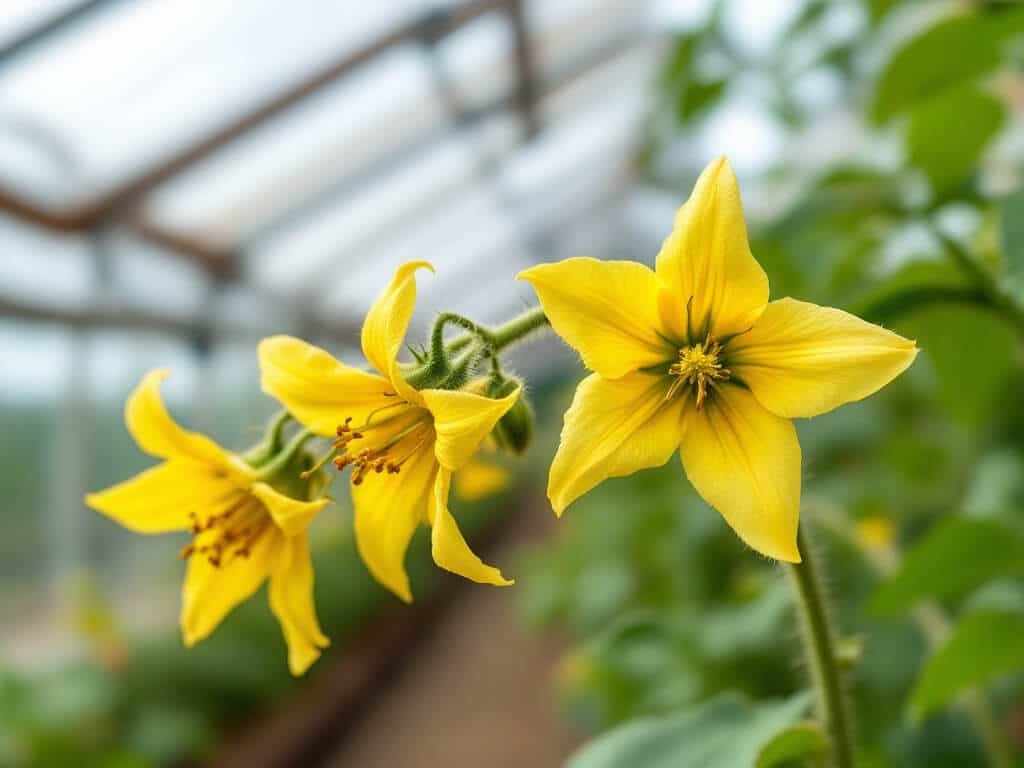
When flowers are fully open, gently shake or tap them to move pollen. This matters most when few insects get into your greenhouse. A light tap on the flower truss is enough, and you do not need to do anything fancy.
Poor fruit set is the usual result when pollen does not move in a closed greenhouse, so make this a habit once flowers start opening.
Water Consistently
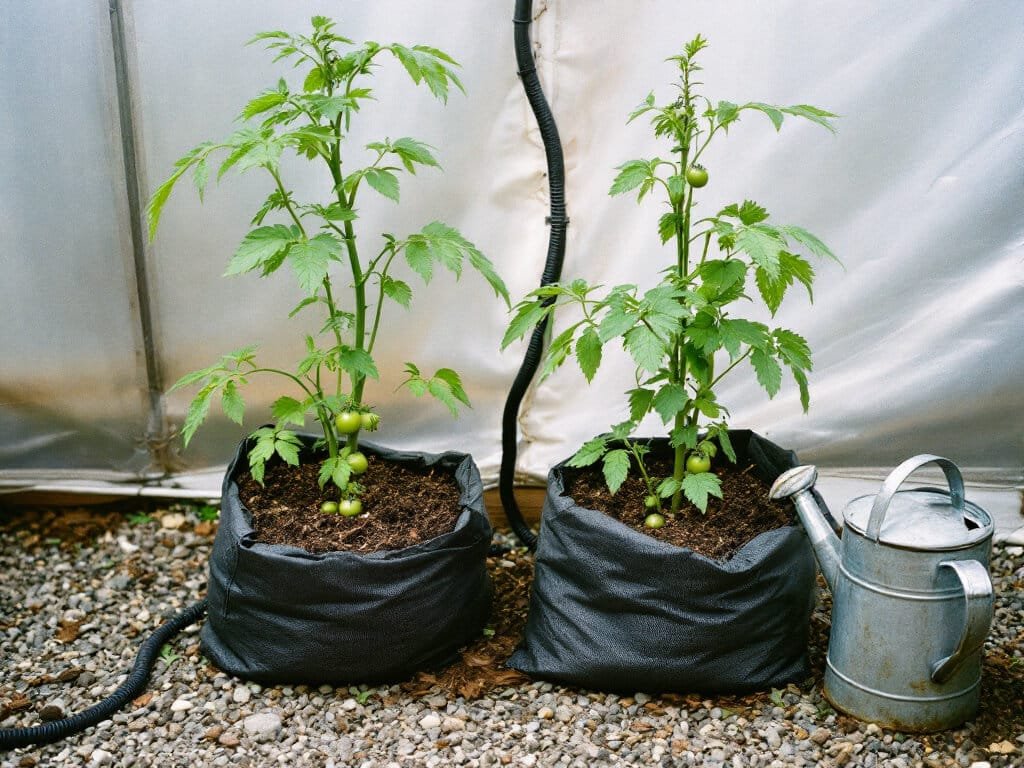
Keep the growing medium evenly moist. In hot weather, check plants daily, because containers and growing bags can need water every day.
The goal is steady moisture. Avoid the cycle of severe dryness followed by a heavy soaking. That swing is the thing that causes trouble, and you should not let plants repeatedly dry out.
Soggy soil is a problem too, so do not respond to a missed watering by flooding the bag. Water often enough to stay even, and keep the medium moist but not saturated.
Feed and Manage the Crop
Wait until the first fruits begin to swell, then apply a high-potassium liquid fertilizer every 10–14 days, following the product label. A tomato fertilizer is the right choice here, and inadequate potassium is one cause of uneven ripening.
Manage heat and light as the summer goes on. Too much of either can cause trouble, so use ventilation or shade to keep conditions under control. Open vents earlier on bright mornings rather than waiting until the greenhouse is already hot.
Inspect plants regularly while you are doing all this. Spotting whitefly or tomato moth early gives you more options for dealing with them.
Common Problems
Blossom-end rot
This is usually associated with irregular water supply. Keep moisture even and do not let plants repeatedly dry out.
Poor fruit set
Pollen is not moving enough in a closed greenhouse. Ventilate and gently shake open flowers.
Leggy, weak plants
The causes are insufficient light, overcrowding, or sowing too early for your greenhouse conditions. Provide bright conditions, give plants adequate space, and do not start them earlier than the greenhouse can support.
Leaf disease or grey mould
Reduce excess humidity, ventilate, and keep foliage as dry as practical. Remove affected material using clean tools. Blight is also on the list of main diseases, so act quickly when you see leaf problems.
Greenback or uneven ripening
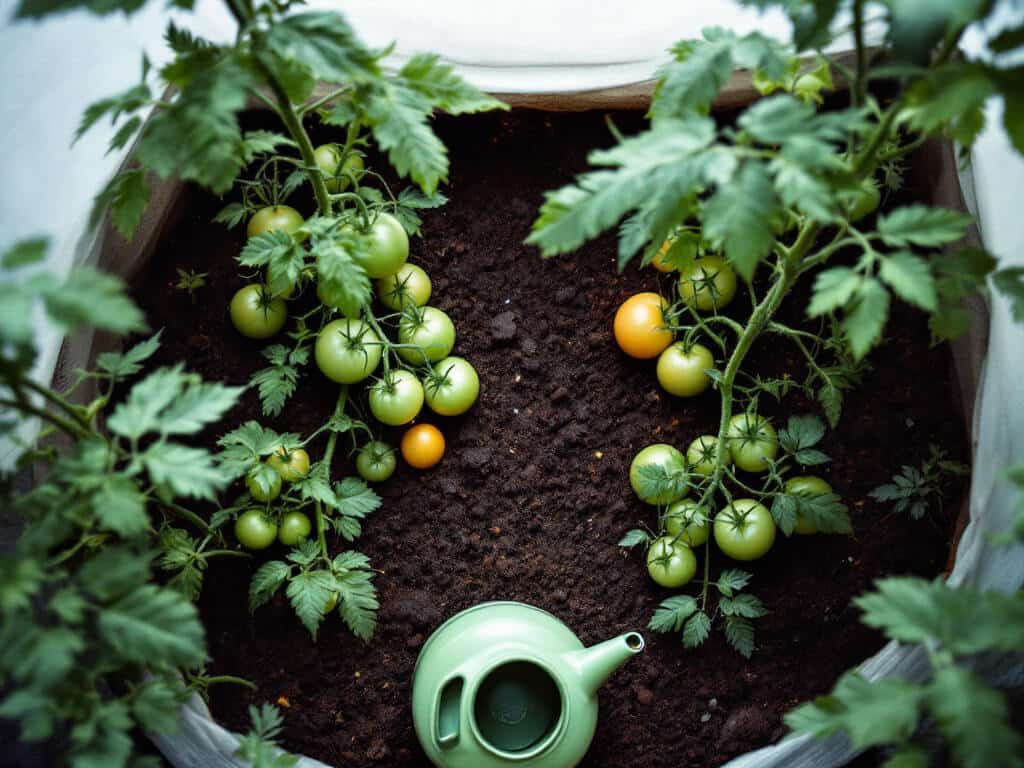
Excessive heat or light, inconsistent watering, or inadequate potassium can all cause this. Improve ventilation and shading, water steadily, and use tomato fertilizer as directed.
Whitefly or tomato moth
Inspect plants regularly and use a control method that is permitted for edible crops. Remove heavily affected plant material and keep the greenhouse clean.
When to Expect Results
Here is the sequence from seed to fruit:
Germination: Seeds sown from late February to mid-March germinate at about 18°C (64°F).
Seedling establishment: Keep seedlings bright and at least 16°C (60°F) while they grow on.
Planting: Move plants to final positions once conditions are reliably above 16°C (60°F). In unheated greenhouses that is commonly April to early summer.
Harvest: Fruit ripens after flowering and pollination through the summer crop period.
I can’t give you an exact harvest date, and neither can anyone else. It varies with the cultivar, light, temperature, and when you planted. Your max-min thermometer and your own notes will tell you more about your greenhouse than any general calendar.
FAQ
When should greenhouse tomatoes be planted?
Start seeds from late February to mid-March. Move sturdy plants into their final greenhouse positions once temperatures are reliably above 16°C (60°F) and frost risk has passed.
How often should greenhouse tomatoes be watered?
Water often enough to keep the growing medium evenly moist. Container plants may need daily watering in hot weather. Avoid irregular cycles of severe drying followed by flooding.
How do greenhouse tomatoes get pollinated?
Open vents to let pollinating insects in. When insect activity is limited, gently tap or shake fully open flowers to help transfer pollen.