
Composting Corn Husks: A Simple How-To
Composting corn husks works fine, but only if you stop them from sitting in the pile as a thick, slow-to-rot mat. Husks are a carbon-rich “brown” material, so they need to be broken up, paired with nitrogen-rich “greens”, and kept moist and aerated. Do those things and they break down like any other plant residue.
Collect husks whenever you shuck fresh corn or clear the stalks after harvest. The steps below cover how to prepare them, build the pile, and manage heat and moisture so you end up with dark, crumbly compost.
What You Need
Gather this before you start. None of it is specialized.
– A compost bin or open pile. For relatively fast hot composting, plan on at least 1 cubic yard, roughly 5 feet wide by 5 feet long by 3 feet high.
– Corn husks, ideally chopped, shredded, torn, or mowed into smaller pieces.
– Nitrogen-rich green materials such as vegetable scraps, fresh grass clippings, or manure.
– Dry, coarse material such as leaves, straw, or small wood pieces, in case the pile turns wet or compacted.
– Water, a pitchfork or compost aerator, a compost thermometer, and gloves.
You are aiming for a moisture level of about 40 to 60 percent. The material should feel moist, but water should not run out of a squeezed handful.
Prepare the Husks
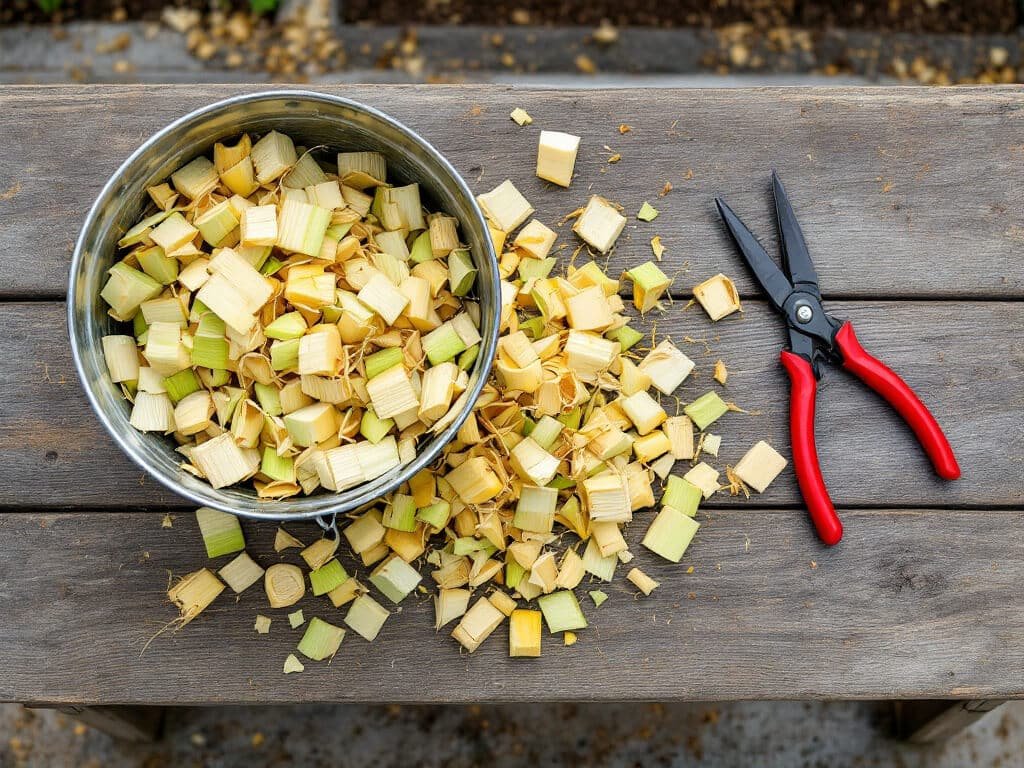
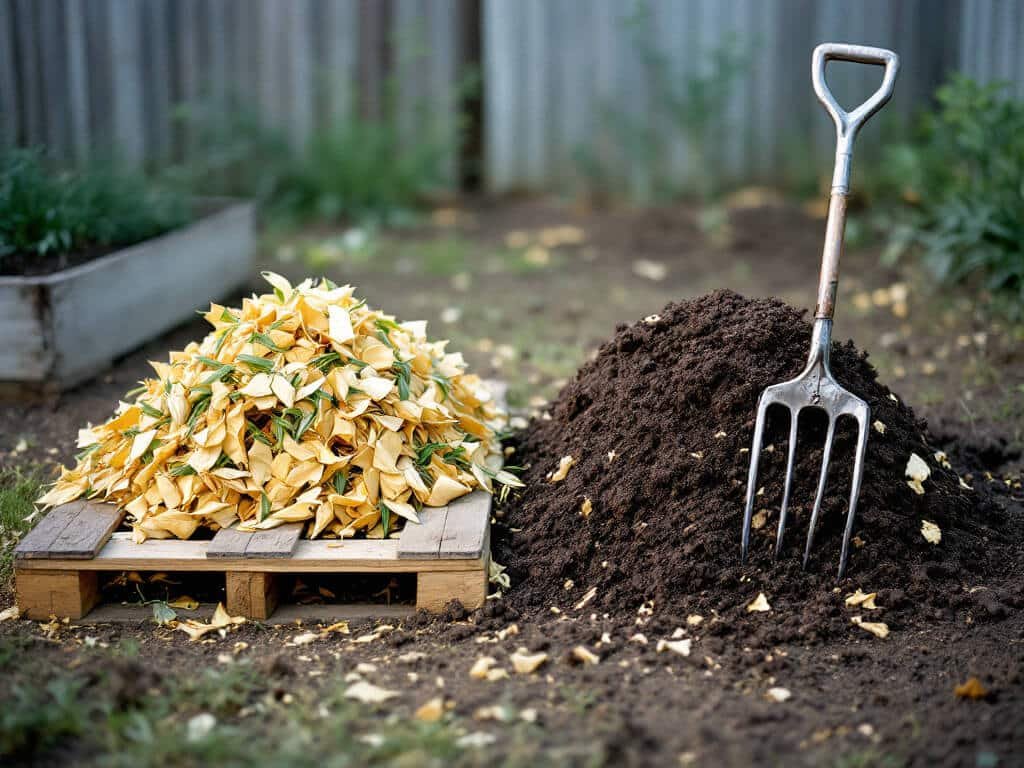
Break the husks into smaller pieces before they go in the pile. Chop them, shred them, tear them by hand, run the mower over them, or smash them flat. Smaller pieces break down faster because microorganisms have more surface to work on.
The extension sources I reviewed don’t give one required piece size, so don’t fuss over exact measurements. Aim for pieces small enough that they mix into the pile instead of lying in sheets. A bucket of husks and a pair of garden shears is plenty for a small batch. For a bigger pile, a mower pass over a heap of husks on the lawn saves time.
Don’t add husks whole in a thick layer. They mat down, shed little air, and stay recognizable long after everything around them has turned to compost.
Build a Balanced Pile
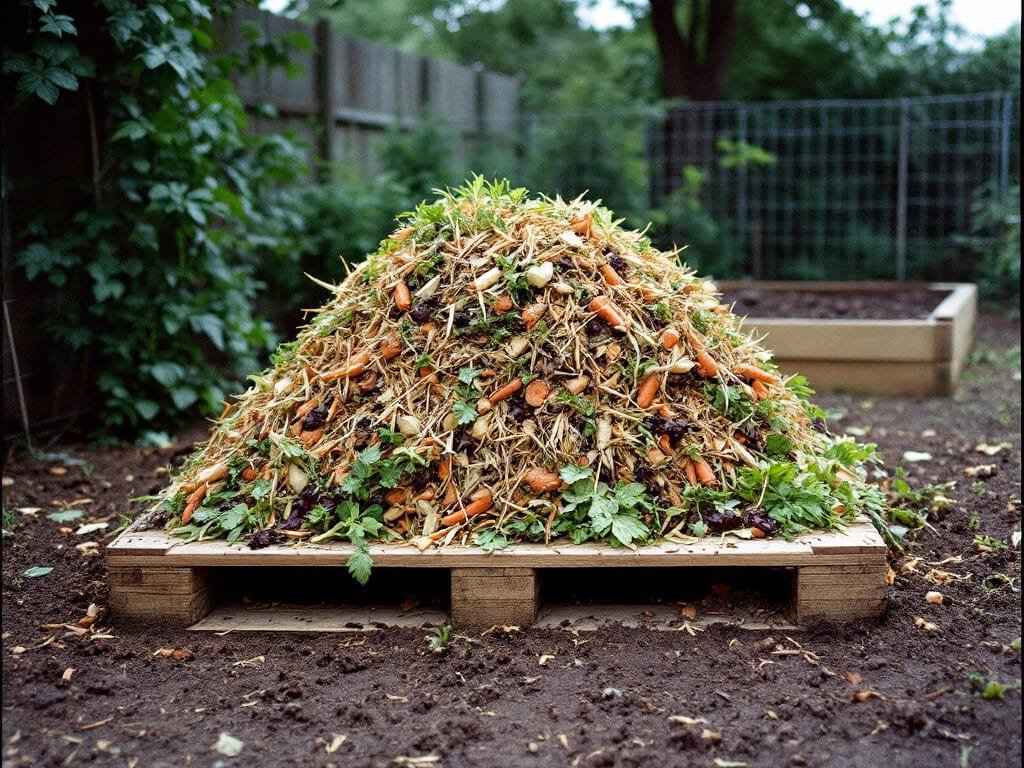
Mix the husks with nitrogen-rich greens to bring the pile toward a carbon-to-nitrogen ratio near 30:1, which is the general target for hot composting. Husks are mostly carbon, so on their own they are short on the nitrogen that feeds the microbes doing the work.
Vegetable scraps, fresh grass clippings, and manure all supply that nitrogen. Mix them through the husks as you build instead of stacking them in separate bands. A thorough mix gets decomposition going evenly.
Size matters too. For relatively fast hot composting, build the pile to about 1 cubic yard, which is roughly 5 feet by 5 feet by 3 feet. A smaller heap can still rot down, but it is less likely to heat up well.
Moisten the Materials
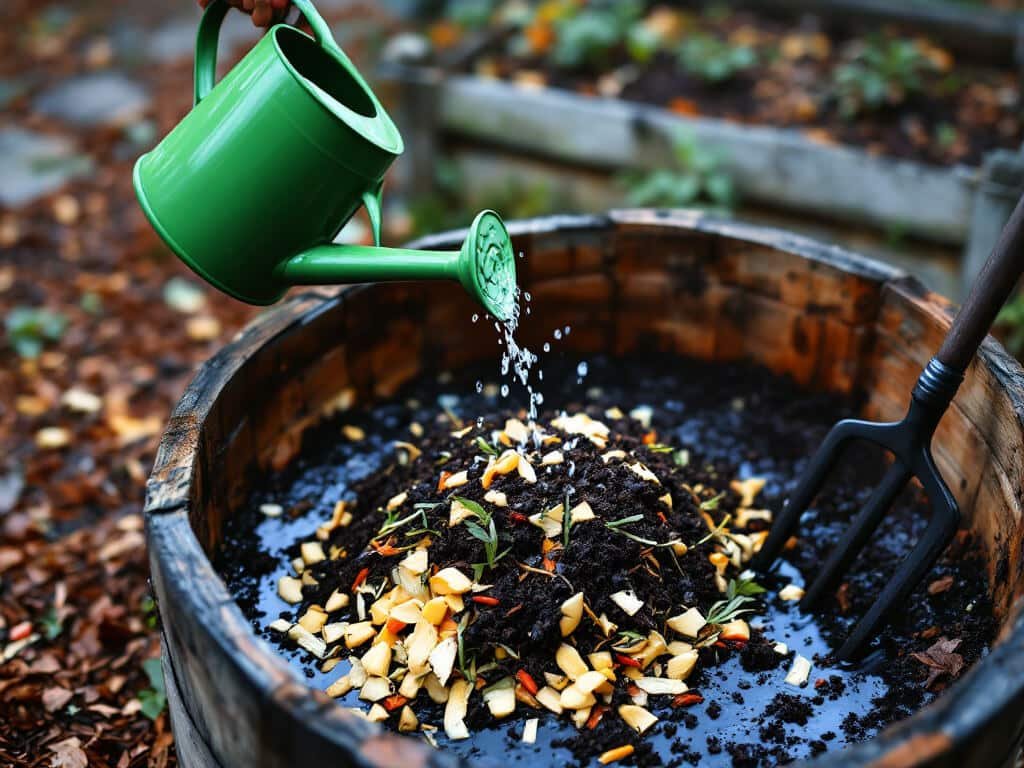
Add water as you mix until the pile feels like a wrung-out sponge, which puts moisture in the useful range of about 40 to 60 percent. Check by squeezing a handful. It should feel damp, with no more than a drop or two of water coming out.
Dry husks and other browns soak up water slowly, so wet the pile in stages as you build it rather than soaking the top at the end. If you overshoot, mix in dry, coarse material such as leaves or straw. If the pile dries out later, add water when you turn it.
Monitor the Temperature
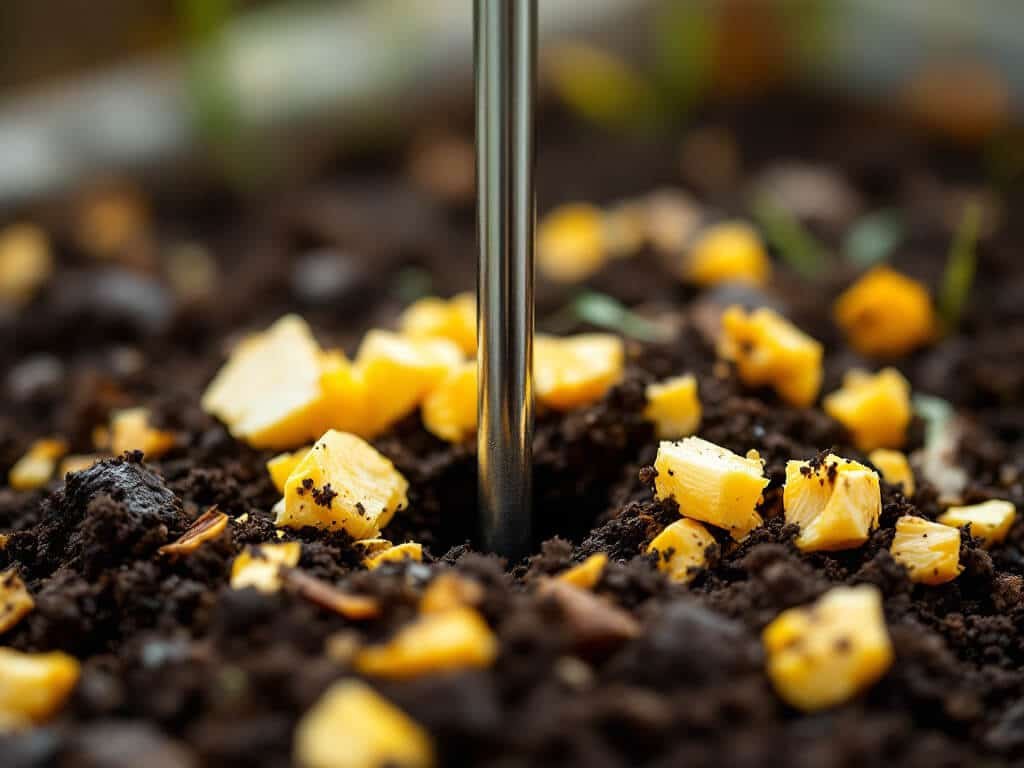
A well-managed pile may heat to about 120 to 150°F. Push a compost thermometer into the center to see where you stand.
Those numbers matter for more than speed. Temperatures above 130°F kill most human and pet pathogens, and temperatures above 140°F destroy most weed seeds. If you are composting husks alongside manure or weedy material, heat is what makes the finished compost safer to use.
Watch for the other end of the range, too. If the pile reaches about 160°F, turn it to release heat. Excessive heat can kill the decomposers and slow the whole process down.
Turn the Pile
Turn the pile with a pitchfork about once a week during the first 4 to 6 weeks. Turning brings in oxygen, which the microbes need, and it moves the cooler outer material into the hot center.
Each time you turn, check moisture. Add water if the pile has dried out. If it feels soggy or compacted, fold in dry, coarse material to open up air space.
Turning also helps with the husks specifically. Any pieces that were left too large or stuck together get pulled apart and redistributed, so they don’t stay in one layer. If the pile hits about 160°F between turns, turn it right away rather than waiting for your weekly schedule.
Cure the Compost
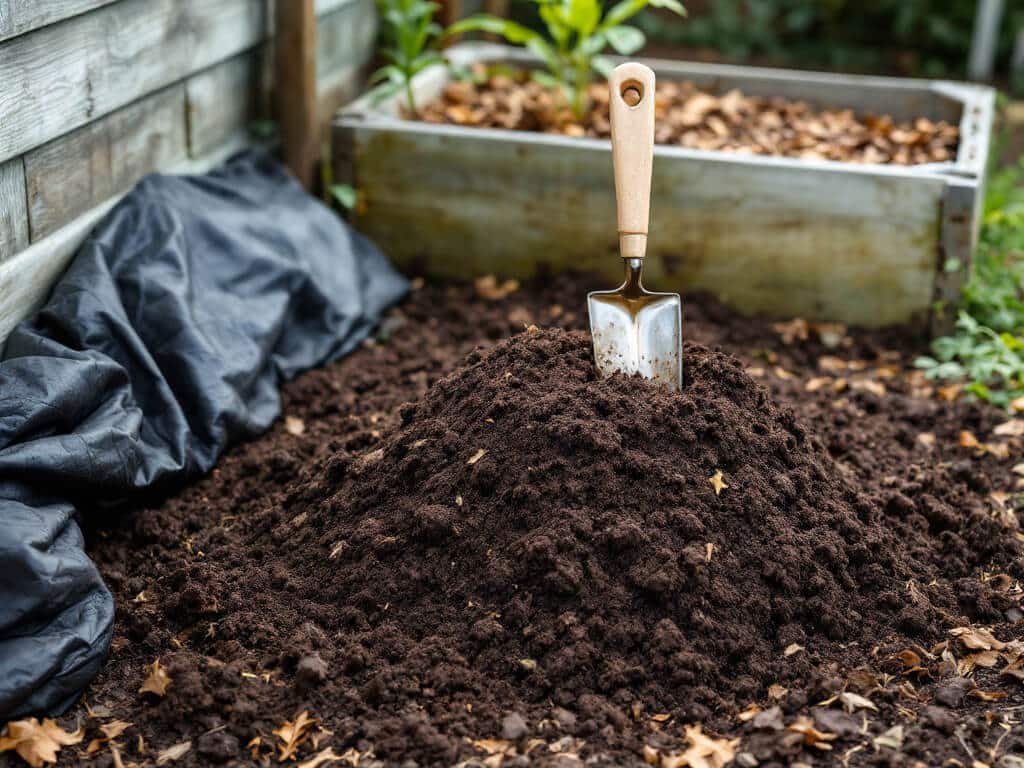
Once the hot phase winds down, let the pile cure for another 2 to 3 months. During curing, temperatures commonly fall to 80°F or lower, and the material finishes breaking down at a slower pace.
You don’t need to do much during this stage. Leave the pile alone, keep it from drying out completely, and resist the urge to use it early. The goal is compost that is dark and crumbly, with no recognizable fresh ingredients left in it. Finished compost can go into garden soil, though the sources I reviewed don’t give a crop-specific application rate.
Common Problems
Most trouble with husks comes down to oxygen, moisture, or particle size. Here is what to look for and what to do.
Husks remain recognizable
Chop or shred them before adding them, and mix them through the pile instead of leaving them in a thick layer. If you already have a layer of intact husks, pull it apart when you turn the pile.
The pile smells rotten
Turn it to bring oxygen back in. If it is overly wet or compacted, mix in dry, coarse material as you go. Poorly aerated or soggy piles are also the ones that attract pests, so fixing the smell helps with that too.
The pile does not heat
Work through the likely causes. Build the pile up toward about 1 cubic yard, add nitrogen-rich materials, check the moisture, and mix everything thoroughly.
The pile is too dry
Add water while you turn the pile. Stop when the material is moist but does not release water when squeezed.
The pile is too wet
Mix in dry, porous material and turn it to improve airflow. A squeezed handful should give up no more than a drop or two.
The pile overheats
Turn it when the temperature approaches or passes 160°F. Too much heat can slow decomposition, so don’t leave it be.
When to Expect Results
A regularly turned, properly balanced pile may stay hot for several weeks to about a month. After that comes roughly 2 to 3 months of curing.
The sources I reviewed don’t give a dependable husk-specific number of days to finish, and I won’t invent one. Judge the pile by how it looks. When it is dark and crumbly and you can’t pick out fresh ingredients, it is done. Size, mix, moisture, and how often you turn will all move that date around.
FAQ
Can corn husks go in compost?
Yes. Corn husks are compostable plant material and work mainly as a carbon-rich brown ingredient. Mix them with nitrogen-rich materials rather than adding them as a dense layer.
Should corn husks be chopped before composting?
Chopping, shredding, tearing, mowing, or smashing coarse husks can speed decomposition by increasing surface area. The extension sources I reviewed don’t specify one required cutting size.
How wet should compost containing corn husks be?
Keep it near 40 to 60 percent moisture, with a wrung-out-sponge feel. It should feel moist, but water should not run from a squeezed handful.