
Blue Star Juniper Companion Plants for Sunny Beds
Choosing blue star juniper companion plants comes down to one question: what else wants the same dry, sunny spot? This juniper is an evergreen dwarf conifer that stays about 1 to 3 feet tall and 1 to 4 feet wide, with blue-gray foliage all year. It has no flowers to speak of, so the plants beside it do the seasonal work.
Below are eight plants that share its conditions, four to keep away from it, and a layout that leaves room for everything to reach mature size.
Why pairings matter for blue star juniper
Blue star juniper is hardy in USDA zones 4 to 8 and prefers full sun. It tolerates drought once established but performs poorly in wet soil. It will grow in loam, sand, clay, or chalk, and in acidic, neutral, or alkaline ground, as long as the soil drains. Waterlogged ground is the one thing it won’t accept.
That makes watering the real test for any neighbor. If a companion needs steady moisture, you will either drown the juniper or starve the companion. Pick plants that want the same dry, sunny conditions and the pairing mostly takes care of itself.
A word on the idea that certain plants repel pests or boost their neighbors. Extension research does not reliably support it, and many claims rest on folklore or thin evidence. The plants below are chosen because their growing conditions match, not because they protect the juniper. Blue star juniper can still pick up aphids, scale, conifer red spider mite, caterpillars, and bagworms, so keep an eye on it whatever you plant beside it.
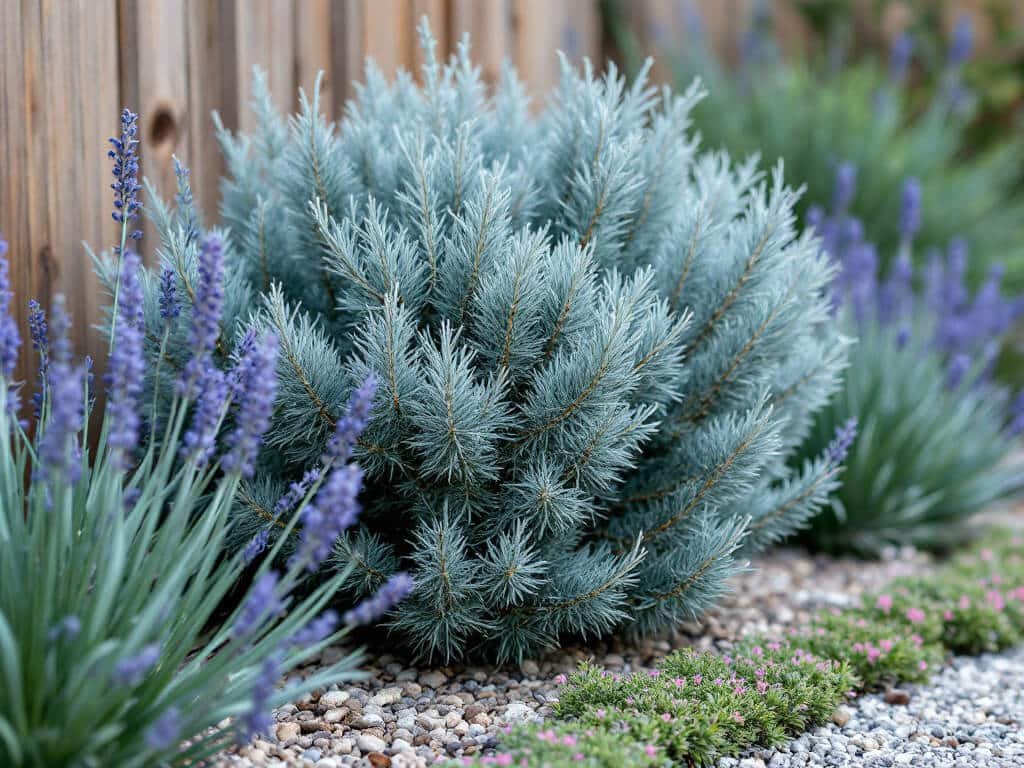
Best companion plants for blue star juniper
All of these share the juniper’s need for sun and drainage. Measure spacing from the juniper’s mature branch spread, not from the small plant you bought.
Lavender
Lavender wants full sun, good drainage, and fairly dry conditions, which is the same deal the juniper expects. It adds summer flower color against the blue-gray foliage. Plant it about 18 to 24 inches from the juniper’s mature branch spread, and adjust for the cultivar you buy.
Blue fescue
Blue fescue gives you fine-textured foliage that contrasts with the juniper’s dense, prickly branches. Its sun and drainage needs match. Place it about 12 to 18 inches from the juniper’s mature edge, depending on how wide your cultivar gets.
Creeping thyme
Creeping thyme is a low groundcover that uses almost no vertical space, so it won’t shade or crowd the juniper. Its flowers draw pollinators. Keep it outside the juniper’s eventual canopy, at least 12 inches from the center of the plant.
Sedum or stonecrop
Sedum asks for sun and excellent drainage, the same as the juniper, and adds seasonal flowers. Leave 12 to 18 inches between the juniper’s mature edge and the sedum. Check the species you are buying, because spread varies.
Little bluestem
Little bluestem is an upright grass with fine foliage and fall color, and it doesn’t need moist soil. It is taller and more upright than most of the other options, so it works best a bit behind the juniper. Add the grass’s mature width to the juniper’s mature spread and plant at that distance instead of squeezing it in.
Salvia nemorosa cultivars
These give you summer flower spikes in a full-sun, well-drained bed. Follow the spacing on the plant label for your cultivar. Keep the stems clear of the juniper’s center so air can move around the shrub.
Heather
Heather offers low evergreen foliage and seasonal flowers in the same sunny, well-drained conditions. It pairs well at the front or edge of a bed. Leave room for its mature spread and don’t plant into the juniper’s crown.
Dwarf mugo pine ‘Mops’
‘Mops’ adds dark-green evergreen texture next to the juniper’s blue-gray. The catch is size: it can become a substantial shrub, so it needs a bigger bed than the other plants here. Follow the nursery’s mature-width spacing and don’t let established crowns overlap.
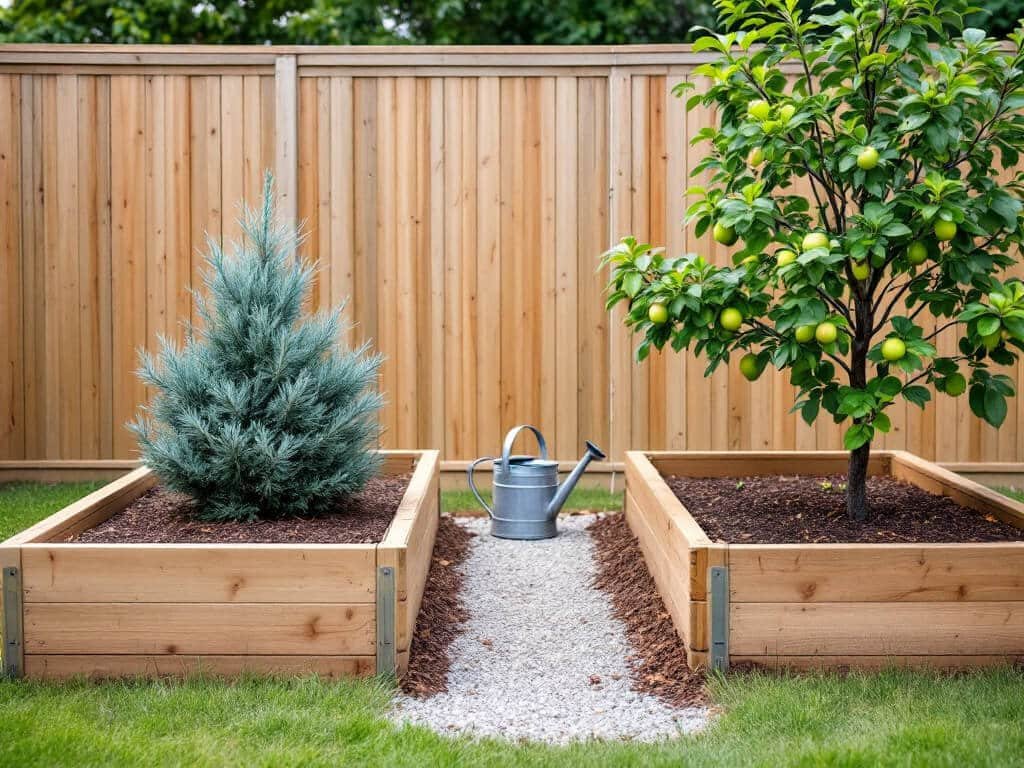
What not to plant with blue star juniper
Two problems show up here: a disease cycle and a mismatch in water needs.
Keep susceptible apples, crabapples, hawthorns, and quinces away from junipers, because cedar apple rust uses both plants to complete its cycle.
Apple
Junipers can serve as an alternate host for cedar apple rust, which can damage apple foliage and fruit. If you grow apples, don’t put a juniper close to them. This is the most practical reason to think twice before planting a juniper near an orchard or fruit corner.
Crabapple
Crabapple shares the same cedar apple rust cycle with junipers. Separation is the better choice wherever rust is a concern. A crabapple used as a lawn specimen is a common case, so check what is nearby before you plant.
Hawthorn
Hawthorn is listed among the rosaceous hosts that can be affected by cedar apple rust associated with junipers. Avoid close pairing. If the hawthorn is already there, put the juniper elsewhere.
Quince
Quince can take part in the same disease cycle. Don’t plant it immediately beside blue star juniper.
Moisture-loving plants
Anything that needs consistently wet or poorly drained soil is a bad match, because this juniper runs into trouble in waterlogged conditions. Possible problems include Phytophthora, canker, honey fungus, and brown-patch issues. Keep thirsty plants in a different bed with their own watering schedule.
Large, aggressive shrubs
Big, dense shrubs compete for the same dry root zone and can crowd the juniper out of its mature form. Plan by mature width instead of container size. A shrub that looks small in a 3-gallon pot can overrun a plant that tops out at 1 to 4 feet wide.
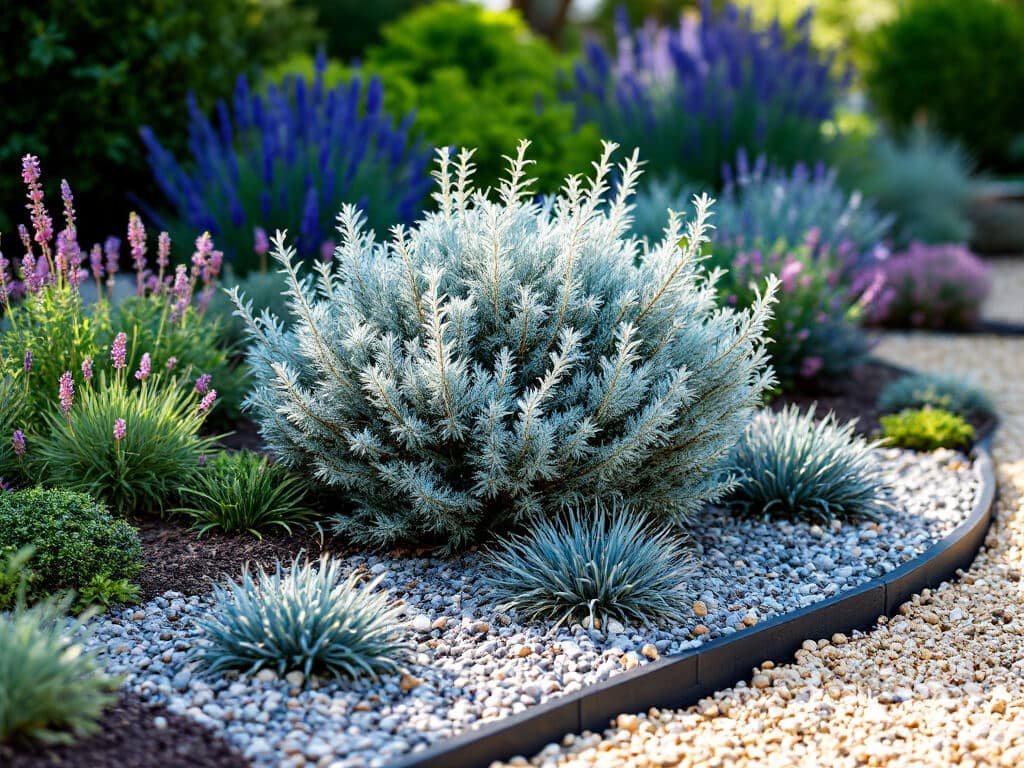
Layout and spacing
Put the juniper in the sunniest, best-drained part of the bed, then work outward from there with lower plants in front. Group the taller or showier plants separately so each one has room for its mature spread.
Front edge: creeping thyme, sedum, or blue fescue, at the spacing given above.
Mid-bed color and texture groups: lavender, salvia, heather, or little bluestem, each in its own clump rather than scattered through the juniper.
Back or side: little bluestem, if you want height behind the juniper, or ‘Mops’ mugo pine if the bed is large enough for it.
Containers: one juniper with only compact plants that tolerate the same drainage and watering pattern.
Leave every plant clear of the juniper’s crown and plant for mature size, not what you see at the garden center.
FAQ
Can blue star juniper grow with lavender?
Yes. Both prefer full sun and well-drained soil, so they are culturally compatible. Leave enough space for each plant’s mature spread.
Should blue star juniper be planted near apple or crabapple trees?
Avoid close planting where cedar apple rust is a concern. Junipers can serve as an alternate host for the disease that affects apples and crabapples.
Does blue star juniper need a companion plant to repel pests?
No. No verified companion plant is needed for pest control. Extension sources caution that many companion-planting claims rest on folklore or limited evidence rather than consistent trials.