
Choosing brunnera companion plants mostly comes down to matching one spot: cool, shaded, and evenly moist. Brunnera is a clump-forming perennial that stands about 18 inches tall (roughly 45 cm, depending on the cultivar), with heart-shaped leaves and small blue flowers in spring. Anything you plant beside it should be happy with the same light and water.
One caution before you shop. The RHS record I’m working from doesn’t give USDA hardiness zones for brunnera, so check the zone rating on the specific cultivar’s tag before you buy.
Why pairings matter for brunnera
Brunnera wants partial to full shade and soil that is evenly moist but drains well. Hot, exposed conditions can scorch the leaves. That makes light and water the two things to check on any neighbor.
A companion that wants more sun or drier soil forces you to choose. Either brunnera gets stressed or the other plant does. Plants that share the same needs let you water, mulch, and shade the whole bed one way.
Brunnera is also listed as generally pest-free and disease-free, so you aren’t picking partners to fend off a known problem. The job is simpler: build a good-looking shade bed where everything gets what it needs. Contrast is the main design tool here, in leaf size, leaf texture, and bloom timing.
Best companion plants for brunnera
Spacing is the same story for every plant below. The source has no fixed brunnera-to-companion distance, so use the mature spread on each plant’s label. I’d rather tell you that than hand you a made-up number.
Hosta
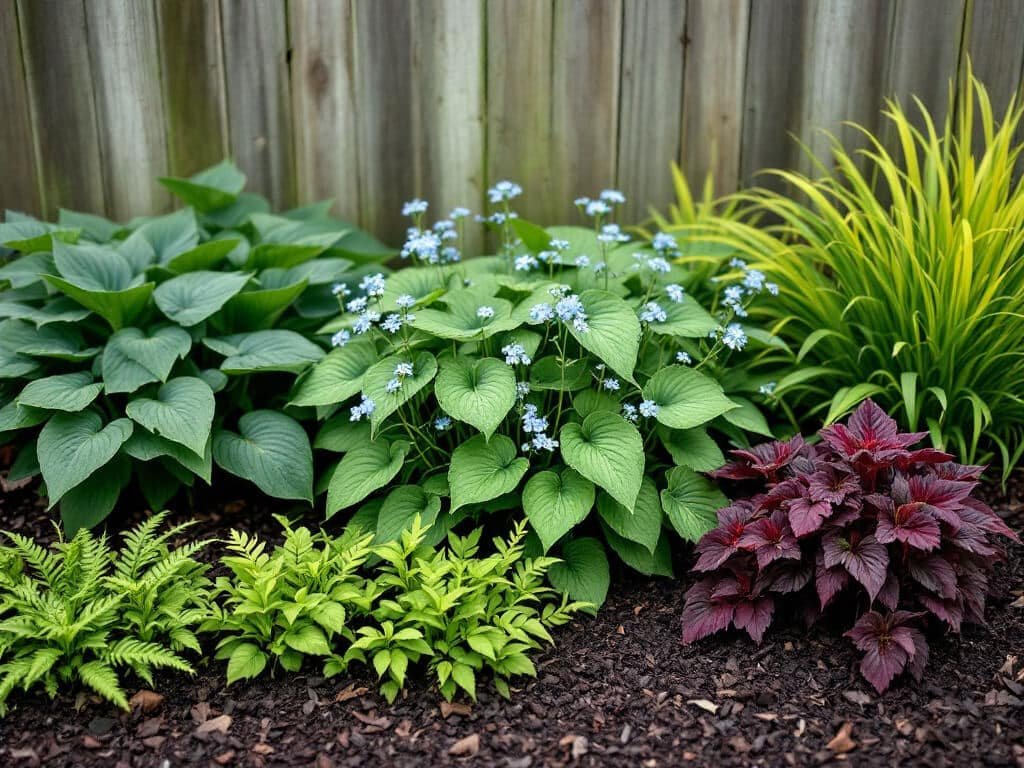
Hosta shares brunnera’s shade and moisture needs, and its broad leaves contrast with brunnera’s heart-shaped ones. Set the spacing by the hosta’s labeled mature spread, since hostas vary a lot in size.
Astilbe
Astilbe suits cool, partly shaded beds with soil that holds moisture, and it adds upright flower plumes in summer. That fills in after brunnera’s spring bloom is done. Follow the spacing on the astilbe label, because cultivar size varies.
Ferns
Ferns want the same sheltered, shaded setting, and their fronds give a fine texture against brunnera’s bigger leaves. Let each fern reach its listed mature spread before you decide how close to plant. Check the label, since the right distance depends on the fern.
Heuchera
Heuchera gives you a lower layer of foliage and tolerates partial shade. Its smaller leaves sit well in front of brunnera’s larger ones. Use the mature width recommended for the heuchera you choose.
Hellebore
Hellebore works as a shade-border partner and adds a different seasonal flower display from brunnera’s spring blue. Plant it by its cultivar’s labeled mature spread, not a fixed distance.
Pulmonaria
Pulmonaria likes the same cool, shaded conditions and flowers in spring, so it makes an early-season pairing with brunnera. Space it by the cultivar’s mature spread. No universal figure exists for this pairing.
Japanese forest grass
Japanese forest grass (Hakonechloa) brings an arching grass texture to a shaded planting and fills a different visual layer than brunnera’s broad leaves. Use the cultivar’s mature width so the two don’t crowd each other.
Tiarella
Tiarella is a low, spreading foliage plant for a moist shade bed, a good edge plant in front of brunnera. Follow the plant label for its mature spread.
What not to plant with brunnera
The sources don’t document any plant that is toxic to brunnera, any allelopathy, or any pest that moves between brunnera and a specific neighbor. So I won’t give you a blacklist of plants. There is one category to avoid, and it’s a matter of conditions, not chemistry.
Plants that need hot, dry, full sun
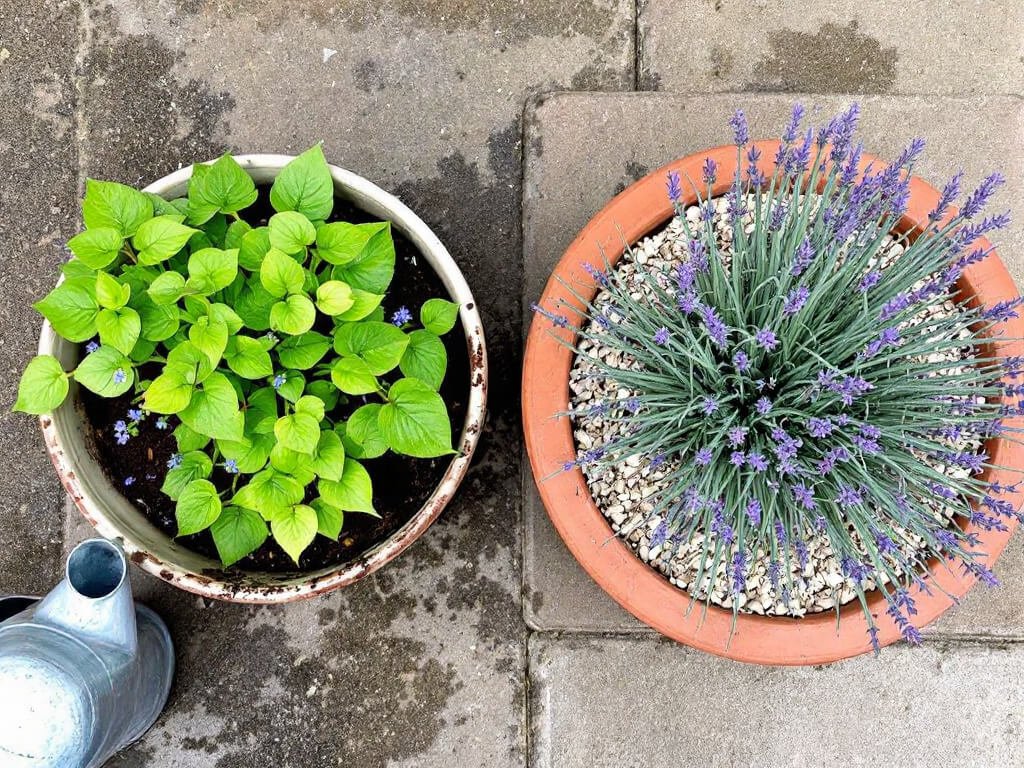
Don’t put brunnera next to plants that need hot, dry, full sun. Brunnera wants a cool, sheltered, moist, shaded site, and these plants want the opposite. The mismatch is cultural, not a case of one plant harming the other. But in practice you end up watering and siting for one or the other, and brunnera’s leaves can scorch if the spot is hot and exposed.
If a plant’s tag says full sun and dry soil, give it a different bed.
Layout and spacing
Put brunnera in the cooler interior of a bed, or on the north or east side, where taller shrubs or a structure cut the afternoon exposure. Only combine it with plants whose light and water needs overlap with its own. For spacing, use the mature width on each plant’s label, because the source gives no universal brunnera spacing.
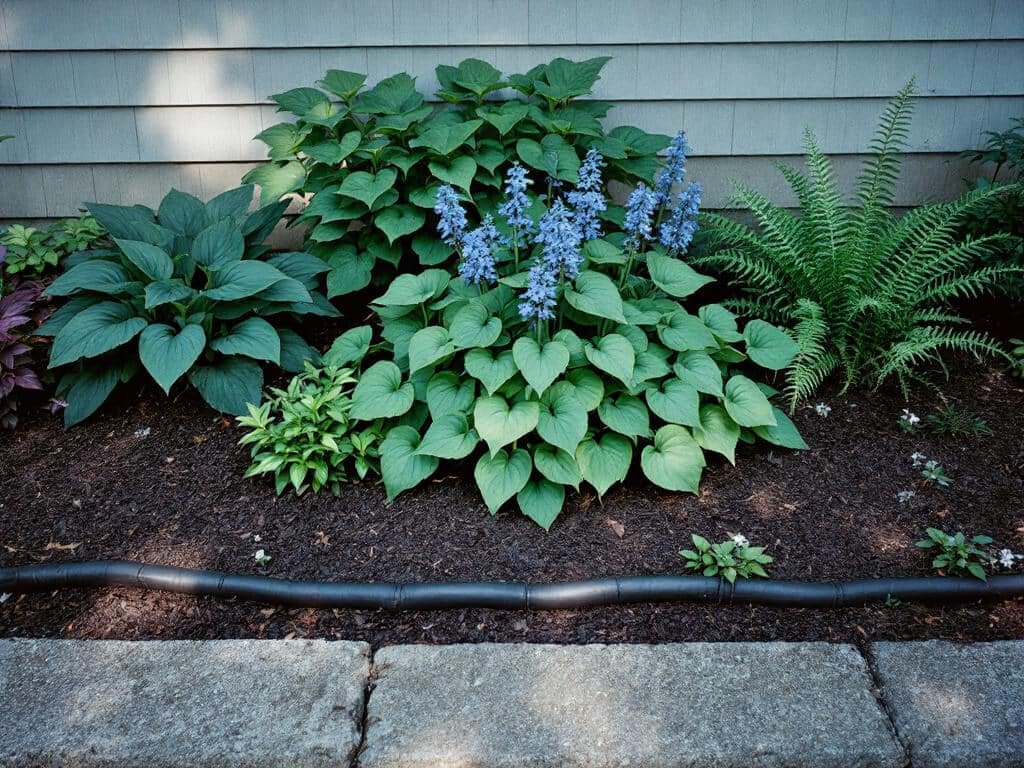
– Back or center of the bed: brunnera, in the shadiest and coolest spot, with the clump given room to develop.
– Beside it: hosta, astilbe, or ferns for leaf contrast and summer interest, each spaced by its own mature spread.
– Front edge: heuchera or tiarella as a low foliage layer.
– Accents: hellebore or pulmonaria for a different seasonal flower display, and Japanese forest grass for an arching texture.
FAQ
What growing conditions should brunnera companions share?
Choose plants suited to partial or full shade, a cool sheltered position, and soil that stays moist without becoming waterlogged.
Can brunnera grow in full sun?
The RHS recommends partial shade or full shade. Cultivar guidance warns that the leaves may scorch in full sun, especially in hot conditions.
How far apart should brunnera and its companions be planted?
No universal brunnera spacing figure is given in the source. Use the mature width listed for each cultivar and companion, and leave enough room for the clump to develop without crowding.